




Microbiology and Healthcare
Microbiology studies microscopic organisms such as bacteria, viruses, and fungi.
It supports healthcare by improving understanding of diseases and developing vaccines.
It also helps protect food and water supplies.
Nigeria’s Healthcare System and Challenges
Nigeria’s healthcare system faces inadequate funding, limited healthcare workers, and poor infrastructure.
It also experiences limited access to essential medical supplies.
Meanwhile, malaria, tuberculosis, and HIV/AIDS remain significant public health issues.
History of Microbiology in Nigeria
Microbiology has developed steadily in Nigeria through university teaching and institutional research.
Departments and research institutions have supplied infrastructure, resources, and expertise for microbiological study.
They have also supported investigations addressing national and global scientific challenges.
- Establishment of microbiology departments in universities and research institutions
- Contributions of Nigerian microbiologists to the field
Establishment of Microbiology Departments in Universities and Research Institutions
Microbiology departments have helped advance education and research across Nigeria.
The University of Lagos established one of Nigeria’s earliest microbiology departments during the 1960s.
Since then, universities across the country have created departments to meet growing interest in microbiology.
These departments offer undergraduate and postgraduate programs in microbiology.
They prepare students for academic and research careers in the field.
Furthermore, their researchers investigate infectious diseases, antimicrobial resistance, and environmental microbiology.
Contributions of Nigerian Microbiologists to the Field
Nigerian microbiologists have advanced the field within Nigeria and internationally.
They have investigated medical, industrial, and environmental microbiology.
These efforts have expanded knowledge and informed scientific responses to important challenges.
Professor Chinyere Ezeogu of the University of Nigeria, Nsukka, has researched antimicrobial resistance in bacteria.
Her work has focused particularly on healthcare settings.
It has clarified antibiotic resistance mechanisms and supported strategies for addressing this global threat.
Professor Rose Gana Fomban Leke has focused her research on malaria.
Her work examines interactions between malaria parasites and the human immune system.
Consequently, her research has supported new diagnostic tools and potential vaccine candidates.
Nigerian microbiologists continue to improve understanding of microorganisms and their roles in health and disease.
Their research also influences healthcare practices and policies in Nigeria and beyond.
Microbiology and Disease Prevention in Nigeria
Microbiology supports disease prevention within Nigeria’s healthcare system.
Healthcare workers use microbiological testing to diagnose infectious diseases.
Consequently, accurate results guide treatment and help reduce infection spread.
Microbiological Testing and Antimicrobial Resistance
Testing helps providers identify the causative agents of illnesses.
Moreover, diagnosis supports appropriate treatment decisions for infected patients.
Continuous testing also helps healthcare teams monitor antimicrobial resistance patterns.
- Healthcare providers can identify pathogens responsible for specific illnesses.
- Accurate diagnoses support suitable treatment and reduce infection transmission.
- Resistance monitoring guides responses to changing antimicrobial patterns.
Vaccines, Antibiotics, and Treatment Development
Microbiological research supports the development of vaccines and antibiotics.
Scientists study bacteria and viruses to create effective vaccines.
Similarly, researchers design antibiotics to target specific bacterial pathogens.
- Vaccines help prepare the body to respond to infectious agents.
- Antibiotics combat bacterial infections by targeting specific pathogens.
- Ongoing research supports the discovery of additional treatment options.
Together, testing and research strengthen efforts to prevent and treat infectious diseases.
These activities can improve healthcare outcomes in Nigeria.
Find Out More: Medical Rehabilitation Associations in Nigeria
Impact of Microbiology on Public Health
Microbiology shapes public health practices in Nigeria.
Technological advances and research have increased recognition of microbiology’s healthcare impact.
Transform Your Career with Expert Guidance
Get personalized mentorship consulting that’s tailored to your unique path. Our expert advice is actionable and exclusive.
Get StartedMicrobiological evidence helps health professionals understand infections and plan appropriate responses.
- Microbiologists monitor infectious diseases within communities.
- Public health officials implement programs based on microbiological findings.
Surveillance and Monitoring of Infectious Diseases
Microbiologists track infectious diseases as they spread through communities.
They collect and analyze samples to identify pathogens.
Furthermore, microbiologists monitor pathogen movement across affected communities.
Health officials use this information to develop disease control and prevention strategies.
Understanding disease epidemiology helps healthcare professionals target interventions and limit infection spread.
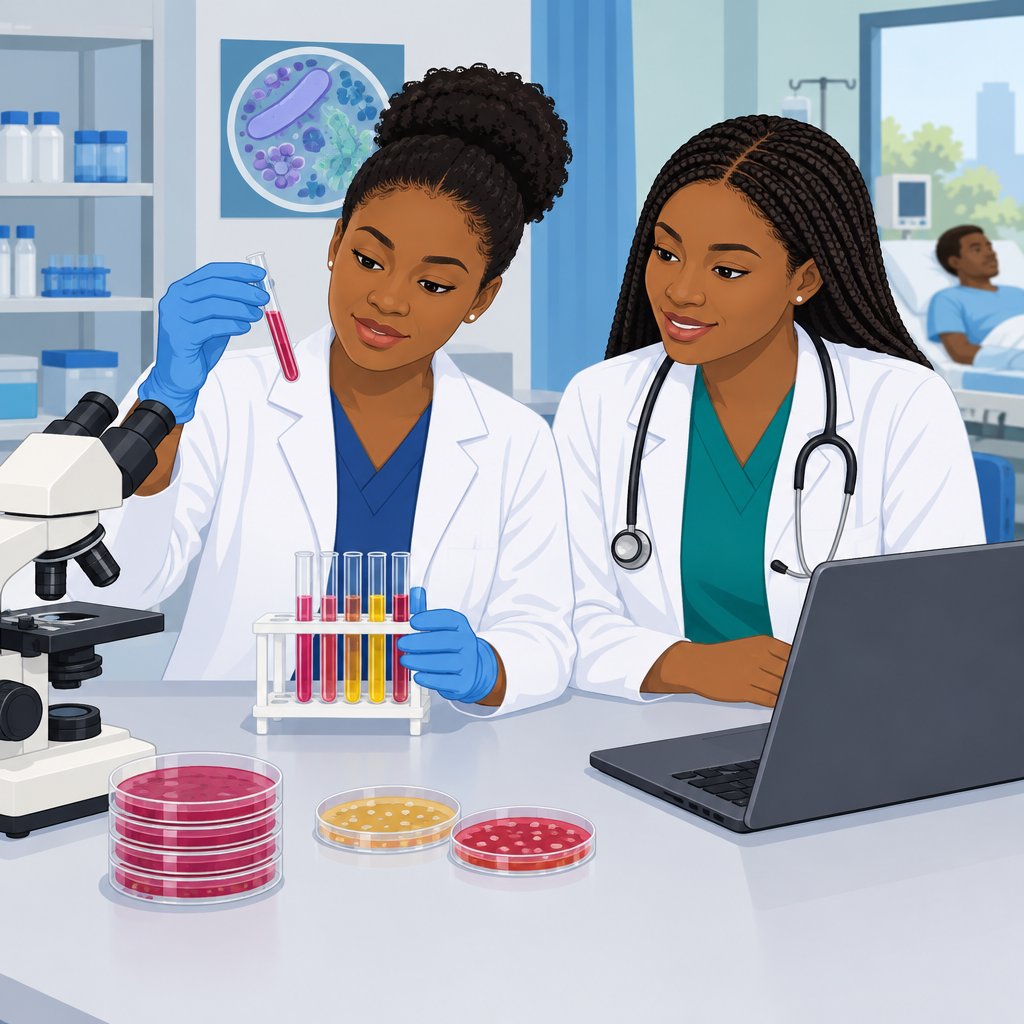
Public Health Programs Based on Microbiological Findings
Microbiological findings guide the design and implementation of public health programs.
Researchers study pathogen behavior to develop vaccines and treatments.
For example, microbiological research supported vaccines against polio and measles.
These vaccines reduced the burden of those diseases in Nigeria and worldwide.
Additionally, microbiologists research antibiotic resistance patterns.
Healthcare providers use this information to prescribe suitable treatments.
Consequently, microbiological research helps address the growing threat of drug-resistant infections.
Microbiology therefore informs public health policies and strengthens programs that protect population health.
Explore Further: Top Oral and Maxillofacial Surgeons in Nigeria
Challenges Faced in Microbiology in Nigeria
- Lack of funding for research and equipment
- Shortage of skilled microbiologists in healthcare institutions
Microbiology plays a crucial role in Nigeria’s healthcare system.
However, several challenges limit its effectiveness and impact.
Two major obstacles involve inadequate resources and insufficient staffing.
Funding for Microbiology Research and Equipment
One primary challenge involves inadequate funding for microbiology research and equipment.
Without sufficient resources, microbiologists struggle to conduct important studies and develop new treatments.
They also face difficulties improving diagnostic techniques.
Consequently, limited funding affects healthcare quality and restricts responses to infectious diseases and antibiotic resistance.
Many healthcare institutions lack essential tools and technology.
As a result, microbiologists find it difficult to perform vital tests and analyses.
Patients may therefore receive delayed or inaccurate diagnoses.
These delays can postpone treatment and create potential complications.
Shortage of Skilled Microbiologists in Healthcare Institutions
Nigeria also faces a shortage of skilled microbiologists in healthcare institutions.
Although microbiologists help diagnose and treat infectious diseases, qualified professionals remain limited.
This shortage affects patient care and restricts the development of innovative responses to emerging health threats.
Furthermore, scarce staffing reduces specialized expertise in antimicrobial resistance and infectious disease surveillance.
Healthcare providers may consequently struggle to manage outbreaks and prevent dangerous pathogens from spreading.
These difficulties place the population at risk of serious health consequences.
Strengthening Microbiology Capacity in Nigeria
Addressing these challenges requires coordinated efforts from policymakers, healthcare institutions, and the scientific community.
Policymakers should prioritize funding for research and essential equipment.
Healthcare institutions can also invest in training programs for future microbiologists.
These efforts can strengthen Nigeria’s healthcare system.
They can also improve protection against infectious diseases and other health threats.
Uncover the Details: Importance of Child Nutrition in Nigeria
Opportunities for Growth in Microbiology
- Collaboration with international organizations for research and development
- Emphasis on microbiology education and training for healthcare professionals
It influences disease diagnosis, treatment, and prevention.
Advancements in technology and research create valuable opportunities for growth.
Collaboration with International Organizations
International partnerships offer Nigeria an important opportunity to strengthen microbiology research and development.
These partnerships can provide access to advanced technologies, funding, and specialized expertise.
They also support knowledge exchange, resource sharing, and the development of innovative healthcare solutions.
Education and Training for Healthcare Professionals
Education and training provide another important pathway for advancing microbiology in Nigeria.
Continuous professional development can strengthen doctors’, nurses’, and laboratory technicians’ microbiology skills.
Training can cover diagnostic techniques, treatment protocols, and infection control measures.
Research-focused programs can improve understanding of pathogens and support strategies for containing infectious diseases.
These efforts can strengthen Nigeria’s healthcare system and address population health needs more effectively.
You Might Also Like: Challenges in Biomedical Technology Education Nigeria
Microbiology’s Role in Nigeria’s Healthcare System
Microbiology plays a significant role in shaping Nigeria’s healthcare system.
It supports disease diagnosis, treatment, and prevention.
Investing in research, infrastructure, and healthcare professionals can strengthen Nigeria’s response to existing and emerging health challenges.
Additional Resources
Google search results for Impact of Microbiology on Nigeria's Healthcare Medical
Bing search results for Impact of Microbiology on Nigeria's Healthcare Medical


