




Biomedical Technology Education in Nigeria
Biomedical technology education in Nigeria trains professionals who connect technology with medical care.
The field equips students with knowledge and skills for developing and using medical technologies.
However, several challenges limit the effectiveness of this important educational field.
Educational Focus and Professional Preparation
Students learn how biomedical technologies support healthcare delivery and medical practice.
They also develop practical abilities for operating and applying medical equipment.
Consequently, this education prepares professionals to contribute to healthcare improvement.
Contributions to Healthcare Outcomes
Biomedical technology education strengthens healthcare delivery through better technological knowledge.
Furthermore, it supports accurate diagnosis and more effective treatment outcomes for patients.
Therefore, well-prepared professionals can apply biomedical technologies more effectively within medical care.
Challenges Affecting Educational Effectiveness
Despite its importance, biomedical technology education faces resource, staffing, curriculum, infrastructure, and research limitations.
These limitations reduce students’ access to current equipment, practical instruction, and innovative learning opportunities.
Addressing these challenges would strengthen training and support improved healthcare outcomes.
- Limited funding restricts student training resources and the acquisition of modern equipment.
- A shortage of qualified instructors reduces students’ access to experienced practical guidance.
- An outdated curriculum limits students’ exposure to current technological advancements.
- Inadequate infrastructure prevents students from gaining sufficient hands-on experience with biomedical equipment.
- Limited research opportunities restrict students’ ability to explore innovative biomedical technology solutions.
Lack of Adequate Infrastructure
Biomedical technology education in Nigeria faces serious infrastructure limitations.
Many institutions lack modern equipment and facilities needed to deliver quality education.
Consequently, students may struggle to follow important advances in biomedical technology.
- Limited access to state-of-the-art equipment and facilities
- Inadequate laboratory resources for practical training
- Reduced opportunities for students to gain hands-on experience
Furthermore, limited laboratory resources restrict students’ practical training.
Biomedical technology requires hands-on learning to develop technical skills and practical proficiency.
Without suitable equipment, students may find it difficult to apply theoretical knowledge in real-world situations.
Inadequate infrastructure can also weaken student and faculty research activities.
Additionally, institutions may fall behind international counterparts without access to current technology.
Educational institutions and the government must therefore improve infrastructure for biomedical technology education.
They should modernize laboratories, expand research facilities, and provide students with essential learning tools.
These investments can strengthen education and prepare graduates for healthcare industry demands.
Shortage of Qualified Instructors
- Insufficient faculty expertise in biomedical technology
- Limited professional development opportunities in this specialized field
- Difficulty providing quality education without experienced instructors
Nigeria faces a shortage of qualified instructors in biomedical technology education.
This shortage limits the quality of instruction available to students.
Without experienced faculty, students may miss essential training and mentorship.
Moreover, educators have few opportunities to develop specialized professional skills.
Limited training can restrict their growth and weaken the instruction they provide.
Institutions also struggle to attract and retain experienced instructors.
As a result, students may receive less guidance for industry demands.
Uncover the Details: Gynaecological Health Services in Nigeria
Outdated Curriculum in Biomedical Technology Education
Biomedical Technology education in Nigeria faces significant challenges because its curriculum remains outdated.
Several factors prevent the curriculum from meeting current industry standards and technological developments.
Therefore, educators must update course content to prepare students for changing professional demands.
Curriculum Misalignment
The curriculum may not reflect recent developments in Biomedical Technology.
Consequently, students may study concepts and practices that no longer remain relevant.
- The curriculum may not align with the latest developments in Biomedical Technology.
Limited Emphasis on Practical Skills
Students need hands-on experience to succeed in Biomedical Technology.
However, the curriculum may emphasize theoretical knowledge instead of practical applications.
- The curriculum may provide insufficient preparation for real-world applications and practical responsibilities.
Challenges in Global Competition
As a result, students may lack skills needed to compete in the global market.
Moreover, outdated training can make it difficult for students to follow worldwide advancements.
Transform Your Career with Expert Guidance
Get personalized mentorship consulting that’s tailored to your unique path. Our expert advice is actionable and exclusive.
Get Started- Students may struggle to remain competitive as Biomedical Technology advances worldwide.
Curriculum Revision for Industry Relevance
Addressing the outdated curriculum remains essential for improving Biomedical Technology education.
Updating course content can help students receive training that reflects current trends and technologies.
Ultimately, curriculum revision can help students remain competitive and relevant in the field.
Gain More Insights: Preventing Vision Loss: Tips from Nigerian Ophthalmologists
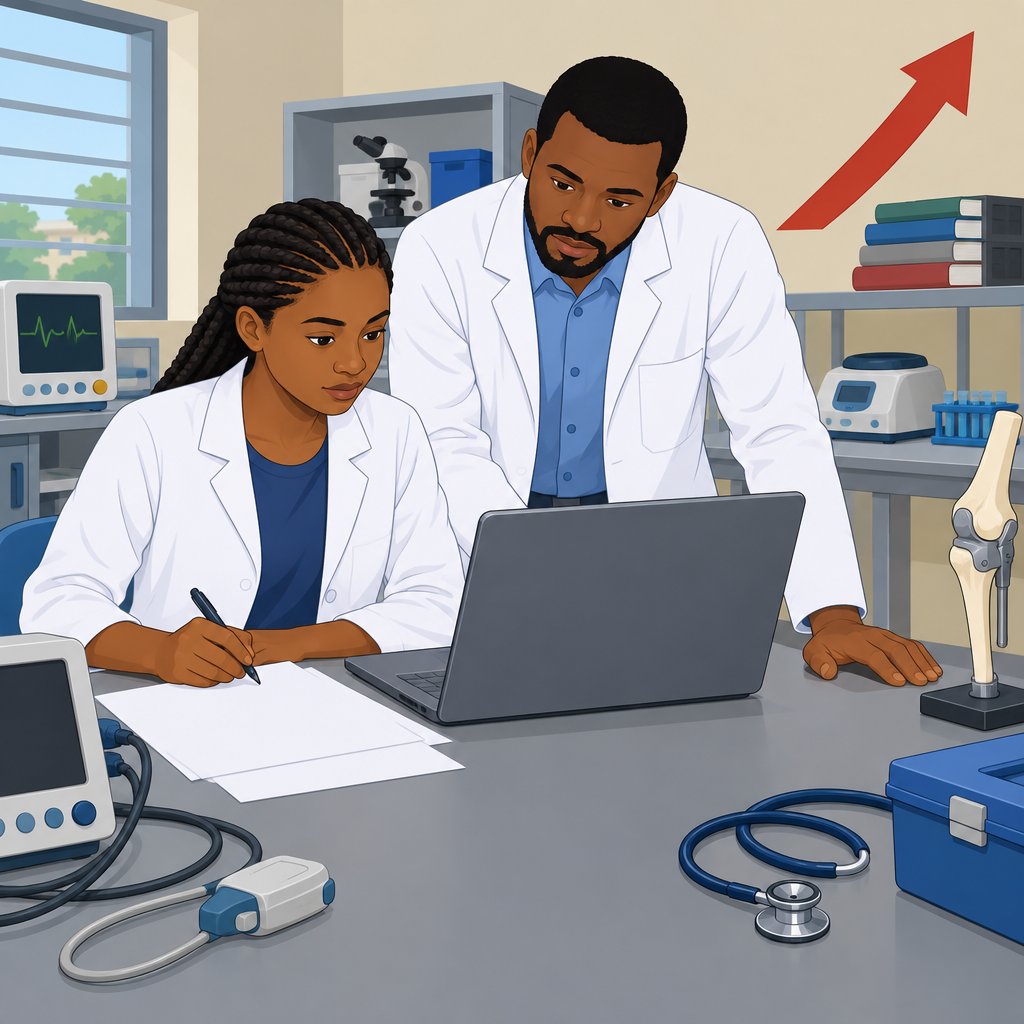
Funding Constraints in Biomedical Technology Education
Biomedical technology education faces several funding constraints.
Government support remains limited for programs in this specialized field.
Private organizations also provide insufficient investment for education and research activities.
- Government funding for biomedical technology education programs remains limited.
- Private sector organizations provide insufficient investment in this field.
- Funding limitations reduce research and development opportunities for students.
Limited Government Funding for Education Programs
Limited government funding makes it difficult for institutions to provide quality education.
Consequently, institutions may struggle to obtain advanced equipment for students.
Students therefore may lack resources needed to excel and gain practical experience.
Insufficient Private Sector Investment
Private sector organizations provide limited financial support for biomedical technology education.
Without external investment, institutions may struggle to upgrade facilities and conduct research.
Additionally, limited funding reduces scholarship opportunities and restricts real-world collaborations.
Effects on Student Research and Development
Funding constraints directly reduce research and development opportunities for students.
Limited resources can prevent students from joining advanced research projects or attending conferences.
Furthermore, students receive less exposure to industry professionals and networking opportunities.
This limited experience can weaken career prospects and restrict student contributions to biomedical technology.
Learn More: Choosing ENT Surgery or Alternative Treatments
Regulatory Challenges in Biomedical Technology
Biomedical technology in Nigeria faces regulatory challenges that affect students and professionals.
These challenges influence training, licensing, practical experience, and workforce development.
Therefore, policy reforms could improve access to education and strengthen healthcare technology services.
- Stringent regulations and licensing requirements affect biomedical technology practitioners.
- Regulatory barriers limit students’ opportunities to gain practical experience.
- Licensing reforms could streamline processes and facilitate education.
Stringent Regulations and Licensing Requirements
Regulations help maintain practitioner safety and competence within biomedical technology.
However, strict requirements can prevent students and professionals from entering or advancing within the field.
Applicants must satisfy specific criteria and complete rigorous testing before receiving necessary licenses.
Consequently, licensing can become time-consuming and costly for aspiring practitioners.
Limited Opportunities for Practical Experience
Students also face limited opportunities to gain practical experience during their education.
Regulatory barriers can restrict access to internships and placements in relevant professional settings.
As a result, learners may struggle to apply classroom knowledge and develop essential skills.
Hands-on training prepares students for industry demands and supports stronger professional performance.
Reforming Licensing Processes and Education Pathways
Reforms could simplify licensing requirements and reduce unnecessary bureaucratic hurdles.
Authorities could also create clearer pathways for students to obtain supervised practical experience.
More efficient licensing would help students and professionals enter biomedical technology more easily.
These changes could address workforce shortages while encouraging innovation and improving healthcare delivery in Nigeria.
Discover More: Radiography Equipment and Technology in Nigeria
Industry-Academia Divide
The biomedical technology sector needs graduates with relevant knowledge and practical competencies.
However, academic institutions and industry organizations often operate without sufficient coordination.
Consequently, students may find it difficult to move smoothly from education into employment.
- Academic institutions often remain disconnected from biomedical technology industry needs.
- Students receive limited opportunities to collaborate with industry professionals.
- The divide can affect students’ ability to transition into the workforce seamlessly.
Challenges Created by the Industry-Academia Divide
The industry-academia gap creates challenges for students and biomedical technology employers.
Academic programs may not fully match the skills, knowledge, and competencies that employers expect.
As a result, graduates can face difficulties when they seek employment or career advancement.
Disconnect Between Academic Institutions and Industry
Academic programs in Nigerian universities may not reflect current biomedical technology industry requirements.
When institutions fail to respond to industry developments, classroom learning becomes less relevant.
This disconnect can leave students unprepared for workplace expectations after graduation.
Limited Collaboration Opportunities for Students
Students often have limited opportunities to work directly with biomedical technology professionals.
Without internships or industry projects, learners miss valuable opportunities to develop practical experience.
They also lose chances to understand workplace practices and professional expectations before graduating.
Effects on Workforce Transition
The industry-academia gap can weaken students’ employability within the biomedical technology sector.
Employers often seek candidates who combine academic understanding with practical workplace skills.
Therefore, students without industry exposure may struggle to secure employment or progress professionally.
Strengthening Biomedical Technology Education in Nigeria
Biomedical technology education in Nigeria faces limited funding, inadequate infrastructure, outdated curricula, and insufficient skilled faculty.
These challenges restrict the preparation of professionals who support medical services, research, and healthcare innovation.
Therefore, the government should allocate more resources and invest in modern educational facilities.
Additionally, authorities should update curricula and provide training opportunities for faculty.
Addressing these needs can strengthen healthcare infrastructure and improve healthcare delivery across the country.
Consequently, better education can produce competent professionals who enhance medical services and develop healthcare solutions.
Additional Resources
Google search results for Challenges in Biomedical Technology Education Nigeria Medical
Bing search results for Challenges in Biomedical Technology Education Nigeria Medical


