




Introduction
Medical rehabilitation in Nigeria helps individuals recover from injuries or disabilities.
It also improves their quality of life.
Medical rehabilitation associations play a crucial role in Nigeria.
They provide resources, support, and advocacy.
Evolution of Medical Rehabilitation Associations in Nigeria
Medical rehabilitation associations in Nigeria have developed considerably since their inception.
The earliest associations emerged during the mid-twentieth century.
Initially, small groups focused on basic care for individuals with disabilities.
As awareness increased, these associations gradually expanded their responsibilities.
During the 1970s and 1980s, formal medical rehabilitation associations made significant progress.
Furthermore, these associations advocated for the rights of individuals with disabilities.
They also helped develop standardized rehabilitation protocols during this period.
During the 1990s, Nigeria experienced a substantial increase in medical rehabilitation associations.
These organizations began collaborating with international groups to strengthen their practices.
By the early 2000s, associations adopted a more holistic rehabilitation approach.
Consequently, programs incorporated psychological, social, and vocational considerations.
Today, medical rehabilitation associations in Nigeria support innovative practices and comprehensive care.
Achievements in Medical Rehabilitation
Medical rehabilitation associations in Nigeria have established multidisciplinary teams.
These teams unite healthcare professionals from different fields.
Together, they coordinate care for people undergoing rehabilitation.
Additionally, associations have developed specialized programs for different populations.
These programs address specific needs among children with disabilities and elderly patients.
Associations have also increased public awareness of rehabilitation’s importance.
They have used community outreach and educational campaigns to inform the public.
Modern technology and equipment have also entered rehabilitation facilities.
As a result, these advancements have improved rehabilitation care.
Meanwhile, associations have advocated for policies supporting individuals with disabilities.
They have urged the government to implement inclusive policies.
These achievements demonstrate the associations’ continuing commitment to better rehabilitation services.
Major Medical Rehabilitation Associations in Nigeria
Several medical rehabilitation associations support healthcare services and disability inclusion in Nigeria.
These organizations advance professional practice through education, research, advocacy, and development opportunities.
They also promote better rehabilitation services and support individuals with disabilities.
Physiotherapy Association of Nigeria
The Physiotherapy Association of Nigeria advances physiotherapy practice in Nigeria.
- The association promotes research, education, and advocacy in physiotherapy.
- Its work supports continued development within the physiotherapy profession.
Nigeria Society of Physiotherapy
The Nigeria Society of Physiotherapy seeks to improve physiotherapy service quality in Nigeria.
- The society provides professional development opportunities for physiotherapists.
- It promotes best practices throughout the physiotherapy field.
Through these activities, the society strengthens professional standards and service delivery.
Association of Occupational Therapists of Nigeria
The Association of Occupational Therapists of Nigeria promotes occupational therapy as a healthcare profession.
- The association advocates for the rights of individuals with disabilities.
- It supports social integration through occupational therapy interventions.
Its activities connect occupational therapy with broader disability support and participation.
Nigerian Association of Speech-Language Therapists
The Nigerian Association of Speech-Language Therapists works to improve speech and language therapy services.
- The association supports professional development among speech-language therapists.
- It raises awareness about communication disorders.
These efforts encourage greater attention to communication services and professional practice.
Together, these associations advance medical rehabilitation across Nigeria.
They improve rehabilitation practice and promote more inclusive healthcare services.
Transform Your Career with Expert Guidance
Get personalized mentorship consulting that’s tailored to your unique path. Our expert advice is actionable and exclusive.
Get StartedGain More Insights: Top Oral and Maxillofacial Surgeons in Nigeria
Professional Functions of Medical Rehabilitation Associations
These associations support rehabilitation professionals through education, networking, advocacy, and professional standards.
They help members exchange knowledge and strengthen collaboration across rehabilitation practice.
Their activities encourage consistent, informed, and patient-focused service delivery.
- Professional development programs help members follow recent advancements in medical rehabilitation.
- Networking opportunities connect professionals and encourage research collaboration.
- Advocacy efforts promote access to quality rehabilitation services across Nigeria.
- Professional standards guide healthcare workers toward high-quality rehabilitation practice.
Contributions to Nigerian Healthcare Services
These associations improve rehabilitation care by supporting education, research, advocacy, and professional collaboration.
They also encourage services that reflect international best practices and respond to community needs.
Furthermore, their partnerships with healthcare providers support multidisciplinary approaches to patient care.
- Continuing education helps professionals maintain and improve the quality of rehabilitation services.
- Research activities encourage innovation and the adoption of improved rehabilitation practices.
- Policy advocacy supports expanded rehabilitation programs in underserved areas.
- Collaboration with other healthcare providers can support better patient outcomes.
Find Out More: Importance of Child Nutrition in Nigeria
Common Challenges Facing Medical Rehabilitation Associations in Nigeria
Medical rehabilitation associations in Nigeria face several challenges that affect their services.
These obstacles can limit support for individuals who need rehabilitation.
Moreover, associations must address financial, resource, infrastructure, workforce, and social barriers.
- Funding shortages hinder quality services and support for individuals who need rehabilitation.
- Limited access to equipment, technology, and skilled professionals affects program effectiveness.
- Inadequate rehabilitation facilities make comprehensive patient care more difficult.
- A shortage of physiotherapists, occupational therapists, and speech therapists affects care quality.
- Stigma and discrimination create social barriers for individuals with disabilities.
Effects of These Challenges on Rehabilitation Services
These challenges directly affect how effectively associations serve their communities.
Consequently, patients may experience reduced care, limited access, or delayed support.
Furthermore, organizational pressures can weaken service delivery, advocacy, and adaptation.
- Resource limitations can reduce the quality of rehabilitation care.
- Funding and resource constraints can limit the number of people associations reach.
- Staff shortages and inadequate infrastructure can create waiting lists and delay care.
- Stigma and discrimination can hinder advocacy for disability rights.
- Multiple challenges can strain organizational capacity and restrict innovation.
Associations can better serve communities by overcoming funding limitations and resource constraints.
Improved infrastructure and staffing can strengthen rehabilitation services.
Reducing stigma and discrimination can support disability rights and inclusion.
Delve into the Subject: Challenges in Biomedical Technology Education Nigeria
International Partnerships for Medical Rehabilitation
International healthcare partnerships can advance medical rehabilitation in Nigeria.
By working with global organizations, Nigerian associations can access resources, expertise, and established practices.
These relationships can help associations improve patient care and rehabilitation outcomes.
Benefits of Global Healthcare Collaboration
Global collaboration gives Nigerian associations opportunities to access advanced technology and current research.
Furthermore, international partners can support professional training, capacity building, and knowledge exchange.
Partnerships may also provide funding opportunities while increasing associations’ visibility and credibility globally.
- Access to cutting-edge technology and research
- Opportunities for training and capacity building
- Exchange of knowledge and best practices
- Potential funding and grants for supporting projects
- Enhanced visibility within the global healthcare community
Successful Nigerian and International Collaborations
Nigerian rehabilitation associations have established partnerships with respected international organizations.
These collaborations have supported professional training, certification development, and rehabilitation research.
They have also increased the global visibility of Nigerian medical rehabilitation associations.
- The Nigerian Association of Physical Therapy collaborated with the World Confederation for Physical Therapy on a physiotherapy training workshop.
- The Association of Nigerian Occupational Therapists partnered with the World Federation of Occupational Therapists on an occupational therapy certification program.
- The Nigerian Society of Speech-Language Pathologists worked with the International Association of Logopedics and Phoniatrics on communication disorders research.
These partnerships have expanded training opportunities for Nigerian rehabilitation professionals.
They have also strengthened research capabilities and supported better patient outcomes.
Continued collaboration can further advance medical rehabilitation across Nigeria.
See Related Content: Gynaecological Health Services in Nigeria
Ongoing Initiatives and Programs
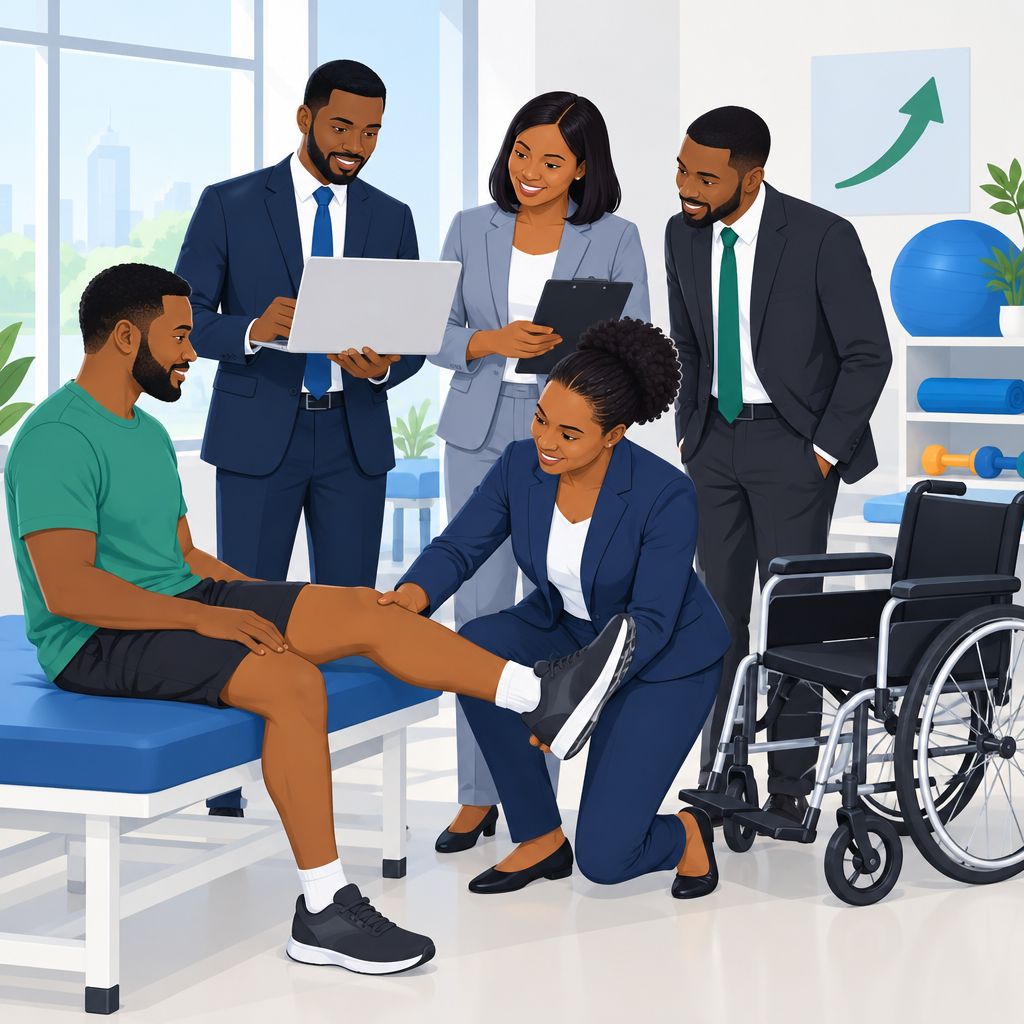
- Medical rehabilitation associations in Nigeria establish community-based rehabilitation programs.
- These programs provide comprehensive care and support to people with disabilities in local communities.
- Additionally, associations promote research and development in medical rehabilitation.
- They collaborate with universities and research institutions to study new treatments and technologies.
- Furthermore, they organize workshops and conferences to share knowledge and best practices.
Impact on the Healthcare System
- These programs improve access to rehabilitation services throughout Nigeria.
- Consequently, people with disabilities receive quality care and support within their communities.
- Research promotion supports innovative treatment strategies and rehabilitation technologies.
- As a result, these strategies improve patient outcomes and overall care quality.
- Moreover, university collaboration builds capacity and expertise in medical rehabilitation.
Future Prospects and Recommendations
Medical rehabilitation associations in Nigeria have promising opportunities to strengthen healthcare services.
They can significantly influence patient care, professional practice, and rehabilitation access.
These recommendations can help associations expand their impact across the country.
Technological Advancements in Rehabilitation
Associations should integrate technology into medical rehabilitation practices.
They should invest in advanced tools and equipment to improve patient care.
Furthermore, technology can support better rehabilitation outcomes.
Public Awareness of Rehabilitation Services
Public education can increase understanding of medical rehabilitation.
Associations should launch awareness campaigns about rehabilitation benefits.
These campaigns should explain how people can access available services.
Research and Innovation in Rehabilitation
Research and innovation can improve medical rehabilitation treatment methods.
Associations should encourage professionals to pursue relevant research projects.
They should also support research funding to advance the field.
Collaboration with Healthcare Stakeholders
Associations should build strong partnerships with healthcare providers.
They should also collaborate with government agencies and nongovernmental organizations.
Such partnerships can support integrated and holistic patient care.
Professional Development Opportunities
Continuous education can strengthen rehabilitation professionals’ knowledge and skills.
Associations should organize workshops, seminars, and professional conferences.
These programs can support ongoing growth among rehabilitation practitioners.
Advocacy and Policy Influence
Medical rehabilitation associations should advocate for supportive sector policies.
They should engage policymakers and other relevant stakeholders.
This engagement can encourage a supportive regulatory environment.
Quality Assurance in Rehabilitation Facilities
Associations should establish quality assurance standards for rehabilitation facilities.
They should develop protocols that promote safe and effective care.
Regular audits and assessments can help facilities maintain practice standards.
Expanded Access to Rehabilitation Services
Associations should decentralize rehabilitation services for underserved communities.
They can work with local authorities to establish satellite clinics.
Mobile units can also bring rehabilitation care to more communities.
Investment in Rehabilitation Human Resources
Skilled professionals remain essential to the sustainability of rehabilitation services.
Associations should invest in training and capacity-building programs.
These efforts can prepare future rehabilitation practitioners and leaders.
Medical rehabilitation associations can drive positive change in Nigeria’s healthcare landscape.
By implementing these recommendations, associations can strengthen their influence and services.
Consequently, individuals who need rehabilitation may receive higher-quality care.
Strengthening Rehabilitation Care in Nigeria
Medical rehabilitation associations strengthen Nigeria’s healthcare system through coordinated support, education, and resources.
Moreover, these associations assist patients and healthcare professionals during rehabilitation.
Through collaboration and advocacy, they improve care quality and encourage progress in rehabilitation medicine.
Consequently, their efforts can support better outcomes for people recovering from injuries or disabilities.
These associations also foster inclusive environments that promote population well-being.
Additionally, they contribute to the continued advancement of healthcare services in Nigeria.
Healthcare stakeholders should therefore support and collaborate with these associations.
Such cooperation can help people needing rehabilitation receive appropriate care and support.
Additional Resources
Google search results for Medical Rehabilitation Associations in Nigeria Medical
Bing search results for Medical Rehabilitation Associations in Nigeria Medical


