



Introduction to Mechatronics
Mechatronics combines mechanical, electrical, and computer engineering to create smart systems.
Moreover, mechatronics provides innovative solutions across automotive, manufacturing, robotics, and healthcare industries.
It integrates mechanical design, electrical control, and computer automation to build intelligent systems.
Mechatronics in Mechanical Systems
Mechanical engineers use mechatronics to combine mechanical systems with electronic controls.
Sensors, actuators, and controllers help engineers develop more precise mechanical systems.
These integrated components also improve system efficiency and adaptability across different environments.
Mechatronics Applications in Mechanical Engineering
Mechatronics supports advanced mechanical applications across automotive, aerospace, and manufacturing industries.
Engineers use electronic controls to improve safety, accuracy, and operational efficiency.
Robotics also applies mechatronics to complex tasks in manufacturing, assembly, and surgery.
- The automotive industry uses mechatronics for Antilock Braking Systems and Electronic Stability Control.
- The aerospace industry uses fly-by-wire controls and autopilot systems to improve aircraft safety and efficiency.
- The manufacturing industry uses robotic arms for automated product assembly and packaging.
Benefits of Integrated Mechatronic Design
Integrated mechatronic designs can improve the precision, efficiency, and reliability of mechanical products.
These systems can adapt to changing conditions and requirements.
Engineers can also optimize resources and reduce production costs over time.
- Enhanced performance enables products to achieve greater precision, efficiency, and reliability.
- Improved flexibility allows systems to respond to changing conditions and requirements.
- Cost-effective solutions optimize resources and reduce long-term production costs.
- Innovation and competitiveness support the development of advanced products for demanding markets.
Fusion of Mechatronics and Electrical Engineering
Mechatronics helps engineers create advanced electrical control systems.
By combining sensors, actuators, and controllers, it improves electrical system functionality.
Furthermore, mechatronics automates many electrical processes and systems.
This combination has advanced industrial automation through coordinated electrical technologies.
Mechatronics in Electrical Control Systems
Mechatronics supports complex control algorithms for electrical systems.
Consequently, engineers can develop precise and efficient electrical control solutions.
Real-time monitoring allows systems to adjust electrical parameters for optimal performance.
Moreover, integrated components interact seamlessly during synchronized operation.
Applications in Electrical Engineering Projects
Mechatronics supports advanced power distribution systems and efficient energy management.
In robotics, it enables intelligent electrical controls for automated tasks.
Smart grid technology uses mechatronics to improve electrical network reliability and resilience.
Renewable energy systems use it to optimize power generation and distribution.
Benefits for Electrical Engineering Practices
Mechatronics improves system reliability and reduces downtime in electrical applications.
Additionally, integrated systems can increase efficiency and productivity.
Streamlined designs and maintenance processes can also reduce costs.
Finally, mechatronics supports innovative solutions that improve project performance and functionality.
This integration creates opportunities for innovation across various electrical engineering industries.
See Related Content: Geoinformatics: Transforming Land Surveying in Nigeria
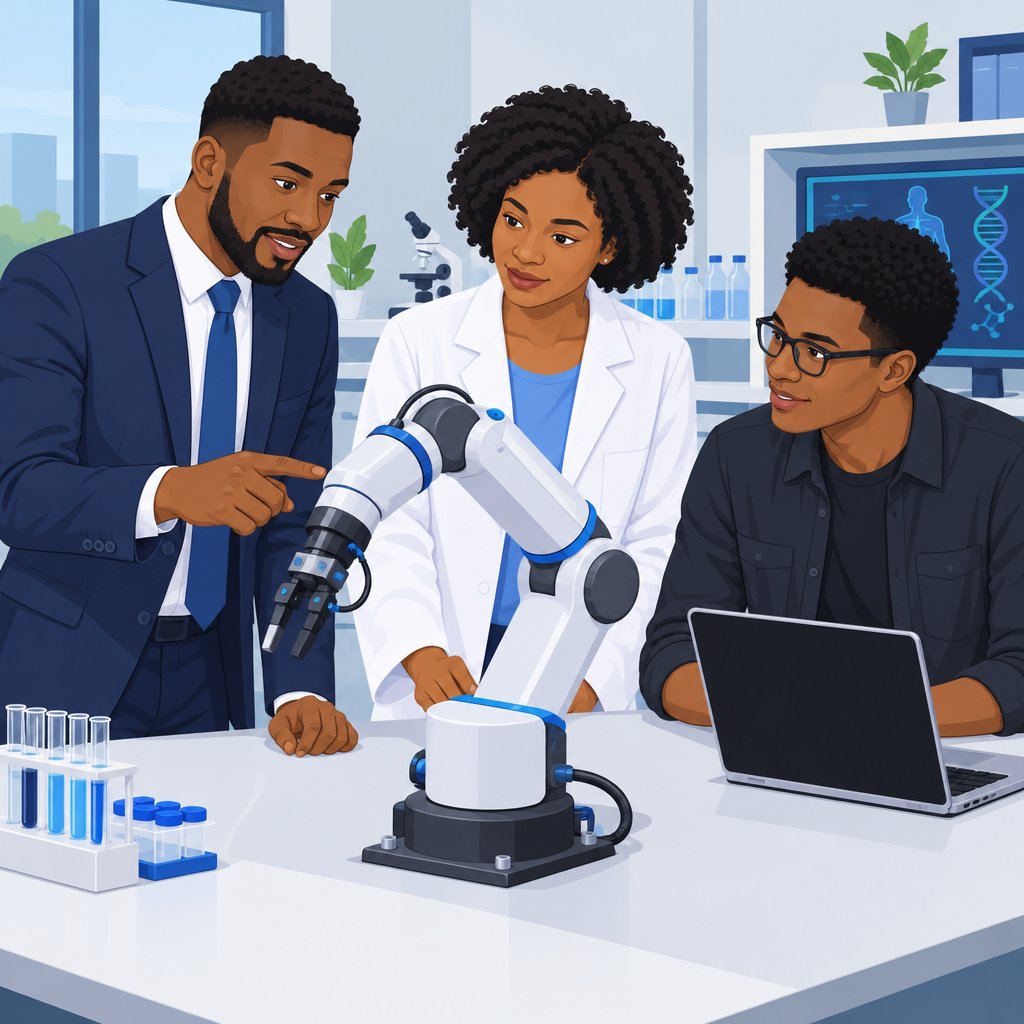
Collaboration Between Mechatronics and Computer Science
Mechatronics and computer science create opportunities for innovation through integrated engineering.
Together, these disciplines connect physical components with software, sensors, and automated decision-making.
This partnership supports precise systems across manufacturing, robotics, aerospace, and other technology fields.
- Mechatronics supports programming and automation in integrated systems.
- Computer science applications use mechatronic systems in several practical contexts.
- Integration provides benefits for engineering, research, and professional development.
Programming and Automation in Mechatronics
Programming gives mechatronic systems instructions for controlling mechanical components and interpreting sensor information.
Engineers use algorithms and software to coordinate movement, feedback, and automated responses.
Consequently, automated equipment can perform complex tasks with limited human intervention.
Mechatronics in Computer Science Applications
Autonomous vehicles combine sensors, control software, and mechanical systems to navigate their surroundings.
Similarly, smart appliances use mechatronic components to improve functionality and user experience.
Artificial intelligence also supports machines that learn, adapt, and make autonomous decisions.
Benefits of Integrated Engineering
Integration can increase efficiency, improve accuracy, and expand system functionality.
Transform Your Career with Expert Guidance
Get personalized mentorship consulting that’s tailored to your unique path. Our expert advice is actionable and exclusive.
Get StartedMechanical engineers and software developers can combine their expertise to address complex engineering challenges.
Furthermore, cross-disciplinary collaboration supports professional growth and research in automation, robotics, and artificial intelligence.
This collaboration also opens new pathways for developing integrated technologies.
Engineers can therefore create innovative solutions that extend the capabilities of modern systems.
Delve into the Subject: Public Spaces in Nigeria: Design and Architecture
Challenges in Combining Mechatronics with Other Disciplines
- Different disciplines may lack a shared language and understanding.
- Conflicting priorities and goals can create disagreements between fields.
- Teams may struggle to integrate different technologies and systems smoothly.
- Some professionals may resist change or interdisciplinary methods.
- Multidisciplinary teams often require complex coordination and workflow management.
Interdisciplinary mechatronics projects often face obstacles that hinder smooth integration.
Professionals must address communication, priorities, technology, workplace culture, and coordination.
First, professionals from different backgrounds may use unfamiliar terminology and methods.
Engineers, computer scientists, and biologists may therefore misunderstand one another.
Clear explanations and shared definitions can reduce confusion during collaborative work.
Additionally, disciplines may pursue different priorities and project goals.
For example, mechanical engineers may emphasize durability and stability.
Meanwhile, software developers may prioritize speed and efficiency.
These differences can create tension and slow joint decision-making.
Teams also face difficulties when they combine unrelated technologies and systems.
Mechatronics components may not align easily with biology, medicine, or environmental science.
Successful integration requires innovative solutions and broad interdisciplinary expertise.
Furthermore, some professionals may prefer familiar methods and established responsibilities.
Open communication can help teams address concerns about changing professional practices.
Finally, leaders must coordinate schedules, skills, responsibilities, and project objectives.
Effective leadership and defined roles can make multidisciplinary workflows more manageable.
Opportunities and Advancements from Combining Mechatronics with Other Disciplines
- Cross-disciplinary ideas can strengthen innovation and creativity.
- Different perspectives can improve problem-solving and project decisions.
- Collaborative teams can develop technologies with broader applications.
- Shared efforts can accelerate responses to complex challenges.
- Participants can expand their careers and professional networks.
Despite these challenges, interdisciplinary mechatronics creates valuable opportunities across many fields.
When professionals exchange ideas, they can produce more creative and practical solutions.
Different viewpoints also help teams examine complex problems from several directions.
For instance, mechatronics can support developments involving biology, healthcare, and renewable energy.
These partnerships can produce technologies with applications beyond their original fields.
Moreover, diverse expertise encourages teams to solve problems more comprehensively.
Collaborators can combine technical knowledge with practical insights from other disciplines.
Such cooperation can accelerate progress on climate change, healthcare, and transportation challenges.
Teams can pool resources, share insights, and pursue common objectives.
As a result, collaborative projects may achieve tangible outcomes more efficiently.
Individuals also gain access to broader professional networks through interdisciplinary work.
They can develop new skills while contributing to varied projects.
Consequently, participants may strengthen their expertise and professional visibility.
Strategies for Effective Interdisciplinary Collaboration
- Establish clear communication channels and shared objectives.
- Offer ongoing training to reduce knowledge gaps.
- Encourage openness, respect, and appreciation for different perspectives.
- Assign responsibilities according to individual strengths and expertise.
- Use agile project management practices to handle changing priorities.
Organizations can improve interdisciplinary collaboration by using deliberate and consistent strategies.
First, teams should establish communication channels, shared goals, and transparent processes.
These practices help members understand expectations and maintain project alignment.
Ongoing training can also reduce knowledge gaps between participating disciplines.
Learning opportunities help professionals adapt to unfamiliar technologies and working methods.
In addition, respectful team cultures encourage people to share different perspectives.
Constructive feedback allows members to improve ideas without discouraging participation.
Leaders should assign responsibilities according to each person’s strengths and expertise.
This approach helps teams use their collective abilities more effectively.
Finally, agile project management supports flexibility when requirements or priorities change.
Iterative planning and regular feedback help teams respond to emerging difficulties.
These practices can improve coordination and support higher-quality interdisciplinary results.
Uncover the Details: Architecture Awards and Recognitions in Nigeria
Future Trends in Mechatronics and Interdisciplinary Studies
Predictions for mechatronics and interdisciplinary integration remain exciting.
As technology advances, mechatronics is poised for significant growth.
Experts expect mechatronics to increasingly converge with artificial intelligence, robotics, and nanotechnology.
These connections will expand opportunities for interdisciplinary engineering research and development.
Predictions for the Future of Mechatronics
Future mechatronic systems will combine multiple technologies to achieve greater intelligence and precision.
First, engineers will connect mechatronics more closely with artificial intelligence, robotics, and nanotechnology.
Consequently, integrated systems will handle increasingly complex tasks with improved efficiency.
- Increased convergence with artificial intelligence, robotics, and nanotechnology
- Integration of the Internet of Things, machine learning, and augmented reality
- Development of more sophisticated and intelligent systems
Emerging Technologies Driving Interdisciplinary Research
Meanwhile, emerging technologies are driving interdisciplinary research throughout mechatronics.
The Internet of Things, machine learning, and augmented reality support this expanding research.
Together, these technologies enable sophisticated systems that perform complex tasks with precision and efficiency.
- Internet of Things (IoT)
- Machine learning
- Augmented reality
Opportunities for Students and Professionals
Students and professionals can find abundant opportunities in mechatronics and interdisciplinary studies.
Furthermore, industries increasingly seek skilled mechatronics engineers for evolving technical roles.
Professionals who combine mechatronics with other disciplines will remain highly sought after.
- High demand for skilled mechatronics engineers
- Growth in interdisciplinary roles across industries
- Increasing importance of combining mechatronics with other disciplines
This interdisciplinary direction will continue pushing the boundaries of engineering innovation and creativity.
Students and professionals can contribute to research and development that shapes future technology.
Find Out More: Automotive Design and Manufacturing Courses in Nigeria
Interdisciplinary Collaboration in Mechatronics
Mechatronics fosters collaboration among mechanical, electrical, and computer engineering professionals.
Together, these disciplines produce innovative solutions to complex problems.
Furthermore, interdisciplinary expertise helps professionals address real-world challenges with advanced technologies.
Students and professionals should explore interdisciplinary opportunities within mechatronics.
By collaborating across fields, they can extend technological possibilities.
Consequently, their work can produce solutions that benefit society.
Additional Resources
Google search results for Combining Mechatronics with Other Disciplines Engineering
Bing search results for Combining Mechatronics with Other Disciplines Engineering


