



Public Spaces and Social Life in Nigeria
Public spaces play a crucial role in shaping Nigeria’s social fabric.
Design and architecture help create functional and inviting public spaces.
Their layout strongly influences how people perceive and use these spaces.
In Nigeria, public spaces support social interaction, community engagement, cultural expression, and recreation.
They also foster belonging and identity among the population.
Design involves planning and organizing structures that harmonize with environments and meet user needs.
Architecture encompasses physical structures and spaces defining the built environment.
Together, design and architecture shape public space perception and usability in Nigeria.
Well-designed spaces can improve safety, accessibility, comfort, and aesthetics.
They become more welcoming and functional for individuals and communities.
Architectural elements include seating, lighting, landscaping, signage, and accessibility features.
These elements influence how people navigate and engage with public environments.
Attractive and functional designs can create positive user experiences.
They can also encourage social interaction and community engagement.
Historical Overview of Public Spaces in Nigeria
Nigerian public spaces have changed as communities, colonial authorities, and urban planners shaped their design and use.
Traditional settings supported cultural exchange, while later planning introduced more formal arrangements.
Recent approaches combine indigenous design ideas with modern planning principles.
- Traditional Public Spaces
- Colonialism and Urbanization
- Design and Architectural Evolution
Traditional public spaces included market squares, village squares, and ceremonial grounds.
People used these settings for celebrations, gatherings, and community meetings.
They also supported economic transactions and cultural exchange among community members.
The colonial period changed public-space design through new urban plans.
Authorities segregated populations according to ethnicity, social status, and occupation.
Exclusive spaces for colonial elites restricted access for indigenous people.
Urbanization made public spaces more structured and formalized.
Western architectural styles and design principles increasingly influenced their appearance.
More recent projects incorporate traditional Nigerian architecture and indigenous design concepts.
This inclusive direction celebrates cultural diversity and supports social cohesion.
The resulting spaces reflect Nigerian identity while adapting to modernization and globalization.
Evaluation of Existing Public Spaces in Major Nigerian Cities
Public spaces in Lagos, Abuja, and Kano support social and cultural activities.
These cities reflect Nigeria’s diverse population, vibrant energy, and rich history.
Their public spaces combine social uses, cultural expression, and architectural design.
Public Spaces in Lagos
Lagos combines modern and traditional public spaces within a busy metropolitan environment.
Green areas provide places for recreation amid the city’s intense urban activity.
Cultural institutions also present Nigerian history and heritage to residents and visitors.
- Jhalobia Recreation Park and Gardens provides a green oasis within Lagos.
- The National Museum in Lagos showcases Nigeria’s history and cultural heritage.
Public Spaces in Abuja
Abuja contains planned public spaces that express the country’s development aspirations.
Families and tourists use these spaces for relaxation, recreation, and cultural experiences.
Local craft displays further connect public space with cultural exchange.
- Millennium Park offers families and tourists a place to relax and enjoy nature.
- The Abuja Arts and Crafts Village showcases local craftsmanship and encourages cultural exchange.
Public Spaces in Kano
Kano’s public spaces reflect the city’s longstanding history and cultural heritage.
Markets support interaction between residents and visitors through daily commercial activity.
Historic landmarks also preserve traditional architectural character within the city.
Transform Your Career with Expert Guidance
Get personalized mentorship consulting that’s tailored to your unique path. Our expert advice is actionable and exclusive.
Get Started- Kurmi Market connects locals and tourists through commerce and social interaction.
- The Emir’s Palace reflects Kano’s traditional architecture and design.
Design and Architecture in Public Spaces
Public spaces in Nigeria have achieved progress through cultural design and improved planning.
However, several challenges continue to affect their quality, accessibility, and use.
Effective design must address both visual qualities and practical community needs.
Successes in Public Space Design
Designers increasingly integrate local culture and traditions into public environments.
Improved accessibility and inclusion encourage interaction among diverse communities.
Creative materials and innovative concepts can strengthen both appearance and function.
- Local cultural elements promote identity and belonging.
- Accessible spaces support interaction and social cohesion.
- Innovative materials can enhance public space functionality and visual appeal.
Failures Affecting Public Space Use
Weak maintenance can cause public spaces and facilities to deteriorate.
Limited community participation may produce spaces that feel disconnected from local users.
Poor planning and zoning can increase overcrowding and congestion.
- Inadequate maintenance contributes to deterioration and underuse.
- Limited community engagement can create impersonal public environments.
- Poor planning and zoning can reduce the quality of user experiences.
Stakeholders in Public Space Development
Successful public spaces require cooperation among several groups.
Each group contributes different knowledge, responsibilities, and user perspectives.
Collaboration can improve planning, design, construction, and long-term maintenance.
Key Stakeholders and Their Roles
Government agencies and planners guide spatial planning and infrastructure development.
Residents provide direct knowledge about local needs and public space use.
Design professionals and advocacy groups support functional, inclusive, and sustainable environments.
- Government agencies and urban planners manage spatial planning and infrastructure development.
- Local communities and residents use and benefit from public spaces.
- Architects, designers, and landscape architects develop functional and attractive environments.
- Non-governmental organizations and advocacy groups promote inclusive and sustainable development.
Addressing these challenges can help Nigeria create vibrant and inclusive public spaces.
Such spaces can improve how citizens experience and use their urban environments.
Discover More: Architecture Awards and Recognitions in Nigeria
Factors Influencing Public Space Design in Nigeria
Public space design in Nigeria responds to social, cultural, and environmental conditions.
These factors influence planning, construction, appearance, and everyday use.
Together, they help planners create spaces that serve diverse communities.
Socio-Economic Influences on Public Space Planning
Socio-economic conditions strongly influence public space planning and construction in Nigeria.
Population density, urbanization, income levels, and resource access shape design decisions.
Consequently, dense urban areas require efficient layouts that encourage social interaction.
Meanwhile, rural areas need spaces that strengthen community connections.
Designers should therefore respond to local populations’ needs and preferences.
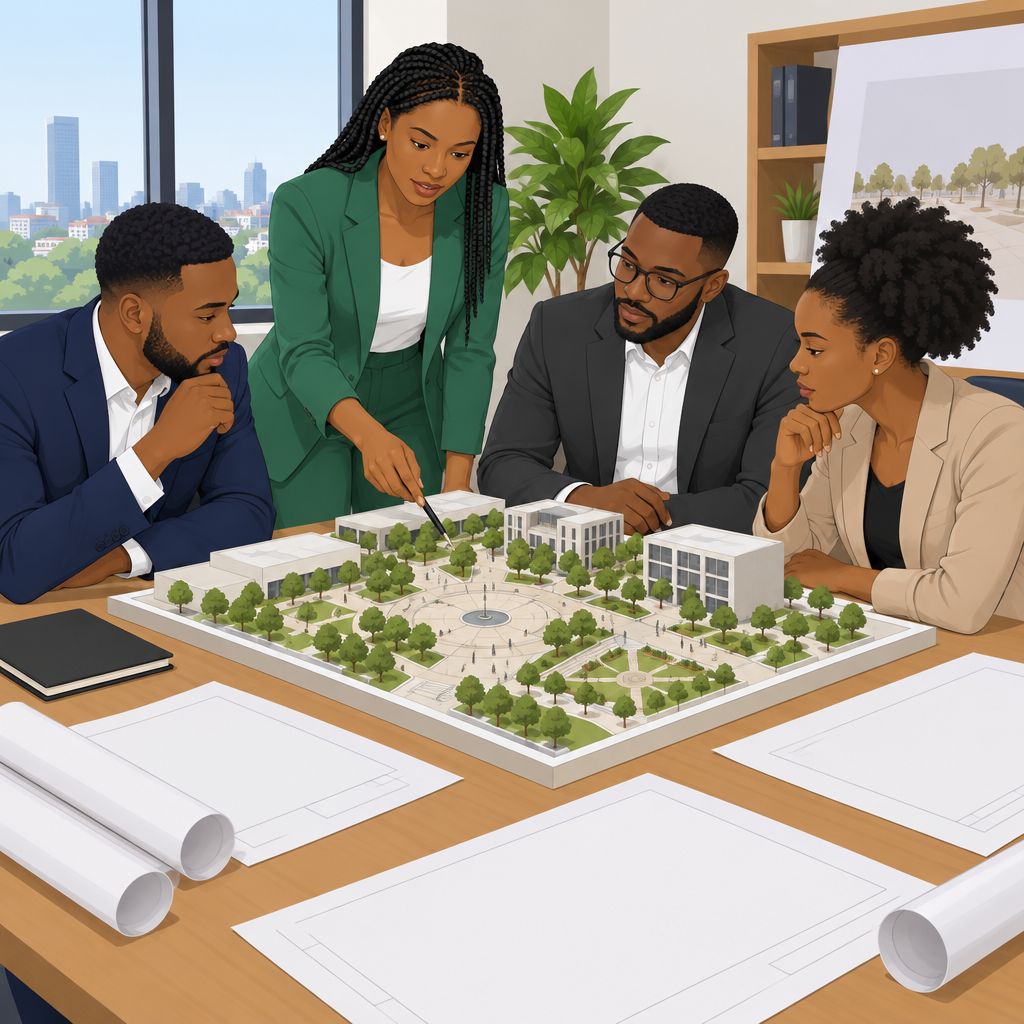
Cultural Considerations in Public Space Design
Nigeria contains more than 250 ethnic groups with distinct traditions and cultural heritage.
Therefore, designers should reflect this diversity when developing public spaces.
Traditional architectural features, artworks, and cultural symbols can strengthen identity and belonging.
Such elements can also make spaces more inclusive and welcoming.
Environmental Sustainability and Green Design
Environmental sustainability increasingly guides the creation of functional public spaces in Nigeria.
Climate change and environmental degradation make responsible design especially important.
Designers can incorporate green spaces, sustainable materials, and energy-efficient technologies.
These practices support healthier and more sustainable urban environments for residents.
Integrated Approaches to Nigerian Public Space Design
Effective public space design combines socio-economic understanding, cultural responsiveness, and environmental responsibility.
Planners can use these considerations to address the needs of Nigeria’s diverse population.
Accordingly, well-planned spaces can become vibrant, inclusive, and sustainable community assets.
Gain More Insights: Automotive Design and Manufacturing Courses in Nigeria
Case Studies of Successful Public Spaces in Nigeria
These case studies examine well-designed and architecturally significant public spaces in Nigeria.
They assess how these spaces influence the communities they serve.
They also identify lessons for future public space development.
- Examination of specific examples of well-designed and architecturally significant public spaces.
- Analysis of the impact these spaces have on the communities they serve.
- Lessons for future public space development from successful projects.
Tafawa Balewa Square in Lagos
Tafawa Balewa Square is a prominent public space in Lagos with historical significance and architectural beauty.
It hosts cultural festivals, concerts, political gatherings, and other public events.
Named after Nigeria’s first prime minister, the square connects national history with public activity.
Its design incorporates elements of Nigerian architecture and culture.
The square’s open layout and well-maintained gardens create a welcoming atmosphere for visitors.
Nearby buildings, including the iconic Independence Building, enhance the space’s overall grandeur.
Tafawa Balewa Square provides a platform for cultural heritage and artistic expression.
Consequently, it fosters identity and belonging among residents.
The square also supports social interaction, economic activities, and public discourse.
These functions contribute to Lagos’s urban vibrancy.
The square demonstrates how local architecture and landscaping can create an authentic environment.
Preserving historical landmarks can strengthen public spaces and maintain community connections.
Furthermore, regular maintenance and programming can support their long-term usefulness.
Millennium Park in Abuja
Millennium Park stands in the heart of Abuja as a modern and sustainable public space.
It attracts both residents and visitors.
The park celebrates Nigeria’s transition to a new millennium.
Its facilities include expansive green spaces, recreational areas, and art installations.
Native plants and water features support biodiversity and environmental conservation.
Public art and cultural elements reflect Nigeria’s heritage and contemporary artistic expression.
As a result, the park offers a dynamic and interactive setting for diverse audiences.
Millennium Park provides a peaceful retreat from urban activity.
Visitors can relax, exercise, and gather socially within the park.
The park also hosts cultural events, educational programs, and community initiatives.
These activities encourage civic pride, public engagement, social cohesion, and well-being.
Millennium Park highlights the value of sustainable and inclusive public space design.
Green infrastructure can encourage environmental stewardship within urban communities.
Cultural relevance and community engagement can strengthen social connections.
Thus, well-designed public spaces can influence city identity and quality of life.
Delve into the Subject: Top Mechanical Engineering Projects in Nigerian Universities
Challenges and Opportunities for Improving Public Spaces in Nigeria
Public spaces in Nigeria face planning, maintenance, funding, security, and amenity challenges.
These conditions can reduce public use and weaken the value of shared urban environments.
However, coordinated action can improve their quality, safety, accessibility, and long-term usefulness.
Common Challenges in Designing and Maintaining Public Spaces
Many public spaces lack thoughtful planning, which can create disorganized and unattractive environments.
Moreover, inadequate maintenance can cause deterioration and create unsafe conditions for users.
Limited resources also restrict development, repairs, security improvements, and essential facilities.
- Public spaces often lack coordinated planning and user-focused design.
- Neglect and poor maintenance can lead to dilapidated public environments.
- Funding constraints can limit construction, improvements, and regular upkeep.
- Crime and insecurity can discourage people from using public spaces.
- Insufficient seating, lighting, and sanitation can reduce comfort and usability.
Potential Solutions for Improving Public Spaces
Comprehensive planning can align public space design with diverse community needs.
Furthermore, regular maintenance can protect facilities and support long-term public use.
Community involvement can strengthen local responsibility and guide practical improvement decisions.
- Urban planners and designers can create cohesive, accessible, and user-friendly spaces.
- Regular maintenance schedules can preserve facilities and improve long-term viability.
- Public-private partnerships can provide funding, skills, and management support.
- Residents can participate in design decisions and identify local priorities.
- Lighting, surveillance, and community policing can strengthen public safety.
Collaboration to Enhance Public Spaces
Government, businesses, and local communities can combine resources to improve public spaces.
Each group can contribute funding, knowledge, labor, consultation, or public communication.
As a result, collaboration can encourage ownership and support more responsive improvements.
- Governments can secure private funding through sponsorship and branding partnerships.
- Design competitions can invite innovative ideas from citizens and professionals.
- Community forums can help residents influence priorities and decisions.
- Maintenance training can prepare residents to care for shared spaces.
- Public awareness campaigns can promote participation in improvement and upkeep.
Explore Further: Professional Certifications for Surveyors in Nigeria
Collaborative Design for Inclusive Public Spaces
Public spaces in Nigeria support community life and express the nation’s culture and heritage.
However, poor design and architecture often leave these spaces underused and neglected.
Therefore, stakeholders should treat public space design as a development priority.
Effective design can improve function, appearance, and opportunities for social interaction.
It can also make spaces more welcoming, inclusive, and accessible to everyone.
Moreover, sustainable approaches can support vibrant and livable environments.
Designers, architects, government officials, and residents must collaborate on this work.
Together, they can improve existing spaces and develop new ones for diverse communities.
By working together, stakeholders can strengthen quality of life for Nigerians.
Additional Resources
Google search results for Public Spaces in Nigeria: Design and Architecture Engineering
Bing search results for Public Spaces in Nigeria: Design and Architecture Engineering


