



Definition of Anatomy
Anatomy is the branch of science that studies the structure of living organisms.
It examines the structures found within living organisms, including humans.
Therefore, anatomy provides knowledge about the body’s structural organization.
Importance of Studying Anatomy
Studying anatomy helps healthcare professionals understand the human body’s structure.
It also helps them understand body functions and potential health issues.
Consequently, anatomical knowledge supports healthcare professionals in their work.
Anatomy’s Role in Nigerian Healthcare
In Nigeria, sound anatomical knowledge remains crucial for healthcare professionals.
Physicians, nurses, and other healthcare workers need a deep understanding of anatomy.
This foundation helps them diagnose and treat patients effectively.
The Role of Anatomy in Medical Education in Nigeria
Anatomical knowledge supports medical education in Nigeria.
It helps students connect body structures with clinical practice.
It also guides diagnosis and treatment throughout healthcare training.
- Medical curricula use anatomy as a core foundation.
- Students apply anatomical knowledge when assessing patients.
- Body structure informs clinical decisions and treatment planning.
Anatomy as a Foundational Course for Medical Students
Medical students in Nigeria study anatomy during rigorous professional training.
The course prepares students for later medical subjects and clinical responsibilities.
Without strong anatomical knowledge, students may struggle with advanced medical learning.
Understanding Anatomy for Diagnosis and Treatment
Detailed anatomical knowledge supports accurate diagnosis and effective patient treatment.
Practitioners use anatomy to locate organs and recognize possible abnormalities.
They also need this knowledge to interpret imaging and perform surgery precisely.
Challenges Faced by Students Studying Anatomy in Nigeria
- Complex anatomical concepts can overwhelm some students.
- Limited resources and outdated methods can hinder learning.
- Inadequate practical sessions can weaken hands-on learning.
- Heavy workloads and time limits can complicate difficult studies.
- Limited cadavers and models can restrict practical exposure.
These obstacles can affect students’ confidence and understanding.
Improved teaching methods and resources could strengthen their learning experience.
More practical opportunities could help students master important anatomical concepts.
Anatomy remains essential for preparing competent healthcare professionals in Nigeria.
Anatomy and Medical Practice in Nigeria
Human anatomy shapes medical practice in Nigeria.
Medical professionals use anatomical knowledge to diagnose conditions and select effective treatments for patients.
This knowledge also supports careful patient care, precise procedures, and improved treatment outcomes.
How Human Anatomy Influences Medical Practice
- Practitioners use anatomy to locate and assess internal structures accurately.
- Additionally, anatomical knowledge guides physical examinations, diagnostic test interpretation, and treatment selection.
- It helps clinicians recognize symptoms, identify illnesses, and prescribe suitable medications for individual patients.
- Surgeons apply detailed anatomical knowledge to perform procedures precisely and reduce complications.
Importance of Anatomy in Surgeries and Treatments
- Anatomy helps surgeons plan interventions while protecting vital structures from damage.
- Furthermore, surgeons navigate complex surgical sites by understanding nearby structures and potential complications.
- Anatomical knowledge guides incision placement, access to target areas, and efforts to reduce postoperative complications.
- It also supports organ transplants, joint replacements, and other complex procedures.
Impact of Anatomy on Patient Care and Outcomes
- Patient care depends significantly on healthcare providers’ anatomical knowledge.
- A thorough understanding of anatomy enables personalized treatment plans for patients’ specific anatomical needs.
- Moreover, anatomical knowledge helps professionals predict treatment outcomes and manage possible complications.
- Patients benefit when providers use anatomical expertise to deliver accurate diagnoses and effective treatments.
Therefore, anatomy guides how healthcare providers diagnose, treat, and care for patients in Nigeria.
Medical professionals need strong anatomical knowledge to perform successful procedures and improve patient outcomes.
Gain More Insights: Dental Technology vs. Dentistry in Nigeria
Anatomical Research in Nigerian Healthcare
Anatomical research supports healthcare advancement in Nigeria.
It connects knowledge of body structures with diagnosis, treatment, and healthcare planning.
Furthermore, this research strengthens evidence-based healthcare practices and improves patient care.
Importance of Anatomical Research for Healthcare Advancement
- Anatomical research reveals the structure of the human body.
- It helps healthcare professionals identify normal and abnormal anatomy.
- Consequently, clinicians can improve diagnosis and treatment decisions.
- Researchers use anatomical knowledge to develop surgical techniques and medical procedures.
- Understanding organs and body systems supports better healthcare outcomes.
- Moreover, anatomical studies strengthen medical education and professional training.
- Anatomical findings provide a foundation for medical technology and treatment development.
- They also guide the development of medical devices and pharmaceuticals.
- Researchers explore anatomical evidence when developing disease prevention and management approaches.
- Healthcare professionals benefit from current anatomical research findings.
Collaboration Between Anatomists and Healthcare Researchers
Anatomists and healthcare researchers connect basic science with clinical practice.
Their collaboration encourages innovative responses to healthcare challenges in Nigeria.
Additionally, joint studies can improve research quality and patient outcomes.
- Anatomists explain the structural basis of diseases and health conditions.
- They contribute expertise to projects focused on healthcare delivery.
- Healthcare researchers gain valuable knowledge of human anatomy and physiology.
- Interdisciplinary teams address healthcare issues through complementary expertise.
- Research partnerships can strengthen the quality of medical investigations.
- Anatomical findings support tailored interventions for specific patient populations.
- Collaborators examine how diseases affect anatomical structures.
- Joint projects demonstrate anatomy’s contribution to improved healthcare practices.
Continued Investment in Anatomical Research
Anatomical research helps Nigerian healthcare professionals understand diseases and improve clinical decisions.
Through collaboration, anatomists and healthcare researchers can develop practical solutions for local healthcare needs.
Therefore, continued investment in anatomical research can support stronger healthcare delivery and patient outcomes.
Find Out More: Eye Health Myths: Nigerian Ophthalmologists Debunking Misconceptions
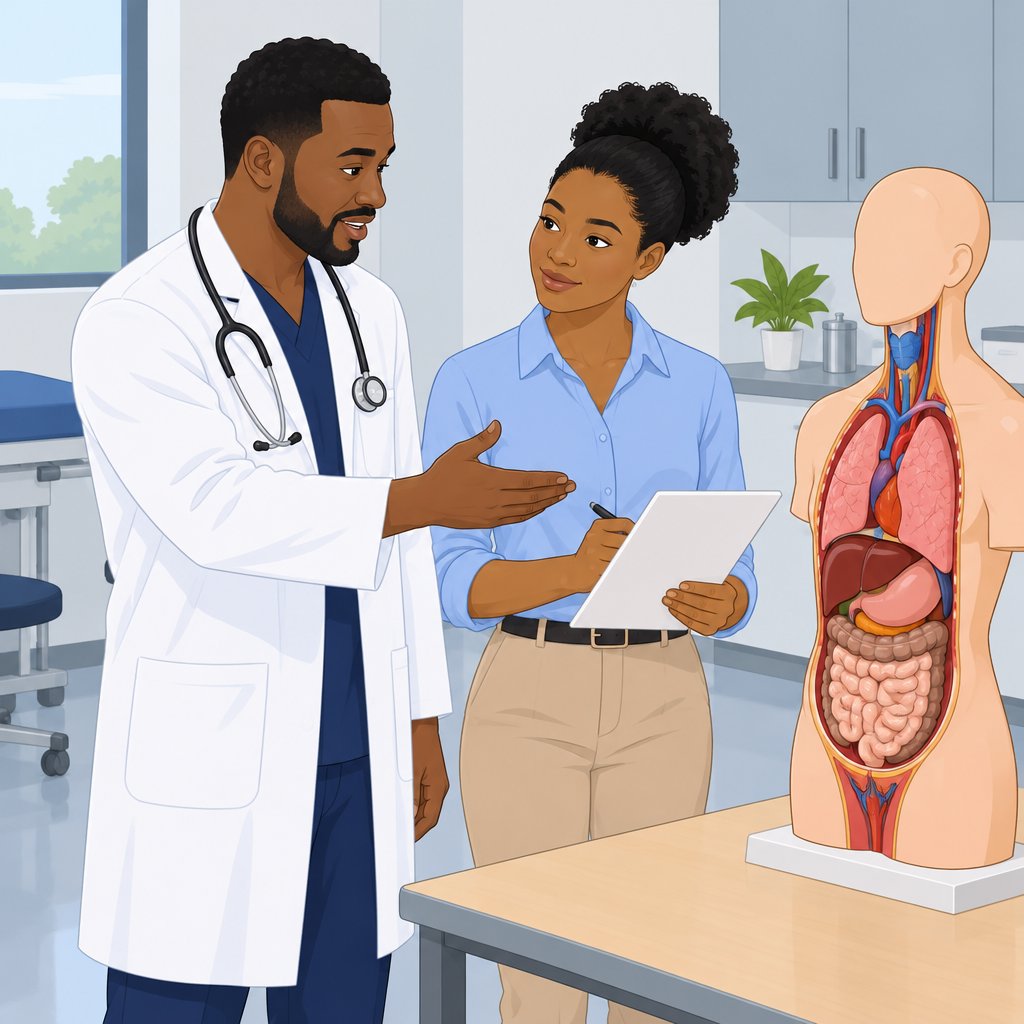
Importance of Anatomical Knowledge in Healthcare Systems and Facilities
Anatomical knowledge supports healthcare infrastructure by connecting body structures with safe service delivery.
Healthcare professionals use anatomy to diagnose and treat various medical conditions.
Transform Your Career with Expert Guidance
Get personalized mentorship consulting that’s tailored to your unique path. Our expert advice is actionable and exclusive.
Get StartedFurthermore, anatomy helps professionals locate organs, tissues, and blood vessels during medical procedures.
Healthcare facilities that apply anatomical knowledge can improve patient care and treatment outcomes.
Training Healthcare Professionals in Anatomy
Healthcare professionals in Nigeria need strong anatomical knowledge to deliver quality healthcare services.
Medical schools and training institutions should prioritize anatomy education for competent healthcare providers.
Additionally, continuing education helps professionals remain informed about medical advancements involving anatomical practice.
Hands-on anatomy training strengthens practical skills and supports better patient care.
Role of Anatomy in Nigerian Healthcare Policies and Guidelines
Anatomy provides a foundation for developing effective healthcare policies and guidelines in Nigeria.
Policymakers use knowledge of anatomical structures when making informed healthcare decisions.
Moreover, anatomical knowledge supports evidence-based guidelines for healthcare delivery and treatment.
Including anatomy in healthcare policies helps maintain consistent standards of care across Nigeria.
Therefore, anatomy influences healthcare infrastructure, professional training, and policy development throughout Nigeria.
Delve into the Subject: Internship and Residency Programs for Nigerian Vets
Challenges in Studying and Practicing Anatomy in Nigeria
Anatomy education and practice in Nigeria face several persistent challenges.
These challenges include limited resources, professional shortages, and insufficient ongoing training.
Addressing these barriers can support stronger anatomy education and healthcare practice.
Insufficient Resources for Studying Anatomy in Nigerian Institutions
Many Nigerian institutions have limited access to cadavers and anatomy laboratories.
In addition, inadequate funding restricts the purchase of anatomical models and teaching materials.
Consequently, some anatomy departments lack modern equipment and technology for effective learning.
- Limited access to cadavers and anatomy laboratories
- Inadequate funding for anatomical models and teaching materials
- Poorly equipped anatomy departments in some institutions
- Limited access to modern teaching and learning technology
Lack of Qualified Anatomists and Healthcare Professionals
Nigerian academic institutions also experience shortages of experienced anatomists.
Furthermore, aspiring anatomists often have limited opportunities for advanced training.
Better opportunities abroad can also make it difficult to retain qualified professionals.
- Shortage of experienced anatomists in academic institutions
- Inadequate training opportunities for aspiring anatomists
- Difficulty retaining qualified professionals because of opportunities abroad
- Shortage of specialized healthcare professionals with detailed anatomical knowledge
Need for Continuous Education and Training in Anatomy
Continuous education can help anatomists and healthcare professionals maintain current knowledge.
Moreover, training programs can incorporate new research findings and technological developments.
International collaboration and e-learning can expand access to professional development opportunities.
- Continuous professional development programs for anatomists and healthcare professionals
- Integration of new research findings and technology into anatomy curricula
- Collaboration with international organizations for knowledge exchange and training
- E-learning platforms for ongoing anatomy education among healthcare professionals
Addressing these challenges remains essential for improving anatomy education and practice in Nigeria.
Adequate resources and qualified professionals can strengthen the foundation of anatomical training.
Continuous education can also help the healthcare system benefit from stronger anatomical knowledge.
Gain More Insights: Volunteer Opportunities in Nigerian Ophthalmology Sector
Future Priorities for Anatomical Advancement
Advancements in anatomical research and education can deepen understanding of the human body.
They can also improve disease diagnosis and support more effective treatments.
Healthcare systems must prioritize anatomy so professionals develop knowledge and skills for quality patient care.
Without a strong anatomical foundation, providers may struggle to diagnose and treat medical conditions accurately.
There is therefore a pressing need to invest in anatomy and healthcare infrastructure in Nigeria.
Such investments can strengthen the healthcare system and improve health outcomes for Nigerian citizens.
Stakeholders should act by directing resources toward anatomical education and research.
Consequently, Nigeria can build a healthier future and expand access to high-quality healthcare services.
Additional Resources
Google search results for Anatomy and Its Importance in Nigerian Healthcare Medical
Bing search results for Anatomy and Its Importance in Nigerian Healthcare Medical


