



Community involvement in environmental management in Nigeria supports sustainable development.
Community Participation in Environmental Practices
Engaging communities in environmental practices ensures long-term preservation.
Additionally, community participation fosters ownership of environmental sustainability.
It also encourages responsibility for protecting the environment.
Current State of Environmental Management in Nigeria
Nigeria faces numerous environmental challenges.
These challenges threaten its ecosystems and population.
Several problems currently demand effective environmental management.
- Deforestation reduces biodiversity and disrupts ecosystems.
- Industrial waste, oil spills, and improper disposal pollute surface water and groundwater.
- Fossil fuels, industrial activities, and traffic congestion pollute major cities and contribute to respiratory diseases.
- Inadequate waste practices accumulate solid waste in streets, drainage systems, and water bodies, creating health risks.
Roles of Government Agencies and Organizations
The Nigerian government has established agencies and organizations to oversee environmental management.
These bodies regulate environmental practices and address pollution and resource degradation.
Their roles include monitoring, conservation, forest management, and oil spill response.
- The Environmental Protection Agency monitors and enforces regulations against pollution and resource degradation.
- The Forestry Commission manages forest reserves, promotes afforestation, and regulates logging.
- The Nigerian Conservation Foundation conserves biodiversity, protects endangered species, and promotes sustainable development.
- The National Oil Spill Detection and Response Agency responds to spills, conducts cleanups, and prevents future incidents.
Community Contributions to Environmental Management
Government action alone cannot address every environmental challenge.
Community involvement strengthens environmental management through local participation.
Collaboration can connect communities, agencies, and organizations around shared solutions.
- Community initiatives can increase awareness about protecting the environment.
- Residents can support sustainable practices through waste segregation, recycling, and energy conservation.
- Local resource management can build capacity and encourage self-reliance.
- Partnerships can support inclusive approaches to environmental challenges.
Joint action can support sustainable solutions.
Local and national cooperation can help safeguard the environment.
Such cooperation can protect environmental conditions for future generations.
Positive Impacts of Community Participation in Environmental Protection
Local residents steward their environment through direct participation.
As a result, community members develop responsibility and ownership for environmental care.
Moreover, participation increases awareness and knowledge about environmental issues.
- Community involvement strengthens bonds between residents and their surroundings.
- Furthermore, participation enhances the effectiveness of environmental management initiatives.
Contribution of Local Knowledge and Practices to Sustainable Solutions
Local knowledge reveals traditional practices that can support environmental protection.
Additionally, traditional methods can produce solutions that fit community cultures.
Community members also offer unique perspectives on ecosystem dynamics.
- Local knowledge complements scientific research and improves decision-making processes.
- Furthermore, communities more readily accept and apply solutions rooted in local practices.
Potential Economic and Social Benefits of Community Involvement
Community involvement can generate cost-effective and innovative environmental solutions.
Meanwhile, local participation can create employment and support local economies.
Collaborative environmental projects strengthen social cohesion and community resilience.
- Engaged communities are more likely to support policies prioritizing environmental protection.
- Environmental management involvement can improve local quality of life and well-being.
Learn More: Sustainable Practices in Nigeria's Industries
Limited awareness prevents many residents from understanding environmental protection and recognizing how their actions can create meaningful change.
Furthermore, insufficient resources can restrict community participation in environmental management.
Without tools, funding, or support, residents may struggle to address environmental concerns.
Education also shapes how effectively communities participate in environmental initiatives.
Without environmental knowledge, residents may feel unprepared to identify problems or select suitable solutions.
They may also remain unaware of practical opportunities for involvement.
Moreover, cultural beliefs and social norms may discourage individuals from protecting their surroundings.
Different community values can therefore influence residents’ willingness to support environmental action.
Some residents distrust authorities or organizations responsible for environmental management.
Consequently, distrust can reduce participation in environmental initiatives and projects.
Limited communication channels can also obstruct community participation.
When information does not reach residents, they may miss involvement opportunities and misunderstand environmental priorities.
Meanwhile, economic hardship, social concerns, and other priorities may overshadow environmental initiatives.
Local leaders can influence participation through their support and engagement.
Transform Your Career with Expert Guidance
Get personalized mentorship consulting that’s tailored to your unique path. Our expert advice is actionable and exclusive.
Get StartedWhen decision-makers fail to empower or listen to residents, community involvement may decline.
Addressing these barriers can improve collective action for environmental management in Nigeria.
Communities can then combine awareness, resources, education, communication, and trusted leadership to protect the environment.
Gain More Insights: Environmental Impact Assessments Explained
Successful Community-Led Environmental Projects
Community involvement in environmental management in Nigeria has produced successful initiatives that model local environmental action.
These projects show how communities can address environmental challenges.
They also support sustainable development through practical local efforts.
Examples of Successful Community-Based Environmental Initiatives in Nigeria
Several communities have developed initiatives that respond directly to environmental needs.
These efforts address land degradation, waste pollution, water security, and biodiversity loss.
Furthermore, each initiative applies local action to a specific environmental concern.
- Community reforestation programs restore degraded lands and combat deforestation through tree-planting initiatives.
- Waste recycling projects reduce pollution and promote cleaner environments through community recycling centers.
- Water conservation efforts protect sustainable water resources through rainwater harvesting and conservation practices.
- Biodiversity protection initiatives preserve endangered species by establishing protected areas.
Key Factors Supporting Community-Led Project Success
Successful projects involve residents throughout planning and decision-making.
They also combine community knowledge with support from external stakeholders.
Moreover, sustainable funding helps communities maintain their environmental initiatives over time.
- Strong community engagement improves projects by involving residents in planning and decision-making.
- Local knowledge and expertise strengthen project effectiveness by using community skills and traditional understanding.
- Stakeholder collaboration provides resources and support through government agencies, NGOs, and private organizations.
- Sustainable funding mechanisms support long-term project viability and continued environmental action.
Lessons and Best Practices for Replication
Communities can improve future initiatives by strengthening leadership, education, monitoring, and local adaptation.
These practices encourage ownership and help residents respond to their specific environmental conditions.
Additionally, regular assessment allows communities to improve projects as conditions change.
- Empowering community leaders builds capacity, ownership, and long-term project sustainability.
- Educational campaigns promote environmental awareness and encourage responsible community stewardship.
- Monitoring and evaluation support adaptive management by measuring project outcomes and impacts.
- Local adaptation improves project relevance by addressing each community’s specific needs and conditions.
Scaling Community Environmental Action
These examples demonstrate the potential of grassroots initiatives to address environmental challenges effectively.
Other communities can adapt the approaches to their own environmental needs and local conditions.
By applying these lessons, communities can strengthen and expand their environmental efforts.
Delve into the Subject: Importance of Environmental Monitoring in Nigeria
Strategies for Promoting Community Engagement
- Education offers an effective way to increase community participation in environmental management.
- Providing information about environmental conservation can motivate community members to take action.
- Workshops, seminars, and awareness campaigns can teach communities about sustainable practices.
Building Relationships, Trust, and Partnerships
- Strong relationships with community members can foster trust and collaboration in environmental management.
- Furthermore, trust can support effective communication, cooperation, and shared responsibility for environmental issues.
- Partnerships with local organizations, NGOs, and government agencies can strengthen community initiatives.
Empowering and Mobilizing Communities to Take Action
- Capacity-building programs can improve community knowledge, skills, and confidence in environmental stewardship.
- Involving community members in decisions and project planning can increase ownership and commitment.
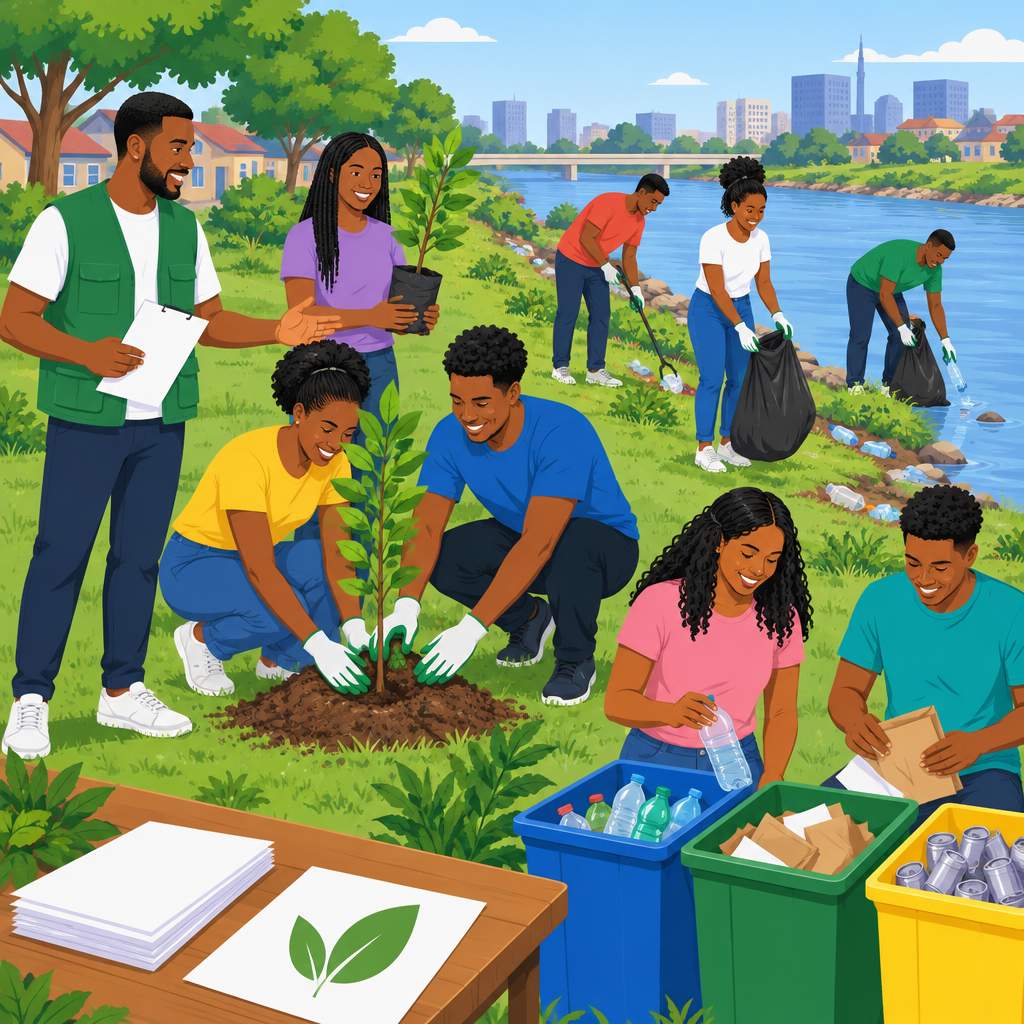
- Additionally, clean-up events and tree planting campaigns can inspire communities to act collectively.
See Related Content: Environmental Tech Initiatives by Nigerian Government
Community-Led Environmental Cleanup in Ogoniland
The community of Ogoniland in Nigeria initiated an environmental cleanup project.
The project responded to years of pollution from oil exploration activities.
Community members worked to address environmental degradation through organized cleanup efforts.
- The community of Ogoniland in Nigeria initiated a cleanup project addressing environmental degradation.
- The project responded to pollution caused by years of oil exploration activities.
Objectives for Ecosystem Restoration and Livelihood Improvement
The project aimed to restore the ecosystem in the affected area.
It also sought to improve community members’ livelihoods through environmental recovery.
Additionally, the project promoted awareness of conservation and sustainable practices.
- The project aimed to restore the ecosystem and improve community members’ livelihoods.
- The project created awareness about environmental conservation and sustainable practices.
Organizing the Environmental Cleanup
The community organized teams to carry out the cleanup.
Local volunteers worked alongside experts in environmental conservation.
Furthermore, the teams prioritized polluted areas and applied eco-friendly techniques.
- The community organized cleanup teams comprising local volunteers and conservation experts.
- The teams focused on heavily polluted areas and used eco-friendly techniques.
Progress in Restoring Polluted Areas
The cleanup achieved significant progress at oil spill sites.
Workers also restored vegetation in parts of the affected area.
As a result, more community members participated in environmental protection activities.
- The project made significant progress cleaning oil spill sites.
- The project restored vegetation and increased participation in environmental protection activities.
Community Ownership of Environmental Protection
Community members actively participated in the cleanup process.
That involvement strengthened their sense of ownership over environmental protection.
Moreover, local knowledge and expertise supported the project’s success and sustainability.
- Community involvement fostered responsibility and ownership for the environment.
- Local knowledge and expertise strengthened the cleanup efforts and project sustainability.
Lessons for Future Environmental Initiatives
The project showed that communities can address environmental challenges effectively.
Community-led initiatives can strengthen local action and environmental responsibility.
Long-term success also requires cooperation among communities, government agencies, and NGOs.
- Community-led initiatives provide an effective approach to environmental challenges.
- Collaboration among communities, government agencies, and NGOs supports long-term success.
Community Responsibility in Environmental Management
Community involvement plays a crucial role in environmental management in Nigeria.
Communities help preserve and protect the environment for future generations.
They contribute to sustainable development through waste management, afforestation, and advocacy.
Grassroots participation strengthens environmental decision-making processes.
Community members provide local knowledge and expertise for identifying environmental challenges.
They also help address those challenges effectively.
Therefore, individuals and communities must take proactive steps to safeguard the environment.
By fostering ownership and responsibility, people can support a sustainable and healthy ecosystem.
Local Interest in Environmental Protection
Community involvement enhances environmental initiatives’ effectiveness and success.
Local communities experience environmental issues directly.
Consequently, they have a vested interest in preserving their surroundings.
Collective Action for a Cleaner Future
Individuals can actively participate in protecting the environment.
Communities can work together to support a greener future.
Together, people can help create a cleaner future for all.
Additional Resources
Google search results for Community Involvement in Environmental Management in Nigeria Environmental
Bing search results for Community Involvement in Environmental Management in Nigeria Environmental


