



Environmental Monitoring in Nigeria
Environmental monitoring in Nigeria tracks environmental changes through scientific methods.
It helps authorities assess risks, measure impacts, and guide environmental management.
This process supports informed decisions that protect ecosystems and promote sustainable development.
Environmental Pressures and Public Health
Nigeria faces air pollution, water pollution, deforestation, desertification, oil spills, and climate change.
These challenges affect public health, biodiversity, livelihoods, and the national economy.
Therefore, consistent monitoring helps policymakers identify threats and respond effectively.
Pollution and Community Health
Urban air pollution comes from industrial activities, vehicle emissions, and biomass burning.
Poor air quality can cause respiratory diseases and other health problems.
Water pollution also threatens communities and ecosystems through contaminated water sources.
Land Degradation and Oil Spill Impacts
Deforestation and desertification reduce biodiversity, degrade soil, and lower agricultural productivity.
Monitoring land conditions can reveal environmental decline and support management efforts.
In the Niger Delta, oil spills damage water quality, biodiversity, and community livelihoods.
Effective spill monitoring measures contamination and supports appropriate remediation measures.
Climate Resilience and Sustainable Development
Climate change affects agriculture, water resources, and exposure to extreme weather events.
Monitoring climate indicators supports adaptation and mitigation planning.
These efforts can strengthen resilience while helping Nigeria address environmental risks.
Importance of Environmental Monitoring
- Environmental monitoring safeguards public health.
- It detects pollution levels and supports effective regulation enforcement.
- Furthermore, monitoring promotes sustainable development and natural resource conservation.
- Authorities can identify potential risks to human health through environmental monitoring.
- Regular monitoring keeps pollution levels within safe limits for communities.
- It also detects pollutants early, before they harm the population.
- By monitoring air quality, the government can take action to reduce pollution levels.
- Water monitoring helps ensure the safety of drinking water sources and aquatic ecosystems.
- Soil monitoring assesses soil quality and prevents contamination from harmful substances.
- Environmental monitoring data supports policies and regulations that protect public health.
- Constant monitoring tracks environmental changes over time.
- It provides valuable information for urban planning and development decisions.
- Monitoring programs identify pollution sources and help hold polluters accountable.
- Environmental monitoring also supports biodiversity and endangered species conservation.
- These efforts help balance economic growth with environmental protection.
- By monitoring natural resources, authorities can implement sustainable management practices.
- Monitoring can identify areas that need remediation and restoration activities.
- Environmental monitoring helps mitigate climate change impacts on ecosystems and communities.
- Monitoring data assesses the effectiveness of environmental management strategies and initiatives.
- Finally, environmental monitoring raises awareness about the importance of protecting the environment.
Nigeria uses several systems to observe environmental conditions.
Government agencies, researchers, and organizations collect information about environmental changes and potential risks.
Existing Environmental Monitoring Systems
- The Federal Ministry of Environment and NESREA oversee important environmental monitoring responsibilities.
- These agencies monitor air, water, soil, and biodiversity to assess conditions and identify potential risks.
- Non-governmental organizations and research institutions also conduct independent studies and collect environmental data.
Challenges Affecting Monitoring Activities
- Insufficient funding limits the purchase of equipment and support for personnel and data analysis.
- Limited coordination creates duplicated efforts, data gaps, and inconsistent reporting among monitoring agencies.
- Technical capacity constraints and outdated technology reduce the effectiveness of monitoring programs.
Improved Infrastructure and Monitoring Technology
- Modern sensors and analytical instruments can improve the accuracy and efficiency of environmental data collection.
- Centralized databases can improve data sharing and integration among monitoring agencies.
- Training programs and workshops can strengthen personnel skills and improve monitoring activities.
Strengthening Environmental Monitoring Capacity
Nigeria faces significant challenges in maintaining effective environmental monitoring systems.
Improved infrastructure, modern technology, and stronger coordination can address important monitoring gaps.
Capacity building can help Nigeria protect environmental conditions and support sustainable development.
Discover More: Environmental Tech Initiatives by Nigerian Government
Environmental Monitoring and Public Health
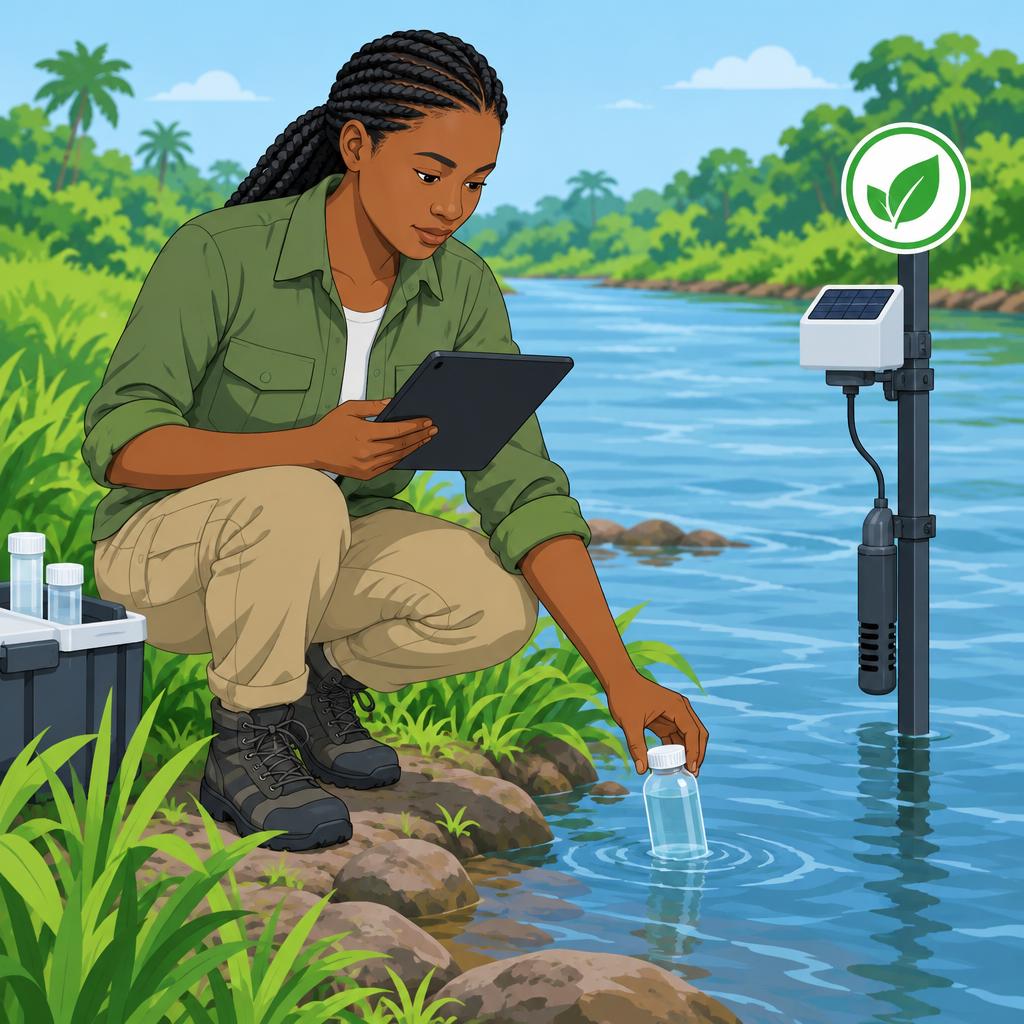
Environmental monitoring helps safeguard public health in Nigeria.
Regular air and water assessments can reveal hazards before they seriously affect communities.
Authorities can then respond promptly and protect community well-being.
Pollution and Related Health Problems
Environmental pollution contributes to several health problems in Nigeria.
Poor air quality can contribute to respiratory illnesses and other health concerns.
Contaminated water and hazardous waste can cause skin disorders and gastrointestinal issues.
Monitoring Supports Health Interventions
Monitoring programs can identify pollution sources and support stronger environmental controls.
Authorities can use monitoring data to regulate emissions and protect water sources.
Public health campaigns can also use these findings to explain pollution-related risks.
Examples of Environmental Health Actions
Monitoring has guided responses to air and water pollution in different Nigerian regions.
These responses address pollution from traffic, industrial activities, oil spills, and industrial waste.
Consequently, authorities can reduce exposure risks and support healthier communities.
- In Lagos, monitoring identified high air pollution linked to traffic congestion and industrial activities.
- The government promoted cleaner transportation options and enforced stricter pollution controls in response.
- In the Niger Delta, monitoring focused on water quality affected by oil spills and industrial waste.
- Cleanup initiatives helped mitigate contamination impacts and prevent waterborne diseases in local communities.
Uncover the Details: Environmental Biology Degree Requirements
Economic Benefits of Environmental Monitoring
Environmental monitoring provides substantial economic benefits for Nigeria.
It can attract investment, support eco-friendly industries, and encourage sustainable economic growth.
Additionally, monitoring helps reduce costs by identifying environmental risks before they become major disasters.
Attracting Investments and Promoting Eco-Friendly Industries
Investors often prefer countries that maintain high environmental standards.
Through effective monitoring, Nigeria can demonstrate its commitment to sustainability.
Transform Your Career with Expert Guidance
Get personalized mentorship consulting that’s tailored to your unique path. Our expert advice is actionable and exclusive.
Get StartedThis commitment can attract local and foreign investment.
- Investors are more likely to invest in countries with high environmental standards.
- Environmental monitoring can demonstrate Nigeria’s commitment to sustainability.
- Renewable energy, waste management, and green technology industries continue to expand globally.
- Effective monitoring can create suitable conditions for these industries to thrive.
- These industries can contribute to Nigeria’s economic development.
Cost Savings from Early Detection and Prevention
Early detection can help Nigeria prevent environmental disasters.
Monitoring air and water quality can reveal potential risks at an early stage.
Authorities can then take preventive measures before damage becomes more extensive.
- Early detection can help prevent oil spills, water pollution, and deforestation.
- Monitoring key indicators can identify environmental risks early.
- Preventing disasters protects lives and ecosystems.
- Prevention also reduces cleanup and restoration costs.
- Proactive monitoring can provide greater long-term savings than delayed action.
Environmental Quality and Economic Growth
Environmental quality has a direct relationship with economic prosperity and overall well-being.
A clean and healthy environment can attract tourists, investors, and skilled workers.
These groups can help strengthen economic activity and national competitiveness.
- High environmental quality supports economic prosperity and overall well-being.
- A clean environment can attract tourists, investors, and skilled workers.
- Poor environmental quality can cause health issues and ecosystem degradation.
- Environmental degradation can also decrease productivity.
- Environmental protection can support Nigeria’s economic growth and global competitiveness.
Environmental monitoring supports sustainable development in Nigeria.
It can attract investment, prevent costly disasters, and strengthen economic activity.
Prioritizing environmental protection can benefit present and future generations.
Uncover the Details: Renewable Energy and Environmental Management in Nigeria
Community Engagement in Environmental Monitoring
Community engagement plays a crucial role in environmental monitoring efforts in Nigeria.
Local participation provides valuable insights and data for decision-making processes.
It also helps communities contribute directly to environmental management.
Importance of Involving Local Communities
Local communities often experience the effects of pollution and deforestation directly.
Their participation ensures that community voices receive attention during monitoring activities.
Furthermore, local involvement helps address community concerns through shared environmental information.
Role of Awareness Campaigns
Awareness campaigns educate communities about the importance of environmental monitoring.
They explain how monitoring activities can support environmental protection.
As a result, informed community members can participate actively in monitoring efforts.
Role of Citizen Science
Citizen science involves community members in scientific research and data collection.
These initiatives can expand monitoring networks across local areas.
They also help communities gather environmental data directly.
Examples of Community-Led Initiatives in Nigeria
Communities in Nigeria have supported several environmental monitoring initiatives.
These initiatives address health, water quality, and air pollution concerns.
Community members often collaborate with NGOs during monitoring activities.
- Health Impact Assessment: Some Nigerian communities assess pollution effects on community health.
- Water Quality Testing: Communities collaborate with NGOs to test and monitor water quality.
- Air Pollution Monitoring: Urban communities establish monitoring stations to track air quality and raise awareness.
Community engagement remains vital to environmental monitoring efforts in Nigeria.
Awareness campaigns can encourage residents to participate in environmental activities.
Citizen science can provide valuable local data for sustainable environmental management.
Explore Further: Environmental Health and Safety Regulations Nigeria
Environmental Monitoring and Sustainable Development
Environmental monitoring supports Nigeria’s sustainable development efforts.
It tracks changes in air quality, water pollution, deforestation, and wildlife conservation.
This process identifies environmental threats before they become more serious.
Consequently, timely intervention can reduce potential damage.
Monitoring also gives policymakers reliable information for environmental policies and regulations.
Moreover, transparent data strengthens accountability in natural resource management.
Communities can use this information to question industrial impacts and support sustainable practices.
Without adequate monitoring, ecosystems may suffer irreversible damage, biodiversity loss, and health hazards.
Thus, Nigeria needs robust monitoring systems to protect its environment and public health.
Long-Term Priorities for Environmental Protection
Nigeria can strengthen sustainable development by increasing investment in environmental monitoring.
The government can also encourage public participation in conservation efforts.
These priorities can support healthier communities, responsible resource management, and improved environmental quality for future generations.
Additional Resources
Google search results for Importance of Environmental Monitoring in Nigeria Environmental
Bing search results for Importance of Environmental Monitoring in Nigeria Environmental


