



Environmental Impact Assessment
Environmental Impact Assessment, or EIA, identifies and predicts potential environmental impacts from development projects.
Therefore, EIA supports sustainable development.
Additionally, EIAs evaluate proposed projects’ effects on the environment and local communities.
They also provide a decision-making framework that considers social and environmental impacts.
Government agencies, project developers, environmental experts, local communities, and non-governmental organizations participate in EIA processes.
Each stakeholder contributes to the assessment’s effectiveness.
The Process of Conducting an Environmental Impact Assessment
An Environmental Impact Assessment evaluates environmental implications associated with a proposed project or development.
The process identifies potential impacts and supplies information for informed project decisions.
It also supports careful consideration of environmental conditions, alternatives, and mitigation measures.
Steps Involved in Conducting an Environmental Impact Assessment
- First, assessors define the assessment’s objectives, boundaries, scope, and methods.
- Next, experts collect baseline data describing current environmental conditions.
- Then, specialists predict project impacts on air, water, biodiversity, and land use.
- Afterward, assessors compare alternatives to identify options that reduce environmental harm.
- Experts subsequently prepare a report describing the project, impacts, and mitigation measures.
- Meanwhile, stakeholders review the proposal and provide feedback during public consultation.
- Relevant authorities then decide whether to approve, reject, or modify the project.
- Finally, monitoring mechanisms verify compliance with mitigation measures and environmental regulations.
Key Components of an Environmental Impact Assessment Report
- The executive summary presents the project, its impacts, and proposed mitigation measures.
- The project description explains the project’s location, size, and purpose.
- The impact assessment examines potential air pollution, water pollution, habitat destruction, and noise.
- The mitigation section identifies actions that minimize adverse impacts and improve environmental sustainability.
- The monitoring plan describes strategies for tracking impacts during and after implementation.
- The recommendations section summarizes key findings and guides decision-makers.
Roles of Experts and Consultants in Environmental Impact Assessments
Multidisciplinary teams commonly conduct Environmental Impact Assessments using specialized knowledge and skills.
Environmental scientists, engineers, ecologists, and social scientists contribute to the assessment process.
These professionals evaluate potential impacts and develop suitable mitigation measures.
They also check compliance with environmental regulations and accepted best practices.
Consultants may facilitate stakeholder engagement, public consultations, and report preparation.
Their guidance helps produce thorough, accurate, and comprehensive assessments of proposed projects.
Types of Environmental Impact Assessments
- Initially, environmental impact assessments identify potential environmental impacts at the beginning of a project.
- During a project, intermediate assessments monitor and address unforeseen environmental issues.
- Finally, environmental impact assessments evaluate the project’s overall environmental impact after completion.
When Each Type of Environmental Impact Assessment Is Necessary
- Before construction or development begins, an initial assessment evaluates potential environmental impacts.
- During a project, an intermediate assessment addresses emerging environmental concerns and supports necessary adjustments.
- After completion, a final assessment evaluates the project’s overall impact on the environment.
Examples of Projects That Required Environmental Impact Assessments
- A new highway required an initial assessment to evaluate potential effects on wildlife habitats.
- A mining project in a sensitive ecosystem required an intermediate assessment to monitor water quality and wildlife populations.
- A new shopping mall required a final assessment to evaluate effects on air quality and traffic congestion.
Explore Further: Importance of Environmental Monitoring in Nigeria
Common Challenges in the EIA Process
EIA teams may face several challenges while gathering information and evaluating environmental effects.
These challenges can reduce assessment accuracy, especially when teams lack adequate resources or expertise.
Furthermore, limited time and participation can prevent teams from examining important details.
- Comprehensive data may be unavailable, which can hinder accurate impact assessments.
- Short timelines may cause rushed assessments and leave crucial details unexamined.
- Limited stakeholder participation can reduce the quality of assessment findings.
- Insufficient technical expertise may produce flawed EIA assessments.
Limitations in Predicting Environmental Impacts
EIA predictions rely on assumptions that may not match actual environmental conditions.
In addition, assessments may overlook combined effects or impacts that develop over extended periods.
Regular monitoring can reveal differences between predicted effects and observed environmental changes.
- Uncertainty can cause predictions to differ from actual environmental outcomes.
- EIAs may overlook cumulative impacts from multiple projects.
- Predictions may miss long-term impacts that appear gradually.
- Inadequate monitoring can reduce the accuracy of impact predictions.
Strategies for Strengthening EIA Assessments
Project teams can improve EIA quality by strengthening information gathering, participation, and technical preparation.
They can also use monitoring results to verify predictions and respond to changing conditions.
Moreover, comprehensive assessments can address combined effects and support more informed environmental decisions.
- Improved data collection can increase assessment accuracy.
- Extended timelines can support more thorough evaluations.
- Enhanced stakeholder engagement can provide valuable assessment insights.
- Training programs can strengthen technical expertise in EIA procedures.
- Regular monitoring can track and verify impact predictions.
- Adaptive management can address changing environmental conditions.
- Comprehensive assessments can consider cumulative environmental impacts.
Delve into the Subject: Environmental Tech Initiatives by Nigerian Government
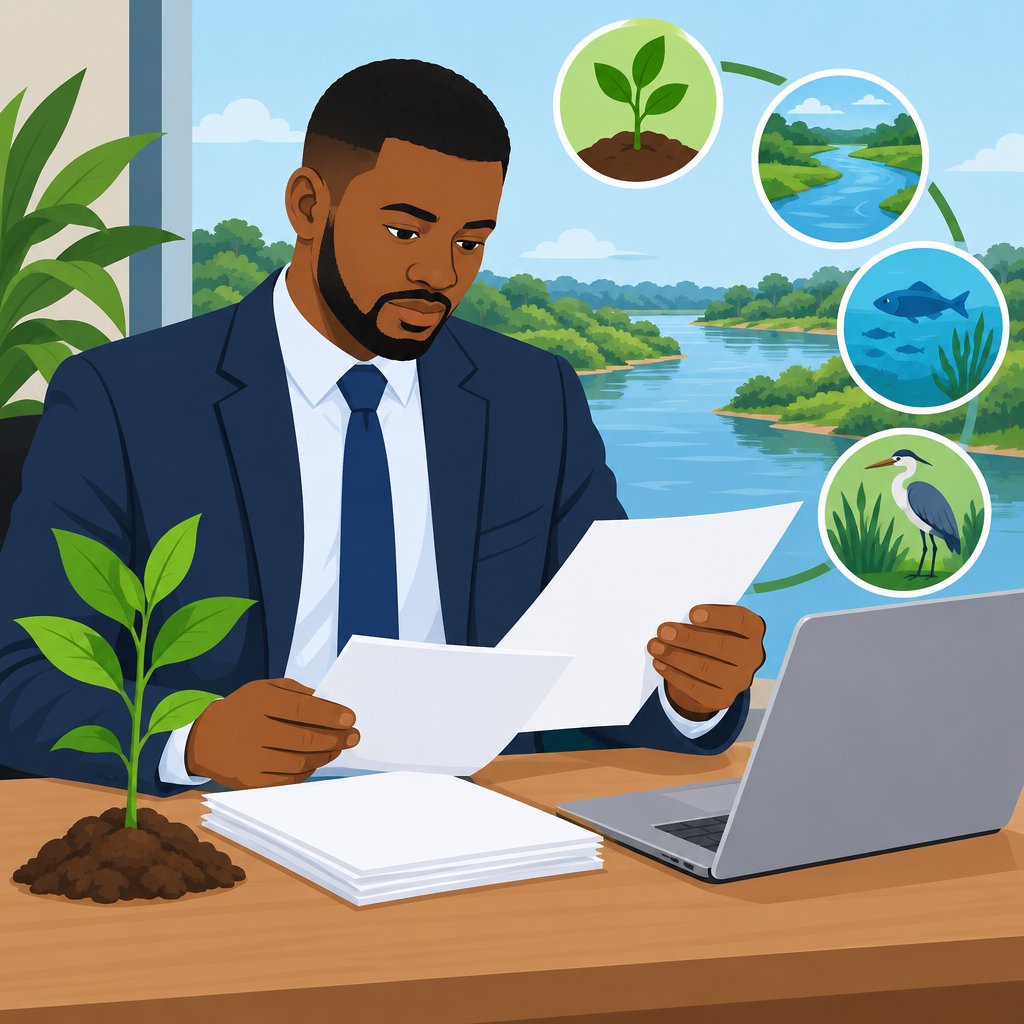
Benefits of Environmental Impact Assessments
EIAs help evaluate potential environmental consequences before projects or developments begin.
They offer benefits that support sustainable development and improved environmental outcomes.
Decision-makers can use these findings to address concerns early and reduce negative consequences.
- Identifying Potential Environmental Impacts: EIAs identify potential environmental impacts before project implementation.
- Promoting Sustainable Development: EIAs incorporate environmental considerations into decisions about responsible development.
- Enhancing Public Participation: Public participation lets stakeholders raise concerns and contribute input, fostering transparency, accountability, and trust.
- Improving Project Design: Assessment findings help designers optimize plans, minimize adverse impacts, and improve project efficiency.
- Protecting Biodiversity and Ecosystems: EIAs assess effects on biodiversity and ecosystems, supporting conservation and ecological balance.
Case Studies of Positive Environmental Outcomes
Several case studies show positive environmental outcomes associated with thorough EIAs.
These examples describe changes in practices, mitigation measures, and conservation requirements.
They illustrate how assessments can inform environmental protection during development.
Exxon Valdez Oil Spill
In 1989, the Exxon Valdez oil tanker spilled more than 11 million gallons of crude oil.
The spill occurred in Alaska’s Prince William Sound.
The incident caused devastating environmental damage.
It prompted significant shifts in industry practices.
The event highlighted rigorous assessments’ importance in the oil and gas sector.
Three Gorges Dam Project
The Three Gorges Dam required extensive environmental impact assessments.
Those assessments identified potential risks to regional biodiversity and ecosystems.
Mitigation measures and adaptive management strategies helped minimize negative impacts.
Transform Your Career with Expert Guidance
Get personalized mentorship consulting that’s tailored to your unique path. Our expert advice is actionable and exclusive.
Get StartedThe project also pursued sustainable development goals.
Great Barrier Reef Marine Park
The Great Barrier Reef Marine Park is a UNESCO World Heritage Site.
The ecosystem remains highly sensitive to environmental changes.
EIAs before construction or development helped safeguard the park.
They required proposed projects to follow strict regulations and conservation measures.
These measures protect reef biodiversity and ecological integrity.
EIAs safeguard the environment and promote sustainable development.
They support responsible decision-making by considering impacts early and involving stakeholders.
This approach encourages a more sustainable and environmentally conscious future.
Gain More Insights: Environmental Biology Degree Requirements
EIAs help policymakers address environmental issues through structured project evaluations.
They examine proposed actions and identify measures that can reduce adverse effects.
How EIAs Influence Decision-Making in Policy Development
EIAs give policymakers evidence about environmental consequences before projects begin.
This advance review helps officials recognize risks and concerns requiring attention.
Consequently, decision-makers can weigh environmental information alongside project proposals.
- Identifying potential environmental impacts
- Assessing the significance of these impacts
- Developing measures to mitigate negative effects
Legal Requirements for Conducting EIAs in Various Countries
Many countries require EIAs for specified project categories.
These rules ensure officials consider environmental implications before approving proposed actions.
Requirements commonly combine reports, consultation, and compliance with established criteria.
- Submitting an EIA report before project approval
- Consulting stakeholders and the public
- Following specific guidelines and criteria
The Impact of EIAs on Shaping Environmental Policies
EIA findings can guide environmental policies for development projects.
Policymakers use identified risks to develop regulations and practical guidelines.
These policies can protect environmental interests while supporting sustainable development.
- Informing the decision-making process
- Enhancing transparency and public participation
- Promoting sustainable development practices
EIAs integrate environmental considerations into policy decisions.
They also help shape policies that protect the environment and support sustainable development.
Uncover the Details: Renewable Energy and Environmental Management in Nigeria
Environmental Planning Through EIAs
Environmental Impact Assessments guide planners in evaluating potential environmental consequences before development projects begin.
Moreover, they reveal environmental concerns before those concerns become irreversible.
Through proactive planning, EIAs support sustainable development and help protect natural resources.
Therefore, project leaders should apply EIAs to development projects and reduce potential environmental harm.
Additional Resources
Google search results for Environmental Impact Assessments Explained Environmental
Bing search results for Environmental Impact Assessments Explained Environmental


