




Radiography in Nigerian Healthcare
Radiography plays a crucial role in healthcare in Nigeria, aiding diagnosis of various illnesses and injuries.
Healthcare professionals need up-to-date equipment and technology for accurate imaging and prompt patient treatment.
Additionally, radiography provides detailed images that support informed patient care decisions.
Healthcare facilities in Nigeria face several barriers when they acquire radiography equipment.
These barriers affect equipment availability, maintenance, financing, and diagnostic service delivery.
As a result, facilities may struggle to provide consistently accurate imaging for patients.
Difficulties in Obtaining and Maintaining High-Quality Equipment
Limited suppliers and manufacturers make high-quality radiography equipment difficult to obtain locally.
Many facilities therefore depend on imports, which can increase costs and extend delivery times.
Import dependence may also complicate access to technical assistance.
Poor maintenance services and limited technical support make equipment upkeep difficult.
Consequently, machines may break down frequently and remain unavailable for extended periods.
Such downtime can disrupt patient care and reduce diagnostic efficiency.
Financial Constraints Affecting Equipment Acquisition
Healthcare facilities often operate with tight budgets that restrict technology investments.
Modern systems, including digital X-ray machines and CT scanners, require substantial funding.
High acquisition costs can prevent hospitals and clinics from updating their imaging capacity.
Limited funding reduces access to advanced diagnostic services for patients.
Facilities may consequently struggle to improve patient outcomes through newer imaging technology.
Effects of Outdated Equipment on Patient Care
Outdated radiography equipment may produce images with insufficient quality for reliable interpretation.
Radiologists can consequently face greater difficulty making accurate diagnoses.
Poor image quality may contribute to misdiagnosis or delays in treatment.
Older machines may also lack features needed for complex imaging procedures.
Therefore, facilities may offer fewer imaging services and face limitations in patient care.
Collaborative Support for Radiography Equipment Access
Government, healthcare providers, and industry stakeholders must work together to address these barriers.
Their coordinated efforts can help facilities obtain and maintain suitable radiography equipment.
Improved access can strengthen care quality and diagnostic accuracy for patients.
Current State of Radiography Equipment in Nigeria
Nigerian healthcare facilities use several imaging technologies for diagnosis and patient monitoring.
Equipment availability varies significantly between urban centers, rural areas, private facilities, and public hospitals.
Recent upgrades have improved image quality, processing speed, storage, and access in some facilities.
Types of Radiography Equipment Used in Healthcare Facilities
Healthcare facilities commonly use X-ray machines, CT scanners, MRI machines, and ultrasound equipment.
These technologies support the diagnosis and monitoring of various medical conditions.
Each equipment type provides healthcare professionals with different forms of diagnostic imaging.
- X-ray machines provide common imaging services in healthcare facilities.
- CT scanners support detailed diagnostic imaging.
- MRI machines provide advanced medical imaging capabilities.
- Ultrasound equipment supports diagnostic and monitoring procedures.
Technology Levels Across Different Parts of Nigeria
Nigeria has unequal access to radiography equipment across its regions.
Urban centers generally have more advanced technology than rural areas.
Private healthcare facilities also tend to offer more advanced equipment than public hospitals.
This technology gap affects the quality of healthcare services available to different populations.
Recent Improvements in Radiography Equipment
Some Nigerian healthcare facilities have upgraded their equipment to digital X-ray machines.
Digital X-ray machines provide higher image quality and faster processing times.
Additionally, some facilities have adopted Picture Archiving and Communication Systems.
PACS improves the storage and accessibility of radiographic images.
Consequently, these improvements support more efficient patient care.
Transform Your Career with Expert Guidance
Get personalized mentorship consulting that’s tailored to your unique path. Our expert advice is actionable and exclusive.
Get StartedSee Related Content: Top Universities Offering Ophthalmology in Nigeria
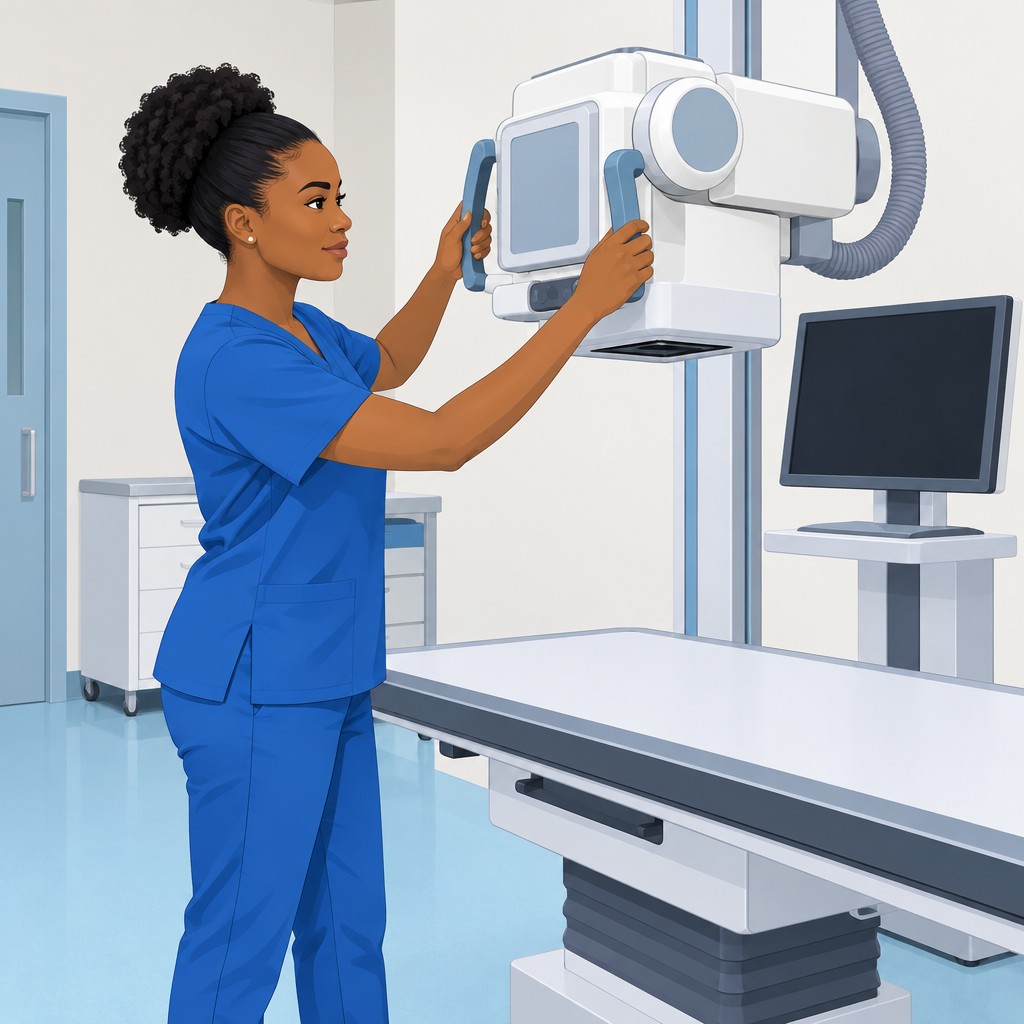
Training and Education for Radiographers
- Radiographers need continuous training and certification to maintain professional competence.
- Education helps them use specialized equipment and technology effectively.
- Well-trained radiographers support accurate diagnosis and protect patient safety.
Continuous Training and Certification
Successful radiographers pursue continuous training and obtain relevant certifications.
Radiography changes continually as professionals introduce new technologies and techniques.
Therefore, radiographers should use professional development, workshops, seminars, and certification programs.
Continuous learning strengthens their skills and keeps their practice aligned with current standards.
It also helps them adapt to technological changes and maintain high patient care standards.
Education for Specialized Equipment and Technology
Education gives radiographers the knowledge and skills to operate advanced imaging equipment.
Specialized courses help them understand equipment functions and optimize its use for accurate diagnoses.
Moreover, education prepares them to use new radiography technologies effectively as equipment continues to advance.
It also builds confidence when they handle complex equipment with precision and accuracy.
Benefits of Well-Trained Radiographers
Well-trained radiographers produce high-quality diagnostic images that support timely medical decisions.
Their equipment expertise also helps clinicians detect and manage medical conditions.
Additionally, continuous education strengthens critical thinking, decision-making, and attention to detail.
These abilities help radiographers deliver precise and reliable results.
Competent equipment use reduces errors and protects patients during radiographic procedures.
Professional development therefore benefits radiographers and improves the quality and safety of diagnostic imaging services in Nigeria.
Delve into the Subject: Understanding Anatomy Curriculum in Nigeria
Impact of Radiography Equipment on Patient Care
Radiography equipment has strengthened patient care across healthcare services in Nigeria.
Modern systems support clearer imaging, more reliable assessments, and better-informed treatment decisions.
Furthermore, improved technology helps healthcare professionals identify diseases and injuries sooner.
- Modern equipment improves diagnostic and treatment quality.
- Radiography supports early disease and injury detection.
- Advanced equipment contributes to successful patient outcomes.
Improved Diagnostic and Treatment Quality
Modern radiography systems produce more accurate and detailed images for healthcare professionals.
Consequently, providers can assess medical conditions with greater confidence.
More precise assessments support treatment plans that better address each patient’s needs.
Early Detection of Diseases and Injuries
Radiography helps providers detect diseases and injuries during their earlier stages.
X-rays, computed tomography scans, and magnetic resonance imaging reveal important internal changes.
Therefore, early findings allow healthcare professionals to begin suitable interventions sooner.
Successful Patient Outcomes
Advanced radiography equipment can improve diagnostic accuracy for patients receiving imaging services.
More accurate results can help providers develop treatment plans more quickly.
As a result, healthcare professionals can deliver more personalized and effective patient care.
Radiography technology therefore remains an important contributor to improved patient care in Nigeria.
Continued technological progress can create further opportunities to strengthen diagnostic and treatment services.
See Related Content: Role of Radiographers in Diagnosing Diseases
Government Initiatives and Policies Regarding Radiography Equipment
Government policies influence access to radiography equipment across healthcare facilities in Nigeria.
They also support equipment safety, reliable performance, and effective technology management.
These measures connect procurement, regulation, and collaboration within radiography services.
Existing Government Programs
Government programs seek to improve access to quality radiography equipment.
Such programs can strengthen healthcare facilities across Nigeria.
Funding and resource allocation influence equipment procurement and service availability.
- Existing programs can improve access to quality radiography equipment.
- These efforts may support healthcare facilities across Nigeria.
- Allocated funds can support radiography equipment procurement.
Regulatory Frameworks and Safety
Regulatory frameworks help protect patients and staff during radiography procedures.
They also support reliable equipment performance and effective technology use.
Government agencies help enforce compliance with established safety standards.
- Regulations guide the safe use of radiography technology.
- Maintenance requirements help preserve equipment performance.
- Government agencies monitor compliance with safety standards.
Collaboration Between Government and Private Sector
Government and private sector collaboration can expand radiography services in Nigeria.
Public-private partnerships may improve access to advanced radiography technology.
Shared efforts can support technological advancement within radiography equipment services.
- Government partnerships can enhance radiography services.
- Private sector involvement may improve technology access.
- Collaborative efforts can support radiography equipment advancement.
Strengthening Radiography Services Through Policy
Government initiatives can help healthcare facilities obtain safe and effective radiography technology.
Clear regulations can reinforce responsible equipment use and maintenance.
Continued collaboration can support stronger radiography services across Nigeria.
Discover More: How to Brush Kids' Teeth Properly in Nigeria
Future Trends and Developments in Radiography Equipment
Nigeria may adopt advanced radiography technologies as global innovation continues.
These developments could improve imaging capabilities and support patient care.
Portable and affordable systems may extend radiography services to remote communities.
Potential Advancements in Radiography Technology in Nigeria
Radiography technology in Nigeria may advance through wider use of sophisticated imaging techniques.
These techniques could strengthen diagnostic capabilities and support more informed clinical decisions.
Meanwhile, manufacturers may prioritize portable, affordable equipment for remote healthcare settings.
Such systems could increase access to radiography services across underserved areas.
Impact of Digitalization and Artificial Intelligence
Digital imaging can streamline image production and improve diagnostic workflow efficiency.
Furthermore, artificial intelligence can analyze radiographic images and assist radiographers during interpretation.
These tools may support more precise assessments while reducing errors linked to manual review.
Their integration can strengthen diagnostic capabilities and support better patient care outcomes.
Opportunities for Innovation and Growth
Equipment developers can create imaging modalities that produce clearer and more detailed images.
Tele-radiology also offers remote image interpretation for facilities lacking specialized services.
Additionally, three-dimensional imaging and virtual reality may expand diagnostic capabilities.
These innovations can encourage growth while supporting improved patient care.
Strengthening Radiography Services in Nigeria
Upgrading radiography equipment and technology can improve healthcare services in Nigeria.
Modern equipment can improve diagnostic accuracy and strengthen patient care.
Healthcare facilities and policymakers should prioritize radiography upgrades to support better outcomes.
Moreover, facilities must track technological advancements to address changing healthcare needs.
State-of-the-art equipment can help Nigeria improve healthcare standards and patient outcomes.
Strong radiography services can also enhance healthcare delivery across the country.
Therefore, decision-makers should recognize the importance of sustained investment in modern radiography technology.
Patients benefit from improved services, while the wider healthcare system gains stronger diagnostic capacity.
Additional Resources
Google search results for Radiography Equipment and Technology in Nigeria Medical
Bing search results for Radiography Equipment and Technology in Nigeria Medical


