



Career Opportunities in Applied Geophysics in Nigeria
Applied geophysics examines Earth’s subsurface using physical methods.
It supports industries such as oil and gas exploration.
In Nigeria, abundant natural resources create strong interest in applied geophysics careers.
Geophysical techniques help professionals locate mineral deposits, groundwater resources, and potential oil fields.
They also support effective resource management and environmental conservation.
Meanwhile, Nigeria’s expanding exploration efforts continue increasing demand for skilled professionals.
Geophysicists work for oil and gas companies, geological survey agencies, mining companies, and environmental consulting firms.
They interpret seismic data, conduct surveys, and assess subsurface structures.
Therefore, their findings guide decisions about resource exploration and development.
Technological advances require geophysicists to use modern instruments and software tools.
As a result, specialized opportunities exist in data analysis, modeling, and visualization.
Professionals with applied geophysics expertise can support Nigeria’s natural resource sector.
They can contribute to its growth and sustainability.
People who enjoy Earth sciences can pursue meaningful careers in this field.
Such professionals can influence resource exploration and management.
Overview of Applied Geophysics in Nigeria
Applied geophysics supports natural resource exploration and extraction in Nigeria.
It serves industries such as oil and gas, mining, environmental consulting, and construction.
These industries use subsurface information to guide investigations and project decisions.
Exploration and Extraction of Natural Resources
Geophysicists use seismic surveys to investigate underground formations.
These surveys help locate potential hydrocarbon deposits beneath the surface.
They also support the evaluation of possible oil and gas reserves.
Geophysics in the Mining Industry
Geophysical methods help identify possible mineral reserves.
They also help determine ore grades and map geological structures.
Mining companies use surveys to reduce exploration costs and improve efficiency.
Environmental Consulting and Geophysics
Environmental consultants use geophysical surveys to assess human impacts on the environment.
Geophysical data helps monitor groundwater contamination and soil erosion.
It also supports assessments of land stability.
Applied Geophysics in Construction
Construction teams use ground-penetrating radar to evaluate subsurface conditions.
Geophysical surveys can detect underground utilities before construction begins.
They also assess soil properties and identify potential hazards.
Challenges in Applied Geophysics in Nigeria
Applied geophysics requires professionals with specialized training.
Nigeria faces a shortage of skilled professionals in this field.
Consequently, this shortage presents a continuing challenge for applied geophysics.
Academic Qualifications and Training
Applied geophysics careers require at least a bachelor’s degree in geophysics or a related field.
Many employers prefer master’s or doctoral degrees for advanced industry positions.
Professionals also pursue certifications and continuous development to strengthen their expertise.
- Employers typically require a bachelor’s degree in geophysics or a related field.
- Advanced positions often require master’s or doctoral qualifications.
- Professional organizations offer certifications that demonstrate specialized knowledge.
- Continuous professional development helps geophysicists follow current technologies and industry trends.
Degree Programs
Prospective geophysicists can study geophysics, geology, physics, or related subjects.
Some Nigerian universities offer specialized geophysics programs.
These programs provide a strong foundation for future professional work.
Graduate programs allow students to explore specific areas of geophysics more deeply.
Transform Your Career with Expert Guidance
Get personalized mentorship consulting that’s tailored to your unique path. Our expert advice is actionable and exclusive.
Get StartedMaster’s and Ph.D. programs can support specialized career opportunities.
Therefore, advanced study can help candidates develop focused professional expertise.
Professional Certifications
Certifications from reputable organizations demonstrate a commitment to professional excellence.
They can also improve job prospects within the competitive geophysics industry.
The Society of Exploration Geophysicists offers internationally recognized certifications.
Examples include Certified Exploration Geophysicist and Certified Petroleum Geophysicist credentials.
These certifications can help professionals demonstrate specialized competence.
Consequently, qualified geophysicists can strengthen their professional profiles through certification.
Continuous Professional Development
Continuous learning helps geophysicists remain relevant in this rapidly evolving field.
Professionals can specialize in seismic interpretation, reservoir characterization, or data analysis.
Such specialization can create opportunities for advancement and career growth.
Additionally, workshops, conferences, and seminars help geophysicists develop new skills.
These events also support professional networking and awareness of technological developments.
Research projects and scientific publications can further support professional development.
They can also establish expertise in a particular area of geophysics.
Formal education, certifications, and continuous development support success in applied geophysics careers in Nigeria.
Find Out More: Nigerian Boat Building: Challenges and Solutions
Job Roles and Responsibilities
Geophysics professionals examine subsurface conditions through surveys, data analysis, and geological interpretation.
They support exploration, drilling, infrastructure design, and other projects requiring reliable subsurface information.
Additionally, each role applies specialized methods to guide technical decisions and improve project planning.
- Geophysicist: Conducts earth surveys and analyzes subsurface data using various techniques.
- Seismic Interpreter: Interprets seismic data to identify potential oil and gas reservoirs.
- Wellsite Geologist: Monitors drilling operations, interprets geological data, and advises on well placement.
- Geotechnical Engineer: Studies soil and rock mechanics to assess infrastructure stability.
Geophysicists acquire seismic data and process raw measurements into usable information.
They also interpret subsurface structures to support geological assessments.
Meanwhile, seismic interpreters analyze reflection data and identify important geological features.
They map potential hydrocarbon reservoirs for exploration and production activities.
At well sites, geologists provide real-time geological analysis during drilling operations.
They assess rock formations and recommend suitable approaches for well completion.
Geotechnical engineers evaluate soil and rock properties before designing foundations.
They apply these assessments to buildings, roads, and other infrastructure projects.
Gain More Insights: Case Studies in Nigerian Agricultural Economics
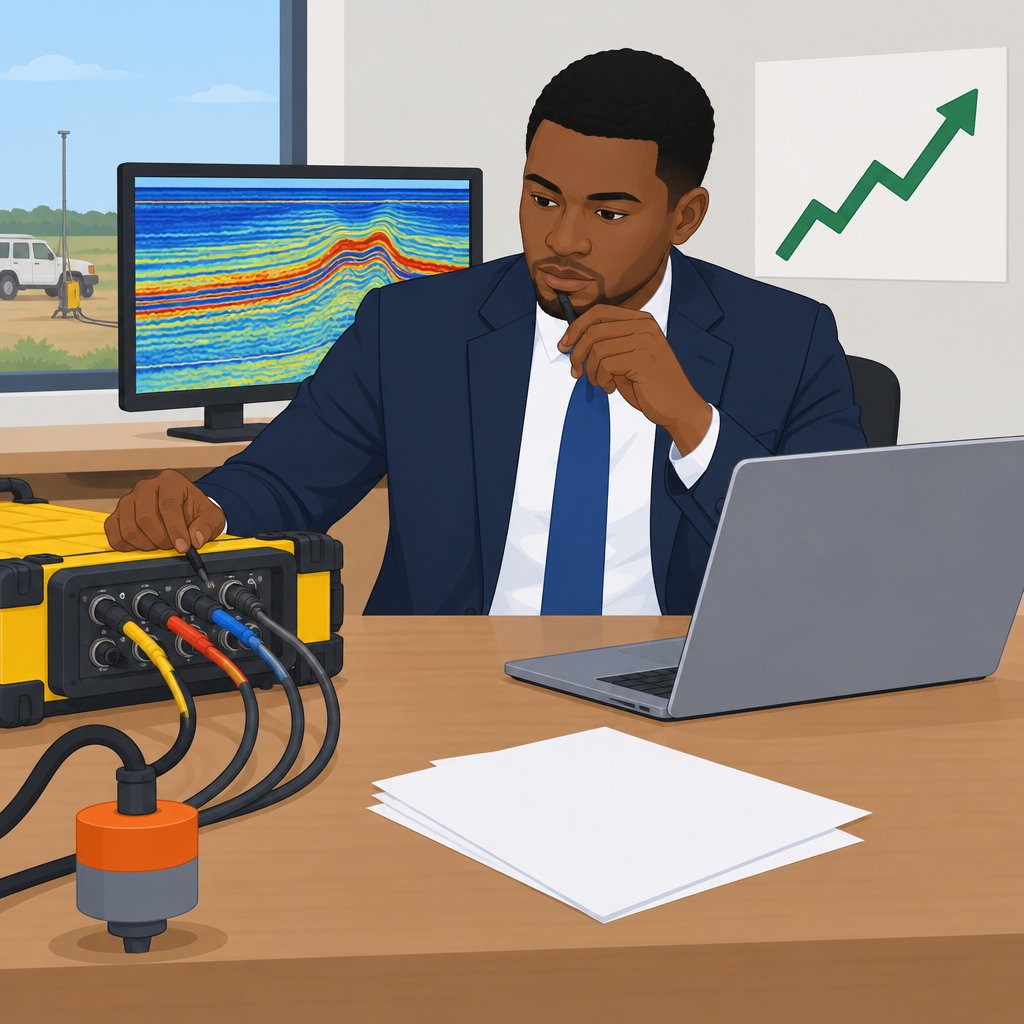
Salary and Benefits for Applied Geophysicists
Entry-level geophysicists in Nigeria generally earn NGN 150,000 to NGN 250,000 per month.
However, salaries vary according to experience, expertise, employer, and sector.
Experienced professionals can earn more than NGN 500,000 per month.
Multinational companies and high-demand sectors may offer higher salaries.
Additionally, applied geophysics offers attractive benefits and opportunities for professional development.
Geophysicists can work on advanced projects and use modern technologies.
They can also collaborate with industry experts to strengthen their skills.
- Geophysicists may travel within Nigeria or internationally for fieldwork and conferences.
- Training, continuing education, certifications, and mentorship can support professional growth.
- Demand from oil and gas, mining, environmental consulting, and infrastructure supports job stability.
Employers may also provide health insurance, retirement benefits, performance bonuses, and flexible work arrangements.
These benefits can improve employment conditions for professionals in applied geophysics.
The combination of competitive pay and career development makes this field appealing to geoscience professionals.
Gain More Insights: Applied Geology Research Areas in Nigeria
Career Progression and Opportunities
Applied geophysics offers several pathways for professional advancement in Nigeria.
Professionals can develop their careers through leadership, project management, entrepreneurship, or consulting.
These pathways allow geophysicists to apply their skills while contributing to industry growth.
Leadership Roles
Experienced geophysicists can pursue leadership roles within their organizations.
They may lead geoscience teams, manage projects, and support strategic decisions.
Furthermore, leaders can mentor junior geophysicists and support professional development.
- Experienced geophysicists can lead teams of geoscientists.
- They can manage projects and make strategic organizational decisions.
- Leadership roles allow professionals to mentor junior geophysicists.
Project Management
Geophysicists with strong management skills can move into project leadership positions.
These professionals plan, execute, and monitor geophysical projects from beginning to completion.
They also coordinate teams and stakeholders while managing timelines and budgets.
- Project managers plan and oversee geophysical projects.
- They coordinate different teams and stakeholders throughout project activities.
- They help projects meet established timelines and budget requirements.
Entrepreneurship
Entrepreneurial geophysicists can establish consulting firms or geophysical service companies.
These businesses can provide specialized geological solutions to clients.
Additionally, entrepreneurs can use their expertise to address specific industry challenges.
- Professionals can start consulting firms or geophysical service companies.
- Consultancies can provide specialized geological solutions to clients.
- Entrepreneurs can develop focused services for specific industry challenges.
Consulting in the Geophysics Industry
Geophysical consulting provides opportunities to advise organizations across several sectors.
Consultants can support mineral exploration, groundwater mapping, and environmental assessments.
They help clients interpret geophysical data and make informed decisions.
- Consultants provide technical insights to organizations across various sectors.
- They work on mineral exploration and groundwater mapping projects.
- They also support environmental assessments through advisory services.
Professional Growth Pathways
Applied geophysics offers professionals multiple ways to advance their careers.
Leadership and project management can expand responsibilities within established organizations.
Entrepreneurship and consulting can help experienced geophysicists create specialized professional opportunities.
You Might Also Like: Success Stories in Nigerian Boat Building Industry
Industry Trends in Applied Geophysics in Nigeria
Applied geophysics in Nigeria continues to change through technology, regulation, and expanding demand.
These shifts influence survey methods, project requirements, and professional skills.
Consequently, professionals must track industry developments and strengthen their technical capabilities.
- Technological advances improve geophysical equipment and software.
- Remote sensing and satellite imagery support more detailed mapping.
- Mineral exploration and environmental assessments increasingly require geophysical surveys.
- Advanced data processing techniques support more effective interpretation.
Regulatory Changes Affecting Geophysical Practice
Regulatory developments increasingly shape how professionals conduct geophysical projects in Nigeria.
These requirements promote environmental responsibility, reliable data collection, and workplace safety.
Therefore, survey companies must understand applicable standards and licensing obligations.
- Stricter environmental regulations affect oil and gas exploration activities.
- International standards guide geophysical data acquisition practices.
- Licensing requirements help verify survey quality and safety.
Market Demands for Geophysical Services
Market needs continue to expand beyond traditional exploration activities.
Infrastructure, water management, and renewable energy projects increasingly use subsurface information.
As a result, geophysicists can serve varied projects across Nigeria’s developing economy.
- Infrastructure development projects require more geophysical services.
- Groundwater exploration supports water resource management.
- Renewable energy projects create opportunities for geophysical surveys.
Future Directions for Geophysics Careers
Future careers will connect geophysical practice with broader engineering and environmental needs.
Professionals will also need stronger skills in interpretation, integration, and visualization.
These capabilities can support clearer decisions when projects involve complex subsurface information.
- Geotechnical engineering offers opportunities in site characterization.
- Civil engineering and environmental science can integrate geophysical data.
- Data interpretation and visualization remain important professional challenges.
Professional Readiness and Future Directions
Applied geophysics in Nigeria shows continued development through technology, regulation, and market expansion.
Professionals who follow these changes can respond more effectively to emerging project requirements.
Regular skill development will help geophysicists address industry challenges and pursue new opportunities.
Professional Impact of Applied Geophysics
Applied geophysics offers meaningful professional opportunities in Nigeria for people who value Earth science, exploration, and problem-solving.
Exploration and extraction industries need skilled professionals to interpret seismic data, examine subsurface structures, and manage natural resources.
These professionals also support climate research, disaster management, urban planning, sustainable development, and environmental protection.
Moreover, the field continues evolving as technology creates demand for specialists with focused technical skills.
Consequently, professionals who invest in education and training can pursue rewarding and challenging career paths.
Geophysics allows individuals to contribute to society while developing expertise across diverse applications.
Those who enjoy scientific investigation can find purpose through the field’s demanding and dynamic work.
Additional Resources
Google search results for Career Opportunities in Applied Geophysics in Nigeria Sciences
Bing search results for Career Opportunities in Applied Geophysics in Nigeria Sciences


