



Applied Geology and Its Role in Nigeria
Applied geology involves the practical application of geological knowledge to address real-world issues.
It plays a crucial role in Nigeria’s research and development sectors.
Geologists apply their knowledge to solve problems involving Earth processes and materials.
Importance of Applied Geology in Nigeria
Applied geology focuses on practical solutions in environmental management, mineral exploration, and engineering projects.
Geologists use their understanding of Earth processes and materials to address complex challenges.
Firstly, applied geology supports the exploration and extraction of mineral resources.
These resources remain critical to Nigeria’s economic development.
Furthermore, applied geology helps address environmental challenges, including pollution and land degradation.
Geologists provide solutions to these challenges through geological principles.
Additionally, applied geology contributes to infrastructure development through geological surveys and assessments.
These assessments help ensure construction projects remain safe and sustainable.
Through these applications, applied geology supports sustainable development and economic growth in Nigeria.
Oil and Gas Exploration
Applied geologists help explore potential oil and gas reserves in Nigeria.
They analyze rock formations to identify areas that may contain oil and gas deposits.
Additionally, geologists use seismic imaging and well logging to locate possible reserves.
This information helps oil companies evaluate exploration and production opportunities in Nigeria.
New discoveries can increase export revenue, create jobs, and support infrastructure investment.
Mineral Exploration
Geologists also explore mineral resources beyond oil and gas.
They study local geology to determine whether deposits contain gold, coal, or iron ore.
Furthermore, teams use geophysical surveys and geochemical analysis during mineral exploration.
Successful discoveries can attract mining companies to extraction and processing activities.
These investments can support economic development, employment, and government revenue.
Environmental Geology
Applied geologists assess environmental conditions and help reduce natural hazards in Nigeria.
They examine how deforestation, mining, and urban development affect the environment.
They also investigate landslides, earthquakes, and soil erosion.
By analyzing geological causes, geologists develop strategies that can help prevent disasters.
This work supports sustainable development and protects Nigeria’s natural resources.
Water Resources Management
Geologists support the management of groundwater and surface water resources in Nigeria.
They study hydrogeology to assess available groundwater quality and quantity.
They also evaluate contamination risks and develop water conservation strategies.
Consequently, their expertise helps communities secure clean and reliable water supplies.
Geologists work with government agencies and NGOs to promote sustainable water management practices.
Geotechnical Engineering
Geologists contribute to geotechnical engineering projects that support infrastructure stability.
They assess site geology to determine whether locations suit proposed construction projects.
Moreover, they examine soil and rock properties for hazards affecting building foundations.
Their geological data helps engineers design structures that withstand local geological challenges.
This collaboration promotes safe and sustainable infrastructure development in Nigeria.
Contributions to Nigeria’s Development
Applied geology supports research across energy, minerals, environmental protection, water, and infrastructure.
Geologists study Earth’s processes and resources to address practical development needs.
Their work contributes to economic development, environmental protection, and infrastructure sustainability in Nigeria.
Transform Your Career with Expert Guidance
Get personalized mentorship consulting that’s tailored to your unique path. Our expert advice is actionable and exclusive.
Get StartedEnvironmental Management and Assessment
Environmental management and assessment guide geological research toward responsible resource use in Nigeria.
These activities examine environmental effects and support practical responses to ecological challenges.
Geologists connect scientific evidence with measures that protect natural resources and ecological balance.
Studying the Impact of Mining Activities
Mining can damage soil, water, vegetation, and surrounding ecosystems.
Specifically, activities may cause soil erosion, water pollution, and deforestation.
Geologists in Nigeria investigate these effects and evaluate their long-term consequences.
Through research, they determine the extent of environmental change caused by mining.
Implementing Measures to Minimize Environmental Degradation
Geologists develop strategies that reduce environmental damage from mining activities.
They work with government agencies and mining companies to support environmental regulations.
Moreover, collaboration encourages mining operators to adopt more sustainable practices.
These measures help limit degradation while supporting responsible geological development.
Promoting Sustainable Practices in Geology Research
Geologists should use sustainable techniques throughout their research activities.
Reclamation and restoration can help repair areas affected by mining.
Consequently, sustainable methods reduce negative environmental effects and support long-term protection.
Such practices also connect geological research with broader environmental responsibilities.
Assessing Environmental Effects Beyond Mining
Environmental assessment also covers quarrying, construction, and oil exploration.
Geologists identify potential risks and develop suitable strategies to manage them.
They collaborate with environmental scientists, engineers, and policymakers on these challenges.
Together, these professionals promote sustainable development and help conserve natural resources.
Their research also supports the preservation of ecological balance in Nigeria.
Explore Further: Success Stories in Nigerian Boat Building Industry
Water Resources Management
Applied geology research in Nigeria also addresses water resources management.
This field supports sustainable development by improving knowledge of available water resources.
Researchers examine groundwater, water quality, availability, and management practices.
Assessment of Groundwater Resources in Nigeria
Researchers assess groundwater resources across Nigeria.
They map underground water sources and evaluate their quantity and quality.
These assessments help determine sustainability and potential for exploitation.
Additionally, geophysical surveys and hydrogeological modeling reveal groundwater distribution and characteristics.
Monitoring Water Quality and Availability
Researchers also monitor water quality and availability.
They analyze chemical composition, microbial content, and physical properties.
These analyses determine whether water suits drinking, irrigation, or industrial purposes.
Continuous monitoring identifies contamination sources and helps predict water shortages.
Consequently, stakeholders can implement remediation measures and protect access to safe, clean water.
Recommendations for Sustainable Water Management Practices
Researchers use assessment and monitoring findings to recommend sustainable water management practices.
These recommendations include water conservation and efficient irrigation techniques.
They also support groundwater recharge strategies and water quality regulations.
Furthermore, geological knowledge can inform water management policies.
Such integration helps preserve resources for future generations and address climate-related changes in availability.
Integrated Approaches to Water Conservation
Water resources management remains a critical applied geology research area in Nigeria.
Interdisciplinary collaboration and data-driven approaches can improve resource utilization and conservation.
These efforts benefit current and future generations across the country.
Gain More Insights: Fieldwork in Nigerian Agricultural Science Studies
Natural Disaster Management
Applied geologists study geological processes that can trigger natural disasters.
They use this knowledge to develop strategies that reduce disaster impacts.
They also collaborate with government agencies to strengthen disaster preparedness.
- Study geological processes that lead to natural disasters
- Develop strategies to mitigate landslide and flooding impacts
- Collaborate with government agencies on disaster preparedness
Landslides can devastate communities living in high-risk areas.
Through fieldwork and data analysis, geologists identify areas prone to landslides.
They then work with local authorities to support preventive measures.
Flooding also requires geological investigation.
Geologists analyze river patterns, sediment composition, and related data to assess flood severity.
This analysis helps communities predict and prepare for flood events.
Furthermore, geologists share research findings with policymakers and emergency responders.
Their expertise supports response plans and infrastructure improvements.
These efforts help reduce disaster effects on communities, property, and the environment.
Ongoing research continues to strengthen preparedness and mitigation.
Explore Further: Student Experiences in Nigerian Applied Botany Programs
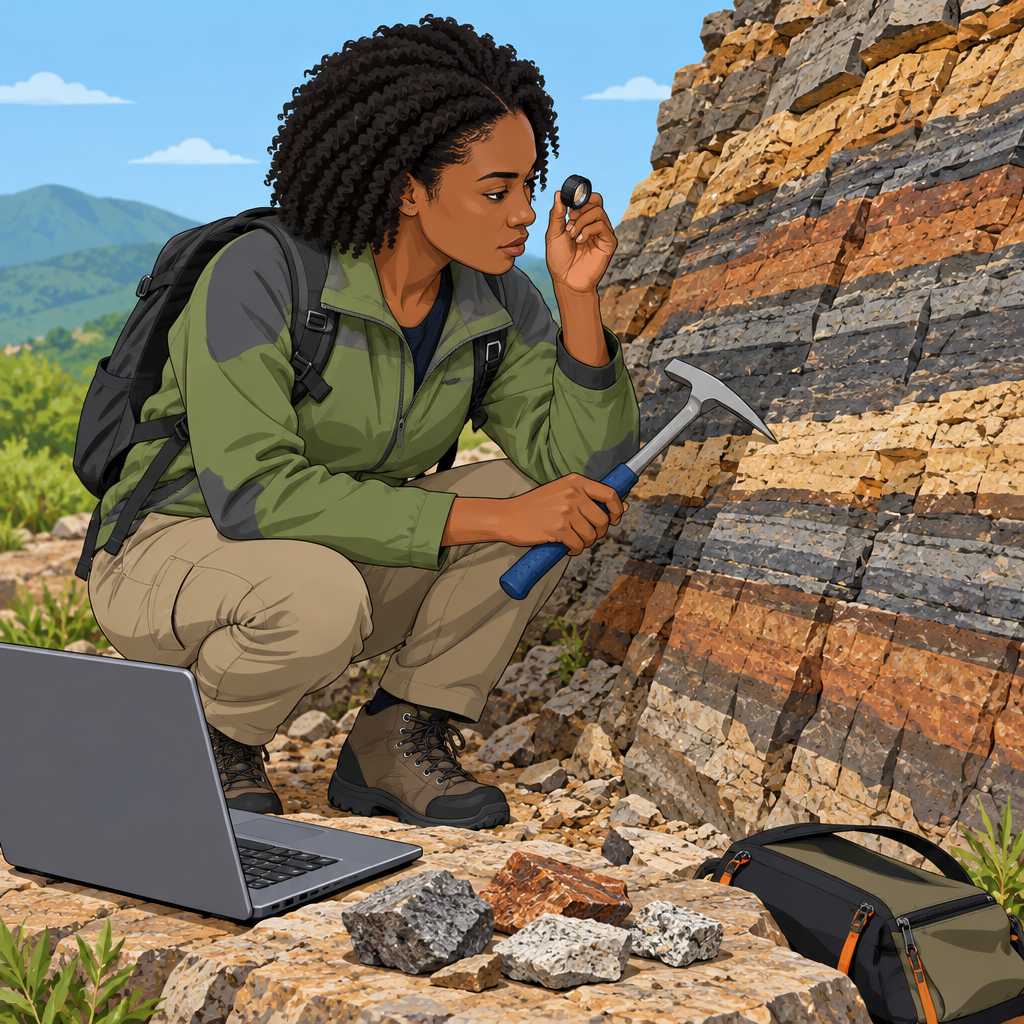
Urban Planning and Infrastructure Development
Urban planning and infrastructure development support Nigeria’s growing economy.
Geologists help construction projects progress smoothly and protect urban communities.
They assess geological conditions, identify hazards, and support stable infrastructure development.
- Conducting geological surveys for construction projects
- Identifying potential hazards in urban areas
- Ensuring structural stability for infrastructure development
Geological Surveys for Construction Projects
Geologists conduct geological surveys before construction projects begin.
They assess soil composition, rock formations, and the area’s overall geology.
These assessments determine whether the area suits construction.
Furthermore, surveys reveal potential risks and challenges before construction starts.
Developers can then make informed decisions about their projects.
Geological Hazards in Urban Areas
Geologists identify potential hazards within urban areas.
They analyze geological conditions to locate areas vulnerable to landslides and subsidence.
This analysis also helps identify areas exposed to other natural disasters.
Urban planners use this information when making infrastructure and land-use decisions.
As a result, geological assessments support safer urban development.
Structural Stability for Infrastructure Development
Structural stability remains essential for successful infrastructure development.
Geologists assess local geological conditions before builders construct structures.
They help ensure that structures stand on stable ground.
Their subsurface insights reduce risks of collapse and structural failure.
Consequently, geologists support safer and longer-lasting infrastructure projects.
Geological Expertise and Sustainable Urban Growth
Geologists provide essential expertise for urban planning and infrastructure development in Nigeria.
Their surveys, hazard assessments, and stability evaluations guide safer construction decisions.
This expertise supports sustainable urban growth and protects infrastructure users.
Discover More: Government Policies on Boat Building in Nigeria
Mineral Exploration and Mining
Mineral exploration and mining research in Nigeria supports sustainable practices and economic viability.
Researchers focus on locating mineral deposits, evaluating mining projects, and protecting environmental resources.
These priorities help manage Nigeria’s mineral resources for present and future generations.
Identifying Mineral Deposits for Extraction
Geologists conduct surveys, mapping, and exploration activities to locate potential mineral resources across Nigeria.
They use geophysical surveys, geochemical analysis, and remote sensing to identify areas with high mineral potential.
By studying geological formations and mineral assemblages, researchers can locate valuable deposits.
Detailed geological mapping and analysis produce mineral resource maps for exploration planning.
These maps can indicate gold, iron ore, coal, tin, and other valuable resources.
Assessing the Economic Viability of Mining Projects
Researchers assess mining projects by analyzing extraction costs, benefits, profitability, and potential risks.
Geologists and economists conduct feasibility studies and cost-benefit analyses before development begins.
They also consider commodity prices, market demand, extraction costs, and regulatory requirements.
These evaluations help investors make informed funding and development decisions.
Consequently, assessments can maximize economic benefits while reducing environmental and social impacts.
Promoting Sustainable Mining Practices
Applied geology research also promotes sustainable mining practices that protect environmental resources.
Geologists and environmental scientists develop strategies to reduce degradation and pollution during mining operations.
They recommend waste management, water conservation, and land reclamation practices for long-term sustainability.
Furthermore, researchers engage mining companies, government agencies, and local communities in environmental stewardship.
These efforts balance economic development with environmental protection.
Researchers contribute to responsible resource management by combining geological, economic, and environmental priorities.
Applied Geology Research Areas in Nigeria
Applied geology research in Nigeria addresses resource use, environmental protection, and construction needs.
Researchers investigate geological conditions to support practical decisions across public and private activities.
These studies connect scientific knowledge with sustainable development goals.
Together, these areas support sustainable development in Nigeria.
Research Priorities for Sustainable Development
Mineral exploration evaluates promising locations and informs responsible extraction strategies.
Groundwater studies support reliable supplies for farms, industries, and households.
Environmental monitoring measures human effects and guides appropriate mitigation responses.
Geotechnical investigations help engineers design stable foundations for buildings, roads, and bridges.
Continued research can address emerging challenges in resource management.
Moreover, collaboration among government, industry, and academia can encourage innovation in geology projects.
Such cooperation can help translate research findings into effective development practices.
Additional Resources
Google search results for Applied Geology Research Areas in Nigeria Sciences
Bing search results for Applied Geology Research Areas in Nigeria Sciences


