



Introduction
Boat building plays a crucial role in Nigeria’s economy and transportation system.
It provides job opportunities and sustains livelihoods for many people.
However, Nigerian boat builders face various challenges in their craft.
Some challenges include limited access to modern technology, inadequate training, and high material costs.
These obstacles have hindered the growth and development of Nigeria’s boat building industry.
Despite these challenges, practical solutions can address them effectively.
Historical Foundations of Nigerian Boat Building
Nigerian boat building dates back centuries and reflects the country’s rich cultural heritage.
Coastal communities relied on locally sourced materials and traditional construction methods.
Moreover, boat builders passed their skills from one generation to the next.
Traditional Boat Building Techniques
Traditional builders used hand tools to shape locally available materials.
Common materials included wood, bamboo, and palm fronds.
These methods produced vessels suited to the demanding marine environment.
Additionally, traditional construction preserved cultural knowledge and strengthened community identity.
Foreign Technologies and Modern Materials
In recent years, foreign technologies have reshaped Nigeria’s boat building industry.
These technologies introduced fiberglass, aluminum, and marine-grade plywood to local builders.
Consequently, Nigerian builders expanded their capabilities and constructed more sophisticated vessels.
Modern tools also improved production efficiency and helped builders pursue international standards.
Integrating Traditional Skills with Modern Innovation
Despite technological changes, many communities continue practicing traditional boat building.
Builders now combine inherited craftsmanship with modern materials and production techniques.
This integration helps them respond to changing market demands.
However, the cost of modern materials and machinery remains difficult for many local builders.
Nevertheless, Nigerian boat builders continue adapting while protecting their cultural heritage.
The resulting combination gives Nigerian boat building a distinctive identity within the global market.
Challenges Facing Nigerian Boat Builders
Nigerian boat builders face several obstacles that limit production and market competitiveness.
These challenges affect their access to equipment, financial support, and customer demand.
Consequently, builders must address several industry pressures to strengthen their businesses.
- Limited access to modern boat building materials and tools
- Limited government support and funding for the industry
- Competition from cheaper, higher-quality imported boats
Access to Modern Materials and Tools
Many Nigerian boat builders lack access to modern materials and advanced boat building tools.
As a result, they often rely on traditional methods and outdated equipment.
This limitation makes it harder for them to produce boats that compete internationally.
Government Support and Industry Funding
Government support and funding remain limited for Nigeria’s boat building industry.
Although boat building creates jobs and contributes to economic activity, public investment remains insufficient.
Without adequate funding, builders struggle to modernize operations, improve products, and expand their businesses.
Competition from Imported Boats
Imported boats create strong competition because they often cost less and appear higher in quality.
Many consumers choose imported boats because they consider them more durable and reliable.
Therefore, local builders must differentiate their products and encourage consumers to choose locally built boats.
Learn More: Case Studies in Nigerian Agricultural Economics
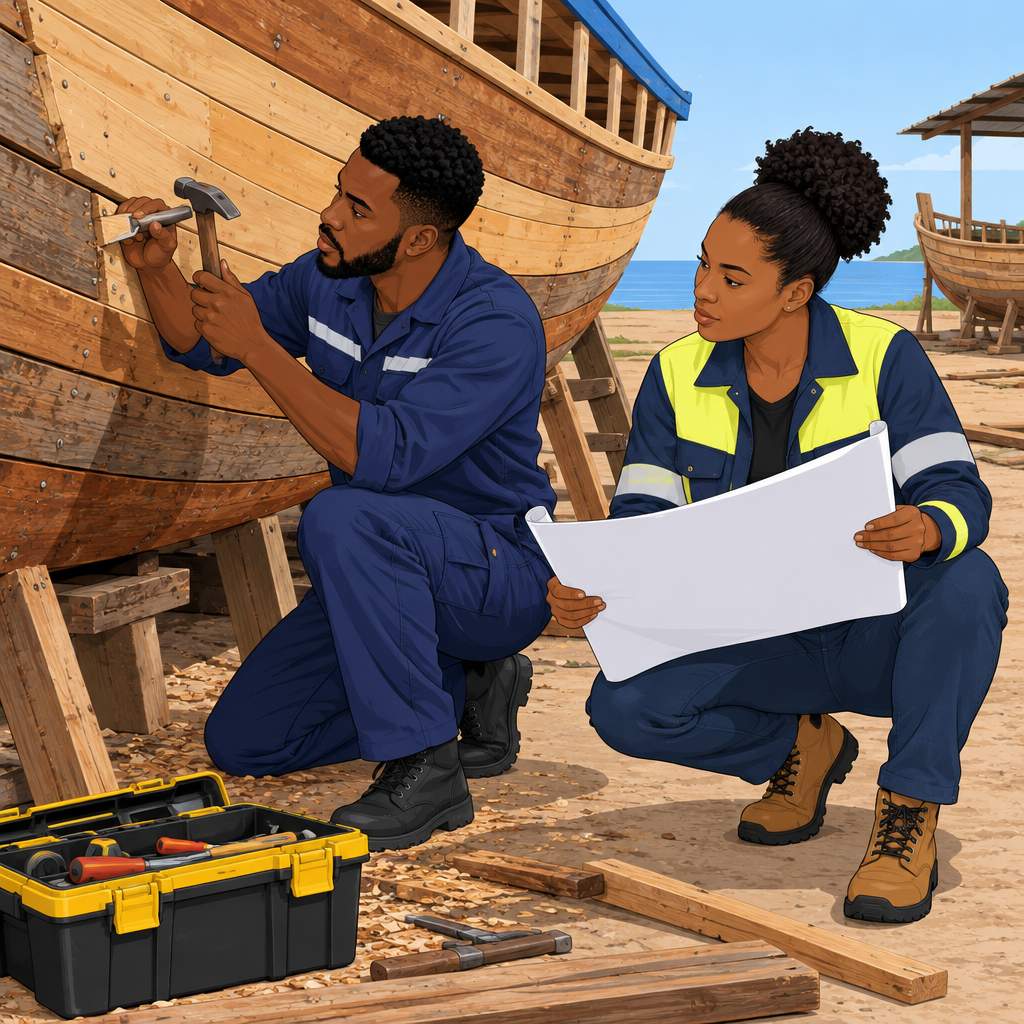
Environmental Challenges in Nigerian Boat Building
Boat building in Nigeria faces numerous environmental challenges that threaten industry sustainability.
These challenges affect coastal resources, working conditions, and construction practices.
Climate change, pollution, and overfishing require sustainable responses from boat builders.
- Climate change affects boat building practices.
- Pollution contaminates waterways and threatens health.
- Overfishing reduces fish stocks and pressures ecosystems.
Climate Change
Climate change increases the frequency of storms affecting coastal communities.
Transform Your Career with Expert Guidance
Get personalized mentorship consulting that’s tailored to your unique path. Our expert advice is actionable and exclusive.
Get StartedRising sea levels also challenge boat construction in coastal areas.
Consequently, boat builders must adapt practices to changing coastal conditions.
Pollution
Industrial activities, improper waste disposal, and oil spills contaminate water bodies.
Contaminated waterways pose health risks to boat builders and marine life.
Therefore, builders need practices that limit waste and harmful discharges.
Overfishing
Overfishing depletes fish stocks and places pressure on marine ecosystems.
It also reduces the availability of traditional boat building materials like wood.
As a result, builders must consider resource conservation during construction.
Sustainable Solutions for Boat Building
Nigerian boat builders must embrace sustainable solutions to reduce environmental impacts.
These solutions can protect resources while supporting responsible construction.
They also encourage cooperation among builders, agencies, and local communities.
- Use eco-friendly building materials and techniques.
- Adopt renewable energy sources for building operations.
- Support reforestation and marine conservation efforts.
- Collaborate with environmental agencies to enforce regulations.
Eco-Friendly Building Materials and Techniques
Builders can use recycled materials to reduce waste during construction.
Biodegradable components can further reduce pollution from boat building.
Non-toxic finishes can protect workers, waterways, and marine life.
Renewable Energy Sources
Solar panels can provide renewable power for boat building operations.
Wind turbines can also reduce reliance on fossil fuels.
Hybrid engines can lower greenhouse gas emissions from boat operations.
Reforestation and Marine Conservation
Boat builders can plant trees to help replenish forests.
They can also support marine protected areas.
These efforts help restore ecosystems and preserve natural resources.
Collaboration with Environmental Agencies
Builders can work with government agencies to follow environmental regulations.
NGOs can help promote sustainable practices within local communities.
Local collaboration can strengthen environmental responsibility across the industry.
Collective action can make Nigerian boat building more environmentally conscious.
Sustainable practices can protect ecosystems while supporting the industry’s future.
See Related Content: Applied Geology Research Areas in Nigeria
Strategies for Strengthening Nigerian Boat Building
Nigerian boat building needs coordinated solutions to overcome its current industry challenges.
These solutions should strengthen local production, improve expertise, and encourage industry growth.
Furthermore, cooperation among builders, experts, and government agencies can support long-term progress.
- Promote local boat building materials and techniques.
- Collaborate with foreign boat building experts for knowledge transfer.
- Provide government incentives and policies that support the boat building industry.
Promotion of Local Boat Building Materials and Techniques
Local materials and techniques can help Nigerian boat builders reduce production costs.
For example, builders can use available resources such as timber and fiberglass.
Additionally, builders can preserve traditional methods while modernizing them for current industry standards.
Collaboration with Foreign Boat Building Experts
Foreign experts can help Nigerian boat builders develop stronger technical skills.
Through collaboration, local builders can learn established boat building practices and improve their work.
Such partnerships can also encourage technology transfer and innovation within the local industry.
Government Incentives and Policies for Industry Support
The government can support boat building through financial assistance, tax breaks, and infrastructure development.
These measures can stimulate growth and strengthen the industry’s capacity.
Moreover, regulations can promote quality standards and safety in boat construction.
These combined measures can help the Nigerian boat building industry overcome obstacles.
They can also help local builders compete more effectively in domestic and international markets.
Gain More Insights: Success Stories in Nigerian Boat Building Industry
Innovation in Nigerian Boat Building
Boat building in Nigeria has seen a shift toward innovation in recent years.
Several projects demonstrate this innovative approach.
- One notable project involves constructing fiberglass boats in Lagos with modern techniques.
- These boats weigh less, last longer, and require easier maintenance than traditional wooden boats.
- Additionally, builders use computer-aided design software to develop boat blueprints.
Examples of Innovative Boat Building Projects
- A Niger Delta community has started building boats with recycled plastic materials.
- This initiative promotes sustainability and provides fishermen with an affordable alternative.
- Meanwhile, Kano builders use modular construction for faster and more efficient boat assembly.
Benefits of Technology and Modern Techniques
- By incorporating technology, Nigerian artisans can improve their craftsmanship and productivity.
- Modern techniques help builders create safer and more reliable watercraft for various purposes.
- Furthermore, innovation gives builders opportunities to reach global markets and showcase their skills.
Innovation remains crucial to the growth and sustainability of Nigerian boat building.
By embracing technology, builders can overcome challenges and create high-quality vessels for today’s maritime sector.
Explore Further: Fieldwork in Nigerian Agricultural Science Studies
Prospects for Nigerian Boat Building
Nigerian boat builders face limited access to modern technology, training, and financial resources.
These barriers have hindered industry growth and reduced competitiveness in the global market.
However, government funding and training programs could strengthen local boat-building capacity.
Partnerships with international boat-building firms could also support technology transfer.
Additionally, regulatory bodies could establish standards that improve quality across the industry.
These measures could help Nigerian boat builders overcome persistent obstacles.
Consequently, stronger support could help them compete locally and internationally.
Additional Resources
Google search results for Nigerian Boat Building: Challenges and Solutions Sciences
Bing search results for Nigerian Boat Building: Challenges and Solutions Sciences


