




Introduction
This overview explains obstetric procedures in Nigerian hospitals.
These procedures support safe delivery for babies.
They also help reduce maternal mortality rates.
Importance of Regular Antenatal Check-Ups
Regular antenatal appointments help healthcare professionals identify and manage pregnancy complications early.
They also allow providers to monitor fetal growth and development throughout pregnancy.
Additionally, appointments give expectant mothers nutrition advice, lifestyle guidance, emotional support, and counseling.
- Early detection and management of pregnancy complications
- Monitoring fetal growth and development
- Guidance about nutrition and healthy lifestyle choices
- Screening for pregnancy risk factors
- Emotional support and counseling for expectant mothers
Common Antenatal Tests and Screenings
Healthcare professionals measure blood pressure to monitor for signs of preeclampsia.
Blood tests can identify anemia, blood group, HIV, and syphilis.
Urinalysis helps screen for urinary tract infections and protein in the urine.
- Blood pressure measurement
- Blood tests for anemia and blood group
- Screening for HIV and syphilis
- Urinalysis for infections and urinary protein
- Ultrasound scans for fetal growth and development
- Gestational diabetes screening
Monitoring Fetal Development and Maternal Health
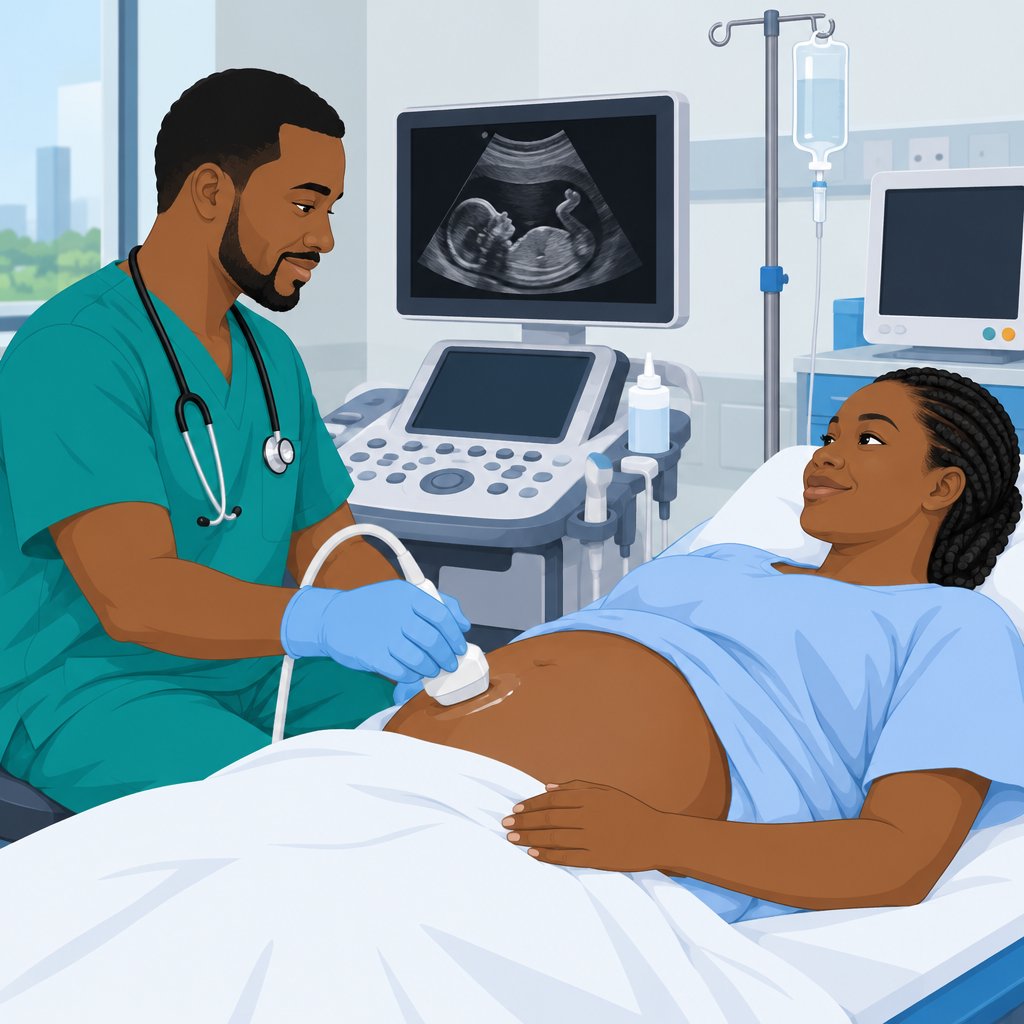
Regular ultrasounds assess fetal growth, position, and general well-being.
Fundal height measurements help providers assess uterine and fetal growth.
Providers also listen to the fetal heartbeat and check the mother’s weight and blood pressure.
- Ultrasounds to assess fetal growth and position
- Fundal height measurements
- Fetal heartbeat monitoring
- Maternal weight checks
- Maternal blood pressure checks
- Discussion of pregnancy symptoms and concerns
Antenatal care supports the health of both mother and baby throughout pregnancy.
It also creates opportunities for early intervention, support, and guidance before delivery.
Labour and Delivery in Nigerian Hospitals
Medical professionals closely monitor labour and delivery in Nigerian hospitals.
They focus on protecting the mother and baby throughout the birthing process.
Care teams assess labour progress and respond when medical support becomes necessary.
Stages of Labour and Delivery
Labour develops through three main stages before delivery ends.
Each stage involves specific changes in the mother’s body.
Healthcare providers monitor these changes as labour progresses.
- The first stage begins when contractions start and the cervix begins to dilate.
- The second stage occurs when the mother pushes the baby through the birth canal.
- The third stage ends when the placenta leaves the uterus after birth.
Medical Support During Labour
Healthcare providers use medical interventions to assess labour and support the birthing process.
These interventions help staff monitor the baby and support the mother’s needs.
Providers choose appropriate measures according to labour progress and clinical circumstances.
- Continuous fetal monitoring tracks the baby’s heart rate during labour.
- Intravenous fluids help keep the mother hydrated.
- Epidurals provide pain relief during labour.
- Oxytocin can stimulate contractions when healthcare providers consider it necessary.
Cesarean Section Procedures
A Cesarean section delivers the baby through incisions in the mother’s abdomen and uterus.
Obstetricians perform this operation when vaginal delivery presents specific concerns.
Trained obstetricians perform Cesarean sections in Nigerian hospitals.
- Fetal distress may require surgery when the baby’s heart rate indicates distress.
- Failed labour may require surgery when labour stops progressing or complications develop.
- Breech presentation may require surgery when the baby does not lie head-down.
- Placenta previa may require surgery when the placenta covers the cervix.
Hospitals consider Cesarean sections safe when teams use sterile environments and proper medical equipment.
Medical professionals manage the procedure while protecting the health of both patients.
Skilled healthcare teams therefore guide labour and delivery through careful monitoring and management.
Learn More: Government Policies on Orthopaedic Tech in Nigeria
Postpartum Care
- Care for the mother and baby immediately after delivery
- Monitor complications following childbirth
- Support breastfeeding and nutrition for the mother and baby
Healthcare providers support both patients immediately after childbirth.
This period requires careful assessment to promote recovery and protect newborn health.
Furthermore, providers address physical needs, feeding, nutrition, and possible complications.
Immediate Care for the Mother and Baby
Following delivery, healthcare providers assess the health status of the mother and baby.
They check for complications and confirm that both patients remain stable.
They also support recovery during the early period after childbirth.
Monitoring for Postpartum Complications
Healthcare providers monitor the mother for complications that may develop after childbirth.
They check vital signs and watch for infection or hemorrhage.
They also assess the mother’s physical and emotional well-being.
Prompt identification allows providers to manage complications and reduce serious health risks.
Transform Your Career with Expert Guidance
Get personalized mentorship consulting that’s tailored to your unique path. Our expert advice is actionable and exclusive.
Get StartedBreastfeeding and Nutrition After Childbirth
Healthcare providers emphasize breastfeeding during the postpartum period.
Breastfeeding supplies essential nutrients and antibodies to the baby.
It also promotes bonding and supports the mother’s recovery.
Meanwhile, proper maternal nutrition replenishes nutrients lost during pregnancy and childbirth.
It also supports the mother’s health and well-being.
Find Out More: How to Become a Radiographer in Nigeria
Neonatal Resuscitation in Nigerian Hospitals
Neonatal resuscitation provides emergency care for newborns experiencing distress in Nigerian hospitals.
This procedure supports newborn survival and helps prevent long-term health complications.
Therefore, healthcare providers must assess each newborn quickly and provide appropriate emergency support.
Medical staff assess the newborn’s condition before selecting suitable interventions.
Common interventions include clearing the airways, providing oxygen, and performing chest compressions when necessary.
- Staff assess newborns and provide airway support when distress occurs.
- Healthcare providers receive specialized training through simulations and hands-on practice.
- Prompt intervention improves survival prospects and reduces potential complications.
Additionally, specialized training prepares healthcare providers to manage neonatal emergencies effectively.
Training combines simulation exercises with hands-on practice to strengthen essential resuscitation skills.
Quick intervention remains critical because seconds can influence the newborn’s outcome.
Prompt assessment and appropriate action can improve survival chances and reduce the risk of complications.
Finally, continuous training and adherence to established protocols support quality neonatal care.
Uncover the Details: Patient Experiences with Restorative Dentistry in Nigeria
Episiotomy and Perineal Repair
An episiotomy is a surgical incision that widens the vaginal opening during childbirth.
Healthcare providers may perform this procedure to help prevent perineal tissue tearing during delivery.
Afterward, providers repair the incision or tears with absorbable sutures to support healing.
- Episiotomy procedure: The incision widens the vaginal opening during childbirth.
- Perineal care: Proper care helps prevent infection and supports healing after delivery.
- Perineal repair: Healthcare providers use absorbable sutures to repair the incision or tears.
Perineal Care After Delivery
Women should follow their healthcare providers’ instructions to promote proper healing and prevent complications.
They should keep the perineal area clean and dry after childbirth.
Additionally, women can use a peri-bottle or warm water to cleanse the area after using the toilet.
Loose-fitting cotton underwear can also support comfort during recovery.
Managing Perineal Pain and Warning Signs
Perineal pain and discomfort commonly occur after childbirth.
However, proper care and sufficient rest can help relieve these symptoms.
Women should avoid heavy lifting and strenuous activities that could strain the perineal area.
Women should contact their healthcare provider immediately if severe pain, bleeding, or infection signs develop.
Learn More: Introduction to Biomedical Technology in Nigeria
Induction of Labour
Induction of labour is a common obstetric procedure in Nigerian hospitals.
It stimulates contractions before labour begins naturally.
Hospitals use this procedure for several clinical reasons.
Reasons for Inducing Labour
Healthcare providers may recommend induction when continuing pregnancy creates potential risks.
They assess the mother’s condition and the baby’s wellbeing before proceeding.
Furthermore, providers consider the pregnancy’s duration and related complications.
- Prolonged pregnancy beyond 42 weeks
- Pre-eclampsia or high blood pressure
- Diabetes during pregnancy
- Decreased fetal movements
- Decreased amniotic fluid levels
Methods Used to Induce Labour
Medical teams select an induction method according to the clinical situation.
Some methods prepare the cervix, while others directly stimulate contractions.
Additionally, providers monitor the mother and baby during each method.
- Membrane sweeping to release prostaglandins
- Artificial rupture of membranes
- Oxytocin infusion to stimulate contractions
- Prostaglandin gel or tablet insertion
Risks and Benefits of Labour Induction
Labour induction can involve risks for the mother and baby.
Possible risks include failed induction, uterine hyperstimulation, and fetal distress.
However, induction can reduce complications when providers identify a clear medical need.
Therefore, healthcare providers should carefully weigh the potential risks and benefits before proceeding.
Close monitoring helps providers support a safe and successful induction process.
These obstetric interventions help support safe pregnancies and deliveries in Nigeria.
Healthcare providers implement and perform these obstetric procedures.
Their expertise and skills help achieve successful outcomes.
Therefore, pregnant women in Nigeria should seek proper care and support throughout pregnancy.
This includes attending regular check-ups and following medical advice.
Women should also take an active role in protecting their health and well-being.
Understanding these procedures and healthcare providers’ roles helps pregnant women take appropriate steps.
They can prioritize their health and seek care that supports their journey to motherhood.
Additional Resources
Google search results for Common Obstetric Procedures in Nigerian Hospitals Medical
Bing search results for Common Obstetric Procedures in Nigerian Hospitals Medical


