




Introduction
Radiographers use diagnostic imaging techniques to help diagnose and treat medical conditions.
They play a crucial role in healthcare by helping physicians make accurate diagnoses.
They also help physicians monitor patients’ treatment progress.
Those aspiring to become radiographers in Nigeria must follow specific steps and meet required standards.
Education and Training for Radiographers
To become a radiographer in Nigeria, complete a Bachelor’s degree in Radiography or Medical Imaging Technology.
Some institutions also offer diploma programs in Radiography as an alternative entry pathway.
Additionally, Radiography programs usually require four to five years of study.
Educational Qualifications for Admission
Applicants typically need good credit passes in Physics, Chemistry, Biology, and Mathematics.
Most Radiography programs also require at least five O’ Level credits, including English Language.
Therefore, prospective students should confirm each institution’s specific admission requirements.
Accredited Radiography Institutions in Nigeria
Several accredited universities and institutions offer Radiography programs across Nigeria.
These institutions provide academic instruction and practical preparation for aspiring radiographers.
Prospective students can review available programs before selecting an institution.
- University of Lagos (UNILAG)
- University of Nigeria, Nsukka (UNN)
- Ahmadu Bello University (ABU), Zaria
- University of Maiduguri (UNIMAID)
Program Duration and Coursework
Radiography programs generally combine theoretical lessons, practical training, and clinical rotations.
Students receive hands-on instruction in various imaging techniques during their training.
Furthermore, the curriculum includes Radiographic Anatomy, Radiographic Physics, and Image Production.
Students also study Pathology and Radiographic Positioning as part of their coursework.
Clinical Training and Professional Development
Students must complete a supervised internship in a hospital or diagnostic center.
This internship helps students gain practical experience in professional healthcare environments.
Graduates should operate radiographic equipment, analyze images, and communicate effectively with patients.
Moreover, continuous professional development helps radiographers stay updated with technological advancements.
Ultimately, the profession requires dedication, hard work, and a passion for helping others.
Importance of Radiographer Licensing in Nigeria
Obtaining a license remains crucial for radiographers practicing in Nigeria.
The RRBN certifies radiographers in Nigeria and regulates professional practice.
A valid license supports legal practice, professional recognition, and patient safety.
- Legal requirement: Nigerian law prohibits radiographers from practicing without a valid RRBN license.
- Professional recognition: A license demonstrates commitment to professional standards.
- Patient safety: Licensing confirms that radiographers possess essential skills and knowledge.
Steps for RRBN Certification
Aspiring radiographers must complete each certification step established by the RRBN.
The process combines academic preparation, application, examination, and supervised practical experience.
After meeting all requirements, applicants receive authorization to practice in Nigeria.
- Graduate from an accredited radiography program and obtain a recognized bachelor’s degree.
- Submit the required registration documents and fees to the RRBN for assessment.
- Pass the RRBN licensing examination to demonstrate professional competence.
- Complete an internship under the supervision of a registered radiographer.
- Receive the license after fulfilling all certification requirements.
Continuing Education and License Renewal
Licensed radiographers must maintain their professional standing after entering practice.
They renew their licenses annually to continue practicing legally.
They also pursue ongoing education to support continued learning and professional improvement.
- Renewal: Radiographers must renew their licenses annually for continued legal practice.
- Continuing professional development: Radiographers participate in ongoing training and education.
- CPD points: Radiographers accumulate required points to demonstrate ongoing learning.
You Might Also Like: Patient Experiences with Restorative Dentistry in Nigeria
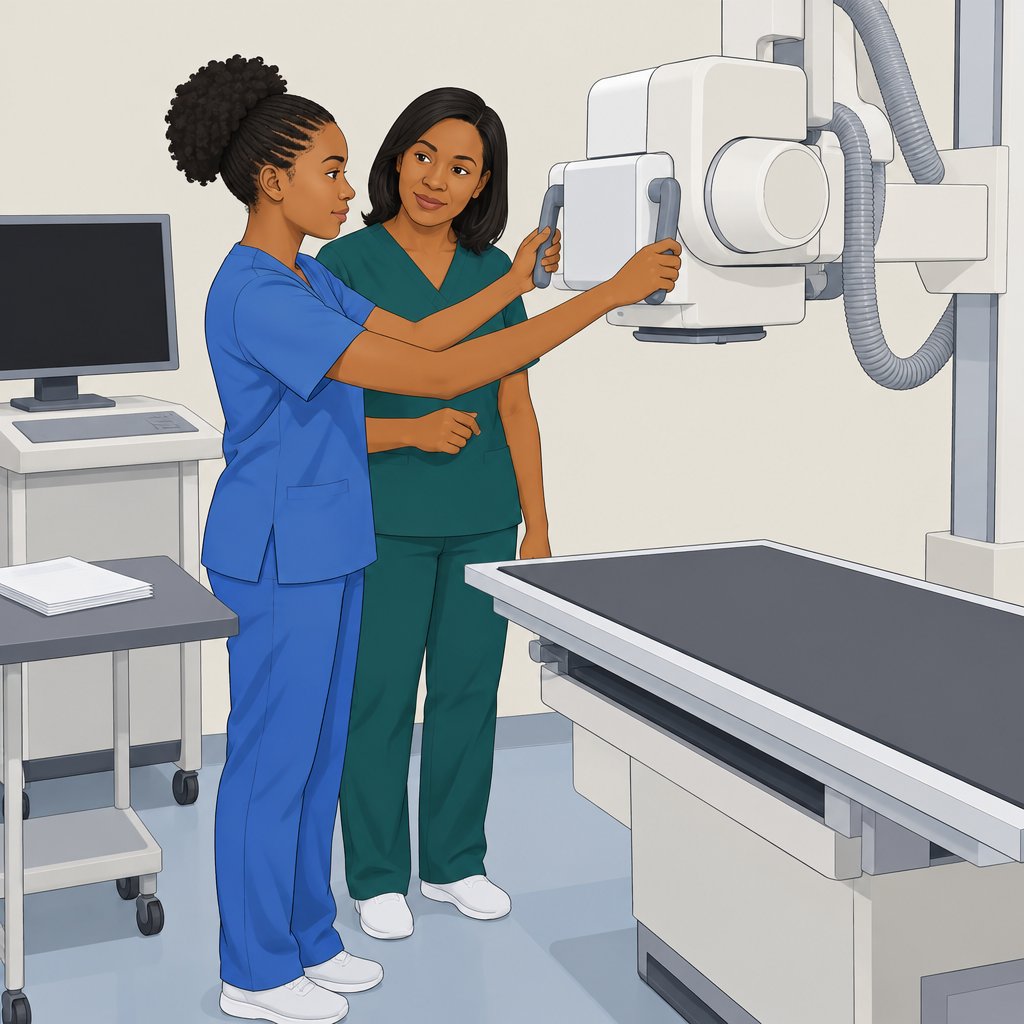
Internship and Clinical Experience
Internship and clinical experience form a crucial part of radiography programs in Nigeria.
Students apply classroom knowledge and skills within real-world clinical environments.
This experience usually supports graduation and eligibility for professional certification.
Experienced radiographers and healthcare professionals supervise students during their clinical training.
Students observe and participate in X-rays, magnetic resonance imaging, computed tomography, and ultrasound procedures.
Benefits of Hands-On Clinical Training
Clinical training helps students develop technical abilities and professional competence.
Moreover, students strengthen their critical thinking skills through practical patient care situations.
They also gain confidence while preparing for professional responsibilities after graduation.
Transform Your Career with Expert Guidance
Get personalized mentorship consulting that’s tailored to your unique path. Our expert advice is actionable and exclusive.
Get Started- Students gain practical experience performing diagnostic imaging procedures and interacting with patients.
- They apply classroom knowledge to real-world situations and improve their understanding of radiography principles.
- Clinical practice develops communication, teamwork, problem-solving, and critical thinking skills.
- Working with patients helps students build confidence in their professional abilities.
Networking and Practical Skill Development
Clinical placements create valuable opportunities for students to connect with experienced radiographers.
Students also interact with medical professionals and other industry experts during their training.
These professional connections may support mentorship, employment opportunities, and future career development.
Furthermore, hands-on training teaches students to operate imaging equipment safely.
Students learn to position patients correctly and maintain safety during imaging procedures.
They also practice effective communication with patients and healthcare team members.
These practical abilities support quality patient care and professional standards in radiography.
See Related Content: Introduction to Biomedical Technology in Nigeria
Career Opportunities for Radiographers in Nigeria
Radiographers in Nigeria can pursue opportunities across public and private healthcare facilities.
They can work in hospitals, diagnostic centers, clinics, research institutions, and government agencies.
Increasing demand for medical imaging services supports promising career prospects for radiographers.
Job Prospects in Healthcare and Government
Radiographers can find employment in both public and private hospitals.
Diagnostic centers and clinics also employ radiographers to provide medical imaging services.
Research institutions offer additional opportunities for radiographers interested in investigative work.
Furthermore, government agencies may employ radiographers in specialized professional roles.
For example, radiographers may support radiation safety and regulatory compliance at the Nigerian Nuclear Regulatory Authority.
Areas of Specialization Within Radiography
Radiography offers several specialization options for professionals seeking career advancement.
Common areas include diagnostic radiography, therapeutic radiography, nuclear medicine, ultrasound imaging, and magnetic resonance imaging.
Each specialization requires additional training and expertise.
Specialization allows radiographers to focus on specific interests and provide targeted patient care.
Salary Expectations for Radiographers
Radiographers’ salaries in Nigeria vary according to experience, education, specialization, and location.
Entry-level radiographers may earn between N50,000 and N100,000 monthly.
Experienced professionals with advanced certifications may earn more than N200,000 monthly.
Radiographers in major cities may earn higher salaries than those working in rural areas.
Top private hospitals and diagnostic centers in Lagos and Abuja may offer higher compensation.
Explore Further: Government Support for Physiotherapy in Nigeria
Professional Development for Radiographers
Radiographers should stay updated on radiography technology advancements to provide excellent patient care.
Continuous learning and training help radiographers improve their skills and knowledge.
Further education or specialization can create new career opportunities for radiographers.
Advanced degrees or certifications can lead to higher-paying positions and increased responsibilities.
Specializing in MRI, CT, or nuclear medicine can strengthen a radiographer’s expertise.
Networking with healthcare professionals can provide valuable insights and career connections.
Additionally, conferences, workshops, and seminars help radiographers follow industry trends.
Collaboration with radiologists, physicians, and other providers can improve patient outcomes and teamwork.
Joining organizations like the Nigerian Institute of Radiography can provide resources and career support.
Finally, research projects and publications can contribute to advances in radiography.
Delve into the Subject: Dental Crowns and Bridges: What to Expect
Skills and Qualities
Radiographers need technical proficiency and careful attention to detail.
Critical thinking helps them analyze images and support accurate diagnoses.
Clear communication supports patient interactions and teamwork with other healthcare professionals.
Importance of Attention to Detail
Attention to detail plays an essential role in radiography.
Even small errors can significantly affect patient care.
Radiographers must review images carefully to support accurate and consistent findings.
Importance of Critical Thinking
Radiographers use critical thinking to interpret complex images.
They analyze information effectively and identify abnormalities within presented images.
Therefore, critical thinking supports accurate diagnosis and treatment planning.
Importance of Communication Skills
Effective communication helps radiographers explain procedures clearly to patients.
It also supports collaboration with other healthcare professionals.
Radiographers must convey medical information clearly to patients and colleagues.
Ways to Develop and Improve Skills
Radiographers can strengthen their abilities through deliberate and continuous development.
Several activities can improve technical, diagnostic, interpersonal, and problem-solving skills.
Regular self-assessment also helps identify opportunities for improvement.
- Attend workshops, seminars, and conferences to improve technical skills.
- Participate in peer reviews and seek feedback from colleagues.
- Complete interpersonal skills training for better patient interactions.
- Practice difficult cases to strengthen critical thinking skills.
- Find a radiography mentor for guidance and career support.
- Assess your performance regularly and identify areas for improvement.
Challenges and Rewards for Radiographers in Nigeria
Radiographers in Nigeria work in a demanding healthcare field with significant professional responsibilities.
They manage workplace challenges while supporting patients through essential diagnostic imaging services.
Their work also provides meaningful rewards, professional growth, and opportunities to improve patient care.
Common Workplace Challenges
Limited resources and outdated equipment can make quality imaging services difficult to provide.
Additionally, limited training opportunities can restrict professional growth and skill development.
Heavy workloads and long hours may cause burnout and affect job performance.
- Healthcare institutions may provide insufficient recognition and support for radiographers.
- Radiographers may face radiation hazards when facilities lack suitable safety measures.
Rewards of a High-Demand Healthcare Profession
Radiographers can make a difference by providing accurate imaging services that support patient care.
Furthermore, increasing demand can provide job security and competitive salary packages.
Medical imaging technology also creates opportunities for continuous learning and career advancement.
- Radiographers collaborate with healthcare professionals to support improved patient outcomes.
- Helping patients and contributing to healthcare can create a strong sense of fulfillment.
Experiences Shared by Nigerian Radiographers
Experienced radiographers describe the profession as challenging, meaningful, and personally rewarding.
They often value patient gratitude, teamwork, and opportunities to strengthen their professional abilities.
Their experiences also show how imaging advances can positively influence patient care.
- “Despite the challenges, radiography has rewarded me through its impact on diagnosis and treatment.”
- “Equipment shortages and long hours remain difficult, but patient gratitude makes the work worthwhile.”
- “Colleague support and a strong sense of purpose keep me motivated in this demanding profession.”
- “Imaging technology continues advancing, creating positive changes in patient care.”
- “The satisfaction of improving patient outcomes outweighs many obstacles in radiography.”
Building a Meaningful Radiography Career
Reviewing the pathway to becoming a radiographer in Nigeria highlights several important considerations.
Aspiring radiographers should pursue their goals diligently and support quality diagnostic imaging services.
In doing so, they can make a positive impact on healthcare.
Readers can also share their experiences or ask questions about becoming a radiographer in Nigeria.
Additional Resources
Google search results for How to Become a Radiographer in Nigeria Medical
Bing search results for How to Become a Radiographer in Nigeria Medical


