




Introduction to Biomedical Technology
Biomedical technology supports healthcare advancement around the world.
It also contributes to the development of healthcare systems in Nigeria.
Furthermore, this technology helps healthcare providers improve medical services.
Definition of Biomedical Technology
Biomedical technology applies engineering principles to healthcare and medicine.
It combines technological methods with medical knowledge.
As a result, healthcare professionals can address various medical needs more effectively.
Importance of Biomedical Technology in Healthcare
Biomedical technology helps healthcare providers diagnose diseases.
It also supports patient health monitoring and treatment development.
Therefore, medical teams can manage various health conditions more effectively.
Biomedical Technology in Nigerian Healthcare
Biomedical technology continues to gain traction in Nigeria.
The country increasingly focuses on improving healthcare infrastructure and services.
Moreover, Nigeria invests in training biomedical engineers and technicians for healthcare support.
Nigerian hospitals use biomedical technology for early disease detection.
They also apply it to precision medicine and personalized healthcare.
Consequently, technology integration improves patient outcomes and enhances care quality.
History of Biomedical Technology in Nigeria
Nigeria began developing biomedical technology during the early years after independence.
During the 1960s, the government invested in healthcare infrastructure.
These investments improved medical facilities and supported healthcare professional training.
Initially, Nigeria imported biomedical devices from countries such as the United States and the United Kingdom.
Evolution of Biomedical Technology in Nigeria
Over time, Nigeria made significant progress in biomedical technology.
Research institutions and universities now specialize in biomedical engineering.
Meanwhile, local manufacturers began producing medical devices for growing healthcare needs.
Consequently, Nigerian biomedical engineers developed innovative responses to healthcare challenges.
Key Milestones and Advancements
Nigeria achieved an important milestone by developing low-cost medical devices.
These devices improved healthcare access in rural areas.
Additionally, specialized medical centers strengthened research and development activities.
International collaborations have also introduced advanced technologies into the country.
Challenges Affecting Biomedical Technology Development
Despite this progress, Nigeria continues to face several development challenges.
Limited funding restricts biomedical research and development.
Furthermore, the country has too few skilled biomedical engineers.
An inadequate medical device regulatory framework also hinders industry growth.
Continued investment and collaboration could help Nigeria become a biomedical technology leader in Africa.
Applications of Biomedical Technology in Nigeria
Biomedical technology supports several healthcare applications in Nigeria.
It strengthens diagnosis, treatment, rehabilitation, and patient support across healthcare settings.
These applications help professionals assess conditions, provide care, and support patient independence.
Medical Imaging Technologies
Medical imaging technologies help healthcare professionals examine internal body structures.
They support diagnosis, treatment planning, and progress monitoring.
Consequently, providers can identify conditions and make timely healthcare decisions.
- Biomedical technology has advanced medical imaging through X-rays, CT scans, MRI, and ultrasound.
- These technologies help professionals diagnose conditions, guide treatments, and monitor patient progress.
- In Nigeria, medical imaging can reveal cancer, fractures, internal injuries, and organ abnormalities.
- Therefore, healthcare professionals can make informed decisions and provide accurate, timely diagnoses.
Diagnostic Tools and Equipment
Diagnostic tools help healthcare providers evaluate a patient’s health status.
They also support disease detection, prevention, and ongoing management.
Transform Your Career with Expert Guidance
Get personalized mentorship consulting that’s tailored to your unique path. Our expert advice is actionable and exclusive.
Get StartedAs a result, providers can select treatments that match individual patient needs.
- Biomedical technology has enabled blood analyzers, genetic testing kits, and glucose monitors in Nigeria.
- These tools help providers identify medical conditions and recommend appropriate treatments.
- They also support early diagnosis, disease tracking, and personalized treatment decisions.
- Consequently, diagnostic equipment can improve healthcare outcomes and patients’ quality of life.
Therapeutic and Surgical Devices
Therapeutic and surgical devices support treatment and the restoration of bodily functions.
These devices also help providers perform procedures with greater precision.
Consequently, patients may experience improved care outcomes and shorter recovery periods.
- Biomedical technology has supported pacemakers, prosthetic limbs, and robotic surgical systems in Nigeria.
- These devices treat medical conditions, restore functions, and improve patient mobility.
- They can reduce recovery time and minimize complications during medical procedures.
- Furthermore, providers can deliver precise treatments while enhancing patient safety.
Rehabilitation and Assistive Technologies
Rehabilitation and assistive technologies help people regain mobility and independence.
They also support participation in society and improve quality of life.
Through these tools, healthcare providers can address physical and cognitive impairments.
- Biomedical technology supports prosthetic devices, wheelchairs, and mobility aids in Nigeria.
- These technologies help individuals with disabilities improve mobility and functional abilities.
- They enable greater independence and support fuller participation in society.
- Therefore, healthcare practices can promote inclusivity and empower individuals with disabilities.
See Related Content: Government Support for Physiotherapy in Nigeria
Diagnostic Precision and Treatment Decisions
Advanced imaging techniques help Nigerian healthcare professionals identify diseases and conditions more precisely.
For example, MRI and CT scans provide detailed information for clinical assessment.
As a result, providers can develop treatment plans that respond more accurately to patient needs.
Patient Monitoring and Care Outcomes
Monitoring tools and devices help healthcare providers observe patients more effectively.
For instance, wearable technology tracks vital signs in real time.
Consequently, providers can intervene quickly when patient conditions require attention.
These improvements can support better outcomes and greater patient satisfaction.
Public Health Access and Disease Prevention
Biomedical technology strengthens public health initiatives and disease prevention efforts in Nigeria.
Genetic testing helps researchers identify people who face risks for certain diseases.
Therefore, health teams can develop targeted prevention strategies for those individuals.
Additionally, telemedicine and mobile health technologies expand access in remote areas.
This broader access contributes to public health improvement.
Discover More: Dental Crowns and Bridges: What to Expect
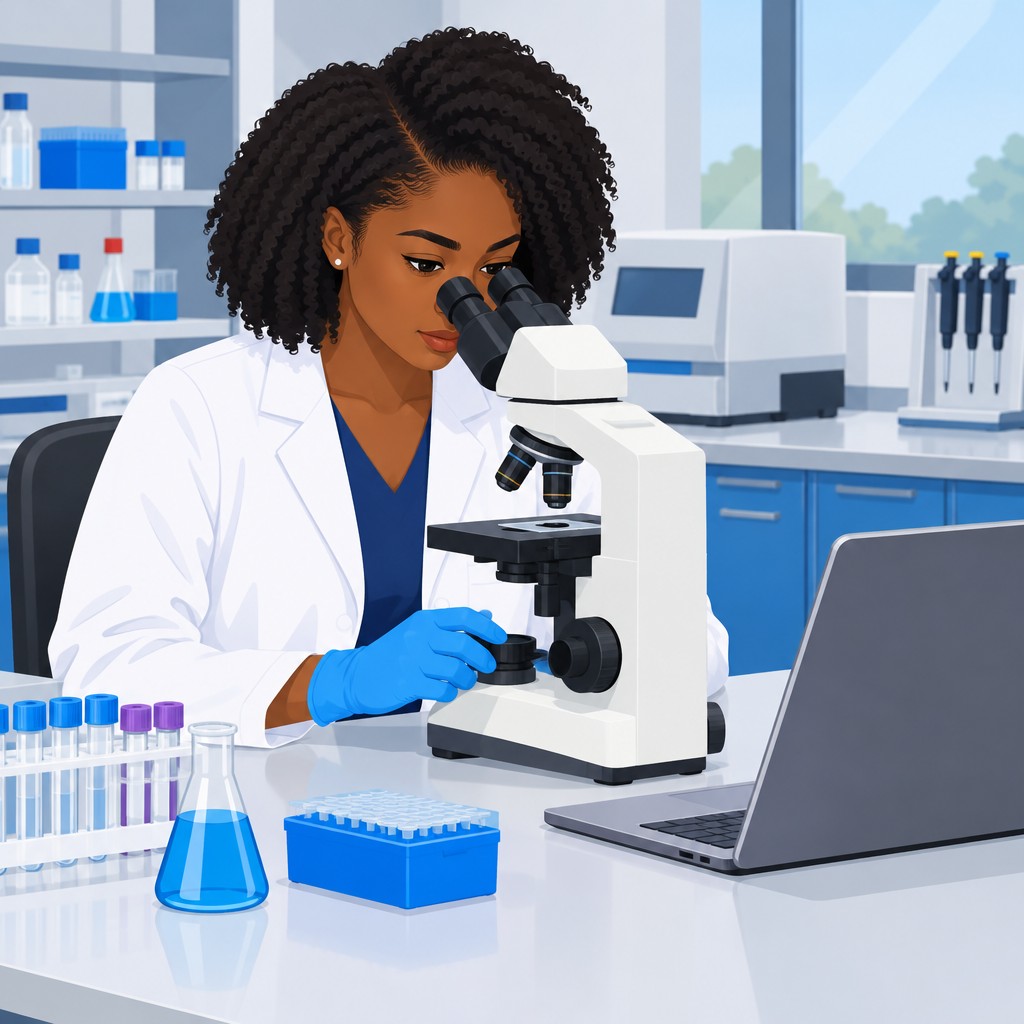
Biomedical Technology Education and Training in Nigeria
Nigeria’s biomedical technology field has grown in recent years.
Universities and polytechnics now provide education for people entering this field.
These programs develop knowledge for work across healthcare, research, and technology settings.
Training Programs and Institutions
Several Nigerian institutions offer biomedical technology programs at undergraduate and postgraduate levels.
Students can select study paths that match their career goals and interests.
Coursework covers anatomy, physiology, medical instrumentation, biochemistry, and related subjects.
- University of Lagos
- University of Ibadan
- Obafemi Awolowo University
- Ahmadu Bello University
- Ladoke Akintola University of Technology
Skills Required for Biomedical Technologists
Biomedical technologists need technical knowledge to use medical equipment and instruments effectively.
They also need problem-solving skills to troubleshoot complex issues.
Attention to detail supports precision and accuracy during technical tasks.
Effective communication helps them work with healthcare professionals.
Analytical skills help them assess data and interpret results.
Biomedical technologists support healthcare teams by helping medical equipment function properly.
They must also follow new technological developments and techniques in their field.
Career Opportunities in Biomedical Technology
Graduates can pursue several roles within Nigeria’s healthcare and technology sectors.
They may work in hospitals, research institutes, medical device companies, or government agencies.
These roles support healthcare delivery and provide opportunities for professional growth.
- Biomedical Equipment Technician: Maintains and repairs medical equipment.
- Clinical Engineer: Develops and implements medical devices.
- Biomedical Scientist: Conducts research in healthcare institutions.
- Medical Technologist: Performs tests and procedures in clinical laboratories.
- Healthcare IT Specialist: Manages and optimizes healthcare technology systems.
Delve into the Subject: Professional Associations for Optometrists in Nigeria
Regulations and Standards for Biomedical Technology in Nigeria
Nigeria uses regulations and standards to support quality and safety in healthcare practices.
These requirements guide biomedical technology across healthcare settings.
Regulatory oversight also helps monitor professional and product compliance.
Regulatory Bodies Overseeing Biomedical Technology
NAFDAC oversees biomedical technology as the primary regulatory body in Nigeria.
Other regulatory bodies include the Medical Laboratory Science Council of Nigeria and the Pharmaceutical Society of Nigeria.
Together, these bodies monitor and enforce biomedical technology standards in Nigeria.
- NAFDAC serves as Nigeria’s primary regulatory body for biomedical technology.
- The Medical Laboratory Science Council of Nigeria also oversees relevant professional standards.
- The Pharmaceutical Society of Nigeria contributes to biomedical technology oversight.
- These regulatory bodies work together to enforce national standards.
Compliance with International Standards and Guidelines
Nigeria aligns biomedical technology regulations with international best practices.
This alignment supports global quality and safety expectations in Nigerian healthcare.
Regulatory bodies collaborate with international organizations and follow updated standards and guidelines.
- Nigeria strives to align biomedical technology standards with international practices.
- International alignment helps Nigerian healthcare practices meet global quality expectations.
- It also supports safety across healthcare practices.
- Nigerian regulatory bodies collaborate with international organizations to follow current guidance.
Measures Supporting Quality and Safety
Certification helps regulators assess biomedical technology products for quality and safety.
Inspections and audits verify compliance with applicable regulations and standards.
Training programs and workshops educate healthcare professionals about biomedical technology practices.
- Regulatory bodies certify biomedical technology products to support quality and safety.
- Inspections and audits help verify compliance with regulations and standards.
- Training programs and workshops teach healthcare professionals recommended practices.
- Ethical guidelines and professional codes of conduct support safe healthcare practices.
Delve into the Subject: Role of Anaesthesiologists in Nigerian Hospitals
Biomedical technology in Nigeria has experienced significant growth, creating opportunities for future trends and innovations.
Emerging Technologies in Biomedical Healthcare
Telemedicine is an important emerging technology in Nigeria.
As telecommunications infrastructure advances, remote healthcare services become more accessible, particularly in rural areas.
Additionally, artificial intelligence and machine learning support diagnostics and treatment planning.
These tools could transform healthcare delivery through more accurate and personalized patient care.
Potential Advancements and Research Opportunities
Nigeria could advance biomedical technology by developing affordable, portable medical devices.
Such devices could expand healthcare access in remote areas.
They could also improve the overall quality of care.
Meanwhile, genomics and personalized medicine offer promising research opportunities.
Studying individual genetic makeup could help providers tailor treatments to specific profiles.
Biomedical Technology and the Future of Nigerian Healthcare
Biomedical technology will shape Nigerias healthcare future by improving access to care.
It can also enhance diagnostic accuracy and expand treatment options.
Moreover, technology can help providers reach more patients and improve health outcomes.
This approach can reduce healthcare disparities and support a more efficient, sustainable system.
Biomedical Technology and Healthcare Improvement
Biomedical technology improves diagnostic accuracy, treatment efficiency, and patient care in Nigeria.
It also strengthens healthcare services and can help save lives.
Therefore, its effective implementation deserves sustained attention from healthcare stakeholders.
Training for Effective Technology Use
Healthcare stakeholders should invest in training professionals on current biomedical technologies and equipment.
Such training can help professionals use available tools more effectively.
Consequently, stronger skills can support continued advancement across the healthcare industry.
Advancing Biomedical Technology in Nigeria
Policymakers, healthcare institutions, and other stakeholders should prioritize biomedical technology adoption in Nigeria.
Meanwhile, investment in research, training, and infrastructure can improve healthcare delivery.
These investments can reduce mortality rates and enhance overall well-being.
Together, Nigerians can embrace biomedical technology and create a healthier future for everyone.
Additional Resources
Google search results for Introduction to Biomedical Technology in Nigeria Medical
Bing search results for Introduction to Biomedical Technology in Nigeria Medical


