




Anatomical Pathology in Nigeria
Anatomical pathology in Nigeria examines tissues and organs to study and diagnose diseases.
It also helps identify the underlying causes of illnesses.
Furthermore, anatomical pathology guides treatment decisions and supports patient care.
As technology and medical research advance, innovations can improve diagnostic accuracy and patient outcomes.
These developments can also strengthen overall healthcare quality in Nigeria.
History of Anatomical Pathology in Nigeria
Anatomical pathology practice in Nigeria dates back to the early twentieth century.
British colonial rule introduced modern medical practices to the country.
Initially, pathology services remained limited to a few hospitals in major cities.
Evolution of Anatomical Pathology
Over time, anatomical pathology developed significantly across Nigeria.
Technological advances and rising demand encouraged more accurate diagnostic services.
Furthermore, Nigerian pathologists adopted new techniques and tools for diagnosing diseases.
Major Milestones in Anatomical Pathology
Several developments have strengthened anatomical pathology practice in Nigeria.
Training, research, collaboration, and technology have supported this continuing development.
Meanwhile, standardized procedures have improved diagnostic consistency and service delivery.
- The Nigerian Institute of Medical Research began supporting pathology research and training in 1977.
- Universities and medical institutions introduced specialized anatomical pathology training programs.
- International collaborations helped improve the quality of anatomical pathology services.
- Digital pathology systems streamlined diagnoses and enabled remote expert consultations.
- Standardized protocols and guidelines improved accuracy when diagnosing common diseases.
- Service expansion brought anatomical pathology to underserved regions across Nigeria.
These developments have expanded access to quality diagnostic services throughout the country.
Continued investment in research, training, and technology can further strengthen Nigeria’s pathology capacity.
Current Challenges in Anatomical Pathology in Nigeria
Access to quality healthcare is a fundamental human right.
However, anatomical pathology in Nigeria faces several barriers to accurate and timely diagnosis.
These barriers also limit patient outcomes and medical research.
- Lack of resources and infrastructure
- Limited access to advanced technology
- Shortage of skilled professionals
Resource and Infrastructure Limitations
Many healthcare facilities lack adequate funding, equipment, and laboratory space.
Consequently, pathologists struggle to perform essential diagnostic tests and procedures.
Moreover, shortages of reagents and consumables can undermine reliable diagnoses.
Limited Access to Advanced Technology
Pathologists also have limited access to advanced diagnostic technology.
Digital imaging systems and molecular testing platforms remain unavailable or expensive in many settings.
Therefore, specialists cannot consistently apply recent medical advances to patient care.
Shortage of Skilled Professionals
Nigeria also faces a shortage of trained anatomical pathologists.
These professionals interpret tests, conduct research, and guide treatment decisions.
Consequently, limited staffing can delay diagnoses and increase the risk of misinterpreted results.
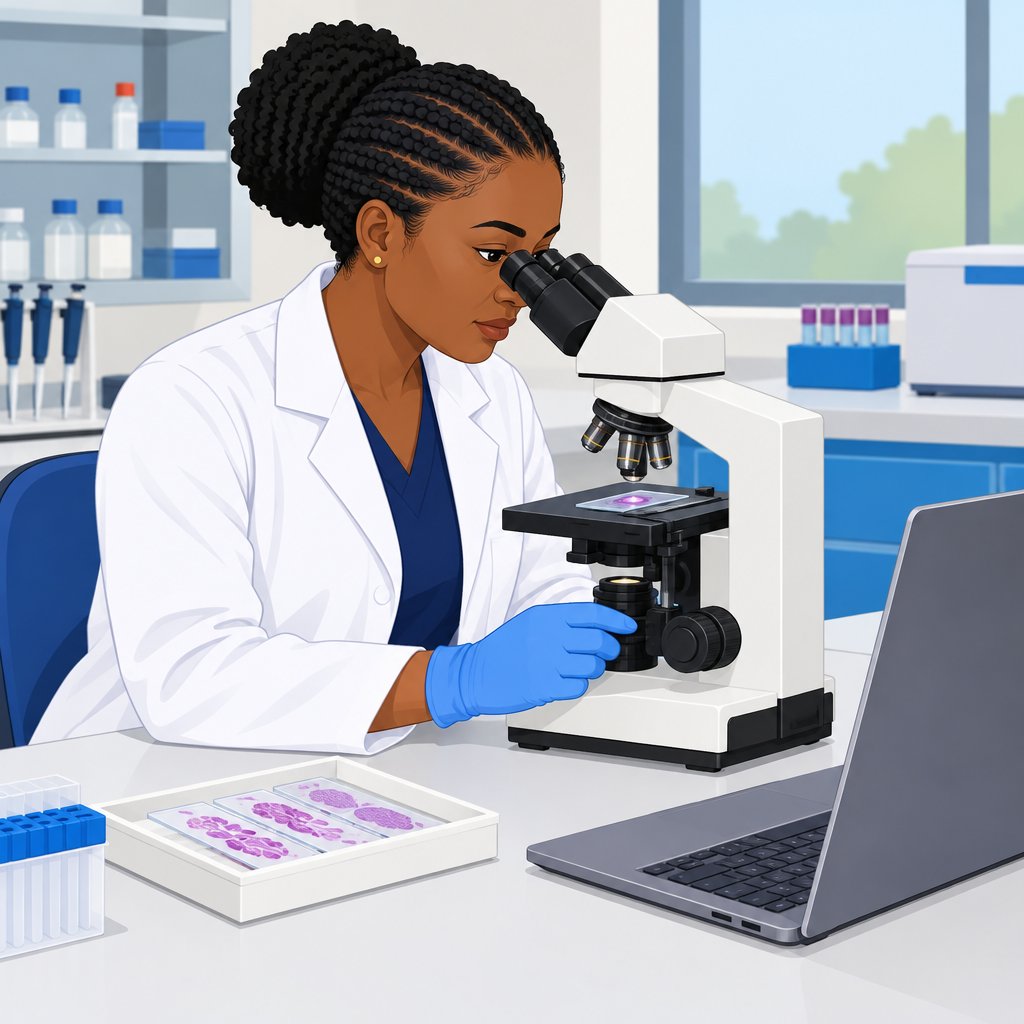
Priorities for Strengthening Anatomical Pathology
Training programs can help develop a stronger pathology workforce.
Investment in essential infrastructure and supplies can also improve service reliability.
International collaboration can support access to advanced diagnostic technologies.
Together, these priorities can strengthen healthcare delivery and patient care.
See Related Content: Scope of Practice for Dental Therapists in Nigeria
Technological Innovations in Anatomical Pathology
Technology has revolutionized anatomical pathology in Nigeria, bringing significant advancements to the field.
These innovations have improved diagnostic speed, accuracy, and efficiency.
The following developments show how technology has transformed disease diagnosis and patient care.
- Introduction of digital pathology
- Automation of laboratory processes
- Use of artificial intelligence in diagnosis
Introduction of Digital Pathology
Digital pathology lets pathologists digitize glass slides and examine them on computer screens.
This approach reduces reliance on traditional microscopes during slide examination.
Furthermore, digital pathology improves image quality and supports easier slide sharing for consultations.
Pathologists can also analyze images remotely, which supports faster and more precise diagnoses.
Transform Your Career with Expert Guidance
Get personalized mentorship consulting that’s tailored to your unique path. Our expert advice is actionable and exclusive.
Get StartedAutomation of Laboratory Processes
Automation has changed several laboratory processes within anatomical pathology.
Automated systems can support sample processing, staining, and result reporting.
These systems streamline workflows, reduce human error, and improve laboratory efficiency.
Moreover, automation handles repetitive tasks while pathologists focus on complex cases.
This division of work can improve diagnostic accuracy and shorten turnaround times.
Artificial Intelligence in Diagnosis
Artificial intelligence provides another important innovation in anatomical pathology.
AI algorithms can analyze large volumes of data from pathology images.
They help pathologists recognize patterns and produce more accurate diagnoses.
Additionally, AI tools can help identify abnormalities and predict disease outcomes.
These tools can also guide treatment decisions and support more personalized patient care.
Technological innovations have improved the speed, accuracy, and efficiency of disease diagnosis in Nigeria.
Digital pathology, laboratory automation, and artificial intelligence now support better patient care and outcomes.
Gain More Insights: Managing Childhood Diseases in Nigeria
Collaboration with International Partners
International partnerships can advance anatomical pathology in Nigeria through training, research, knowledge exchange, and modern resources.
Foreign institutions can provide Nigerian pathologists with training and research opportunities unavailable locally.
These partnerships also encourage professionals to exchange knowledge and share effective practices.
Exchange programs can help Nigerian pathologists learn new techniques from international experts.
Through these programs, participants can gain exposure to advanced technologies and improved methodologies.
Consequently, Nigerian pathologists can strengthen their skills and improve anatomical pathology practice.
International collaboration can also support the importation of advanced equipment and technology.
These resources can improve diagnostic accuracy and increase the efficiency of laboratory processes.
As a result, Nigerian pathologists can access tools that support better patient outcomes.
Therefore, foreign partnerships can strengthen professional capabilities and improve healthcare services in Nigeria.
Uncover the Details: Challenges in Nigerian Paediatric Healthcare
Impact on Patient Care
Advancements in anatomical pathology have significantly improved patient care in Nigeria.
New technologies help healthcare providers diagnose diseases faster and with greater precision.
Consequently, patients can receive timely treatment and begin recovery sooner.
- Faster and more accurate diagnosis: Advanced technologies help providers identify diseases quickly and accurately.
- Improved treatment outcomes: Healthcare professionals can tailor treatment plans more effectively for individual patients.
- Better understanding of disease patterns: Researchers gain deeper insight into disease prevalence and characteristics in Nigeria.
As a result, personalized care can improve outcomes and overall quality of care.
Moreover, disease pattern knowledge supports targeted prevention and intervention strategies.
Together, these innovations strengthen Nigeria’s healthcare landscape and support further progress.
See Related Content: Training and Certification for Restorative Dentists
Investment and Collaboration for Future Progress
Innovations in anatomical pathology in Nigeria can significantly improve healthcare services.
Moreover, technology and research investment can support accurate diagnosis and treatment.
Pathologists, researchers, and healthcare providers must collaborate to share knowledge and advance the field.
Therefore, stakeholders should increase investment in anatomical pathology to improve healthcare outcomes for Nigerians.
Continued technological progress can strengthen the future of anatomical pathology in Nigeria.
Meanwhile, collaboration can help create a brighter future for the field.
Additional Resources
Google search results for Innovations in Anatomical Pathology Nigeria Medical
Bing search results for Innovations in Anatomical Pathology Nigeria Medical


