




Environmental Management Technology in Nigeria
Environmental management technology in Nigeria involves strategies to protect the environment.
Staying updated on trends remains crucial.
This supports effective environmental conservation efforts.
Adoption of Renewable Energy Sources
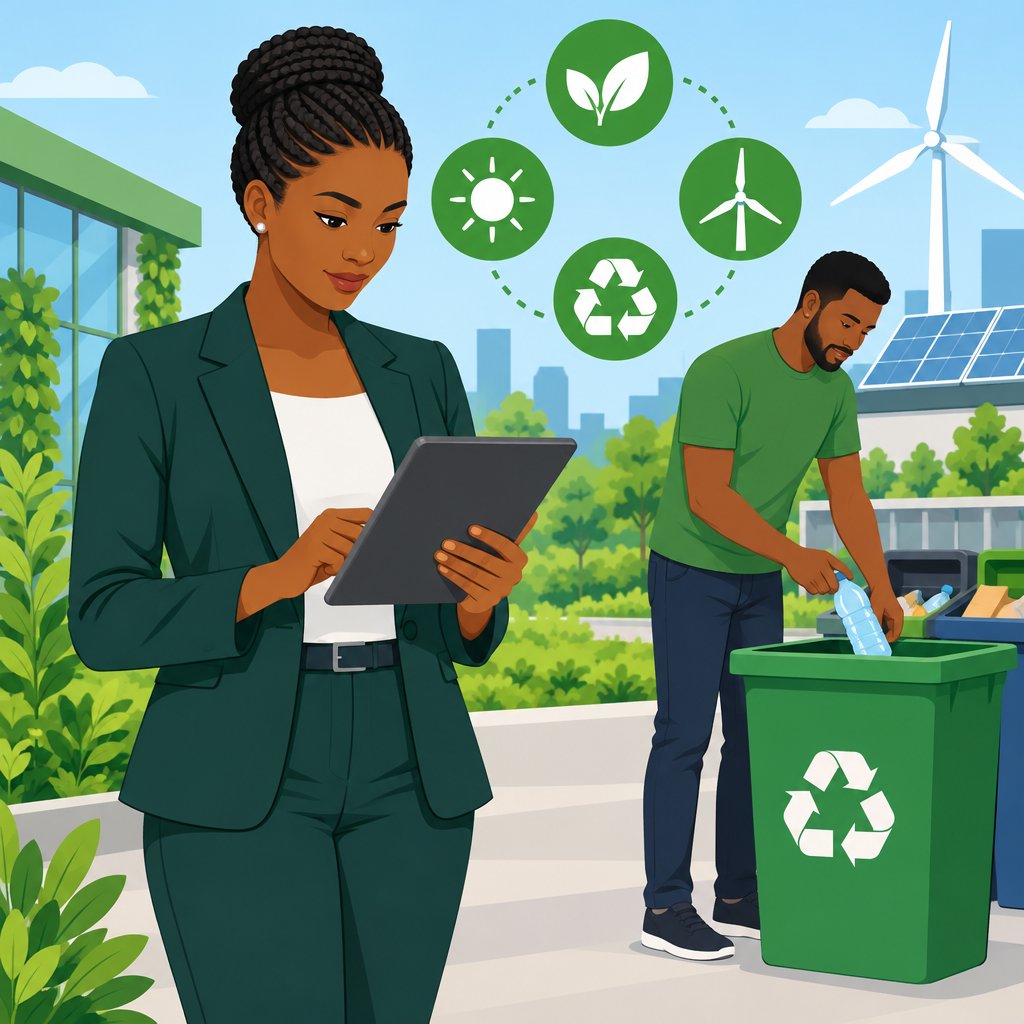
Renewable energy adoption is growing within Nigeria’s environmental management technology landscape.
Solar, wind, and hydroelectric power now attract increasing interest.
This shift supports cleaner energy choices and strengthens the country’s sustainable development efforts.
Benefits of Renewable Energy
Renewable energy can reduce carbon emissions when it replaces traditional fossil fuels.
It can also provide a more sustainable alternative for consumers and businesses.
Furthermore, lower energy costs may benefit households and organizations.
- Renewable energy reduces Nigeria’s carbon footprint and supports climate change efforts.
- These sources can lower energy costs for consumers and businesses.
The Nigerian government recognizes the importance of transitioning toward renewable energy.
Accordingly, it has introduced policies and initiatives supporting sector development.
Beyond environmental gains, renewable energy creates economic opportunities and strengthens national energy security.
Implementation of Waste Management Technologies
Nigeria has significantly improved waste management by adopting new methods and technologies.
Various innovative solutions now help communities handle waste efficiently and sustainably.
Additionally, recycling has gained momentum as a key waste management technology in Nigeria.
Recycling reduces waste, conserves resources, and minimizes environmental impacts.
Meanwhile, Nigeria increasingly uses composting as another important waste management technology.
This process decomposes organic waste into nutrient-rich compost for agricultural fertilizer.
Furthermore, waste-to-energy solutions convert waste into usable energy sources.
These solutions support waste management while contributing to renewable energy production.
Delve into the Subject: Estate Management Degrees: What to Expect
Use of Remote Sensing and GIS Technologies for Environmental Monitoring
- Remote sensing and GIS technologies track pollution levels, deforestation, and other environmental issues.
- Real-time data collection and analysis provide immediate information for effective decision-making.
- Meanwhile, satellite imagery, aerial photography, and ground-based sensors reveal environmental changes.
- Researchers and policymakers visualize and analyze spatial data to understand environmental trends.
- Additionally, GIS integrates varied data sources into comprehensive environmental maps for better planning.
- Remote sensing detects land-use, forest-cover, and water-quality changes across large areas efficiently.
- These tools identify potential hazards, support conservation planning, and monitor human impacts on ecosystems.
- Consequently, remote monitoring enables stakeholders to act promptly, mitigate risks, and protect natural resources.
- Together, these technologies support environmental management and sustainable development strategies.
- They also strengthen environmental policies, resource allocation, and disaster management through timely information.
Find Out More: Green Building Technologies in Nigeria
Sustainable Building Practices in Nigeria
Eco-friendly building designs are rising across Nigeria.
Innovative materials such as recycled glass, bamboo, and solar panels support sustainable construction.
These materials reduce environmental impact while encouraging responsible resource use.
- Natural ventilation and daylight harvesting reduce energy consumption.
- Modern buildings now prioritize energy efficiency and sustainability.
- Sustainable construction minimizes waste and maximizes resource efficiency.
- Additionally, green roofs and walls improve insulation and reduce energy costs.
- Rainwater harvesting systems help buildings conserve water.
- These practices reduce greenhouse gas emissions and support climate action.
- The construction sector promotes sustainable development throughout Nigeria.
- Furthermore, LEED and BREEAM certifications are becoming more common across the industry.
- Sustainable construction benefits the environment and improves occupant health.
- Government regulations and policies encourage green building adoption in Nigeria.
- Consequently, the construction industry is adopting more sustainable practices.
- Educating architects, engineers, and contractors remains essential for sustainable construction.
- Collaboration among construction stakeholders can accelerate sustainable development.
- Investing in green building technologies creates long-term financial and environmental benefits.
- Sustainable construction supports Nigeria’s sustainable development goals.
- Promoting green buildings can reduce Nigeria’s carbon footprint and preserve natural resources.
Find Out More: Success Stories in Nigerian Environmental Management
Water Conservation Technologies in Nigeria
Water conservation technologies are crucial in Nigeria.
They address water scarcity and pollution.
These solutions support sustainable water management.
Water Harvesting Technologies
Nigeria promotes rainwater harvesting and dew harvesting techniques.
These methods capture rainwater and condensation for domestic use.
Additionally, harvested water supports agricultural activities.
Consequently, communities can reduce their reliance on traditional water sources.
Water Purification Methods
Modern purification technologies address water pollution issues in Nigeria.
For example, reverse osmosis removes contaminants from water sources.
Similarly, ultraviolet disinfection helps eliminate pathogens.
These methods provide safer and cleaner drinking water for the populace.
Wastewater Reuse Practices
Wastewater reuse forms another important part of water conservation.
Nigeria is developing efforts to treat wastewater for reuse.
Treated wastewater can support irrigation and industrial processes.
Transform Your Career with Expert Guidance
Get personalized mentorship consulting that’s tailored to your unique path. Our expert advice is actionable and exclusive.
Get StartedAs a result, reuse reduces pressure on freshwater sources.
It also minimizes pollution in the environment.
Water Management for Sustainable Development
Nigeria must address water scarcity and pollution effectively.
A growing population steadily increases demand for clean water.
Increasing industrialization also intensifies that demand.
Therefore, stakeholders should prioritize sustainable water management.
These efforts can safeguard this vital resource for future generations.
Find Out More: Role of Environmental Scientists in Nigeria
Smart Agriculture and Precision Farming Techniques
Farmers use technology to optimize crop production and reduce agriculture’s environmental impact.
Precision farming uses data, GPS, and sensors to tailor cultivation practices.
Additionally, drones and satellite imagery monitor crop health, moisture levels, and soil conditions.
Automated irrigation systems conserve water by delivering appropriate amounts to crops.
Moreover, variable rate technology applies fertilizers and pesticides precisely where needed.
Real-time monitoring enables immediate intervention when pests or diseases emerge.
Benefits of Precision Farming for Productivity and Sustainability
Precision farming increases yields by applying appropriate inputs where crops need them.
Furthermore, precise applications reduce resource waste and improve farmers’ cost efficiency.
These techniques also help farmers minimize effects on soil and water quality.
Resource conservation supports sustainable agriculture for future generations.
Real-time data helps farmers make informed decisions and achieve better outcomes.
Finally, precision farming allows adjustments when environmental conditions and market demands change.
Strategic Priorities for Environmental Technology
Stakeholders should monitor environmental management technology trends in Nigeria.
This awareness helps them make informed decisions that benefit society and the environment.
As environmental challenges increase, stakeholders should adopt innovative solutions and sustainable practices.
These approaches can support a greener future for Nigeria.
Furthermore, tracking new developments helps stakeholders improve the effectiveness and efficiency of environmental efforts.
Collaborative action can protect the environment for future generations.
Additional Resources
Google search results for Trends in Environmental Management Technology in Nigeria Environmental
Bing search results for Trends in Environmental Management Technology in Nigeria Environmental


