




Women’s Role in Nigerian Agriculture
Women play a crucial role in Nigeria’s agricultural business sector.
They participate actively in several areas of the agricultural industry.
Furthermore, their involvement supports food security and economic growth.
Importance of Women in Agriculture
Women contribute significantly to food production, processing, marketing, and distribution in Nigeria.
These activities help ensure food security across the country.
Moreover, women’s agricultural work supports broader economic growth.
Current Status of Women in Nigeria’s Agricultural Sector
Despite their contributions, women face several challenges within the agricultural sector.
They often have limited access to land, credit, technology, and training opportunities.
Many women also practice subsistence farming, which limits commercial activities and income generation.
Additionally, gender inequalities continue to affect decision-making and leadership opportunities.
Women often remain marginalized in important agricultural decisions.
Nevertheless, several efforts now support women through training, gender equality, and improved resource access.
Addressing these disparities can strengthen sustainable development and improve food security in Nigeria.
Historical Context of Women’s Agricultural Participation
- Women in Nigeria have contributed significantly to agriculture for centuries.
- Traditionally, women planted, weeded, and harvested crops.
- They also cared for domestic animals, processed food, and managed household gardens.
- Their agricultural work supported their families’ survival and sustenance.
- In some communities, women preserved indigenous farming knowledge.
- However, male-dominated societies often undervalued and overlooked their contributions.
Traditional Practices and Cultural Beliefs
- The traditional division of labor shaped women’s participation in agriculture.
- Men typically produced cash crops, while women focused on subsistence farming.
- Some communities viewed farming primarily as men’s work.
- Meanwhile, they expected women to manage household responsibilities.
- Some regions restricted women’s land ownership and agricultural decision-making through cultural taboos.
- Consequently, these practices limited women’s access to resources and formal agricultural opportunities.
Challenges Facing Women in Agricultural Business
- Limited land ownership and control remain major challenges for women farmers.
- Gender disparities restrict women’s access to credit, inputs, and extension services.
- Cultural norms and traditional roles reduce women’s decision-making power in agricultural businesses.
- Limited education and training hinder women’s adoption of modern farming techniques.
- Unfair labor practices and unequal wages further marginalize women.
- Social barriers also discourage women from pursuing agricultural leadership roles.
Efforts to Empower Women in Agricultural Business
- Organizations and government agencies have launched programs supporting women’s agricultural participation.
- These programs provide access to land, credit, training, and market opportunities.
- Training workshops develop women’s skills in modern farming and business management.
- Advocacy initiatives challenge gender norms and promote inclusive agricultural decisions.
- Women’s cooperatives and support networks provide solidarity and mutual assistance.
- Policies and legal reforms protect land rights and strengthen women’s economic empowerment.
Effects of Women’s Empowerment in Agriculture
- Women’s empowerment can improve food security and family nutrition.
- Better access to resources and training can increase productivity and profitability.
- Women’s participation in decisions can encourage sustainable and equitable agricultural practices.
- Women agricultural entrepreneurs can create jobs and support rural economic growth.
- Empowered women can inspire other women and girls to pursue agricultural careers.
- Therefore, women’s empowerment can transform agriculture and support inclusive growth.
Challenges Faced by Women
Women in Nigeria’s agricultural business sector face challenges that restrict their participation and business success.
These barriers affect resources, skills, technology, markets, and daily responsibilities.
Addressing them can strengthen women’s contributions to food security and economic development.
Limited Access to Essential Resources
Traditional land systems often give men ownership, leaving women with little control over agricultural land.
Financial institutions may require collateral or formal documents that many women cannot provide.
Limited education and training also restrict women’s ability to develop agribusiness skills and knowledge.
Technology and Market Access Challenges
Modern technology supports crop monitoring, irrigation, productivity, and market access.
However, many women lack access to these tools, which limits their competitiveness.
Transportation difficulties, limited market information, and discriminatory practices further restrict access to profitable markets.
Social and Policy Barriers
Gender-based discrimination creates biases that undermine women’s abilities and restrict their opportunities.
These stereotypes can prevent women from gaining support, recognition, and opportunities for business growth.
Government policies may also provide limited support and representation for women-owned agricultural businesses.
Family Responsibilities and Environmental Pressures
Women often balance agricultural work with childcare, household chores, and other family responsibilities.
This dual workload can become overwhelming and limit the time available for business activities.
Climate change also affects crop yields, water availability, and food security.
Many women lack the resources and support needed to adapt to changing environmental conditions.
Strengthening Women’s Agricultural Businesses
Removing these barriers can improve women’s participation and success within Nigeria’s agricultural business sector.
Better access to land, finance, training, technology, and markets can support business expansion.
Empowered women can contribute more effectively to food security and economic development.
Delve into the Subject: Successful Nigerian Agricultural Business Entrepreneurs
Success Stories
- Funke Opeke represents a success story in Nigeria’s agricultural business sector.
- Similarly, Joyce Alumo has excelled within the agricultural sector.
- Both women overcame challenges and became trailblazers in their field.
- Funke Opeke started her own agribusiness company and expanded it over the years.
- Meanwhile, Joyce Alumo became known for her innovative farming strategies.
- Through determination and hard work, these women showed that success remains achievable.
- Funke Opeke faced gender stereotypes but proved women can thrive in agriculture.
- Despite financial constraints, Joyce Alumo continued pursuing her agricultural ambitions.
- Their stories inspire other women to pursue their passion for agriculture.
- Furthermore, Funke Opeke and Joyce Alumo made significant contributions to Nigeria’s agricultural business sector.
- As role models, they encourage other women to enter the industry.
Uncover the Details: Importance of Supply Chain in Nigerian Agricultural Business
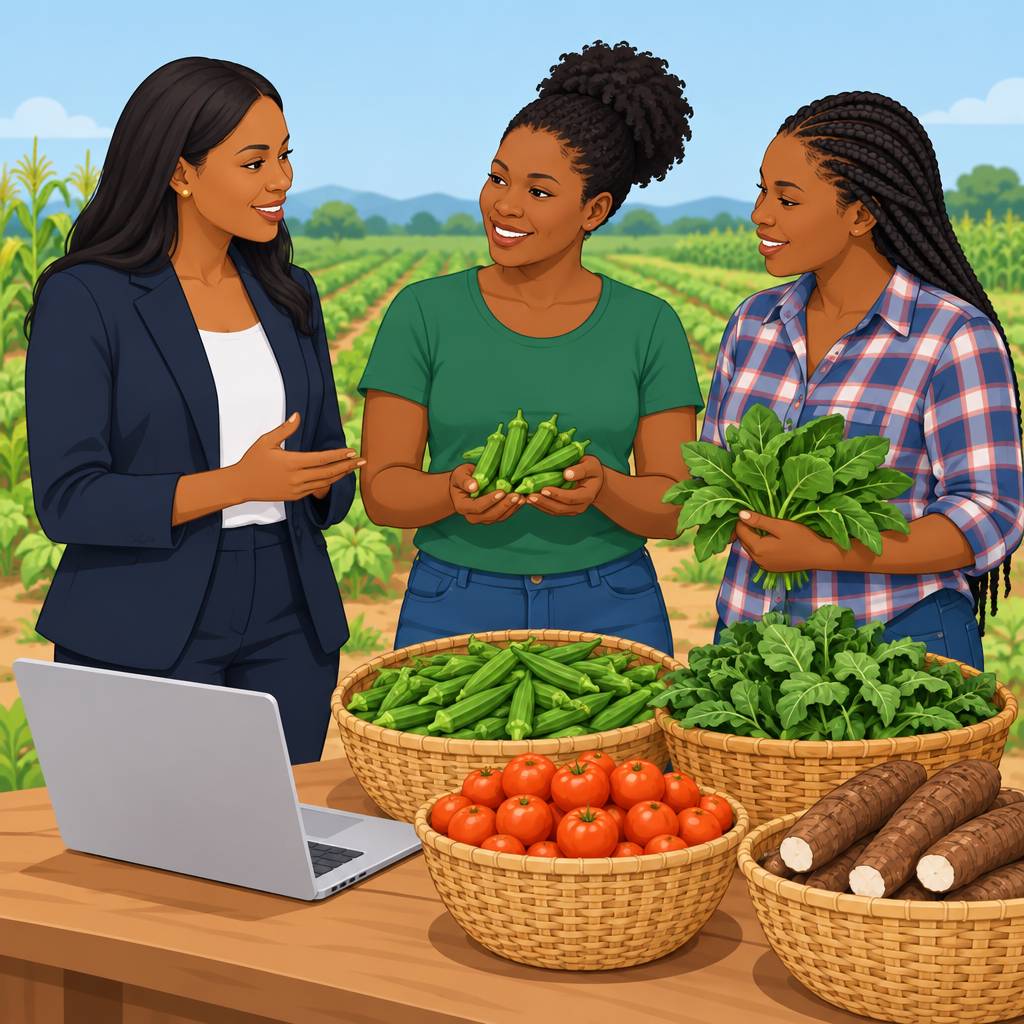
Government Initiatives Supporting Women Farmers
Government initiatives support women in Nigeria’s agricultural business sector.
These programs provide credit, training, subsidized inputs, and opportunities for participation.
Consequently, women can strengthen their agricultural businesses and contribute to sector development.
- Agricultural Credit Guarantee Scheme Fund: The scheme provides low-interest credit facilities to farmers, especially women.
- National Gender Policy in Agriculture: The policy promotes gender equality and women’s participation in agricultural decisions.
- Growth Enhancement Support Scheme: GESS provides subsidized seeds and fertilizers to smallholder farmers, including women.
- Women Empowerment and Entrepreneurship Program: WEEP offers women training, mentorship, and financial support for agribusiness.
Effects of Government Support on Women Farmers
Government support has increased women’s participation across Nigeria’s agricultural value chain.
Women now engage actively in production, processing, and marketing activities.
Access to resources has also improved many women’s incomes and family opportunities.
Transform Your Career with Expert Guidance
Get personalized mentorship consulting that’s tailored to your unique path. Our expert advice is actionable and exclusive.
Get Started- Increased participation: More women now engage in different areas of the agricultural value chain.
- Improved livelihoods: Credit, training, and support have helped many women increase their incomes.
- Enhanced productivity: Better access to inputs and resources helps women farmers increase agricultural output.
- Greater empowerment: Women increasingly assume leadership roles and participate in agricultural decision-making.
Expanding Women’s Contributions to Agriculture
These initiatives strengthen women’s ability to operate and expand agricultural businesses.
Furthermore, women’s growing participation supports food security and economic growth in Nigeria.
Continued government support can increase women’s influence and achievements within the agricultural sector.
Delve into the Subject: Developing Agri-Tourism Business in Nigeria
Women’s Role in Nigerian Food Security
Women in Nigeria help ensure food security.
They produce and distribute food for families and communities.
Their agricultural work supports access to nutritious food.
Importance of Women’s Agricultural Contributions
Women contribute significantly to agriculture on small and large farms.
They plant, harvest, process, and sell food crops.
Additionally, women manage household food resources and prepare meals for their families.
- Women produce much of Nigeria’s food.
- They support food production across different agricultural operations.
- Women help families and communities access nutritious food.
- They participate in planting, harvesting, processing, and selling food crops.
- Women manage household food resources and prepare family meals.
Effects of Women’s Agricultural Participation
Women’s agricultural participation increases food production in Nigeria.
It also encourages crop diversity and strengthens access to food.
Furthermore, women distribute food through local markets and communities.
- Women increase food production through agricultural involvement.
- They grow diverse crops that support food security.
- Women distribute food to local markets and communities.
- Their participation helps reduce food scarcity and improve food access.
- Women use local farming knowledge to support sustainable food production.
Strengthening Food Security Through Women’s Agricultural Work
Women help produce, distribute, and make food available across Nigerian communities.
Their involvement connects agricultural production with household food needs.
Empowering women in agricultural business can further strengthen food security in Nigeria.
Learn More: Agricultural Business and Rural Development in Nigeria
Empowerment and Capacity Building
Programs empower women and build their capacity in Nigeria’s agricultural business sector.
Financial literacy, credit access, technical skills, and leadership training support this empowerment.
Additionally, education and training strengthen women’s knowledge, confidence, decision-making, and market access.
- Financial literacy training workshops
- Access to microcredit and loans
- Technical skills development programs
- Leadership and entrepreneurship training
- Education provides women with the knowledge and skills to manage their businesses effectively.
- Training opportunities help women stay informed about new agricultural technologies and best practices.
- Education increases women’s confidence and strengthens their decision-making abilities.
- Capacity building improves women’s ability to access markets and negotiate fair prices.
Future Directions for Women in Nigeria’s Agricultural Sector
Women in Nigeria’s agricultural sector may gain greater participation and influence.
Government agencies will likely strengthen inclusion and support for women.
Meanwhile, technology and partnerships may expand women’s access to markets, knowledge, and resources.
Emerging Trends for Women in Agriculture
Digital tools will help women access agricultural information and productive resources more easily.
Additionally, online platforms will create new opportunities for women to market agricultural products.
Women-led cooperatives and agricultural organizations will likely gain stronger representation and leadership.
- Women will likely participate more actively across Nigeria’s agricultural sector.
- Government support for women’s agricultural inclusion will continue expanding.
- Technological advances will improve women’s access to information and resources.
- Digital marketplaces will help women promote and sell agricultural products.
- Women-led agricultural cooperatives will become increasingly common.
- Women will assume more leadership roles within agricultural organizations.
- International partnerships will create additional opportunities for women in agriculture.
Opportunities Emerging in the Coming Years
Improved financial services may help women invest in and expand their agricultural ventures.
Training programs will strengthen women’s technical, financial, and leadership abilities.
Moreover, stronger market connections may improve women’s access to domestic and export opportunities.
- Finance and credit facilities may become more accessible to women farmers.
- Government programs may provide more targeted support for women in agriculture.
- Capacity-building programs will develop women’s agricultural skills and knowledge.
- Expanded market links may benefit women farmers and agricultural businesses.
- Export opportunities may create additional income channels for women.
- Gender-responsive extension services will address women’s specific agricultural needs.
- Stakeholders may recognize and support more women-owned agricultural businesses.
- Advocacy efforts will amplify women’s voices across the agricultural sector.
Challenges Affecting Future Agricultural Participation
Persistent social expectations may continue limiting women’s decision-making authority.
Resource limitations could restrict women’s ability to expand agricultural operations.
Climate pressures, weak infrastructure, and unequal markets may create additional difficulties.
- Gender stereotypes may continue limiting women’s control over agricultural decisions.
- Restricted land access could prevent women from scaling agricultural operations.
- Limited resources may reduce women’s capacity to invest and expand.
- Climate change may affect women farmers disproportionately.
- Environmental degradation could reduce agricultural productivity and resilience.
- Poor roads and storage facilities may hinder women’s agricultural activities.
- Unequal pay and profit distribution may persist across agricultural value chains.
- Limited technology access could widen the digital divide among women.
- Large agribusinesses may increase competition for women-owned enterprises.
Building Inclusive Agricultural Growth
Women can strengthen Nigeria’s agricultural future when institutions address persistent barriers.
Government, civil society, and private organizations must coordinate support for lasting progress.
Such collaboration can help women drive agricultural innovation, enterprise growth, and shared prosperity.
Women Advancing Nigeria’s Agricultural Development
Women help shape Nigeria’s agricultural business sector through production, processing, marketing, and distribution.
Their work also strengthens the economy and connects agricultural activities across communities.
Moreover, economic opportunities for women can support food security and reduce poverty.
Continued initiatives, training, and policy interventions can help women expand their agricultural contributions.
By promoting gender equality, Nigeria can address disparities and encourage more sustainable agricultural development.
Therefore, prioritizing women’s empowerment can unlock their potential and support national development.
Additional Resources
Google search results for Role of Women in Nigeria's Agricultural Business Sector Agriculture
Bing search results for Role of Women in Nigeria's Agricultural Business Sector Agriculture


