




Role of Agricultural Business and Rural Development in Nigeria
Agricultural business and rural development play a crucial role in Nigeria’s economy.
The sector provides employment opportunities.
It contributes to food security.
Furthermore, it boosts economic growth.
However, there are key challenges such as inadequate infrastructure.
Limited access to finance also affects the sector.
Low mechanization remains a significant challenge.
Despite these challenges, immense opportunities exist in the agricultural sector in Nigeria.
The government has introduced various policies and programs to support agricultural development.
Initiatives such as the Anchor Borrowers Program help farmers access credit and inputs.
The Growth Enhancement Support Scheme also benefits farmers.
The agricultural sector in Nigeria benefits from fertile land and a favorable climate.
These conditions support diverse cultivation activities.
The growing population presents a huge market for agricultural products.
This creates many opportunities for farmers and agribusinesses.
Investment in agricultural research can further enhance productivity.
Technology adoption can improve competitiveness in the sector.
Agricultural business and rural development are vital for Nigeria’s sustainable economic growth.
They also ensure long-term food security across the country.
Current State of Agricultural Business in Nigeria
According to statistics, agriculture contributes significantly to the Nigerian economy.
However, despite its importance, there are numerous challenges facing farmers and agribusinesses.
These challenges include inadequate funding, lack of modern farming techniques, and poor infrastructural development.
Additionally, issues such as climate change, land tenure insecurity, and limited access to markets hinder progress.
Statistics on the Contribution of Agriculture to the Nigerian Economy
- Agriculture accounts for about 21% of Nigeria’s GDP, employing over 60% of the population.
- The sector contributes to the country’s food security and serves as a major source of livelihood.
- Nigeria is the largest producer of cassava in the world, showcasing the potential for growth.
Analysis of the Challenges Facing Farmers and Agribusinesses in the Country
- Inadequate access to finance and credit facilities limits investment in agriculture.
- Small-scale farmers face difficulties in obtaining necessary inputs and technology for efficient production.
- Market access is constrained by poor infrastructure, limiting the ability to reach consumers effectively.
Opportunities for Growth and Development in the Agricultural Sector
Despite the challenges, there is immense potential for growth and development in the agricultural sector in Nigeria.
Investment in technology, research, and infrastructure can help improve productivity and efficiency.
Government support through policies that promote agricultural development and provide incentives for farmers is crucial.
Furthermore, collaboration with the private sector can lead to innovations and increased investment in the industry.
The agricultural business in Nigeria faces challenges, but with the right strategies and support, there is great potential for growth and development in the sector.
Government Policies and Interventions
- Review of government initiatives aimed at promoting agricultural business and rural development
- Evaluation of the effectiveness of existing policies and programs
- Recommendations for improvement and increased impact
The government plays a crucial role in shaping the agricultural business and rural development sector in Nigeria.
Through various policies and interventions, the government aims to promote sustainable growth.
It also seeks to increase productivity and alleviate poverty in rural areas.
Review of Government Initiatives
Over the years, the Nigerian government has implemented several initiatives to support agricultural businesses and rural development.
These include the Agricultural Transformation Agenda (ATA), the Growth Enhancement Support Scheme (GESS), and the Anchor Borrowers Program.
The ATA was launched in 2011 to transform Nigeria’s agricultural sector by focusing on key value chains such as rice, cassava, and sorghum.
It aimed to increase food security, create jobs, and boost rural incomes.
The GESS, on the other hand, aimed to provide smallholder farmers with subsidized inputs such as fertilizers and seeds to increase their productivity.
This program helped millions of farmers improve their yields and incomes.
The Anchor Borrowers Program was introduced to provide farmers with access to credit facilities to enhance their production and income.
By partnering with financial institutions, the government has been able to reach thousands of farmers across the country.
Evaluation of Policy Impact and Challenges
While these initiatives have made significant strides in promoting agricultural business and rural development, challenges remain.
Transform Your Career with Expert Guidance
Get personalized mentorship consulting that’s tailored to your unique path. Our expert advice is actionable and exclusive.
Get StartedLimited access to finance, inadequate infrastructure, and climate change continue to hinder the sector’s growth.
Additionally, the implementation of these programs has faced bureaucratic bottlenecks, causing delays and inefficiencies.
There is a need for better coordination between government agencies, increased transparency, and stronger monitoring and evaluation mechanisms.
Strategies for Enhancing Agricultural Policies and Programs
- Strengthening coordination and collaboration between government agencies and stakeholders to ensure effective implementation of programs.
- Increasing investment in infrastructure such as roads, irrigation facilities, and storage warehouses to improve market access and reduce post-harvest losses.
- Enhancing access to finance for smallholder farmers through innovative financial products like mobile banking, microfinance, and value chain financing.
- Promoting climate-smart agriculture practices to build resilience to climate change and ensure sustainable production.
- Scaling up successful programs and initiatives to reach more farmers and rural communities, especially in underserved areas.
- Incorporating gender-sensitive approaches to ensure the inclusion of women and youth in agricultural value chains and decision-making processes.
Government policies and interventions play a critical role in shaping the agricultural business and rural development sector in Nigeria.
By reviewing existing initiatives, evaluating their effectiveness, and making recommendations for improvement, the government can create a more enabling environment.
This will foster sustainable growth and development in the sector.
Find Out More: Agricultural Business Associations and Networks in Nigeria
Role of Technology in Agricultural Business
- Exploration of how technology is transforming the agricultural sector in Nigeria.
- Case studies of successful agri-tech startups and innovations.
- Discussion on the potential of technology to drive growth and increase productivity in rural areas.
Technology has become a game-changer in the agricultural sector in Nigeria.
Farmers are increasingly adopting modern technologies to improve their farming practices.
They also increase productivity and maximize profits.
The integration of technology in agricultural businesses has revolutionized the way farming is done in the country.
Exploration of How Technology is Transforming the Agricultural Sector in Nigeria
The adoption of technology in agriculture has led to increased efficiency and cost-effectiveness.
Farmers are now able to access real-time information on weather patterns.
They also obtain market prices and pest control measures through various technological tools.
This has enabled them to make informed decisions and optimize their farming practices.
One of the key areas where technology is making a significant impact in Nigeria’s agricultural sector is precision farming.
Precision farming involves the use of data analytics, sensors, and GPS technology.
It tailors farming practices to specific conditions.
This approach has resulted in higher yields, reduced waste, and improved sustainability.
Case Studies of Successful Agri-tech Startups and Innovations
- One successful agri-tech startup in Nigeria is Farmcrowdy, a platform that connects investors with small-scale farmers.
- Another notable innovation is Hello Tractor, a service that provides farmers with access to affordable tractor services on-demand.
- Agri-tech companies like Thrive Agric and Cellulant are also making significant strides in transforming the agricultural landscape in Nigeria through digital platforms and mobile payment solutions.
These case studies highlight the potential of technology to drive innovation and create value in Nigeria’s agricultural sector.
By leveraging technology, these startups are addressing key challenges faced by farmers.
They tackle issues such as access to finance, market information, and mechanized farming services.
Potential of Technology to Drive Growth and Increase Productivity in Rural Areas
Technology has the potential to revolutionize rural development in Nigeria by increasing productivity.
It creates new opportunities and improves livelihoods.
By adopting digital tools and innovative solutions, farmers in rural areas can overcome traditional barriers to growth.
They can also access new markets.
Furthermore, the use of technology in agriculture can bridge the gap between urban and rural areas.
It enables seamless communication, data sharing, and market linkages.
This connectivity empowers smallholder farmers to scale up their operations.
They improve their income and contribute to overall economic development in rural communities.
Technology is playing a vital role in transforming agricultural business and rural development in Nigeria.
With the right investment, support, and integration of innovative technologies, the country’s agricultural sector has great potential.
It can thrive, drive growth, and improve the livelihoods of millions of farmers across the country.
Uncover the Details: Agricultural Business Research and Development in Nigeria
Financing Agricultural Business
- Overview of the challenges faced by farmers and agribusinesses in accessing finance:
Lack of collateral.
High-interest rates.
Limited financial literacy. - Analysis of the different financing options available in Nigeria:
Bank loans.
Grants.
Venture capital.
Crowdfunding are some of the options available. - Recommendations for improving access to finance for agricultural entrepreneurs:
- Government Support:
Implement policies that provide financial incentives for lenders to invest in agriculture. - Capacity Building:
Offer financial literacy training to farmers and agribusiness owners to improve their creditworthiness. - Public-Private Partnerships:
Foster collaborations between government, financial institutions, and private sector players to increase funding opportunities. - Risk-Sharing Mechanisms:
Introduce programs that mitigate risks for lenders, such as loan guarantees and crop insurance.
Strategies to Enhance Financial Access for Agricultural Entrepreneurs
Access to finance is crucial for the growth and development of Nigeria’s agricultural sector.
Addressing the challenges faced by agricultural entrepreneurs will enable farmers and businesses to thrive.
Implementing targeted recommendations can create a more enabling environment for agricultural success.
Stakeholders including government, financial institutions, and private sectors must collaborate.
Such cooperation will improve access to finance and contribute significantly to the country’s economy.
See Related Content: Microfinance and Smallholder Farmers in Nigeria
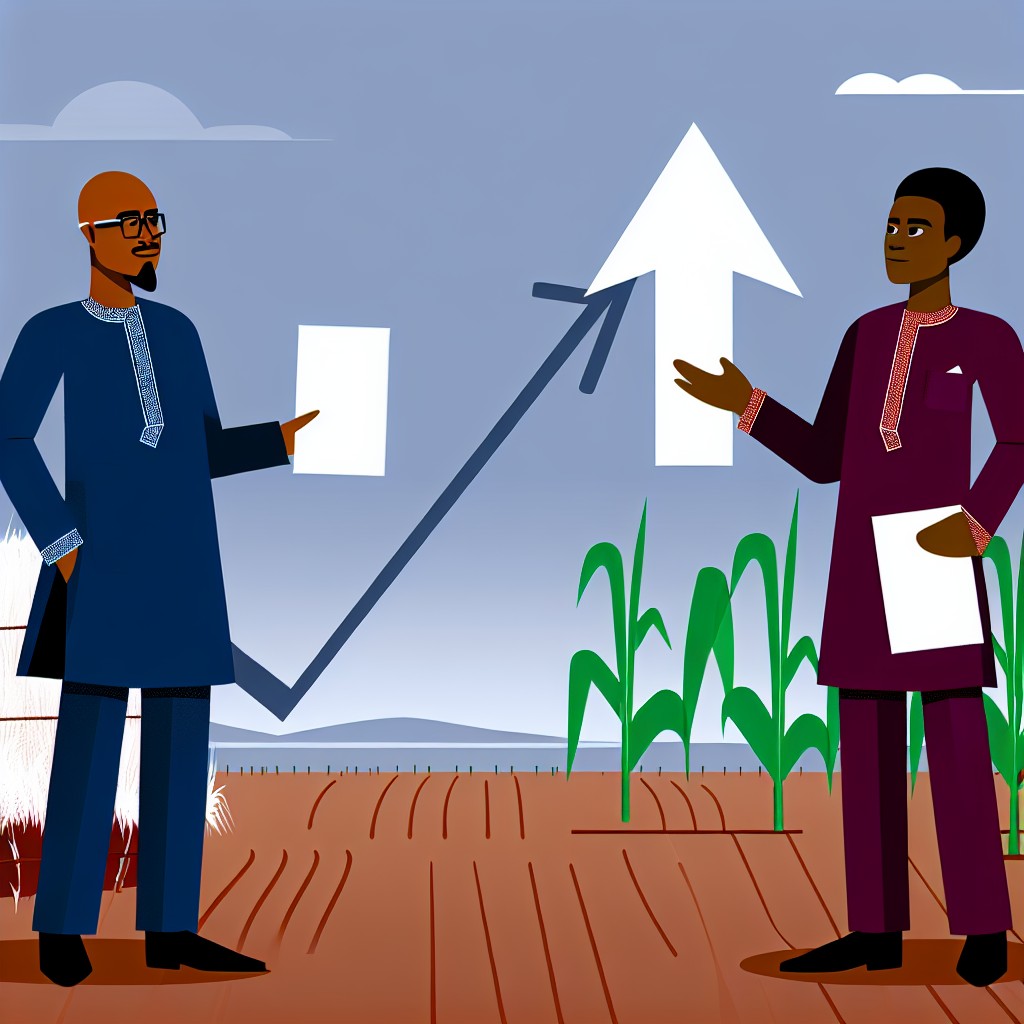
Sustainable Practices in Agriculture
Sustainable agriculture is crucial for long-term development in Nigeria.
It ensures that resources are used efficiently without harming the environment.
Sustainable practices can lead to increased productivity.
They also improve soil health.
These practices contribute to long-term profitability.
Examples of Sustainable Farming Practices
- Crop rotation helps prevent soil depletion and maintain fertility.
- Organic farming avoids synthetic chemicals to protect soil and water quality.
- Agroforestry integrates trees into farming systems to improve biodiversity.
Roles of Key Stakeholders in Promoting Sustainable Agriculture
- The government should implement policies supporting sustainable agriculture nationwide.
- Farmers need to adopt sustainable farming methods to ensure business viability.
- Consumers can support sustainability by choosing environmentally friendly products.
- NGOs and organizations should collaborate with farmers and government agencies to promote sustainability.
Significance of Sustainable Agriculture for Nigeria’s Future
Sustainable agriculture benefits both the environment and agricultural business.
It supports rural development across Nigeria.
All stakeholders must collaborate for a sustainable agricultural future.
See Related Content: Community-Based Agricultural Business Models in Nigeria
Recap of the key points discussed in the blog post.
Emphasis on the importance of investing in agricultural business and rural development.
Call to action for all stakeholders to work together towards achieving sustainable growth in the sector.
Recap of Key Points
Agricultural business is crucial for the economic development of Nigeria.
Rural development plays a significant role in improving living standards.
There is a need for increased investment in agriculture and rural areas.
Promoting agricultural business can create jobs and reduce poverty.
Importance of Investing in Agricultural Business and Rural Development
Investing in agricultural business and rural development is essential for boosting food security and reducing dependence on imported goods.
It empowers rural communities and promotes inclusive growth.
Utilizing Nigeria’s vast agricultural potential can lead to economic prosperity.
Collaboration for Sustainable Agricultural Growth
All stakeholders, including the government, private sector, and NGOs, must collaborate to create policies that enhance agricultural productivity.
They should promote sustainable practices that preserve the environment and natural resources.
Investments in infrastructure and technology are essential to support agricultural development.
Together, we can work towards a future where agriculture thrives, and rural communities flourish.
Additional Resources
Bending the curve of tomato loss can help Nigerian farmers, reduce …
Agriculture Scholarships and Grants for Nigerians (2025) – Facebook