




Simulation Labs in Nigerian Medical Training
Simulation labs replicate real-life medical scenarios for educational purposes.
In Nigeria, medical training helps develop competent healthcare professionals.
These facilities connect theoretical knowledge with practical medical education.
Safe Practice for Clinical Skills
Simulation labs provide students with safe environments for practicing clinical skills.
Students can apply classroom knowledge without exposing patients to unnecessary risks.
Therefore, repeated practice helps learners strengthen their technical abilities.
Developing Clinical Decision-Making
Students experience hands-on practice during critical medical situations.
These realistic exercises improve clinical decision-making and emergency responses.
Moreover, repeated practice supports skill mastery and builds confidence.
Building Competent Healthcare Professionals
Realistic scenarios prepare students for challenges in clinical settings.
They develop competence before managing similar situations during actual patient care.
Consequently, simulation training strengthens students’ preparedness to deliver quality healthcare services.
Supporting Better Patient Care
Skills gained in simulation labs can support improved patient care outcomes.
Students become better equipped to manage complex medical situations.
As a result, their preparation can benefit Nigeria’s broader healthcare system.
Strengthening Teamwork and Communication
Simulation labs encourage teamwork among students during practical exercises.
They also strengthen communication and promote collaborative approaches to patient care.
Furthermore, this environment reflects the interdisciplinary nature of healthcare delivery.
Preparing Nigeria’s Future Healthcare Workforce
Simulation labs create practical and interactive learning environments for medical students.
Through structured practice, students improve their skills, confidence, and clinical preparedness.
Ultimately, these benefits help prepare competent professionals for Nigeria’s healthcare needs.
Overview of Simulation Labs
- Definition of simulation labs
- Types of simulation labs used in medical training
- Benefits of using simulation labs in medical education
Simulation labs provide learners with realistic hands-on experience in controlled educational environments.
Medical training uses task trainers, standardized patients, virtual reality simulators, and high-fidelity manikins.
These labs enhance skill acquisition, clinical reasoning, confidence, and patient safety.
Current State of Medical Training in Nigeria
Medical training in Nigeria faces challenges that reduce educational quality and healthcare preparation.
These challenges affect resources, funding, faculty capacity, curricula, and clinical exposure.
Consequently, medical schools need stronger support and more effective training methods.
- Medical schools lack adequate resources and infrastructure.
- Insufficient funding limits medical education and training programs.
- A shortage of qualified faculty restricts knowledge and skills development.
- Outdated curricula fail to match modern healthcare practices.
- Limited clinical exposure reduces students’ practical experience.
Traditional medical training also leaves important gaps in modern healthcare preparation.
- Traditional methods emphasize theoretical knowledge over practical skills.
- Students receive few opportunities for hands-on learning and realistic scenarios.
- Medical schools provide limited inter-professional education and collaboration.
- Traditional methods cannot reproduce complex procedures within controlled settings.
- These approaches inadequately prepare students for healthcare industry demands.
Therefore, Nigerian medical education needs innovative approaches such as simulation labs.
These facilities can strengthen practical learning while supporting safer skill development.
- Simulation labs create realistic settings for clinical skills practice.
- They provide hands-on training that helps students improve competency.
- Simulations allow students to practise complex procedures and scenarios.
- Students can learn from mistakes without causing real-world harm.
- Simulation activities encourage teamwork, communication, and critical thinking.
Explore Further: How Physiotherapy Helps Nigerian Stroke Patients
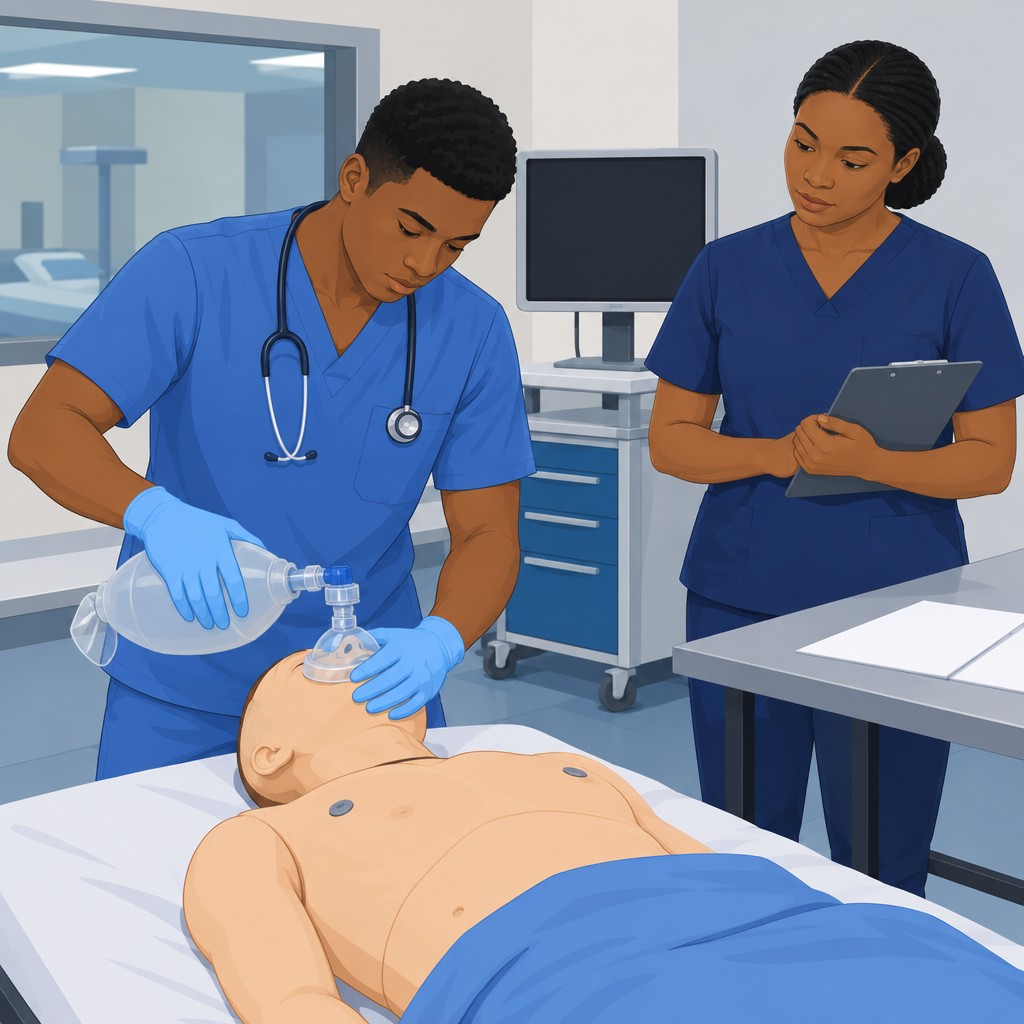
Simulation labs support medical education by giving students a safe place to practice hands-on procedures.
- Safe Practice: Students can practice procedures in a controlled setting without placing patients at risk.
- Realistic Scenarios: Simulated situations allow students to experience diverse medical treatment challenges.
- Critical Thinking: Students strengthen decision-making skills while responding to changing situations under pressure.
Additionally, simulation labs mirror clinical environments and help students develop essential professional skills.
- Teamwork and Communication: Students collaborate with colleagues and communicate clearly during simulated care.
- Technical Skills: Repeated practice helps students master complex procedures before treating actual patients.
- Confidence Building: Regular practice helps students strengthen their confidence and prepare for clinical work.
Furthermore, simulation labs help educators assess performance and guide students toward improvement.
- Performance Evaluation: Educators observe student performance and provide targeted feedback on areas requiring improvement.
- Engaging Learning: Simulation-based activities create a more immersive and interactive educational experience.
- Continuous Development: Students monitor their progress and refine their skills through repeated simulations.
Simulation labs therefore provide a dynamic environment where future healthcare professionals can develop practical abilities.
Gain More Insights: Choosing the Right Material for Dental Restorations
Impact of Simulation Labs on Patient Outcomes
- Simulation labs can improve patient care through various studies and examples.
- They help reduce medical errors by enabling professionals to practice in controlled environments.
- Furthermore, emergency simulations prepare healthcare providers to manage critical situations effectively.
- Studies indicate a relationship between simulation training and improved patient safety outcomes.
- Additionally, simulation labs help professionals develop skills and strengthen clinical judgment.
These benefits can enhance healthcare delivery and patient outcomes in Nigeria.
Learn More: Importance of Early Childhood Care in Nigeria
Integration of Simulation Labs in Nigerian Medical Schools
Simulation lab integration remains limited across Nigerian medical schools.
Several initiatives support pilot programs and laboratory development.
Transform Your Career with Expert Guidance
Get personalized mentorship consulting that’s tailored to your unique path. Our expert advice is actionable and exclusive.
Get StartedHowever, financial, staffing, infrastructure, and awareness challenges restrict wider adoption.
Current Status of Simulation Labs
Many Nigerian medical schools still lack simulation laboratories.
Some institutions operate basic facilities, but they lack advanced equipment.
Therefore, simulation laboratory availability remains limited across Nigeria.
- Many Nigerian medical schools still lack simulation laboratories.
- Some schools have basic simulation laboratories without advanced equipment.
- Overall access to simulation laboratories remains limited.
Initiatives Supporting Laboratory Integration
Several medical schools have started pilot simulation programs.
Meanwhile, NGOs support the establishment of simulation laboratories.
Partnerships with foreign universities also contribute to laboratory development.
- Some medical schools have introduced pilot simulation programs.
- NGOs provide support for establishing simulation laboratories.
- Foreign university partnerships assist simulation laboratory development.
Barriers to Widespread Adoption
Financial constraints limit laboratory setup and ongoing maintenance.
Additionally, schools face shortages of qualified simulation staff.
Inadequate infrastructure, traditional teaching preferences, and limited awareness create further barriers.
- Schools often lack funding for laboratory setup and maintenance.
- Qualified staff shortages hinder simulation program delivery.
- Inadequate infrastructure limits the use of simulation technology.
- Some educators resist changes to traditional teaching methods.
- Limited awareness reduces recognition of simulation training benefits.
Conditions for Wider Integration
Institutions need collaboration to expand simulation laboratory access.
Government support can address financial and infrastructure limitations.
Greater awareness can encourage educators to adopt simulation-based training.
Delve into the Subject: Innovations in Anatomical Pathology Nigeria
Success Stories from Institutions Using Simulation Labs
Several institutions use simulation labs to strengthen medical education and clinical training.
The College of Medicine at the University of Lagos provides one example.
The Ahmadu Bello University Teaching Hospital in Zaria offers another example through nursing education.
- The College of Medicine at the University of Lagos implemented simulation labs for medical education.
- Students reported greater confidence and preparation when treating patients.
- Simulation training improved student performance during exams and clinical practice.
- The Ahmadu Bello University Teaching Hospital incorporated simulation labs into nursing training programs.
- Nurses who trained there demonstrated stronger competency and clinical skills.
- Patients reported noticeable improvements in the quality of care they received.
- These examples show how simulation labs can strengthen medical training.
Simulation labs play a crucial role in Nigerian medical training by providing hands-on experience.
These labs simulate real-life medical scenarios for students to practice and enhance their skills.
Moreover, medical students develop clinical skills, critical thinking, and decision-making abilities through simulation training.
Simulation labs also bridge the gap between theoretical knowledge and practical application in medical education.
Furthermore, students can make mistakes safely and learn without risking patient safety.
Strengthening Medical Training Through Simulation
Simulation labs improve medical training in Nigeria by offering students realistic learning environments.
They also enhance the overall learning experience through practical and structured training.
Therefore, increased investment and support can advance healthcare practices in Nigeria.
Additional Resources
Google search results for Role of Simulation Labs in Nigerian Medical Training Medical
Bing search results for Role of Simulation Labs in Nigerian Medical Training Medical


