



Optometrists play a crucial role in Nigeria’s healthcare system by focusing on vision care and eye health.
Because vision supports overall health, optometry remains important within the healthcare sector.
Growth of Optometry in Nigeria
Optometry has grown significantly as a profession in Nigeria.
As a result, more optometrists now serve the Nigerian population.
These professionals identify and diagnose eye conditions, provide treatment, and prescribe corrective lenses.
History and Development of Optometry in Nigeria
- Optometry in Nigeria has evolved significantly over the years.
- Initially, optometry was not a recognized profession in the country.
- However, in the late 20th century, the government acknowledged optometry’s importance in healthcare.
- This recognition led to the establishment of training institutions for optometrists.
Training and Education Requirements
- Prospective optometrists in Nigeria must complete a rigorous educational program.
- They typically need a Bachelor’s degree in Optometry from a recognized institution.
- After completing their degree, they must undergo a period of practical training.
Regulatory Bodies and Professional Associations
- The Optometrists and Dispensing Opticians Registration Board of Nigeria oversees optometry practice nationwide.
- The board ensures that optometrists follow professional standards and ethical requirements.
- Additionally, the Nigerian Optometric Association supports and advocates for optometrists.
Optometrists in Nigeria provide essential eye care services.
They support population eye health through clinical assessment and treatment.
Their services address vision problems, eye conditions, prevention, and patient education.
Roles and Responsibilities of Optometrists in Nigeria
Optometrists assess vision and identify conditions that may affect eye health.
They also guide patients through treatment, prevention, and ongoing eye care.
Additionally, they support patients before and after selected eye surgeries.
- They conduct comprehensive eye examinations to assess visual acuity and detect eye diseases.
- They prescribe corrective lenses, including glasses and contact lenses.
- They evaluate and manage red eyes, dry eyes, and eye infections.
- They provide preoperative and postoperative care for patients undergoing cataract surgery.
- They educate patients about proper eye care and regular eye examinations.
Services and Treatments Provided by Optometrists
Optometrists provide testing and treatment services for various vision and eye health needs.
They identify potential diseases and recommend suitable options for improving visual function.
They also assist patients who need specialized support for binocular vision problems.
- They perform refraction tests to determine appropriate lens prescriptions.
- They screen for glaucoma, macular degeneration, and diabetic retinopathy.
- They fit and prescribe contact lenses for suitable patients.
- They manage allergies, conjunctivitis, dry eyes, and other common conditions.
- They provide vision therapy for binocular vision and eye muscle disorders.
Collaboration with Other Healthcare Professionals
Optometrists work with other healthcare professionals when patients need broader or specialized care.
This cooperation helps coordinate diagnosis, treatment, referrals, and continuing patient support.
They also contribute to community efforts that promote eye health and prevent vision loss.
- They collaborate with ophthalmologists to manage complex eye diseases.
- They refer patients for surgical interventions and specialized eye care services.
- They work with general practitioners when systemic conditions affect eye health.
- They participate in multidisciplinary teams caring for chronic eye disorders.
- They join community outreach programs that promote eye health in underserved areas.
Gain More Insights: Mental Health Care for Nigerian Women and Girls
Challenges Faced by Optometrists in Nigeria
Optometrists in Nigeria face several barriers that can limit consistent, high-quality eye care delivery.
These barriers affect professional preparation, clinical resources, service access, regulation, public engagement, and teamwork.
Addressing them requires coordinated improvements across education, funding, infrastructure, awareness, and healthcare collaboration.
- Lack of adequate training and education: Inadequate training can hinder optometrists’ ability to provide high-quality eye care services.
- Limited access to equipment and technology: Limited access to modern tools can affect accurate diagnosis and treatment of eye conditions.
- Insufficient resources and funding: Financial limitations can prevent optometrists from investing in essential tools and services.
- Inadequate infrastructure: Poor infrastructure can make it difficult to deliver optometry services in remote areas.
- Regulatory and licensing issues: Regulatory hurdles can affect professional practice and limit available optometry services.
- Lack of public awareness and support: Limited public awareness can reduce the use of regular eye check-ups and optometry services.
- Limited collaboration with healthcare professionals: Weak collaboration can produce fragmented care and less effective patient outcomes.
Measures for Strengthening Optometry Services
Several practical measures can strengthen optometry services and help professionals reach more patients.
These measures focus on skills, equipment, resources, infrastructure, regulation, public awareness, and professional cooperation.
Together, they can support more coordinated and accessible eye care across Nigeria.
- Advocacy for better training and education: Improved programs can strengthen optometrists’ skills and knowledge.
- Investment in equipment and technology: Modern equipment can support accurate and efficient eye care services.
- Enhanced resource allocation: Increased funding can address financial challenges and improve care quality.
- Infrastructure development: Better infrastructure can help optometrists reach underserved populations.
- Regulatory reforms and licensing simplification: Simplified procedures can streamline practice and expand service access.
- Public awareness campaigns: Awareness campaigns can explain eye health and encourage regular check-ups.
- Interprofessional collaboration: Cooperation among healthcare professionals can improve coordination and patient outcomes.
Addressing these challenges can help optometrists overcome practice barriers and provide better eye care services.
Gain More Insights: Role of Social Media in Nigerian Mental Health
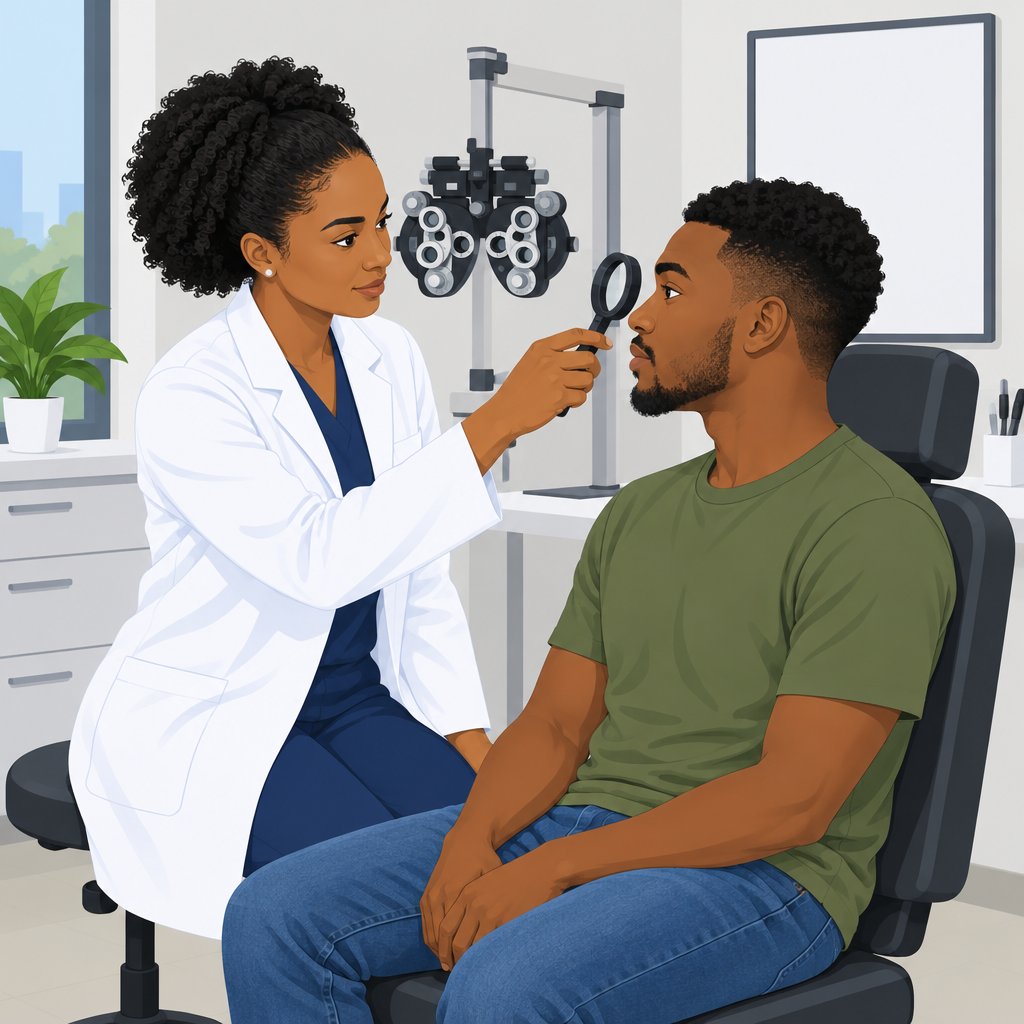
Public Health Contributions of Optometrists
Optometrists promote eye health and help prevent vision problems in Nigeria.
They examine, diagnose, treat, and manage diseases affecting the visual system.
Their work supports public health through early detection, vision screening, and community education.
- Early Detection and Management of Eye Diseases
Through comprehensive eye exams, optometrists can identify glaucoma, cataracts, and diabetic retinopathy early. - Vision Screenings
Optometrists conduct screenings in schools, communities, and workplaces.
These screenings identify refractive errors and amblyopia.
They also support referrals for further evaluation and treatment. - Community Outreach Programs
Additionally, optometrists raise awareness about eye health through community outreach programs.
These efforts provide education about regular eye exams.
They also reach underserved populations that may lack access to eye care services.
Together, these activities help optometrists promote eye health and address vision problems across Nigerian communities.
Discover More: Medical Microbiology Teaching Methods in Nigeria
Training and Professional Development Opportunities
Optometrists in Nigeria can access continuing education and professional training through several providers.
These opportunities address emerging technology, clinical guidelines, and established best practices.
Universities, professional associations, and private institutions support this ongoing learning.
- Workshops provide focused learning on current optometry topics.
- Seminars encourage professional discussion and knowledge sharing.
- Conferences expose optometrists to new developments and professional perspectives.
- Online courses offer flexible access to continued education.
Staying Updated With Optometry Advancements
Optometrists must remain informed about advancements in optometry practice.
New technologies, research findings, and treatment methods continue to emerge within the field.
Continuous learning helps practitioners adapt their knowledge and maintain professional relevance.
- Updated knowledge can support more accurate diagnosis.
- Current treatment information can improve patient care decisions.
- Awareness of developments helps optometrists respond to changing healthcare needs.
Initiatives and Partnerships for Skills Enhancement
Several initiatives and partnerships aim to strengthen optometrists’ skills and professional competencies in Nigeria.
The Nigerian Optometric Association collaborates with universities and international organizations on training opportunities.
These collaborations help practitioners develop abilities that support comprehensive eye care.
Transform Your Career with Expert Guidance
Get personalized mentorship consulting that’s tailored to your unique path. Our expert advice is actionable and exclusive.
Get Started- Pharmaceutical partnerships introduce optometrists to new products and treatments.
- Government initiatives support training for eye care professionals.
- The National Eye Health Program contributes to professional skills development.
Professional Development and Quality Eye Care
Professional development enables optometrists to strengthen their knowledge and clinical skills.
By participating in training, practitioners can improve their competencies and support quality eye care services.
Strong development opportunities help optometrists meet the eye care needs of Nigeria’s population.
Learn More: Impact of Parasitology on Nigerian Communities
Public Awareness and Advocacy for Eye Health
Regular eye examinations help prevent vision loss and support lasting eye health.
Many people delay care until serious symptoms affect their daily lives.
Public education can encourage earlier attention to common vision concerns.
Importance of Public Awareness
Optometrists educate communities about the value of routine eye examinations.
These examinations can detect myopia, hyperopia, and astigmatism at an early stage.
Early detection helps individuals receive information and resources for appropriate eye care.
Strategies for Promoting Eye Health Education
Community organizations, schools, and local health agencies can coordinate eye screening events.
Screening events can identify people at risk and connect them with useful guidance.
Meanwhile, optometrists can use social media, videos, infographics, and articles to expand education.
Advocacy for Vision Care Policies
Optometrists can work with government officials, public health organizations, and other stakeholders.
They can support policies that prioritize eye health and increase funding for vision care programs.
Public campaigns allow optometrists to share expertise and encourage stronger healthcare policy decisions.
Strengthening Eye Care Through Optometry
Optometrists provide essential eye care services within Nigeria’s healthcare system.
Furthermore, recognizing optometry as vital healthcare supports holistic well-being.
Therefore, continuous support can help optometrists improve eye health outcomes in Nigeria.
Additional Resources
Google search results for The Role of Optometrists in Nigeria's Healthcare System Medical
Bing search results for The Role of Optometrists in Nigeria's Healthcare System Medical


