



Radiography in Nigeria
Radiography plays a crucial role in Nigeria’s healthcare sector.
It uses imaging techniques to diagnose and treat medical conditions.
Furthermore, technological advances continue to expand and improve radiography across Nigeria.
Radiographers use X-rays, ultrasound, CT scans, and MRI to create internal body images.
These images help healthcare professionals identify diseases and plan appropriate treatments.
Moreover, radiography supports early disease detection and guides medical interventions.
Healthcare professionals also use imaging to monitor patients’ treatment progress.
Digital imaging, artificial intelligence, and 3D printing are transforming radiography in Nigeria.
These developments improve image quality, diagnostic accuracy, and efficiency in patient care.
History of Radiography in Nigeria
Radiography in Nigeria began developing during the early 1950s.
Early hospitals introduced X-ray machines for diagnostic examinations.
Over time, training and technology expanded radiography services across the country.
Evolution of Radiography Services
In the early 1950s, hospitals introduced radiography services in major cities.
At first, practitioners mainly used radiography for diagnostic purposes.
Subsequently, improved technology and training programs supported professional growth.
These developments expanded services into rural areas.
They also introduced specialized imaging techniques into clinical practice.
Milestones in Nigerian Radiography
A major milestone came in 1979 with the establishment of the Radiographers Registration Board of Nigeria.
The board established and maintained professional standards for radiographers.
Consequently, it supported quality radiography services for patients.
Another milestone involved integrating radiography services into the national healthcare system.
This integration increased access to diagnostic imaging across the country.
It also encouraged collaboration between radiographers and other healthcare professionals.
As a result, healthcare teams improved patient care and outcomes.
Challenges Facing Radiography Development
Despite progress, radiography faced several challenges during its development.
Nigeria experienced a shortage of qualified radiographers.
Inadequate training programs also struggled to meet growing demand.
As a result, patients often experienced long waits for examinations.
This shortage sometimes affected the quality of care.
Furthermore, some regions lacked access to advanced imaging technologies.
Limited resources reduced radiographers’ ability to provide timely and accurate diagnoses.
This disparity demonstrated the need for strategic planning and infrastructure investment.
Future Development of Radiography Services
Radiography in Nigeria continues to show opportunities for further development.
Additional expansion can improve imaging services for the Nigerian population.
Continued investment in infrastructure can support wider access to radiography.
Dedicated healthcare professionals can further strengthen service delivery.
Current Status of Radiography in Nigeria
- Number of radiography institutions in the country
- Availability of radiography equipment and facilities
- Regulation and standardization of radiography practice
Nigeria currently has 26 accredited radiography institutions across the country.
These institutions train qualified radiographers to meet the population’s healthcare needs.
Furthermore, radiography equipment and facilities have become more available in recent years.
However, many remote healthcare facilities still lack advanced imaging technology.
Transform Your Career with Expert Guidance
Get personalized mentorship consulting that’s tailored to your unique path. Our expert advice is actionable and exclusive.
Get StartedThis limitation reduces the quality of patient care in those areas.
Meanwhile, the Radiographers Registration Board of Nigeria regulates radiography practice nationwide.
The board establishes standards for training, registration, and professional practice.
Consequently, radiographers must follow professional ethics and provide high-quality patient services.
Find Out More: Scholarships for Physiology Students in Nigeria
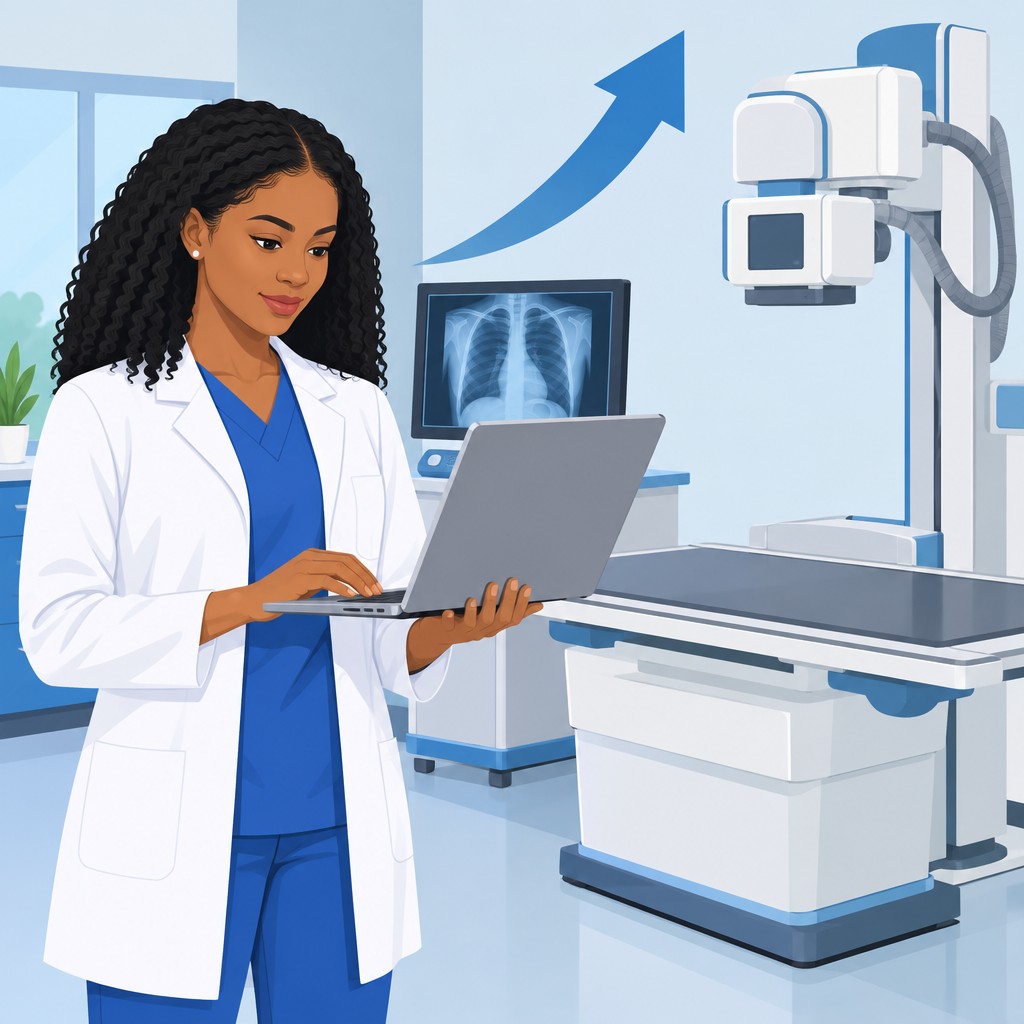
Emerging Trends in Radiography
Recent advances are reshaping radiography practice in Nigeria and creating new possibilities for patient care and diagnosis.
- Use of digital radiography technology
- Specialization in different areas of radiography
- Incorporation of artificial intelligence in radiography
Digital radiography supports faster image acquisition, improved image quality, and greater patient comfort.
It also removes traditional film processing chemicals, making these systems more environmentally friendly.
Radiographers increasingly specialize in mammography, computed tomography (CT), magnetic resonance imaging (MRI), and ultrasound.
Such specialization helps professionals develop expertise and provide more focused care.
Artificial intelligence (AI) is also entering radiography practice.
AI algorithms can analyze radiographic images quickly and accurately.
They can help radiographers detect abnormalities and make more precise diagnoses.
Consequently, this technology may improve diagnostic accuracy, reduce errors, and enhance patient outcomes.
As these trends develop, radiographers can better address the changing healthcare needs of Nigeria’s population.
They can also provide high-quality diagnostic services through technology and innovation.
You Might Also Like: Public Health Tech Startups Making Waves in Nigeria
Predictions for the Future of Radiography in Nigeria
As technology advances, radiography in Nigeria will experience further growth and development.
Several trends will influence how professionals deliver services across the country.
These changes will affect workforce needs, education, and professional cooperation.
Increased Demand for Radiography Services
- Nigeria’s growing population and health awareness will increase demand for radiography services.
- Hospitals, diagnostic centers, and other healthcare facilities will require additional radiography support.
- Radiography will remain essential for diagnosing and treating various medical conditions.
- Consequently, rising demand will create more opportunities for skilled radiographers.
Expansion of Radiography Education and Training Programs
- Nigeria will need stronger education and training programs to meet increasing service demands.
- Training institutions can improve instruction quality while increasing available program spaces.
- Investment in professional education will help develop a capable radiography workforce.
- Expanded programs can also help address the shortage of radiographers.
Collaboration with International Radiography Organizations
- International collaboration can help Nigerian radiographers follow new developments and professional practices.
- Partnerships may provide exchange programs, conferences, and training opportunities abroad.
- Knowledge sharing can strengthen radiographers’ skills and improve service quality.
- International cooperation can raise radiography’s profile within Nigeria and beyond.
These developments indicate promising prospects for radiography in Nigeria.
Greater investment can prepare professionals to meet the population’s healthcare needs.
It can also support quality radiography services for citizens across the country.
You Might Also Like: Key Roles of Chemical Pathologists in Nigeria
Challenges Affecting Radiography’s Future in Nigeria
- Limited funding for radiography research and development.
- Shortage of skilled radiography professionals.
- Infrastructure and maintenance problems in radiography facilities.
Limited funding remains a major challenge for radiography research and development in Nigeria.
Consequently, institutions and researchers struggle to conduct studies and experiments that advance radiography technology.
Insufficient financial support also limits efforts to improve existing radiography practices.
Meanwhile, Nigeria faces a shortage of skilled radiography professionals.
Growing demand for imaging services increases the need for more trained professionals.
However, limited educational opportunities discourage many individuals from pursuing radiography careers.
In addition, a lack of incentives makes the profession less attractive to potential trainees.
Radiography facilities also experience infrastructure and maintenance problems.
Without proper equipment and facilities, providers struggle to deliver high-quality imaging services.
Furthermore, inadequate maintenance can cause equipment breakdowns and inefficient radiography processes.
Healthcare stakeholders and the government must work together to address these challenges.
They can strengthen the field by increasing research funding and supporting professional training.
They should also invest in upgrading radiography infrastructure and maintaining available facilities.
These actions can help radiography meet Nigeria’s growing demand for imaging services.
Learn More: Internship Programs in Nigeria's Public Health Tech
Radiography’s Future in Nigeria
Radiography’s future in Nigeria appears promising.
However, stakeholders must support strategic planning to guide continued progress.
This approach can help radiography respond effectively to changing healthcare needs.
Key Developments Shaping Radiography
The discussion examined current trends influencing radiography in Nigeria.
It also considered technology’s growing impact on professional practice.
Continuous education remains essential as radiographers develop their knowledge and skills.
Preparing for Changing Healthcare Needs
Healthcare changes will continue to influence radiography practice across Nigeria.
Radiography professionals should anticipate these changes and adopt suitable practices.
These efforts can strengthen patient outcomes and support effective healthcare delivery.
Shared Responsibility for Radiography Development
Policymakers should prioritize radiography development through supportive decisions and planning.
Healthcare providers can advance the field by supporting improved professional practices.
Educators must also strengthen learning opportunities for a healthier Nigeria.
Additional Resources
Bing search results for The Future of Radiography in Nigeria: Trends and Predictions Health Sciences


