




Practical Anatomy Skills for Nigerian Medical Students
Understanding practical anatomy skills helps Nigerian medical students excel in their field.
These skills support hands-on learning of the human body and strengthen medical practice.
In Nigeria, healthcare challenges make a strong anatomy foundation vital for diagnosing and treating medical conditions effectively.
Moreover, practical anatomy mastery helps medical students navigate their coursework successfully.
Anatomy forms a significant part of their medical curriculum.
Therefore, Nigerian medical students should hone these skills to become competent healthcare professionals.
Practical Anatomy Skills in Medical Education
Hands-on anatomy experience helps medical students understand the human body comprehensively.
It connects physical structures with theoretical knowledge through direct learning experiences.
Consequently, practical training supports competent medical practice in Nigeria.
Value of Hands-On Anatomical Experience
Direct experience gives students a tactile understanding of the body’s structures.
Additionally, students can visualize anatomical relationships in three dimensions.
Kinesthetic learning also helps students remember anatomical information.
- Students gain a tactile understanding of the body’s structure.
- They visualize anatomical relationships in three dimensions.
- They strengthen memorization through kinesthetic learning.
Practical Skills in Anatomy and Physiology
Practical activities allow students to apply theoretical knowledge in suitable learning settings.
Moreover, these activities clarify complex anatomical concepts.
They also connect anatomy with other medical disciplines.
- Students apply theoretical knowledge in practical settings.
- They improve their understanding of complex anatomical concepts.
- They integrate anatomy with other medical disciplines.
Contribution to Medical Knowledge
Practical anatomy training helps students recognize anatomical variations during diagnosis.
Furthermore, hands-on experience supports the development of surgical proficiency.
It also prepares students for real-life patient care scenarios.
- Students improve diagnostic skills by recognizing anatomical variations.
- They develop surgical proficiency through hands-on experience.
- They prepare for real-life patient care scenarios.
Challenges Facing Nigerian Medical Students in Practical Anatomy Training
- Lack of resources and facilities for practical anatomy training
- Shortage of qualified anatomy instructors and limited exposure to practical sessions
- Impact of these challenges on learning experiences and skill development
Many Nigerian medical schools lack equipment, specimens, and cadavers for effective practical anatomy training.
Moreover, limited facilities restrict students’ opportunities to practice anatomical knowledge directly.
Consequently, students may find complex structures harder to understand without sufficient practical resources.
Qualified anatomy instructors are also insufficient in many Nigerian medical schools.
Therefore, students may receive limited guidance and mentorship during practical sessions.
Because practical sessions occur infrequently, learners may struggle to develop essential anatomical skills.
Hands-on experience helps students understand the human body and its intricacies more deeply.
Without adequate training, students may struggle to apply anatomical concepts in clinical settings.
Ultimately, these barriers can affect their ability to provide quality patient care.
Addressing resource, facility, and instructor shortages can strengthen anatomical training for future healthcare professionals.
Delve into the Subject: Telemedicine Training in Nigerian Medical Schools
Strategies for Strengthening Practical Anatomy Training
Nigerian medical students need varied opportunities to develop practical anatomy skills.
These opportunities can connect anatomical knowledge with direct learning experiences.
Several coordinated strategies can support stronger practical anatomy training.
- Incorporate more hands-on anatomy workshops and training sessions.
- Use virtual anatomy software to supplement traditional learning methods.
- Collaborate with anatomy experts and organizations to improve practical skills training.
Hands-on workshops can provide direct experience with human cadavers, anatomical models, and other teaching aids.
During these sessions, students can practise dissections and identify different body structures.
Such activities can deepen understanding while developing confidence with practical anatomical tasks.
Virtual anatomy software can further support learning through interactive three-dimensional models.
Students can use these tools to explore structures and perform virtual dissections.
Consequently, virtual resources can strengthen spatial reasoning and anatomical visualization.
Institutions can also collaborate with experienced anatomists to provide guidance and mentorship.
Anatomy experts can lead specialized workshops, practical demonstrations, and focused training sessions.
Transform Your Career with Expert Guidance
Get personalized mentorship consulting that’s tailored to your unique path. Our expert advice is actionable and exclusive.
Get StartedAdditionally, anatomy organizations can provide resources, research opportunities, and professional networking events.
These combined approaches can prepare students for continued medical education and clinical practice.
Delve into the Subject: Medical Conferences and Workshops in Nigeria: 2025 Guide
Benefits of Improved Practical Anatomy Skills
- Enhanced practical skills improve understanding and retention of anatomical knowledge.
- Medical students need a strong anatomy foundation because it supports medical practice.
- Furthermore, practical training deepens students’ understanding of bodily structures and functions.
- This stronger understanding can support accurate diagnoses and appropriate treatment plans.
Positive Effects on Medical Practice and Patient Care
- Medical professionals with advanced anatomy skills can provide higher-quality patient care.
- Moreover, anatomical knowledge helps healthcare providers make informed clinical decisions and recommendations.
- Improved practical skills can reduce procedural errors and promote patient safety.
Confidence and Competence Among Medical Students
- Proficiency in practical anatomy builds confidence as students enter clinical practice.
- Additionally, accurate dissection and identification of structures strengthen student competence.
- This confidence can improve examination performance and communication with patients and colleagues.
- Consequently, stronger practical anatomy skills can support future professional success and quality patient care.
Explore Further: Dental Sealants: Key to Preventive Dentistry
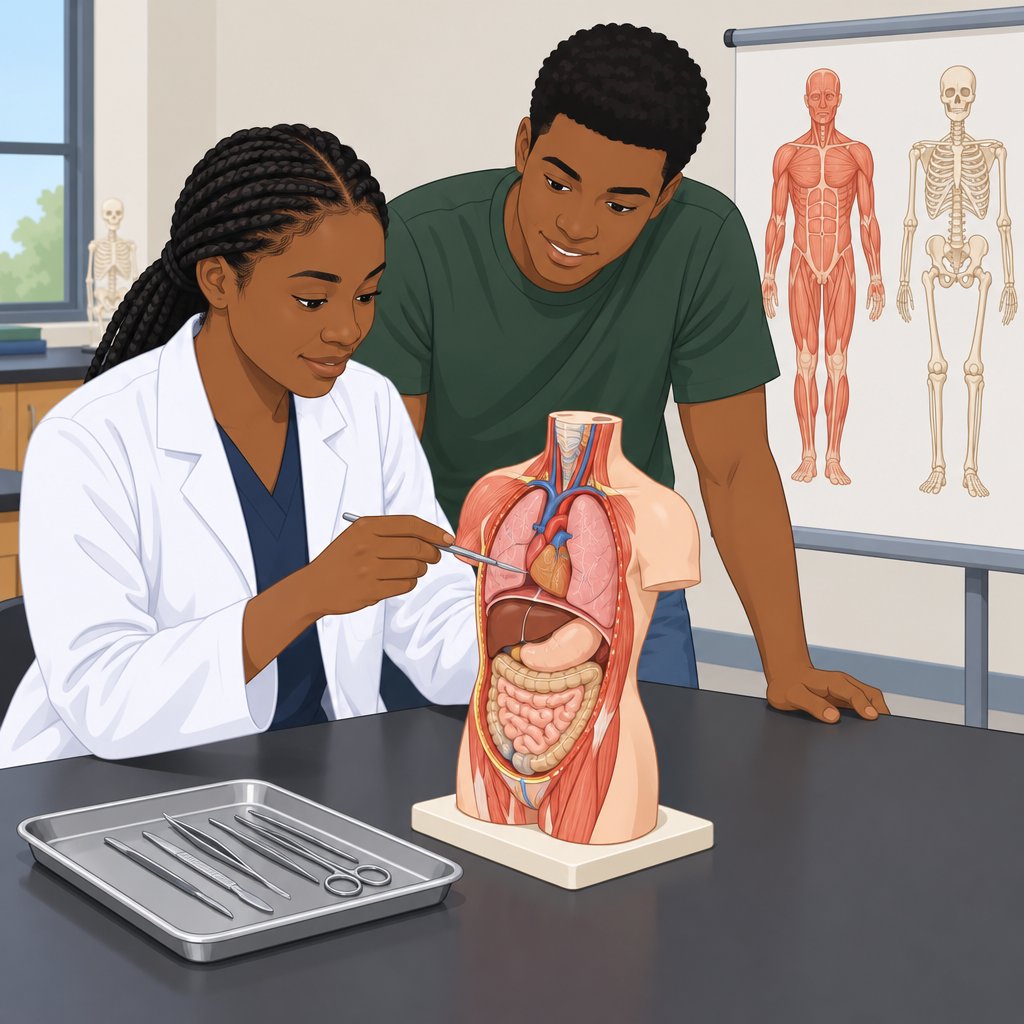
Case Studies of Successful Implementation
Several Nigerian medical schools have strengthened practical anatomy training through focused educational initiatives.
These examples show how structured activities can improve students’ learning experiences.
Students and professionals have also described important benefits from this practical preparation.
University of Lagos Medical School
The University of Lagos Medical School implemented a new practical anatomy curriculum.
The school increased hands-on dissection sessions and used modern technology for learning.
Students reported improved understanding of anatomy after participating in these activities.
- Implemented a new practical anatomy curriculum
- Increased hands-on dissection sessions
- Utilized modern technology for learning
- Students reported improved understanding of anatomy
Ahmadu Bello University Teaching Hospital
Ahmadu Bello University Teaching Hospital introduced interactive anatomy workshops.
The workshops emphasized clinical correlations between anatomical structures and medical practice.
Peer-to-peer teaching helped students develop teamwork and communication skills.
- Introduced interactive anatomy workshops
- Emphasized clinical correlation of anatomical structures
- Facilitated peer-to-peer teaching
- Enhanced teamwork and communication skills
Outcomes and Benefits Seen in Students
Students receiving improved practical anatomy training reported several positive outcomes.
They described stronger knowledge retention and greater confidence in clinical settings.
They also reported better surgical technique and stronger problem-solving abilities.
- Enhanced understanding of anatomical structures
- Improved retention of knowledge
- Increased confidence in clinical settings
- Better surgical skills and technique
- Enhanced problem-solving abilities
Testimonials from Students and Professionals
Students and professionals have directly described the value of practical anatomy skills training.
Their experiences illustrate how dissection and clinical preparation can support future medical practice.
These perspectives also emphasize the lasting value of practical anatomy education in Nigeria.
“The hands-on dissection sessions revolutionized my understanding of anatomy and prepared me for clinical practice.” – John, Medical Student
“Practical anatomy skills remain essential in my daily work as a surgeon.” – Dr. Sarah, Surgeon
Explore Further: Cataract Treatment: Nigerian Clinics Offering Advanced Care
Recommendations for Medical Schools and Students
- Medical schools should prioritize practical anatomy training and invest in resources that develop students’ skills.
- Students should actively seek hands-on learning and practice opportunities beyond their regular coursework.
- Students should pursue continuous improvement and practice to strengthen their practical anatomy abilities.
Medical schools shape the anatomy skills of future healthcare professionals.
Therefore, institutions should make practical anatomy training a central part of their curriculum.
They can improve learning by providing cadavers, medical models, and simulation tools.
Students can also join anatomy laboratories, dissection workshops, or clinical internships.
These activities expose students to anatomical structures and strengthen their preparation for clinical settings.
Furthermore, students should review anatomical structures regularly and practise dissection techniques.
Case studies can reinforce knowledge while helping students build confidence in practical anatomy.
Because anatomy requires sustained reinforcement, students should continue practising throughout their education.
Medical schools can complement traditional instruction with virtual dissection software and 3D visualization tools.
These technologies offer interactive experiences that simulate real-world scenarios and clarify anatomical structures.
Consequently, coordinated efforts from schools and students can support stronger anatomy education in Nigeria.
This preparation can help produce competent and knowledgeable healthcare professionals.
Importance of Practical Anatomy Skills
Practical anatomy skills help Nigerian medical students understand the human body.
These skills connect anatomical knowledge with direct learning experiences.
Therefore, students can apply their understanding during medical education and practice.
Collaboration and Innovative Approaches
Medical schools can strengthen practical anatomy training through collaboration.
Students and stakeholders should contribute to developing effective learning approaches.
Additionally, innovative methods can support practical anatomy education.
Priority for Practical Anatomy Training
Medical schools must prioritize practical anatomy training.
Students should actively value opportunities to develop practical anatomy skills.
Stakeholders must support these priorities to improve medical education and practice in Nigeria.
Additional Resources
Google search results for Practical Anatomy Skills for Nigerian Medical Students Medical
Bing search results for Practical Anatomy Skills for Nigerian Medical Students Medical


