



Introduction
This topic examines anatomy lab experiences in Nigerian medical schools.
These experiences represent a crucial practical aspect of anatomy education.
Furthermore, hands-on learning helps students grasp complex anatomical structures.
Anatomy Laboratory Setup and Resources
Anatomy labs in Nigerian medical schools typically contain dissecting tables, cadavers, anatomical models, and medical instruments.
Students use microscopes, prepared slides, textbooks, charts, and computer software for virtual dissections.
Additionally, students receive lab coats, gloves, and goggles for practical work.
Laboratory sessions develop students’ understanding of bodily structures, functions, and anatomical relationships.
They also provide practical experiences that support students’ medical education.
Educational Benefits of Laboratory Experience
Students deepen their anatomical understanding by examining and dissecting real human specimens.
They also develop essential clinical skills, including dissection techniques and anatomical identification.
Furthermore, collaborative dissections strengthen teamwork and communication as students learn from one another.
Challenges Affecting Anatomy Laboratories
However, some laboratories lack sufficient resources, causing overcrowding and limited equipment access.
Cadaver maintenance can prove difficult when preservation techniques and embalming funds remain inadequate.
Moreover, weak connections between theory and practice can hinder clinical application of anatomical concepts.
Strategies for Strengthening Anatomy Education
Medical schools should increase funding for equipment, cadaver maintenance, and student support.
Faculty should align laboratory sessions with classroom lectures to reinforce theoretical concepts.
Finally, training laboratory technicians in preservation and equipment maintenance can improve laboratory quality.
These improvements can strengthen anatomy education and prepare future healthcare professionals more effectively.
Student Experiences in Anatomy Labs
- Students often feel awe and excitement when they work with real human cadavers.
- Although some students feel nervous before dissection, they quickly adapt and engage with the learning process.
- Furthermore, many students find hands-on experience valuable for strengthening their understanding of the human body.
- The anatomy lab also provides perspectives that textbooks and lectures cannot offer alone.
Challenges Faced by Students
- Initially, students may feel discomfort and unease when they first encounter a cadaver.
- Additionally, students must manage the physical demands of standing and working for long hours.
- Because dissections require precision, intricate procedures can cause frustration and anxiety.
- Moreover, groups may experience communication and coordination difficulties during simultaneous tasks.
Importance of Teamwork and Collaboration
- Students must collaborate to dissect and study cadavers effectively.
- Teamwork distributes tasks evenly and gives every student opportunities to participate and learn.
- Meanwhile, students deepen their understanding by sharing insights and knowledge.
- Finally, mutual support during difficult sessions fosters camaraderie among students.
See Related Content: Impact of COVID-19 on Nigerian Mental Health
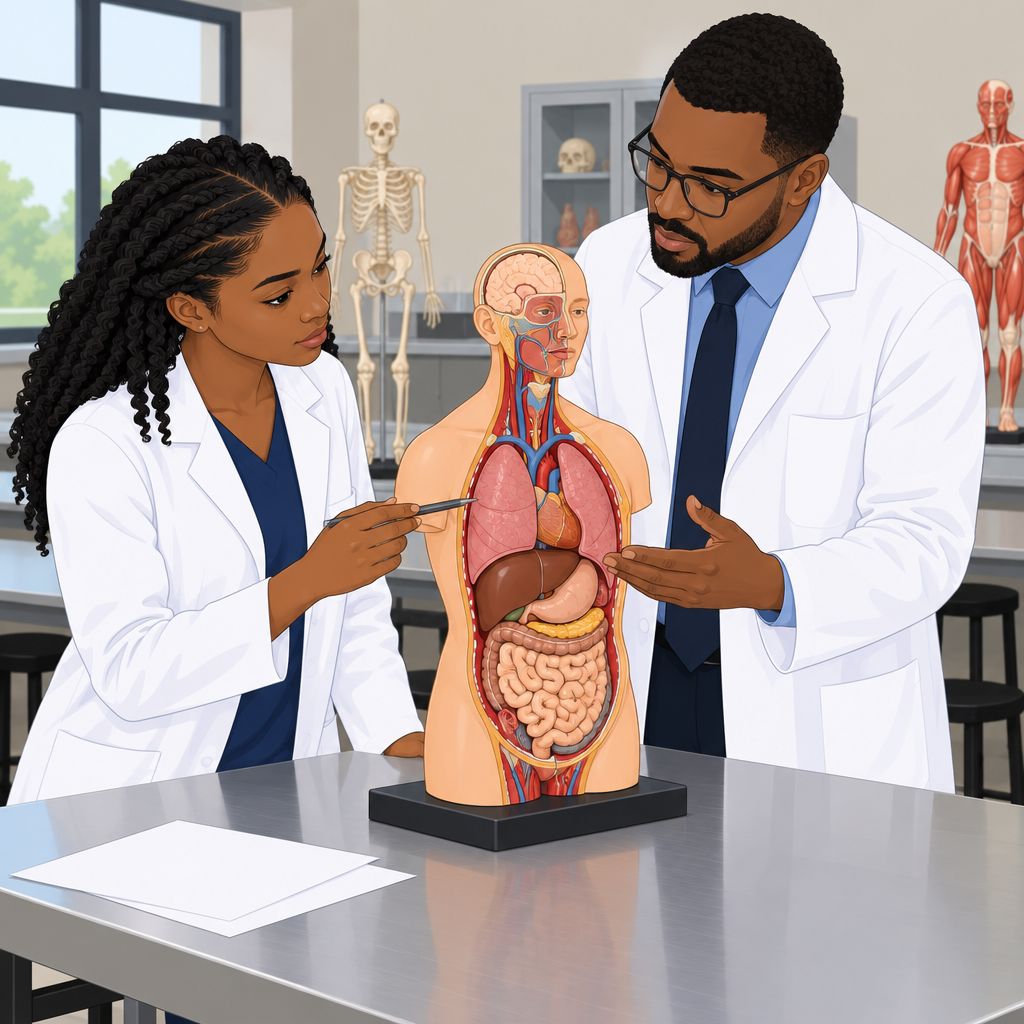
Benefits of Anatomy Lab Experiences
Hands-on anatomy lab experiences support medical students’ learning and professional development.
Students visualize and interact with real human structures, which clarifies the body’s three-dimensional organization.
Additionally, active participation improves retention because practical activities reinforce anatomical details.
- Enhanced anatomical understanding: Students examine real structures and develop a clearer three-dimensional understanding of the human body.
- Improved knowledge retention: Dissections and anatomical models help students remember and understand important details.
- Clinical skill development: Real specimens reveal structures and functions that support physical examinations, surgery, diagnosis, and treatment.
- Critical thinking and problem-solving: Practical activities require students to analyze anatomical problems and apply their knowledge.
- Teamwork and communication: Group dissections help students coordinate with peers and prepare for collaborative healthcare practice.
Discover More: Community Outreach by Nigerian Anaesthesiologists
Innovations in Anatomy Education
- Exploring recent developments in anatomy education in Nigerian medical schools
- Technology and virtual reality’s role in enhancing anatomy laboratory experiences
- Potential benefits of incorporating new teaching methods in anatomy education
Nigerian medical schools have advanced anatomy education through technology and innovative teaching methods.
These changes reshape how students learn and understand the human body.
Moreover, interactive tools create more dynamic learning environments for future healthcare professionals.
Recent Developments in Anatomy Education
Recent developments include integrating cutting-edge technology into anatomy education.
Medical schools now use virtual reality to enhance learning experiences in anatomy laboratories.
This approach gives students additional ways to explore complex anatomical structures.
Technology and Virtual Reality in Anatomy Education
Through virtual reality simulations, students explore the human body interactively.
They can dissect virtual cadavers and examine anatomical structures from different perspectives.
They can also practice surgical procedures in a controlled digital environment.
Consequently, students develop spatial awareness while strengthening their understanding of anatomy.
Benefits of New Teaching Methods
New teaching methods help students grasp complex anatomical concepts.
Interactive experiences can improve engagement and information retention.
Furthermore, hands-on digital activities encourage critical thinking and problem-solving skills.
These methods prepare students for challenges in clinical practice.
By embracing technology, educators create more dynamic and immersive learning environments.
Explore Further: Introduction to Medical Rehabilitation in Nigeria
Challenges Faced in Anatomy Labs
- Anatomy labs commonly face limited resources.
- These limitations may include insufficient cadavers, specimens, and dissection equipment.
- Additionally, overcrowded labs can restrict students’ hands-on experience.
- Overcrowding may also reduce individual attention and educator guidance.
- Furthermore, some anatomy labs lack supervision from experienced instructors.
Potential Solutions for Anatomy Lab Challenges
- Schools can address limited resources by partnering with hospitals or medical centers.
- These institutions may donate cadavers or specimens for educational purposes.
- Meanwhile, virtual dissection software can supplement hands-on learning.
- Schools can reduce overcrowding through smaller lab groups or longer lab hours.
- Finally, additional educator training can strengthen guidance and supervision.
You Might Also Like: Integrating ICT in Nigerian Medical Education: Benefits
Transform Your Career with Expert Guidance
Get personalized mentorship consulting that’s tailored to your unique path. Our expert advice is actionable and exclusive.
Get StartedThe Lasting Value of Anatomy Laboratory Training
Anatomy lab experiences in Nigerian medical schools help shape future healthcare professionals.
Through practical work, students connect anatomical knowledge with the demands of healthcare practice.
Dissections and demonstrations clarify complex structures and strengthen students’ understanding of human anatomy.
Consequently, this understanding can support more effective diagnosis and treatment in future practice.
Moreover, laboratory work teaches students to approach medical tasks with responsibility and precision.
Students also develop careful attention to detail and accuracy through repeated practical engagement.
By valuing practical learning, medical schools can help students become well-rounded professionals.
These experiences build knowledge and skills that students can apply throughout their medical careers.
Ultimately, anatomy laboratories contribute to healthcare education by shaping capable and conscientious future practitioners.
Additional Resources
Google search results for Anatomy Lab Experiences in Nigerian Medical Schools Medical
Bing search results for Anatomy Lab Experiences in Nigerian Medical Schools Medical


