




Introduction
Marine engineering courses and curriculum in Nigeria support the country’s maritime industry.
These courses prepare students for work in maritime transportation.
The field connects education with Nigeria’s maritime development.
Definition and Importance of Marine Engineering in Nigeria
Marine engineering involves designing, testing, and maintaining ships, boats, and other marine vessels.
In Nigeria, the field supports transportation of goods and people through waterways.
This work makes marine engineering important to the country’s transportation system.
Overview of the Maritime Industry in Nigeria
The maritime industry represents a significant sector of Nigeria’s economy.
It includes shipping, logistics, and port operations.
Nigeria has a vast coastline along the Atlantic Ocean.
Therefore, maritime transportation remains essential for trade and commerce.
The industry provides employment opportunities for many Nigerians.
It also contributes to the country’s Gross Domestic Product.
Maritime engineering courses equip students with skills and knowledge for this sector.
Nigerian universities and institutions offer these courses.
The curriculum typically covers naval architecture and marine propulsion systems.
It also addresses marine safety regulations.
Graduates can pursue careers as marine engineers, naval architects, or port engineers.
They may work for shipping companies, maritime organizations, or government agencies.
Demand for skilled marine engineers may increase as Nigeria invests in maritime infrastructure.
Investment in transportation networks may also support this demand.
These courses and curricula support the development and growth of Nigeria’s maritime industry.
Marine Engineering Courses in Nigeria
Marine engineering education covers several connected areas of ship design, construction, operation, and maintenance.
These areas help students develop knowledge for studying marine systems and engineering processes.
Furthermore, the curriculum combines technical subjects that explain how ships function and remain structurally sound.
Courses Offered in Marine Engineering Schools
Marine engineering schools offer courses that address ship structures, machinery, electrical systems, and propulsion.
Students examine these subjects to understand the technical relationships within marine engineering.
Consequently, each course contributes a distinct area of knowledge to the curriculum.
- Naval Architecture
- Marine Machinery Systems
- Marine Electrical Systems
- Marine Structural Design
- Marine Propulsion Systems
Importance of Each Course
Each course develops a specific understanding of marine engineering operations and design requirements.
Together, these subjects help students examine ships from structural, mechanical, electrical, and propulsion perspectives.
Therefore, the courses strengthen the technical knowledge required for marine engineering studies.
- Naval Architecture provides knowledge of ship design principles and hydrodynamics.
- Marine Machinery Systems focuses on operating and maintaining ship machinery.
- Marine Electrical Systems covers electrical systems installed onboard ships.
- Marine Structural Design addresses the structural integrity of ships.
- Marine Propulsion Systems examines technologies used to propel ships.
Requirements for Studying Marine Engineering
Students seeking admission into marine engineering programs must satisfy specific academic requirements.
These requirements establish an academic foundation for handling engineering subjects.
Additionally, applicants must complete the relevant admission and institutional screening processes.
- Applicants need at least five O’Level credit passes, including Mathematics, Physics, and English.
- Applicants must complete a recognized pre-degree or foundation program in engineering.
- Applicants must pass the Joint Admissions and Matriculation Board examination with the required engineering cutoff mark.
- Applicants must pass the screening examination conducted by the university offering the program.
Practical Training in Marine Engineering
Practical training strengthens marine engineering education in Nigeria.
Students apply classroom concepts while preparing for challenges in maritime workplaces.
This experience develops technical ability, workplace confidence, and professional readiness.
Importance of Practical Training in Marine Engineering
- Practical activities help students apply theoretical knowledge and improve their technical skills.
- Hands-on learning helps students meet industry standards and become job-ready after graduation.
- Real engineering challenges strengthen students’ problem-solving abilities.
- Supervised project work builds confidence for demanding professional responsibilities.
Hands-on Experience in Shipyards and Maritime Companies
Students may train in shipyards, maritime companies, and onboard vessels.
This exposure gives them direct experience with ship construction, maintenance, and repair.
They work alongside experienced engineers, technicians, and other industry professionals.
Therefore, students observe and participate in marine engineering projects.
Transform Your Career with Expert Guidance
Get personalized mentorship consulting that’s tailored to your unique path. Our expert advice is actionable and exclusive.
Get StartedThey study ship systems, equipment operation, safety protocols, and project management practices.
Shipyard work demonstrates hull construction, welding, piping installation, and electrical integration.
Students apply classroom knowledge to real situations and develop essential practical skills.
Impact of Practical Training on Career Development
- Practical training improves students’ employability within the maritime industry.
- It helps students build professional relationships that may support referrals, internships, or employment.
- Hands-on experience strengthens resumes and expands career options.
- Additionally, practical work supports personal and professional development.
Practical training gives students skills, experience, and industry exposure for maritime engineering careers.
It helps them enter a dynamic and challenging professional field with greater readiness.
Discover More: Women in Marine Engineering: Stories from Nigeria
Marine engineering education in Nigeria faces challenges that can affect student preparation.
However, the maritime industry also offers opportunities for graduates who develop relevant technical skills.
Understanding these conditions helps students prepare for careers and support progress within marine engineering.
Challenges Faced by Students Studying Marine Engineering in Nigeria
Several educational limitations can reduce students’ access to effective marine engineering training.
Furthermore, institutions may struggle to provide current equipment, qualified instructors, and sufficient practical experience.
These challenges can limit students’ ability to meet changing maritime industry requirements.
- Lack of adequate infrastructure and technology
- Inadequate funding for research and development
- Shortage of qualified faculty members
- Limited practical training opportunities
- Outdated curriculum that does not align with industry requirements
Opportunities for Career Advancement in the Maritime Industry
Despite these limitations, marine engineering students can pursue varied careers across the maritime industry.
Additionally, industry demand can create pathways toward stable employment, international projects, and leadership responsibilities.
Students can also apply their knowledge to sustainable marine technologies as their careers develop.
- High demand for skilled marine engineers in the shipping industry
- Potential for lucrative salaries and job stability
- Opportunities to work on international projects
- Possibility of career growth into management positions
- Chance to contribute to the development of sustainable marine technologies
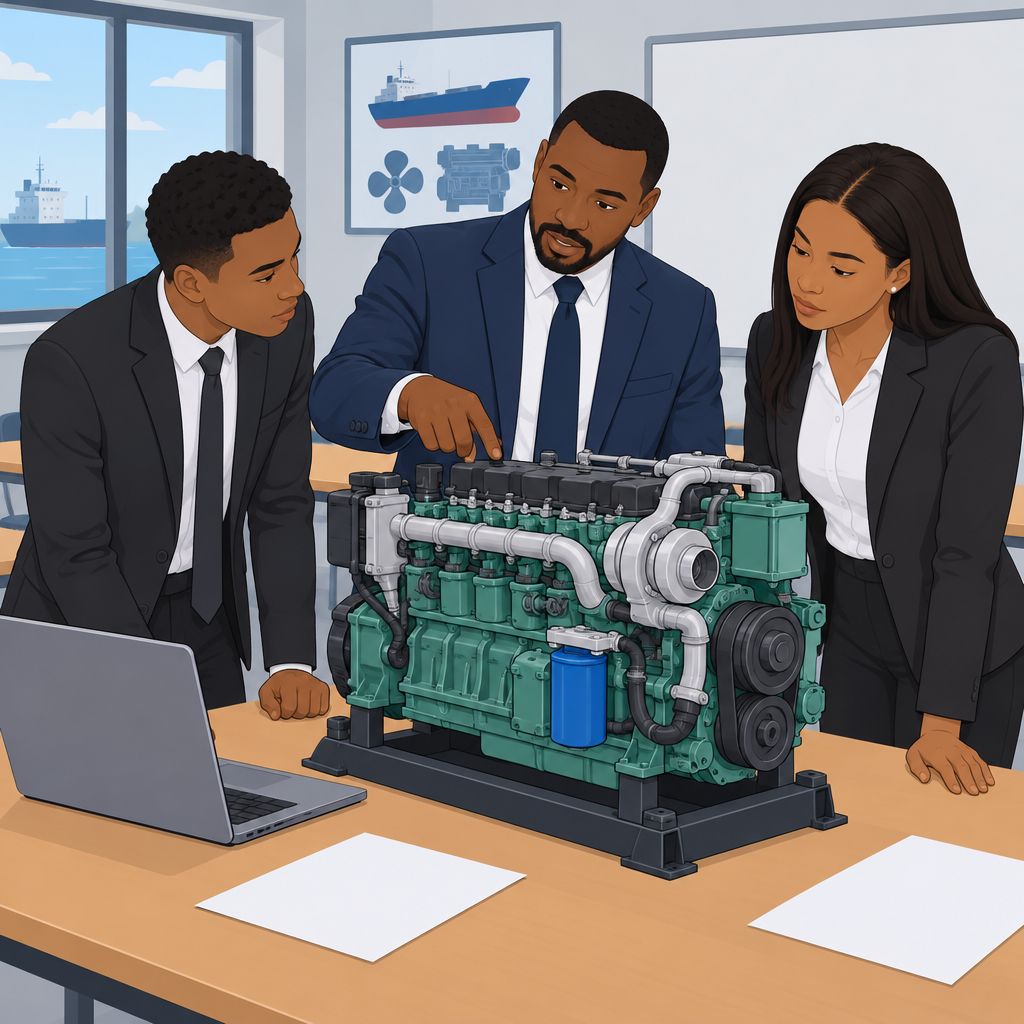
Strategies for Overcoming Challenges and Maximizing Opportunities
Institutions can strengthen marine engineering education by improving facilities, updating courses, and expanding industry relationships.
Moreover, students can increase their readiness by pursuing internships, apprenticeships, and relevant workplace experiences.
These strategies can connect classroom learning with professional expectations in the maritime industry.
- Investing in modern infrastructure and technology for hands-on training
- Increasing funding for research projects and industry collaborations
- Recruiting experienced professionals from the maritime sector as faculty members
- Integrating industry feedback to update the curriculum regularly
- Encouraging students to participate in internships and apprenticeship programs
Addressing these challenges can help Nigeria develop a stronger base of skilled marine engineers.
At the same time, career opportunities can encourage students to pursue continuous professional growth.
Together, improved education and industry opportunities can support innovation and progress in marine engineering.
Delve into the Subject: Interview with a Nigerian Metallurgical Engineering Expert
Technology Integration in Marine Engineering Education
Technology is changing how marine engineering students in Nigeria learn and prepare for maritime careers.
Advanced tools give learners practical opportunities beyond conventional classroom instruction.
These resources connect technical lessons with controlled practice.
Simulators and Advanced Training Tools
Simulators recreate maritime operations within safe and controlled learning environments.
Students can practise ship navigation and manage engine systems through realistic scenarios.
They can also respond to emergencies without exposing themselves to operational risks.
Educational Benefits of Technology
Technology makes lessons more interactive and helps students engage with training materials.
Furthermore, realistic exercises help learners develop practical skills for maritime workplaces.
These methods also support safety awareness and more effective emergency responses.
- Interactive Learning: Technology creates engaging training experiences for marine engineering students.
- Practical Skill Development: Simulators help students practise tasks relevant to maritime careers.
- Realistic Scenarios: Advanced tools expose learners to controlled maritime situations.
- Cost Efficiency: Simulators can reduce dependence on expensive equipment and resources.
- Improved Safety: Controlled practice strengthens safety awareness and response capabilities.
Consequently, technology helps students build knowledge and abilities for demanding maritime work.
It also gives learners structured opportunities to apply engineering concepts during training.
This approach supports stronger preparation for careers in the maritime industry.
You Might Also Like: Steps to Become a Licensed Surveyor in Nigeria
Industry Partnerships and Internship Programs
Industry partnerships connect marine engineering education with maritime workplaces in Nigeria.
These relationships help students relate academic learning to professional responsibilities.
Internship programs also expose learners to industry expectations and career pathways.
Collaboration Between Marine Engineering Schools and Maritime Companies
Marine engineering schools often work with maritime companies to support student development.
These partnerships give students opportunities to observe real workplace situations.
Consequently, learners can connect theoretical knowledge with challenges in their future careers.
Importance of Internships in Gaining Real-World Experience
Internships place aspiring marine engineers alongside experienced industry professionals.
Students gain practical skills and insights that classroom instruction cannot provide.
Moreover, workplace assignments help learners understand marine engineering complexities.
Impact of Industry Partnerships on Job Placement and Career Growth
Industry partnerships can improve graduates’ prospects for securing employment after graduation.
Students build professional relationships while gaining relevant experience during internships.
These connections can also support career growth and awareness of field developments.
Gain More Insights: Impact of Mechatronics on Nigerian Technology
Marine Engineering Education and Professional Growth
Marine engineering education in Nigeria remains essential to the maritime industry’s development.
It supplies skilled professionals who support safe and efficient maritime operations.
Moreover, the field contributes to Nigeria’s economic growth through stronger maritime capabilities.
- It ensures skilled professionals support the maritime sector.
- It promotes safety and efficiency during marine operations.
- It contributes to the growth of Nigeria’s economy.
Aspiring marine engineers should pursue their passion and explore available educational opportunities.
They can use relevant courses and curricula to develop the skills required for their careers.
Meanwhile, professionals should follow new developments in marine engineering technology.
They should seek further training and certification to strengthen their knowledge and expertise.
Therefore, continuous learning supports success in the dynamic field of marine engineering.
Additional Resources
Google search results for Marine Engineering Courses and Curriculum in Nigeria Engineering
Bing search results for Marine Engineering Courses and Curriculum in Nigeria Engineering


