



Introduction
Radiologists are medical doctors who diagnose and treat diseases and injuries through medical imaging.
They provide accurate and timely diagnoses that help guide treatment decisions.
Their expertise supports healthcare teams and patient care.
Brief Overview of What a Radiologist Does
Radiologists use X-rays, ultrasounds, CT scans, MRIs, and nuclear medicine.
These technologies create images of the body’s interior.
By interpreting those images, radiologists identify conditions ranging from broken bones to cancer.
Importance of Radiologists in Healthcare
Radiologists provide valuable information to other physicians.
That information helps healthcare teams determine suitable treatment for patients.
Their imaging expertise can save lives and improve patient outcomes.
Steps Needed to Become a Radiologist in Nigeria
Aspiring radiologists in Nigeria must complete a medical degree.
They then undergo specialized training in radiology and obtain certification from the Nigerian Medical and Dental Council of Nigeria.
Additionally, they may pursue sub-specializations such as interventional radiology or neuroradiology.
Educational Requirements for Radiologists in Nigeria
Aspiring radiologists in Nigeria must meet specific educational requirements before entering this specialized medical field.
These requirements help candidates develop the knowledge and skills necessary for successful radiology practice.
First, students need a strong academic foundation in the sciences before pursuing medical training.
- Bachelor’s degree in a related field, such as biology or chemistry
- Completion of medical school
- Residency in a radiology program
- Additional fellowship training, which is optional but recommended
A bachelor’s degree in biology or chemistry provides essential preparation for understanding radiology concepts and principles.
After completing this degree, aspiring radiologists must attend medical school.
Medical school provides the medical knowledge and clinical skills needed to diagnose and treat patients effectively.
Next, medical school graduates must apply for residency training in radiology.
A radiology residency typically lasts four years and includes intensive clinical training.
During residency, doctors learn various radiological procedures and techniques under experienced radiologists’ supervision.
Some doctors pursue fellowship training after residency to specialize in a specific radiology area.
Although fellowship training remains optional, it is highly recommended for specialized practice.
Fellowship programs provide advanced training in areas such as interventional radiology or neuroradiology.
Therefore, aspiring radiologists need academic preparation, medical training, and practical experience.
Licensing and Certification
- Required licensing exams in Nigeria
- Board certification in radiology
- Continuing education requirements
Radiologists in Nigeria must meet licensing and certification requirements before practicing.
These requirements help confirm their skills and knowledge.
They also support quality patient care.
Required Licensing Exams in Nigeria
Candidates must pass the licensing exams required in Nigeria.
These exams assess knowledge of radiology principles, procedures, and practices.
Therefore, diligent preparation helps candidates progress toward their careers.
Board Certification in Radiology
After completing education and training, radiologists must seek board certification in radiology.
This certification shows that they meet standards set by the Nigerian Medical Council.
It also confirms their qualification to practice as radiologists.
Continuing Education Requirements
Licensed and certified radiologists must fulfill continuing education requirements.
Continuing education helps them stay current with developments in radiology.
It also helps them improve their skills and provide quality patient care.
Meeting these requirements helps radiologists practice effectively.
Licensing exams, board certification, and continuing education support their professional preparation.
You Might Also Like: Leading Institutions for Public Health Technology in Nigeria
Transform Your Career with Expert Guidance
Get personalized mentorship consulting that’s tailored to your unique path. Our expert advice is actionable and exclusive.
Get StartedSkills and Qualities for Radiologists in Nigeria
Aspiring radiologists in Nigeria need specific skills and qualities to excel in this specialized medical field.
These abilities help them perform their duties effectively and earn patients’ trust and confidence.
Together, these qualities support accurate care and professional relationships.
- Attention to detail
- Strong analytical skills
- Communication skills
- Ability to work well under pressure
Attention to Detail
Radiologists interpret complex images from X-rays, MRIs, and CT scans.
They must identify small abnormalities because missed findings can seriously affect a patient’s health.
Careful observation therefore supports accurate assessment and safer decisions.
Strong Analytical Skills
Radiologists need strong analytical skills to interpret imaging results accurately.
They must understand different imaging techniques and recognize patterns or irregularities.
Consequently, sound analysis helps them diagnose conditions and guide appropriate treatment plans.
Effective Communication Skills
Radiologists must communicate findings clearly to healthcare professionals and patients.
They should explain medical terms and imaging results in an understandable way.
This approach keeps patients informed about diagnoses and treatment options while building trust.
Ability to Work Well Under Pressure
Radiology can become highly stressful, particularly during emergencies requiring rapid decisions.
Radiologists must remain calm, focused, and able to prioritize critical tasks.
As a result, efficient performance supports timely and accurate diagnoses that can save lives.
Learn More: Nigerian Medical Labs for Chemical Pathology Tests
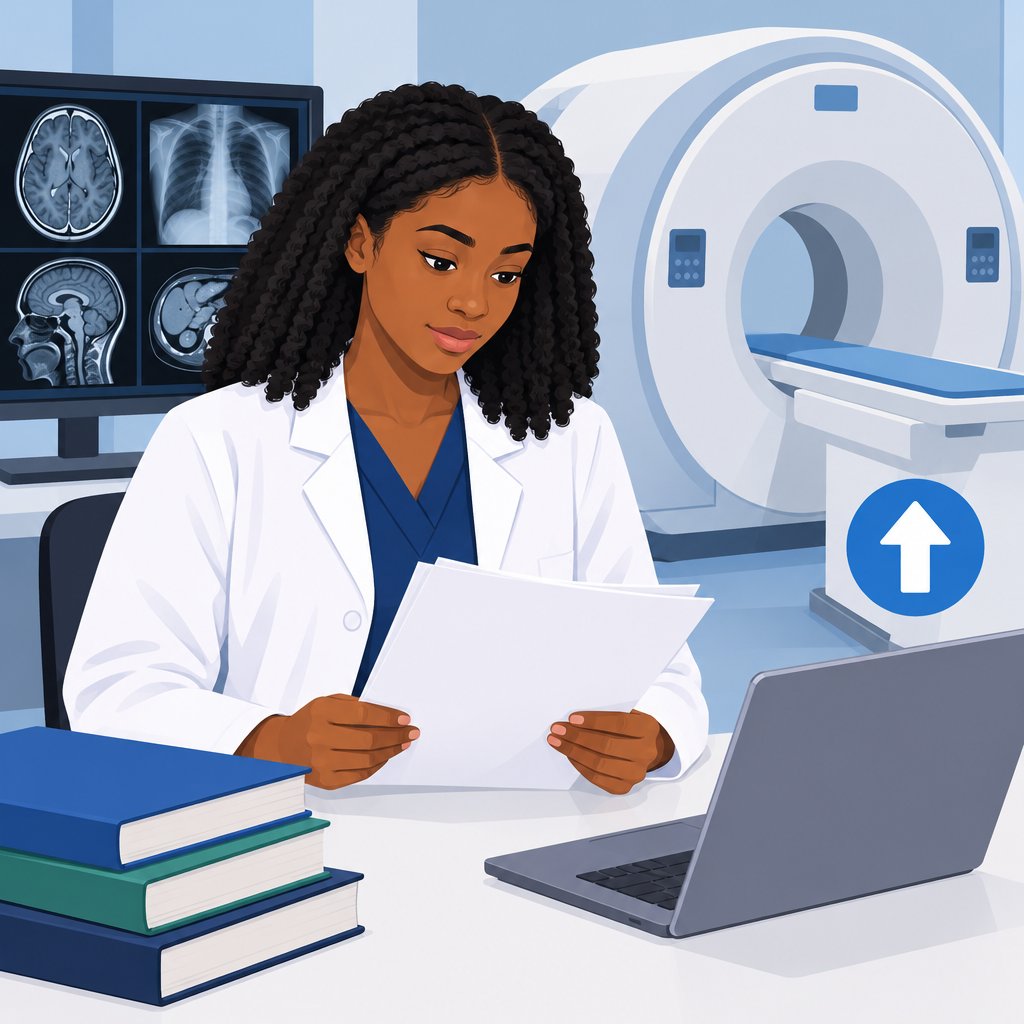
Radiology Career Opportunities in Nigeria
Radiologists in Nigeria can pursue several career opportunities across the healthcare and academic sectors.
Healthcare facilities value their expertise because medical imaging supports accurate patient diagnosis.
Additionally, radiologists can choose roles that match their interests, experience, and professional goals.
Employment in Hospitals, Clinics, and Diagnostic Centers
Many radiologists work in hospitals, clinics, and diagnostic centers throughout Nigeria.
These facilities depend on radiologists to interpret medical images and support accurate diagnoses.
Moreover, radiologists collaborate with healthcare professionals to deliver comprehensive patient care.
Depending on facility needs, they may specialize in oncology, neurology, or pediatrics.
Private Practice Opportunities
Radiologists can also establish private practices in Nigeria.
This path gives them greater control over schedules, patient caseloads, and financial earnings.
However, private practitioners must manage business operations, market their services, and maintain patient demand.
Despite these responsibilities, private practice can provide greater professional autonomy.
Research and Teaching Positions
Radiologists interested in academia can pursue research and teaching positions in Nigeria.
Research roles allow them to conduct studies, publish findings, and advance radiology knowledge.
They may also investigate imaging techniques, diagnostic tools, or treatment options with other experts.
Meanwhile, teaching positions let radiologists educate medical students, residents, and fellow radiologists.
Through these opportunities, radiologists contribute to patient care and the development of Nigeria’s healthcare system.
See Related Content: Medical Laboratory Science: Job Prospects in Nigeria
Salary and Benefits
Radiology offers competitive compensation and benefits for professionals working in Nigeria.
Specialized expertise and healthcare demand can support attractive employment packages.
Compensation may vary according to experience, expertise, and the employing healthcare facility.
- Salary range for radiologists in Nigeria
- Benefits packages typically offered
- Opportunities for career advancement and salary increases
Salary Range for Radiologists in Nigeria
Radiologists in Nigeria can earn between N500,000 and N1,500,000 monthly.
However, experience and professional expertise can influence individual earnings.
Private hospitals typically offer higher salaries than government-owned hospitals.
Benefits Packages Typically Offered
Employers may provide health insurance alongside a radiologist’s salary.
Paid time off, retirement plans, and continuing education opportunities also commonly appear.
Additionally, some employers offer housing or transportation allowances to attract qualified professionals.
Career Advancement and Salary Growth
Radiologists can pursue career advancement through further specialization and professional certifications.
Specialties such as interventional radiology and nuclear medicine can strengthen professional qualifications.
These achievements may support access to higher-paying positions and greater job satisfaction.
Learn More: Advances in Medical Biochemistry Research Nigeria
Radiology Practice and Healthcare Impact in Nigeria
Becoming a radiologist in Nigeria requires a medical degree and residency training.
The Medical and Dental Council of Nigeria must license practitioners.
Radiology offers rewarding work focused on diagnosing and treating various medical conditions.
The field also provides diverse opportunities for professional growth and development.
Radiologists provide accurate and timely diagnostic imaging services within Nigeria’s healthcare system.
These services support informed medical decisions and improve patient outcomes.
Additionally, radiologists strengthen the overall effectiveness of healthcare delivery.
Additional Resources
Google search results for How to Become a Radiologist in Nigeria Health Sciences
Bing search results for How to Become a Radiologist in Nigeria Health Sciences


