



Medical Biochemistry Research in Nigeria
Medical biochemistry research in Nigeria has grown significantly in recent years.
This field examines chemical processes within the human body, particularly those related to disease.
These advances provide insights into developing treatments and diagnostic tools for various health conditions.
Recent developments could revolutionize healthcare practices and improve patient outcomes.
Furthermore, continued progress can address national health challenges and advance population well-being.
History of Medical Biochemistry Research in Nigeria
Medical biochemistry research in Nigeria has developed through several decades of scientific work.
This history includes important milestones that have advanced medical science within the country.
Researchers have continually pursued deeper understanding of biochemical processes in the human body.
- Evolution of the Field: Researchers and scientists have expanded medical biochemistry through sustained scientific investigation.
- Key Milestones and Breakthroughs: Dedicated laboratories and institutions enabled researchers to conduct detailed biochemical studies.
- Influence on Current Advancements: Earlier studies provided foundations for diagnostic tools, treatment strategies, and preventive measures.
Consequently, this history reflects Nigeria’s commitment to scientific discovery and improved health outcomes.
Researchers continue to extend knowledge and pursue further advances in medical biochemistry.
Current Trends in Medical Biochemistry Research
- Recent studies focus on new biomarkers for various diseases.
- Additionally, experiments explore genetic factors involved in metabolic disorders.
- Meanwhile, researchers develop novel diagnostic tools and therapies.
Cutting-Edge Technologies and Methodologies
- Furthermore, high-throughput sequencing has revolutionized biochemistry research.
- Researchers use metabolomics and proteomics to examine complex biological interactions.
- Finally, CRISPR gene editing provides new avenues for genetic research.
Impact of International Collaborations on Research Outcomes
- Moreover, international collaborations create diverse and comprehensive research approaches.
- These partnerships facilitate resource, knowledge, and expertise sharing among researchers.
- As a result, joint projects produce groundbreaking discoveries and field advancements.
Explore Further: Medical Biochemistry Internship Programs in Nigeria
Challenges and Limitations
Medical biochemistry researchers in Nigeria face several challenges that limit effective research.
These challenges affect facilities, materials, collaboration, funding, ethics, and regulatory processes.
Addressing these barriers can create a stronger environment for scientific progress.
- Researchers face several obstacles in Nigeria.
- Limited funding and resources restrict research activities.
- Ethical considerations and regulatory issues complicate research processes.
Research Obstacles in Nigeria
Researchers often work without advanced infrastructure or sufficient technical expertise.
Many facilities lack modern equipment and technology for advanced medical biochemistry studies.
Consequently, limited laboratory capacity can restrict the scope of research projects.
Researchers also experience limited access to research materials and scientific databases.
Importing materials costs much, while local suppliers remain scarce.
Furthermore, inadequate collaboration and networking restrict interdisciplinary knowledge sharing.
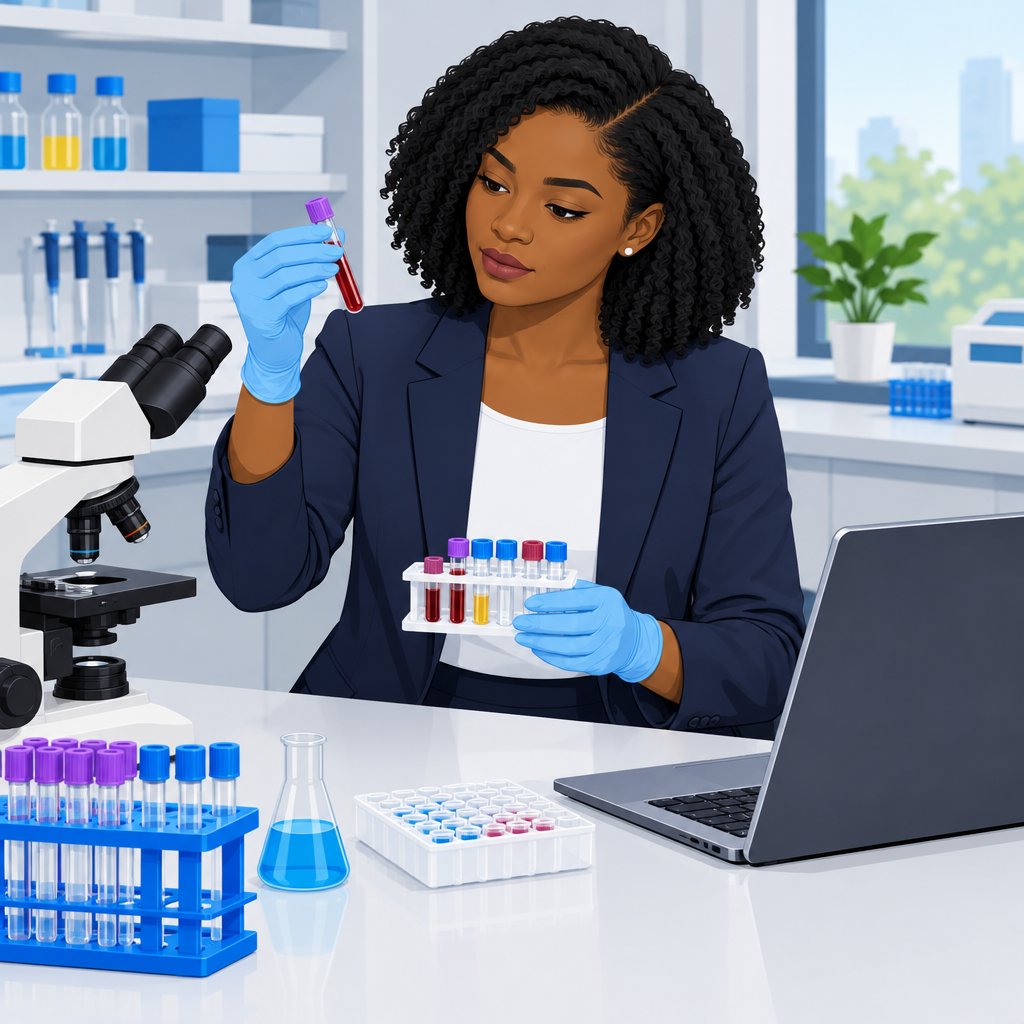
Funding and Resource Constraints
Funding remains a major challenge for medical biochemistry researchers in Nigeria.
Insufficient government support and limited private investment create serious financial constraints.
Additionally, few grants and scholarships make sustained research difficult.
Researchers may struggle to pay for equipment, materials, and personnel.
Limited research facilities and infrastructure further intensify these funding pressures.
Ethical and Regulatory Requirements
Researchers must address ethical considerations and regulatory requirements during medical biochemistry studies.
They must also follow international research standards and ethical guidelines.
However, unclear regulatory frameworks and weak oversight can complicate research approval.
Obtaining ethical approval may therefore require careful navigation of complex requirements.
Data privacy and confidentiality also create important ethical responsibilities.
Researchers must protect participant rights and preserve research data integrity.
Improved funding, infrastructure, and regulatory systems could support greater innovation in Nigeria.
Uncover the Details: Chemical Pathology Conferences and Events in Nigeria
Success Stories and Achievements
Nigeria has achieved significant advances in medical biochemistry research in recent years.
Successful projects have contributed positively to healthcare and scientific knowledge across the country.
These achievements demonstrate researchers’ dedication to improving diagnosis, treatment, and patient outcomes.
Successful Research Projects
Researchers developed a rapid diagnostic test for malaria that supports earlier disease detection.
The test has helped improve treatment decisions for people affected by malaria.
Additionally, scientists identified a novel drug target for cancer treatment.
- Researchers developed a rapid diagnostic test for malaria.
- Scientists identified a novel drug target for cancer treatment.
- A sickle cell study identified genetic markers associated with the condition.
Contributions to Healthcare in Nigeria
Medical biochemistry research has strengthened approaches to diagnosing several diseases.
Transform Your Career with Expert Guidance
Get personalized mentorship consulting that’s tailored to your unique path. Our expert advice is actionable and exclusive.
Get StartedFurthermore, research findings have supported improved treatment strategies for patients.
These contributions have also helped improve healthcare outcomes across various medical conditions.
Breakthroughs in Disease Diagnosis and Treatment
A research team developed a diagnostic tool that supports earlier tuberculosis detection.
Earlier detection enables healthcare professionals to begin appropriate treatment more quickly.
Other studies have addressed diabetes management and cardiovascular disease risks.
- Researchers developed a diagnostic tool for tuberculosis.
- Scientists discovered a more accurate blood test for monitoring glucose levels.
- A cardiovascular study identified a genetic mutation linked to increased risk.
Recognition of Researchers and Institutions
Several Nigerian researchers and institutions have received recognition for their contributions.
The National Institute for Medical Research supports medical biochemistry research efforts.
The Nigerian Society for Biochemistry and Molecular Biology also promotes research in this field.
Dr. Adebayo Ogunbali, Dr. Fatima Ibrahim, and Prof. Chukwuma Eze have received recognition.
Their work reflects Nigeria’s growing expertise in medical biochemistry research.
Together, these achievements show how research can advance healthcare and scientific understanding.
Discover More: Career Opportunities in Nutrition and Dietetics Nigeria
Future Directions and Opportunities in Medical Biochemistry
- Exploring potential areas for further research and development
- Discussing government and stakeholder roles in advancing medical biochemistry research
- Identifying opportunities for career growth and learning in the field
Medical biochemistry continues to evolve, creating opportunities for researchers and professionals.
Researchers can investigate new therapies and treatments for various diseases and conditions.
By applying advanced technologies and methods, they can identify novel biomarkers and biological pathways.
These discoveries may improve how professionals diagnose, treat, and manage diseases.
Meanwhile, government support remains essential for advancing medical biochemistry research.
Funding, policy initiatives, and industry partnerships can strengthen research activities.
Government agencies can set priorities, allocate resources, and encourage scientific innovation.
Additionally, academic institutions, healthcare facilities, and biotechnology companies can collaborate to support progress.
Professionals can pursue advanced degrees, certifications, and specialized training programs.
Such learning can expand opportunities in research, teaching, and clinical practice.
Consequently, medical biochemistry offers pathways toward fulfilling careers in healthcare.
Nigeria’s future prospects depend on continued collaboration, innovation, and investment.
These efforts can support healthcare improvement and expand scientific knowledge.
Learn More: Public Awareness of Radiology Services in Nigeria
Medical Biochemistry Research Requires Continued Collaboration
Recent discussion highlighted key advances in medical biochemistry research in Nigeria.
Furthermore, continued investment and support remain crucial for strengthening this field.
Therefore, researchers, policymakers, and the public should collaborate to drive further advancements.
Additional Resources
Google search results for Advances in Medical Biochemistry Research Nigeria Health Sciences
Bing search results for Advances in Medical Biochemistry Research Nigeria Health Sciences


