



Role of Anatomical Pathology
Anatomical pathology is a branch of medicine.
It examines tissue samples to diagnose diseases.
Additionally, it guides treatment decisions by revealing disease characteristics.
Accurate Diagnosis and Public Health Outcomes
Accurate diagnosis supports effective treatment and strengthens public health in Nigeria.
Pathologists identify diseases and provide prognostic insights that help clinicians plan patient care.
Consequently, diagnostic accuracy influences individual outcomes and broader healthcare decisions.
- Accurate diagnosis improves the likelihood of effective treatment outcomes.
- Pathologists help clinicians select appropriate treatments for individual patients.
- Incorrect diagnoses can cause unsuitable treatments and worsen patient outcomes.
- Anatomical pathology helps detect diseases and other significant health conditions.
- Early pathological diagnosis supports timely intervention and improved prognosis.
- Diagnostic findings guide informed decisions throughout patient care.
In Nigeria, accurate diagnosis forms a cornerstone of effective healthcare delivery.
Pathologists evaluate tissue samples, biopsies, and other diagnostic tests to identify diseases.
This information helps healthcare providers choose suitable treatment plans for patients.
Moreover, pathologists collaborate with other healthcare professionals to deliver timely and reliable diagnostic findings.
Their reports help clinicians assess disease severity and anticipate possible progression.
They also provide information that supports decisions about appropriate treatment options.
Furthermore, accurate diagnosis reduces misdiagnosis and helps patients receive suitable treatment from the beginning.
Misdiagnosis may delay appropriate care and produce harmful effects on patient outcomes.
Diagnostic findings also help providers tailor treatment to each patient’s specific disease characteristics.
For example, pathologists provide valuable information about cancer, infectious diseases, and autoimmune conditions.
That information guides treatment decisions and supports better patient outcomes.
Therefore, anatomical pathology remains essential to improving public health through dependable disease identification.
Pathologists’ expertise helps patients receive appropriate and effective care.
Anatomical Pathology and Public Health Monitoring
Anatomical pathology supports public health monitoring in Nigeria.
It helps authorities recognize disease patterns and respond to changing health needs.
Furthermore, pathology findings support disease surveillance and public health planning.
Prevention and Control of Infectious Disease Outbreaks
Pathologists examine tissue samples to identify infectious diseases at an early stage.
These examinations can help detect malaria, tuberculosis, and HIV/AIDS.
Early detection enables timely intervention and helps limit disease transmission within communities.
Moreover, pathology findings help officials design targeted measures for outbreak control.
Monitoring Public Health Trends
Pathology services generate information about disease prevalence and mortality patterns.
Researchers can compare these patterns over time to identify changes in population health.
Consequently, health authorities can assess public health interventions more effectively.
They can also allocate resources and prioritize programs addressing prevalent health concerns.
Identification of Emerging Health Threats
Pathologists recognize unusual disease patterns and unexpected clinical presentations.
These findings may indicate novel pathogens or other emerging health risks.
Thorough investigations can alert public health agencies to potential outbreaks.
Therefore, early characterization supports rapid containment and reduces wider transmission.
Strengthening Nigeria’s Public Health Infrastructure
Pathologists contribute to surveillance, outbreak response, and population health assessment.
Their work helps health authorities evaluate disease control measures and public health campaigns.
Investing in pathology services can strengthen healthcare delivery and protect communities across Nigeria.
Gain More Insights: How Technology Is Shaping Anatomy Studies in Nigeria
Cancer Diagnosis and Treatment Planning
Anatomical pathology helps detect cancer by examining tissue samples collected through biopsies.
Pathologists analyze cellular changes to identify the cancer type and determine its stage.
Transform Your Career with Expert Guidance
Get personalized mentorship consulting that’s tailored to your unique path. Our expert advice is actionable and exclusive.
Get StartedThis information helps oncologists choose effective treatment strategies for each patient.
- Pathologists and oncologists collaborate to provide personalized cancer care.
- Pathology findings help oncologists tailor treatments to each cancer’s specific characteristics.
- Pathologists identify mutations or biomarkers that support targeted therapy selection.
You Might Also Like: Mental Health Legislation: Nigeria's Progress
Challenges in the Nigerian Healthcare System
Addressing these challenges remains essential for improving public health outcomes in Nigeria.
Anatomical pathology services face inadequate infrastructure and workforce shortages.
These limitations can delay diagnoses and weaken patient care.
Inadequate Infrastructure
- Poor equipment and facilities can hinder accurate diagnoses.
- Outdated technology can delay test results and affect patient care.
- Inadequate storage can cause specimen contamination or loss.
Limited infrastructure can reduce the reliability of anatomical pathology services.
Delayed testing can prevent patients from receiving timely treatment.
Specimen problems can further compromise diagnostic accuracy.
Workforce Shortages
- Too few pathologists can create backlogs and delay diagnoses.
- Insufficient laboratory technicians can affect testing quality.
- Inadequate support staff can slow sample processing and reporting.
Staff shortages can increase laboratory backlogs.
They can also reduce efficiency during sample processing and reporting.
Consequently, patients may experience longer waits for reliable diagnostic information.
Effects on Public Health Outcomes
Patients may wait longer before receiving appropriate treatment.
Inaccurate diagnoses can lead to disease mismanagement and worsen health burdens.
Limited healthcare access can increase disparities between socioeconomic groups.
People unable to afford private facilities may face greater public-sector shortcomings.
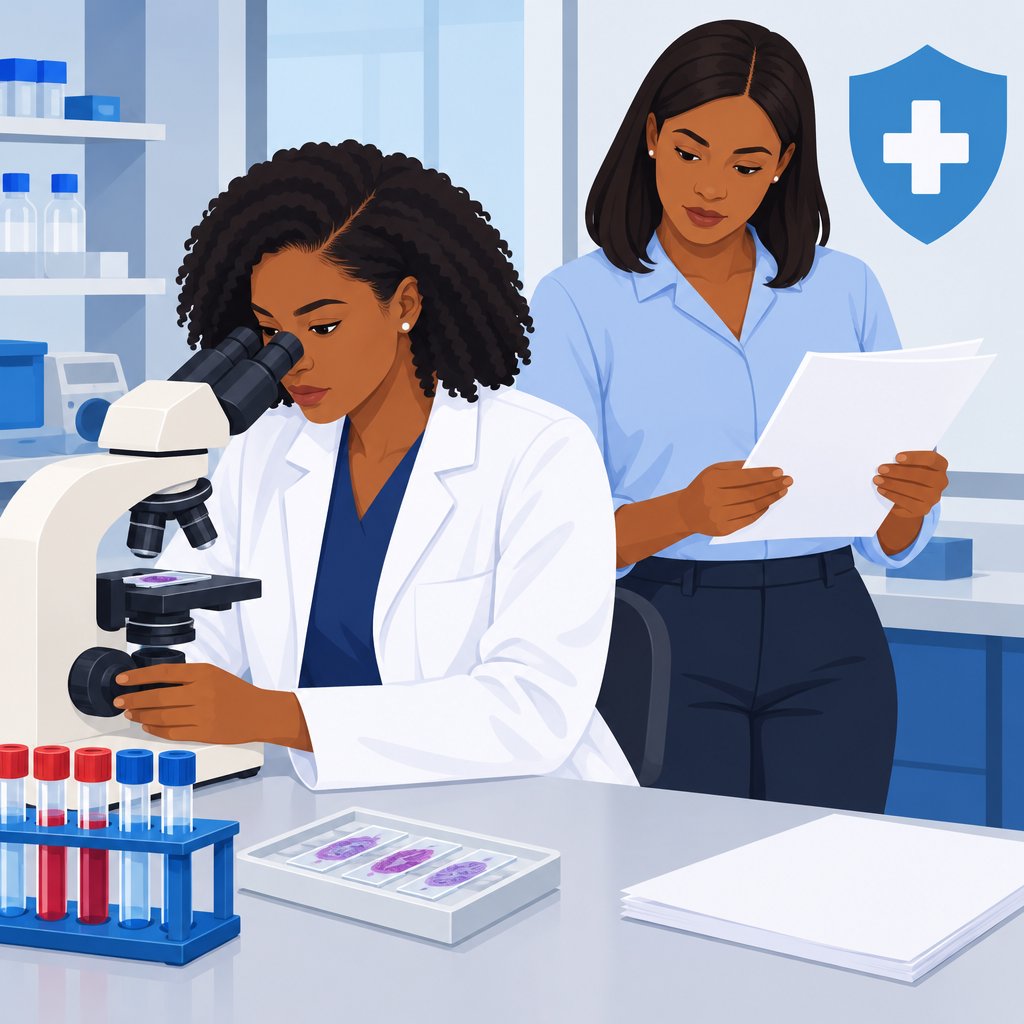
Strengthening Anatomical Pathology Services
Modern equipment and improved facilities can speed diagnoses and increase result accuracy.
Training and recruiting pathologists can help address workforce shortages.
Developing laboratory technicians can support timely and reliable testing procedures.
Additional support staff can streamline operations and reduce reporting errors.
These improvements can strengthen healthcare services for Nigeria’s population.
Explore Further: Accredited Biomedical Technology Programs Nigeria
Improving Access to Pathology Services
Several initiatives aim to strengthen anatomical pathology services in Nigeria.
These initiatives can enhance public health outcomes and strengthen the country’s healthcare system.
Together, these efforts can improve access to essential diagnostic services.
Investing in Training Programs
Healthcare institutions can strengthen services by investing in comprehensive training for pathologists, technicians, and other professionals.
Such programs build capacity, improve skills, and support high-quality diagnostic services.
Additionally, continuing education helps professionals follow advances in pathology practice, technology, and techniques.
Consequently, updated skills can improve diagnostic capabilities and patient outcomes.
Using Technology to Improve Diagnosis
Healthcare facilities can strengthen diagnostic services by integrating advanced technology into their processes.
Modern equipment, software, and tools can streamline workflows, increase efficiency, and improve diagnostic accuracy.
Furthermore, digital pathology, automation, and telepathology can address resource, infrastructure, and expertise limitations.
These solutions can support faster turnaround times, remote consultations, and better access to specialized expertise.
Building Collaborative Partnerships
Government agencies, academic institutions, private organizations, and international entities can advance pathology services through collaboration.
These partnerships encourage knowledge sharing, resource mobilization, and skill transfer within Nigeria’s healthcare system.
Moreover, healthcare facilities can use external expertise, funding opportunities, and capacity-building initiatives to strengthen pathology departments.
By pooling resources and expertise, stakeholders can improve infrastructure, expand services, and enhance healthcare delivery.
Coordinated Action for Stronger Services
Improving access requires coordinated investment, technological adoption, and sustained collaboration.
These priorities can strengthen diagnostic capabilities across Nigeria’s healthcare system.
By pursuing them together, stakeholders can improve patient outcomes and support a healthier population.
Uncover the Details: Patient Stories: Maxillofacial Surgery in Nigeria
Collaboration Between Pathologists and Public Health Agencies
Pathologists collaborate with public health agencies to track disease patterns and identify emerging health threats.
This partnership strengthens disease surveillance and helps agencies respond effectively to outbreaks.
During investigations, pathologists analyze tissue samples and provide insights for public health interventions.
They also help agencies identify disease risk factors and recommend preventive measures.
Consequently, anatomical pathology supplies data that informs public health programs and policies.
These insights can improve healthcare delivery and support better patient outcomes.
Collaboration also creates a coordinated approach to public health interventions.
Together, pathologists and agencies can address current health challenges more effectively.
This work supports healthier communities across the Nigerian population.
Education and Awareness in Anatomical Pathology
Public education can clarify how anatomical pathology supports informed healthcare decisions.
Greater understanding helps people recognize pathologists’ contributions to diagnosis and treatment.
Moreover, clear information can reduce misconceptions and encourage timely medical care.
Public Understanding of Anatomical Pathology
Educational efforts can increase public understanding of anatomical pathology.
People can then appreciate how pathologists contribute to diagnosing and treating diseases.
Additionally, accurate information can dispel misconceptions and reduce disease-related stigma.
This knowledge empowers individuals to make informed health decisions and seek appropriate care.
Awareness of Pathology Services
Pathologists examine tissues and cells to support accurate disease diagnosis.
Consequently, public awareness can show how pathology services influence disease management.
Earlier recognition of conditions, including cancer, can support better patient outcomes.
Clear communication also helps individuals value pathology within the healthcare system.
Preventive Healthcare and Early Detection
Preventive healthcare helps people maintain health and reduce risks associated with disease.
Anatomical pathology can identify risk factors and support early disease detection.
Therefore, regular screenings and check-ups can enable timely interventions.
Healthy behaviors can further reduce disease risk and improve public health outcomes.
Anatomical Pathology’s National Public Health Value
Anatomical pathology strengthens Nigerian public health by supporting diagnoses and informing treatment strategies.
It also helps health professionals understand disease patterns, monitor outbreaks, and improve healthcare delivery.
Furthermore, the discipline supports research that informs effective public health interventions and policies.
These contributions help Nigeria address diverse health challenges through stronger evidence and better planning.
Without anatomical pathology, Nigeria’s healthcare system would face greater difficulty addressing the population’s varied health needs.
Therefore, this discipline remains a cornerstone of public health and supports the well-being and prosperity of Nigerian communities.
Additional Resources
Google search results for How Anatomical Pathology Impacts Nigerian Public Health Medical
Bing search results for How Anatomical Pathology Impacts Nigerian Public Health Medical


