



Introduction
Nigeria’s oil and gas industry relies significantly on geology.
Geology plays a crucial role in oil and gas exploration.
It also supports successful oil and gas production.
Geology of Nigeria
Nigeria contains diverse geological formations, including sedimentary basins and rift zones.
These formations create varied settings for sediment deposition and resource accumulation.
Nigeria’s geological heritage includes diverse rock types, structures, and mineral resources.
Overview of Nigeria’s Geological Formations
Nigeria lies in West Africa and contains a wide range of geological formations.
Its geology reflects the presence of different rocks, structures, and mineral resources.
Furthermore, these features shape the country’s geological character and resource potential.
Key Geological Features
The Niger Delta Basin and Benue Trough represent important sedimentary basins in Nigeria.
The Chad Basin and Anambra Basin represent significant rift zones within Nigeria’s geological setting.
Meanwhile, sedimentary basins support extensive sediment deposition and hydrocarbon accumulation.
Importance for Oil and Gas Exploration
Sedimentary basins provide reservoirs that support hydrocarbon exploration and production activities.
The Niger Delta Basin contains substantial hydrocarbons and attracts investment in exploration and production.
Rift zones create space for sediment deposition and may form potential oil and gas traps.
For example, the Chad Basin has shown potential for oil and gas discoveries.
Consequently, these geological features help assess Nigeria’s petroleum potential and guide exploration interest.
Abundance of Oil and Gas Reserves in Nigeria
Nigeria possesses abundant oil and gas reserves.
The country’s oil and gas industry remains important to its economy.
It generates revenue and employment opportunities.
- The Niger Delta region as a major oil-producing area
- Geology influences the distribution and quality of oil and gas reserves
The Niger Delta as a Major Oil-Producing Region
The Niger Delta contains extensive oil and gas deposits.
Consequently, the region supports significant exploration and production activities.
Local and international oil companies operate within this important producing area.
Geological Controls on Nigerian Oil and Gas Reserves
Geology strongly influences where Nigerian oil and gas reserves occur.
The Niger Delta contains sedimentary basins that support oil and gas accumulation.
These geological settings helped create favorable conditions for reservoir development.
Fault lines, anticlines, and salt domes can create traps for accumulating hydrocarbons.
Therefore, these structures influence the formation and distribution of oil and gas reserves.
Geological processes also affect the quality of Nigeria’s oil and gas resources.
Source rocks, reservoir rocks, and seal rocks determine reserve composition and characteristics.
Tectonic events and sedimentation patterns further shaped the region’s petroleum resources.
Organic matter deposition also contributed to the formation of oil and gas reserves.
Understanding these factors supports efficient exploration and production of Nigeria’s resources.
Delve into the Subject: Internship Opportunities for Microbiology Students Nigeria
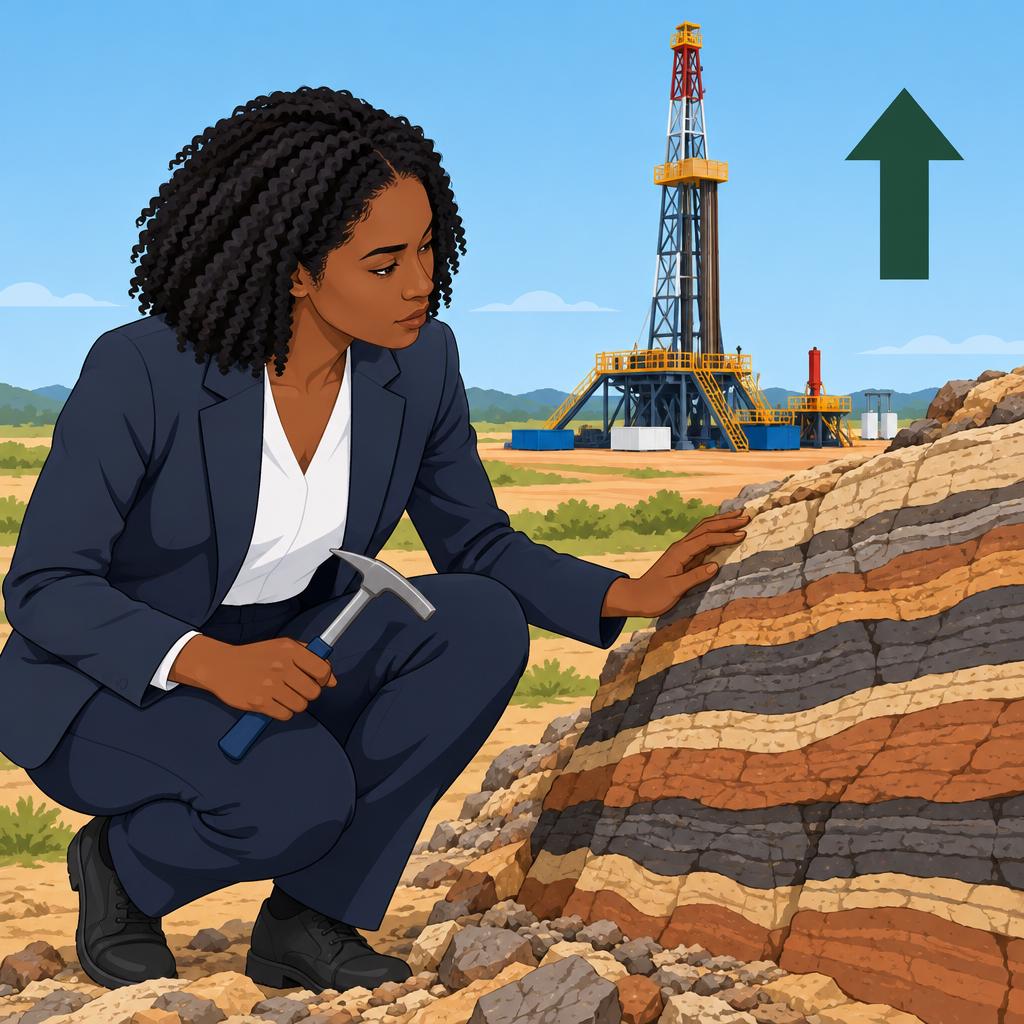
Exploration and Drilling Techniques
Geologists use specialized techniques to identify and extract oil and gas from underground reservoirs.
These methods combine subsurface imaging, geological analysis, and carefully planned drilling operations.
By studying underground conditions, geologists improve decisions about reservoir locations and extraction methods.
Consequently, their expertise supports efficient oil and gas recovery.
Seismic Imaging for Identifying Potential Reserves
- Geologists use seismic imaging to create detailed images of underground rock formations.
- This technology helps them identify potential oil and gas reservoirs beneath Earth’s surface.
- They analyze seismic data to locate areas with greater chances of containing oil and gas deposits.
- Seismic surveys send sound waves underground and measure reflections to create three-dimensional subsurface images.
Drilling Techniques for Extracting Oil and Gas
- Once geologists identify potential reserves, drilling operations extract oil and gas from underground reservoirs.
- Companies use vertical, directional, and horizontal drilling techniques for different reservoir locations.
- Vertical drilling accesses reserves located directly beneath the drilling site.
- Directional drilling reaches reserves located away from the surface drilling location.
- Horizontal drilling extends through the reservoir to maximize oil and gas recovery.
Geological Structure and Drilling Planning
- Before drilling begins, geologists must understand the area’s geological structure thoroughly.
- They examine rock formations, fault lines, and other geological features during planning.
- This analysis helps geologists predict where oil and gas reserves may occur.
- Accurate geological interpretation helps teams plan drilling operations more effectively.
- Misinterpreting geological structures can cause unsuccessful drilling and waste valuable resources.
Together, these practices support efficient oil and gas extraction in Nigeria.
Gain More Insights: Impact of Nigerian Ecologists on Global Research
Transform Your Career with Expert Guidance
Get personalized mentorship consulting that’s tailored to your unique path. Our expert advice is actionable and exclusive.
Get StartedGeological Controls on Production
Geology directly affects how efficiently Nigerian wells produce oil and gas.
Reservoir properties control the volume of hydrocarbons that extraction operations can recover.
Therefore, geologists evaluate subsurface conditions before developing production strategies.
- Reservoir porosity determines how much fluid the rock can contain.
- Permeability controls how easily oil and gas move through the formation.
- Faults and fractures can redirect or restrict fluid movement underground.
- Anticlines and fault traps can concentrate hydrocarbons within reservoirs.
Geological Challenges During Production
Reservoir variability can distribute oil and gas unevenly across a production area.
Moreover, complex fluid movement can make hydrocarbon recovery less efficient.
Unexpected geological conditions may also disrupt planned production operations.
- Variable reservoir properties can create differences between individual wells.
- Complex fluid pathways can complicate decisions about extraction methods.
- Unidentified faults may alter expected pressure and flow behavior.
- Unanticipated fractures can affect well performance and reservoir connectivity.
Geologists’ Role in Reservoir Management
Geologists interpret reservoir information to support practical production decisions.
They identify locations that may contain commercially valuable hydrocarbon accumulations.
They also coordinate with engineers to improve well planning and recovery strategies.
- Geologists assess reservoir data when selecting potential drilling locations.
- They evaluate subsurface conditions before recommending extraction techniques.
- They help determine approaches that can improve recovery rates.
- They collaborate with engineers to design suitable well plans.
Gain More Insights: Preparing for Applied Math Examinations
Environmental Considerations in Oil and Gas Production
- Environmental impacts on geology
- Measures for mitigating environmental damage
- Sustainable practices for preserving geological resources
The Nigerian oil and gas industry has significantly affected regional geology.
Extraction and production create environmental challenges that require careful management.
First, extensive drilling operations and infrastructure development can degrade land.
These activities may cause soil erosion, vegetation loss, and natural habitat disruption.
Consequently, land degradation can produce long-term effects on local geological features.
Furthermore, extraction and processing can release harmful chemicals and gases.
These substances can contaminate soil, water, and air.
Pollution may alter geological composition, natural processes, and surrounding ecosystems.
Regulatory authorities and oil companies have introduced measures to reduce environmental damage.
For example, operators can use advanced technologies to reduce harmful emissions.
They can also apply proper waste management practices during production.
Additionally, environmental monitoring can track impacts throughout the production process.
Sustainable practices can further protect geological resources for future generations.
Reforestation and habitat restoration can help repair disturbed environments.
Meanwhile, reduced carbon emissions can lower the industry’s environmental footprint.
These strategies support geological conservation while benefiting surrounding environments.
Sustainability also offers economic and social advantages for oil and gas companies.
Responsible companies may attract investors and strengthen relationships with communities.
They can also improve the long-term viability of their operations.
Therefore, environmental responsibility remains essential for Nigeria’s oil and gas industry.
Careful mitigation and sustainable practices can preserve geological resources and support a healthier planet.
Discover More: Government Initiatives Supporting Bioinformatics in Nigeria
Future of Nigeria’s Oil and Gas Industry
Nigeria’s oil and gas industry continues to evolve through changing technologies, markets, and investment priorities.
These changes create new possibilities while exposing persistent challenges across the sector.
Therefore, Nigeria must support innovation, investment, and responsible resource management for sustainable industry development.
Current Trends in Nigeria’s Oil and Gas Industry
Recent industry developments show Nigeria adapting its exploration and production strategies.
Operators increasingly pursue offshore resources, improve existing fields, and expand natural gas utilization.
Meanwhile, Nigeria seeks foreign investment to strengthen its oil and gas sector.
- Nigeria has shifted toward deepwater exploration and production as onshore resources decline.
- Operators increasingly use enhanced oil recovery techniques to maximize output from existing fields.
- The industry is expanding natural gas utilization as a cleaner alternative to oil.
- Nigeria actively seeks foreign investment to strengthen its oil and gas sector.
Challenges and Opportunities for Industry Growth
Security concerns continue to affect operations, particularly in the Niger Delta region.
Additionally, volatile markets, regulatory uncertainty, and limited infrastructure can restrict sector expansion.
However, Nigeria can pursue growth through smaller fields, technology, and innovation.
- Security remains a major challenge for Nigeria’s oil and gas industry.
- Market volatility, regulatory uncertainty, and infrastructure limits create further obstacles.
- Small and marginal fields offer significant opportunities for additional Nigerian production.
- Technology and innovation can improve efficiency and productivity across the industry.
Geological Research and the Industry’s Future
Geology remains essential for locating and developing Nigeria’s oil and gas reserves.
Continued research can reveal prospects and support more effective reservoir management.
Furthermore, geological understanding can reduce exploration risks and improve recovery rates.
- Geology supports oil and gas exploration and production activities in Nigeria.
- Advanced geological studies help identify prospects and optimize reservoir management.
- Geological knowledge can reduce exploration risks and improve recovery rates.
- Ongoing research and geological investment support long-term industry sustainability.
Geology’s Role in Nigeria’s Oil and Gas Industry
- Geology plays a crucial role in Nigeria’s oil and gas industry.
- Furthermore, geologists help ensure sustainable and efficient production.
- Continued geological exploration and research support industry growth and development.
Additional Resources
Google search results for Impact of Geology on Nigeria's Oil and Gas Industry Sciences
Bing search results for Impact of Geology on Nigeria's Oil and Gas Industry Sciences


