



Microbiology Internships in Nigeria
Internships give microbiology students in Nigeria practical experience.
They also provide exposure to industry.
As a result, students develop essential skills.
Why Internships Matter
Internships offer students valuable industry exposure.
They help students develop essential skills.
Therefore, practical training supports student development.
Benefits for Students
Internships strengthen students’ career prospects.
They provide valuable hands-on experience.
Additionally, students gain networking opportunities.
Overview of Microbiology in Nigeria
Microbiology studies microorganisms, including bacteria, viruses, and parasites.
In Nigeria, the field supports healthcare, agriculture, and biotechnology.
It connects laboratory science with practical needs across several industries.
Relevance of Microbiology in Various Industries
Microbiology addresses important needs in healthcare, agriculture, and biotechnology.
Furthermore, microbiologists apply scientific knowledge to improve products, processes, and public health outcomes.
These applications make microbiology valuable across Nigeria’s developing industries.
- Healthcare: Microbiologists diagnose infectious diseases and support treatment decisions.
- They also research vaccines and antibiotics for disease prevention and treatment.
- Agriculture: Microbiology supports soil fertility management and crop protection.
- It also promotes food safety and helps maintain agricultural productivity.
- Biotechnology: Microorganisms help produce biofuels, enzymes, and pharmaceuticals.
- Microbiologists guide these processes through research and technical expertise.
Demand for Skilled Microbiology Professionals
Nigeria needs skilled microbiologists to address disease control, food safety, and environmental protection.
Additionally, emerging infectious diseases increase the need for surveillance and outbreak investigations.
Microbiologists also support sustainable agriculture and biotechnology development.
- Healthcare challenges continue increasing demand for trained microbiology professionals.
- Microbiologists conduct disease surveillance and support outbreak investigations.
- In agriculture, they develop biofertilizers and improve pest management practices.
- These activities contribute to sustainable farming and food security.
- Biotechnology companies rely on microbiologists to develop new bioproducts.
- Their research supports growth within the biotechnology sector.
Microorganisms influence many aspects of life in Nigeria.
Therefore, skilled microbiologists help address challenges and encourage innovation across multiple industries.
Importance of Internships for Microbiology Students
In Nigeria, internships help microbiology students connect academic study with workplace responsibilities.
They also reveal how laboratory knowledge supports professional tasks.
Furthermore, students can assess their interests while adapting to structured work environments.
- Students practise laboratory procedures while applying concepts learned during coursework.
- Real assignments encourage critical thinking, careful analysis, and practical problem-solving.
- Workplace communication improves as students collaborate with supervisors and colleagues.
- Professional contacts can provide mentorship, guidance, and future employment information.
- New challenges strengthen adaptability and broaden students’ understanding of microbiology careers.
Applying Theoretical Knowledge in Real-World Settings
Internships place classroom concepts within actual laboratory or workplace activities.
Consequently, students can observe how scientific principles guide daily decisions.
They also learn to adjust methods when practical conditions differ from classroom examples.
- Students connect textbook concepts with procedures performed during assigned workplace tasks.
- Real projects require students to identify issues, evaluate evidence, and select responses.
- Laboratory placements let students practise techniques introduced in academic courses.
- Research placements allow students to use research methods within active projects.
Building Professional Networks and Improving Job Prospects
Workplace relationships can continue supporting students after an internship ends.
Meanwhile, industry exposure helps them understand available roles and career directions.
Successful placements may also strengthen applications for employment or further education.
- Students meet supervisors, mentors, and colleagues who understand microbiology workplaces.
- These professional contacts can offer guidance about career development and opportunities.
- Supervisors may provide references when students apply for jobs or further study.
- Some employers may consider successful interns for available positions within their organizations.
Uncover the Details: Impact of Nigerian Ecologists on Global Research
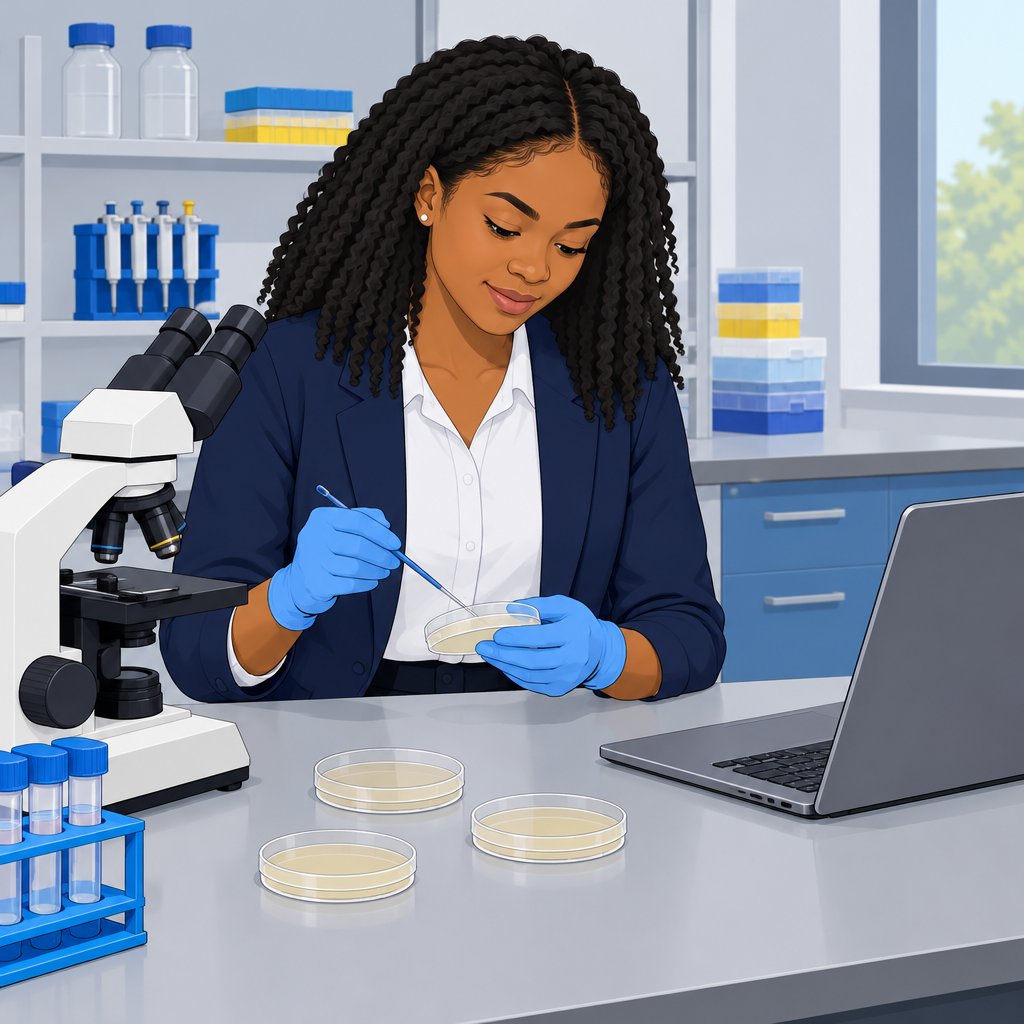
Internship Opportunities for Microbiology Students in Nigeria
Microbiology students in Nigeria can explore internship opportunities across several professional sectors.
These placements introduce students to laboratory procedures, workplace practices, and specialized microbiology applications.
Furthermore, students can select opportunities that match their interests in industry, research, or public health.
Pharmaceutical Company Internships
Pharmaceutical companies provide placements in quality control, research and development, and production.
During these placements, interns examine microorganisms, support laboratory testing, and observe pharmaceutical processes.
These experiences can help students understand how microbiology supports medicine production and quality assurance.
Research Institution Internships
Research institutions offer opportunities to participate in structured microbiology investigations.
Interns may conduct experiments, analyze results, and assist experienced researchers with ongoing projects.
Additionally, research placements can strengthen students’ analytical abilities and familiarity with scientific communication.
Government Agency Internships
Government agencies provide placements focused on public health microbiology and disease surveillance.
Transform Your Career with Expert Guidance
Get personalized mentorship consulting that’s tailored to your unique path. Our expert advice is actionable and exclusive.
Get StartedFor example, the Nigerian Centre for Disease Control offers exposure to public health initiatives and outbreak investigations.
Consequently, these placements may interest students pursuing epidemiology or public health microbiology.
Organizations Offering Internship Opportunities
Several recognized Nigerian organizations may provide internship opportunities for microbiology students.
Students should contact each organization directly to confirm available programs and application requirements.
Potential placement organizations include research bodies, regulatory agencies, and health authorities.
- Nigerian Institute of Medical Research (NIMR)
- National Agency for Food and Drug Administration and Control (NAFDAC)
- Federal Ministry of Health
These organizations can expose interns to current laboratory practices and professional environments.
Students can therefore use suitable placements to connect classroom knowledge with microbiology-related responsibilities.
Discover More: Preparing for Applied Math Examinations
How to Find Internship Opportunities
- Utilize online job portals to search for microbiology internships in Nigeria.
- Explore professional networking sites like LinkedIn for potential internship connections.
- Visit your university’s career center for internship listings and resources.
- Reach out to industry professionals in microbiology to inquire about internship opportunities.
- Attend career fairs and networking events to meet potential employers and explore internship options.
- Check with research institutions and government agencies for microbiology internship programs.
- Join relevant professional organizations to access exclusive internship opportunities and resources.
- Use social media platforms to connect with microbiology professionals and search for internship openings.
Explore Further: Government Initiatives Supporting Bioinformatics in Nigeria
Skills and Qualifications for Microbiology Internships
Microbiology internships require students to combine scientific knowledge with practical laboratory abilities.
Employers also assess how candidates apply their training in research, pharmaceutical, and public health settings.
Therefore, students should develop technical competence alongside communication, teamwork, and problem-solving abilities.
Essential Technical Skills
Strong knowledge of microbiology principles helps interns understand laboratory procedures and experimental objectives.
Additionally, accurate data analysis enables students to interpret experimental results and support research activities.
Students should also understand laboratory safety requirements before handling equipment, materials, or microorganisms.
- Strong knowledge of microbiology principles and techniques.
- Proficiency in aseptic techniques and media preparation.
- Ability to conduct experiments and analyze data accurately.
- Familiarity with microbiology equipment and instruments.
- Understanding of laboratory safety protocols and regulations.
These technical abilities help interns complete experiments carefully and operate laboratory instruments with precision.
Moreover, laboratory competence allows students to contribute effectively to research projects and practical assignments.
Employers value candidates who can apply classroom knowledge accurately within practical laboratory environments.
Professional Soft Skills
Communication skills help interns collaborate with supervisors and other members of their laboratory teams.
Furthermore, problem-solving abilities help students address scientific challenges and respond to unexpected results.
Time management enables interns to prioritize responsibilities and complete assigned tasks within expected deadlines.
- Effective written and verbal communication skills.
- Strong problem-solving abilities for scientific challenges.
- Ability to work independently and within a team.
- Adaptability within a fast-paced work environment.
- Time management skills for prioritizing tasks and meeting deadlines.
In addition, teamwork helps interns contribute positively to shared laboratory responsibilities.
Adaptability allows students to respond constructively when workplace conditions or experimental requirements change.
Combining technical preparation with interpersonal skills can strengthen a student’s performance during an internship.
Delve into the Subject: Postgraduate Programs in Microbiology Nigeria
Career Development Through Microbiology Internships
Microbiology internships in Nigeria give students practical exposure and hands-on experience.
Through these placements, students apply theoretical knowledge to real-world situations.
Moreover, active participation strengthens academic learning and supports future career preparation.
These experiences also provide networking opportunities and help students develop professional skills.
Additionally, internships allow students to explore different career paths within microbiology.
By pursuing suitable placements, students can gain a competitive edge in the job market.
Therefore, internship experience helps microbiology students prepare for workforce responsibilities and continued professional development.
Additional Resources
Google search results for Internship Opportunities for Microbiology Students Nigeria Sciences
Bing search results for Internship Opportunities for Microbiology Students Nigeria Sciences


