



Introduction
Community projects play a crucial role in Nigerian Environmental Biology.
They promote awareness and conservation efforts within communities.
This blog post highlights various community project types making a difference in this field.
Overview of Nigerian Environmental Biology
Environmental biology examines interactions between organisms and their environments in Nigeria.
It explores relationships between living organisms and physical surroundings.
These interactions influence ecosystems, biodiversity, and human well-being.
Scope of Environmental Biology in Nigeria
- Nigerian environmental biology includes ecology, conservation biology, pollution control, and environmental management.
- Moreover, this multidisciplinary field applies biology, chemistry, physics, and other scientific principles.
- Researchers study environmental changes, human impacts, ecosystems, and endangered species.
Environmental Conservation and Sustainable Development
- Environmental biology addresses pollution, deforestation, habitat destruction, and climate change in Nigeria.
- Furthermore, environmental biologists identify ways to protect and conserve natural resources.
- They also examine relationships between ecological systems and human activities.
This understanding supports sustainable development and biodiversity preservation in Nigeria.
Consequently, researchers can develop strategies for conservation and protecting Nigeria’s natural heritage.
Tree Planting and Ecosystem Protection
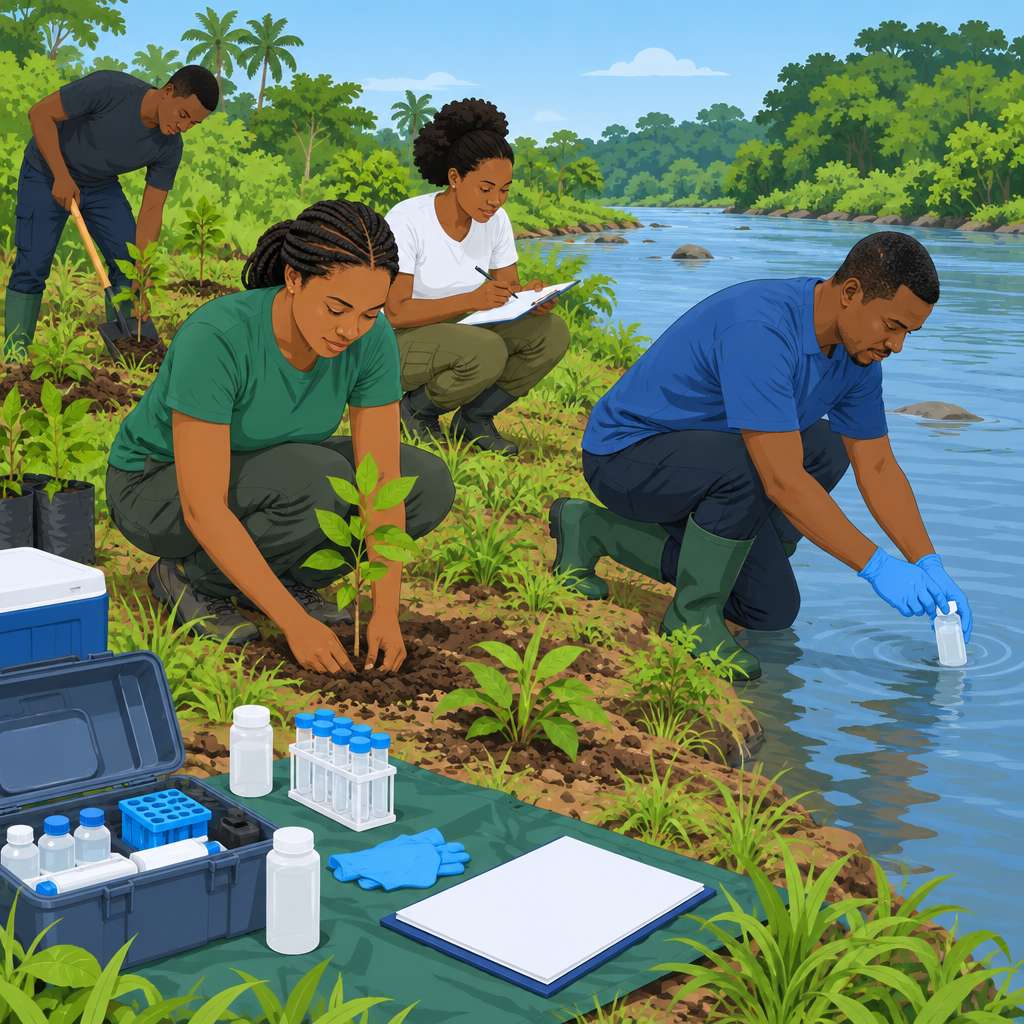
- Tree planting initiatives promote biodiversity and ecosystem health in Nigeria.
- By planting trees, communities combat deforestation and improve environmental quality.
- Additionally, trees provide wildlife habitats, shade, and support climate change mitigation.
- These projects encourage community involvement and teach residents to preserve natural resources.
Waste Management and Resource Recovery
- Waste management projects support environmental sustainability in Nigeria.
- These projects promote proper disposal, recycling, and waste reduction.
- As a result, communities prevent pollution and protect their natural surroundings.
- Moreover, recycling and upcycling projects create opportunities for income generation.
Water Conservation and Community Access
- Water conservation projects help Nigerian communities maintain access to clean water.
- These initiatives encourage efficient water use and protect important water sources.
- They also reduce wastage and help communities address water scarcity.
- Furthermore, these projects raise awareness about protecting water bodies.
These community projects promote sustainability, preserve natural resources, and protect the environment for future generations.
Community participation in these efforts supports healthier ecosystems and improves local surroundings.
Gain More Insights: Job Sectors for Applied Math Graduates in Nigeria
Successful Community Conservation and Farming Projects
- One successful project established a conservation area in Nigeria.
- Community members protected a specific ecosystem and endangered species.
- Consequently, the ecosystem recovered and biodiversity increased.
- Eco-tourism generated income and increased awareness of environmental conservation.
- Another project introduced sustainable farming practices in rural communities.
- Through training, farmers adopted organic methods and reduced chemical use.
- These methods improved soil quality, crop yields, and environmental health.
- As a result, residents experienced better health and increased income.
- Furthermore, reduced chemical runoff improved water quality in nearby rivers and streams.
Environmental and Community Benefits
- Community projects promote conservation practices across Nigerian environments.
- They help preserve forests, wetlands, and wildlife habitats.
- Moreover, community participation encourages environmental responsibility and stewardship.
- Consequently, deforestation, illegal poaching, and other destructive activities have declined.
- Reforestation and habitat restoration initiatives have repaired degraded landscapes.
- These environmental improvements also benefit nearby communities.
- Better land and water resources support agricultural productivity and food security.
- Additionally, eco-tourism and sustainable fishing create employment opportunities.
- Education and training empower residents to become environmental advocates and village leaders.
- These initiatives connect conservation with sustainable development and community wellbeing.
You Might Also Like: Historical Development of Geophysics in Nigeria
Challenges Faced by Community Projects
Community projects in Nigerian Environmental Biology face several obstacles.
These obstacles can reduce project effectiveness, participation, and long-term sustainability.
Understanding these challenges helps project organizers develop practical responses.
- Identify common challenges affecting community projects in Nigerian Environmental Biology.
- Examine funding shortages, logistical difficulties, and community engagement concerns.
Funding Constraints
Many community projects struggle to secure adequate financial support.
Limited funding can restrict planned activities and reduce project scope.
Projects may also lack equipment and qualified personnel when resources remain insufficient.
Logistical Difficulties
Logistical problems can disrupt environmental biology project implementation.
Poor planning, transportation difficulties, and inadequate infrastructure can delay activities.
Consequently, delays can reduce efficiency and weaken project effectiveness.
Community Engagement Challenges
Strong community engagement supports successful environmental biology projects in Nigeria.
However, some projects struggle to gain local support and participation.
Project teams must build trust and involve residents in planning and implementation.
Strengthening Project Effectiveness
Project organizers should address funding, logistics, and engagement challenges together.
Effective planning can improve implementation and reduce avoidable delays.
Inclusive participation can support environmental conservation and biodiversity preservation in Nigeria.
Delve into the Subject: Key Zoological Research Institutes in Nigeria
Strategies for Overcoming Challenges
Effective environmental projects begin by identifying stakeholders who can participate actively in community efforts.
Next, organizers can create action plans that address specific environmental issues.
Meanwhile, partnerships with local organizations and educational institutions can strengthen project implementation.
- Identify key stakeholders in the community for active involvement.
- Develop a comprehensive action plan to address specific environmental issues.
- Establish partnerships with local organizations and educational institutions.
- Encourage community members to participate in clean-up events and awareness campaigns.
- Advocate for policy changes at local and national levels to support environmental initiatives.
Importance of Collaboration, Community Involvement, and Government Support
Collaboration combines resources and expertise to address complex environmental issues.
Community involvement helps projects respond to local residents’ needs and concerns.
Furthermore, government support can provide legitimacy and funding for sustainable environmental projects.
- Collaboration allows communities to pool resources and expertise for complex environmental issues.
- Community involvement ensures that projects address local residents’ needs and concerns.
- Government support provides legitimacy and funding for sustainable environmental projects.
- Engaging government agencies can support long-term policy changes for environmental protection.
- Empowering communities encourages responsibility and sustainability through local ownership.
Find Out More: Biochemistry and Nigerian Healthcare Advancements
Community Projects and Environmental Sustainability in Nigeria
Community projects in Nigerian Environmental Biology play a vital role in preserving the natural environment.
These projects involve local communities, fostering ownership and responsibility for environmental sustainability.
By engaging community members in tree planting, waste management, and conservation, these projects help reduce environmental degradation.
Additionally, community projects raise awareness about protecting natural resources and promoting biodiversity in Nigeria.
Through their involvement, communities contribute to environmental well-being and support future generations.
Transform Your Career with Expert Guidance
Get personalized mentorship consulting that’s tailored to your unique path. Our expert advice is actionable and exclusive.
Get StartedUltimately, collaboration, education, and stakeholder commitment determine the success of these projects.
Together, these initiatives can combat climate change, preserve ecosystems, and create a sustainable future for Nigeria and its people.
Additional Resources
Google search results for Community Projects in Nigerian Environmental Biology Sciences
Bing search results for Community Projects in Nigerian Environmental Biology Sciences


