



Biochemistry and Nigerian Healthcare
Biochemistry studies chemical processes within living organisms.
It plays a crucial role in advancing healthcare.
In Nigerian healthcare, biochemistry provides a foundational science for medical breakthroughs.
Biochemistry and Healthcare
Biochemistry examines chemical reactions and processes within living organisms.
In healthcare, it supports disease diagnosis and treatment monitoring.
It also helps clinicians understand how medications work inside the body.
Biochemical Foundations of Disease Understanding
Biochemists study body chemistry to identify biomarkers associated with disease or abnormal functioning.
These biomarkers can support diagnosis by indicating changes in normal biological activity.
Consequently, biochemical evidence helps healthcare professionals examine disease mechanisms.
Biochemistry’s Role in Treatment Development
This knowledge supports targeted therapies and personalized medicine.
Biochemists also help develop vaccines, antibiotics, and other pharmaceutical interventions.
These approaches can improve patient outcomes by addressing disease more effectively.
Current State of Nigerian Healthcare
Nigeria’s healthcare system combines private and public facilities.
It operates through primary, secondary, and tertiary healthcare levels.
However, inadequate funding, weak infrastructure, and workforce shortages continue to challenge service delivery.
Overview of the Healthcare System
Primary healthcare centers provide the first level of care.
General hospitals form the secondary level of care.
Teaching hospitals and specialist centers provide tertiary services.
Key Challenges Affecting Healthcare Delivery
Several interconnected problems reduce access, quality, and affordability across the healthcare system.
Moreover, rural communities often face greater barriers than urban populations.
These conditions require coordinated action from government and stakeholders.
- Limited government funding leaves facilities without sufficient resources.
- Many facilities lack basic equipment and reliable infrastructure.
- Nigeria has too few doctors, nurses, and other medical staff.
- Service quality varies considerably between urban and rural areas.
- Rural communities often lack essential healthcare services.
- Many Nigerians cannot afford care, so out-of-pocket costs create financial barriers.
- Malaria, tuberculosis, and HIV/AIDS place substantial pressure on healthcare services.
- High maternal and child mortality requires improved services for women and children.
- Limited health education can encourage poor health-seeking behavior and preventable diseases.
Priorities for Healthcare Improvement
Improved healthcare financing can strengthen services and reduce financial barriers.
Investment in infrastructure and workforce development can improve healthcare delivery.
Government and stakeholders must collaborate to improve health outcomes for all Nigerians.
You Might Also Like: Internship Opportunities for Nigerian Chemistry Students
Impact of Biochemistry on Nigerian Healthcare
Biochemistry has significantly improved healthcare in Nigeria.
First, biochemical advances have strengthened diagnostic testing.
These tests support early disease detection, timely treatment, and improved patient outcomes.
Moreover, biochemical methods make medical diagnoses more precise and accurate.
This precision reduces misdiagnosis, unnecessary treatment, and avoidable pressure on healthcare resources.
Biochemistry also supports personalized medicine in Nigeria.
This approach considers individual genetic makeup and biomarkers when guiding treatment.
Consequently, clinicians can optimize therapeutic outcomes for individual patients.
Drug development increasingly uses biochemistry to produce effective and targeted medications.
These medicines expand treatment options for cancer, diabetes, and infectious diseases.
Additionally, biochemical research supports novel therapies and treatment modalities.
Examples include gene therapy, immunotherapy, and regenerative medicine.
These innovations have transformed patient care in Nigeria.
Examples of Biochemistry-Based Innovations in Nigerian Healthcare
One notable innovation uses genomics to guide cancer treatment in Nigeria.
Genomic testing identifies specific mutations within cancer cells.
Transform Your Career with Expert Guidance
Get personalized mentorship consulting that’s tailored to your unique path. Our expert advice is actionable and exclusive.
Get StartedHealthcare providers use these findings to select targeted therapies for patients.
Furthermore, rapid diagnostic tests help identify infectious diseases quickly.
These tests use biochemical markers to detect pathogens and support timely intervention.
They also help healthcare workers contain infectious disease outbreaks.
Biochemical research has identified biomarkers for detecting chronic diseases earlier.
Healthcare providers can monitor these biomarkers and intervene before diseases progress.
This approach supports management of cardiovascular disorders and diabetes.
Proteomics has also improved understanding of disease mechanisms and drug responses.
Proteomic profiling identifies potential therapeutic targets for further development.
These findings support personalized treatment strategies in Nigerian healthcare.
Biochemistry continues to drive healthcare innovation and medical advancement in Nigeria.
Explore Further: Role of Applied Biology in Nigeria's Agriculture
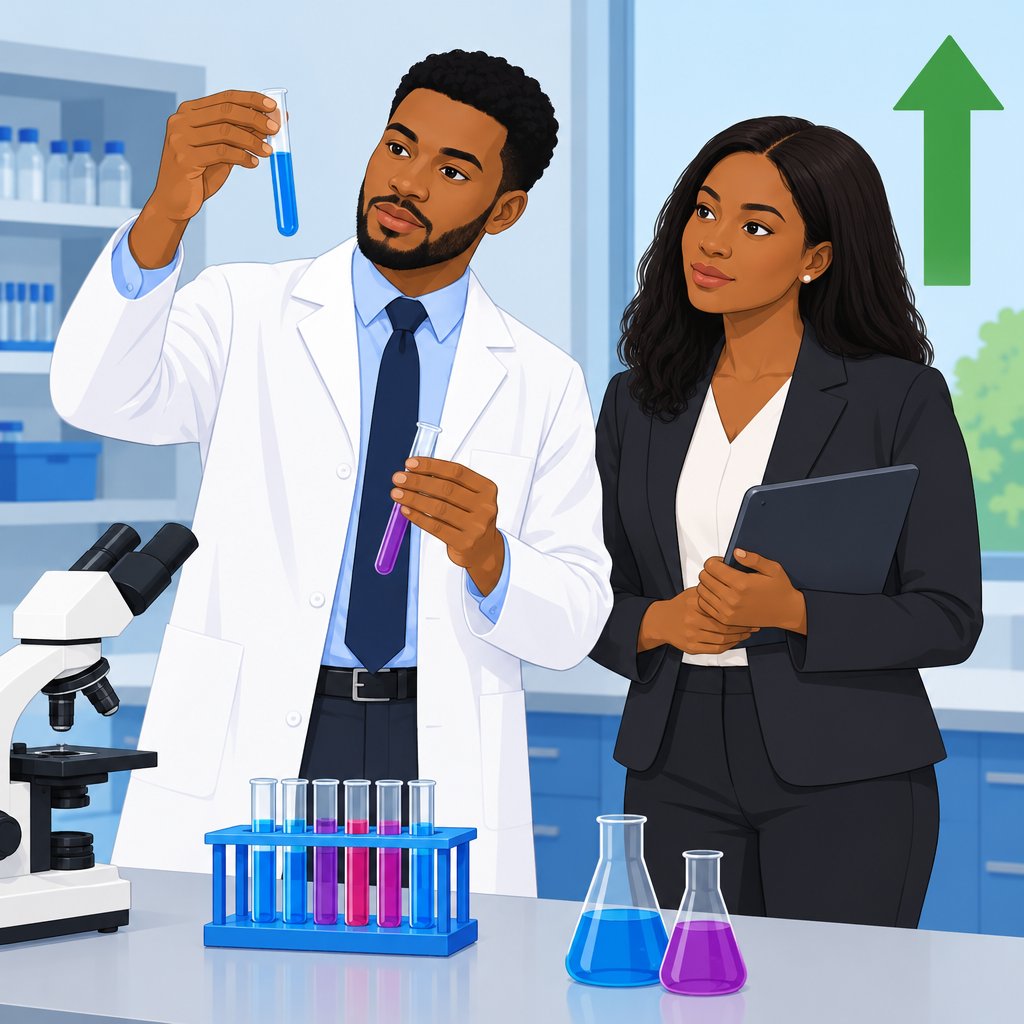
Role of Research and Innovation in Healthcare
Research and innovation help biochemistry generate knowledge that supports healthcare advancement.
Biochemical research can guide therapeutic development, diagnostic design, and preventive strategies for health conditions.
Researchers examine molecular processes to identify drug targets, biomarkers, and treatment options.
- Research and innovation support healthcare advancement.
- Ongoing projects and partnerships demonstrate Nigeria’s research activity.
Research Projects and Partnerships in Nigeria
Nigeria supports research projects that address important healthcare needs.
One initiative examines genetic factors linked with sickle cell anemia, diabetes, and hypertension among Nigerians.
Researchers hope these findings will support personalized treatment strategies and improve patient outcomes.
Partnerships connect academic institutions, research organizations, and healthcare providers.
These collaborations encourage knowledge exchange, resource access, and clinical application of research findings.
Healthcare and Capacity-Building Outcomes
Biochemistry research can produce medicines, diagnostic tests, and treatment approaches that strengthen healthcare.
Emerging tools, including gene editing and personalized medicine, may enable more precise interventions.
Research partnerships also promote training, mentorship, and expertise among scientists, healthcare professionals, and entrepreneurs.
These activities can help Nigeria address changing healthcare needs and participate in global disease-control efforts.
Delve into the Subject: Bioinformatics Scholarships for Nigerian Students
Collaboration and Partnerships
International partnerships have strengthened biochemistry’s contribution to Nigerian healthcare.
They have expanded opportunities for research, training, and knowledge exchange.
These relationships also connect Nigerian professionals with global expertise and resources.
Role of International Collaborations in Healthcare
Through these collaborations, Nigerian healthcare professionals engage with experts from around the world.
This engagement helps address knowledge gaps and supports technology transfer.
Additionally, international partnerships provide funding and resources for innovative research.
They also support healthcare programs that address important needs in Nigeria.
Furthermore, partners exchange ideas and expertise for mutual benefit.
International institutions also facilitate technology transfer to Nigerian healthcare facilities.
As a result, healthcare providers improve disease diagnosis and treatment capabilities.
Successful Partnerships and Healthcare Outcomes
Several partnerships between Nigerian institutions and international organizations have improved healthcare outcomes.
For example, the Nigerian Institute of Medical Research collaborates with the World Health Organization.
Through this partnership, NIMR conducts biochemistry research on malaria and HIV/AIDS.
The research has supported new diagnostic tools and treatment strategies.
Moreover, WHO connects NIMR with global networks and research resources.
Another partnership links the University of Lagos College of Medicine with the CDC.
This collaboration advances biochemistry research and strengthens healthcare training.
International pharmaceutical partnerships also support essential medication and vaccine distribution.
Consequently, these collaborations improve access to life-saving treatments in Nigeria.
Continued partnerships can further strengthen research capacity and healthcare services.
Gain More Insights: Top Universities Offering Applied Botany in Nigeria
Biochemical Advances Supporting Nigeria’s Healthcare Future
Biochemistry remains a cornerstone of healthcare advancement in Nigeria.
Furthermore, continued investment in biochemistry research and innovation can strengthen medical progress.
Integrating biochemical knowledge into healthcare can improve medical outcomes across Nigeria.
Healthcare professionals need biochemical tools for accurate diagnosis and effective treatment.
Additionally, biochemical advancements can support the overall wellbeing of Nigerians.
Therefore, sustained funding can help biochemistry initiatives support lasting healthcare progress.
Biochemistry also offers promising approaches to Nigeria’s ongoing health challenges.
Innovative biochemical solutions can address prevalent diseases within the country.
Consequently, Nigeria can benefit substantially from continued biochemical advancements.
These contributions position biochemistry as a central pillar of healthcare development.
Prioritizing biochemistry can help Nigeria build a healthier nation.
Additional Resources
Google search results for Biochemistry and Nigerian Healthcare Advancements Sciences
Bing search results for Biochemistry and Nigerian Healthcare Advancements Sciences


