



Physiotherapy Equipment for Nigerian Clinics
Physiotherapy equipment supports patient care in Nigerian clinics.
These tools help therapists deliver rehabilitation and treatment for various medical conditions.
Consequently, appropriate equipment can improve patient outcomes and the quality of care.
Clinics can provide broader physiotherapy services when they maintain varied equipment.
This range allows therapists to address diverse patient needs during treatment.
Basic tools include treatment tables and exercise bands.
Meanwhile, advanced options include ultrasound machines and electrotherapy devices.
Such equipment helps therapists deliver targeted treatments for specific patient needs.
Patients can then receive support that promotes faster recovery.
Furthermore, suitable tools help therapists provide a high standard of care.
Therefore, investing in physiotherapy equipment can strengthen clinic services and patient care.
Access to the right tools can make a significant difference in treatment quality.
Essential Physiotherapy Equipment
Physiotherapy clinics need various equipment to treat patients effectively.
These tools range from basic necessities to advanced machines that support rehabilitation.
Together, they help therapists provide treatment for different patient needs.
Treatment Tables
Treatment tables provide stable surfaces for patients during therapy sessions.
Clinics can choose different sizes and designs to match treatment requirements.
They form a basic part of physiotherapy services.
Exercise Bands and Balls
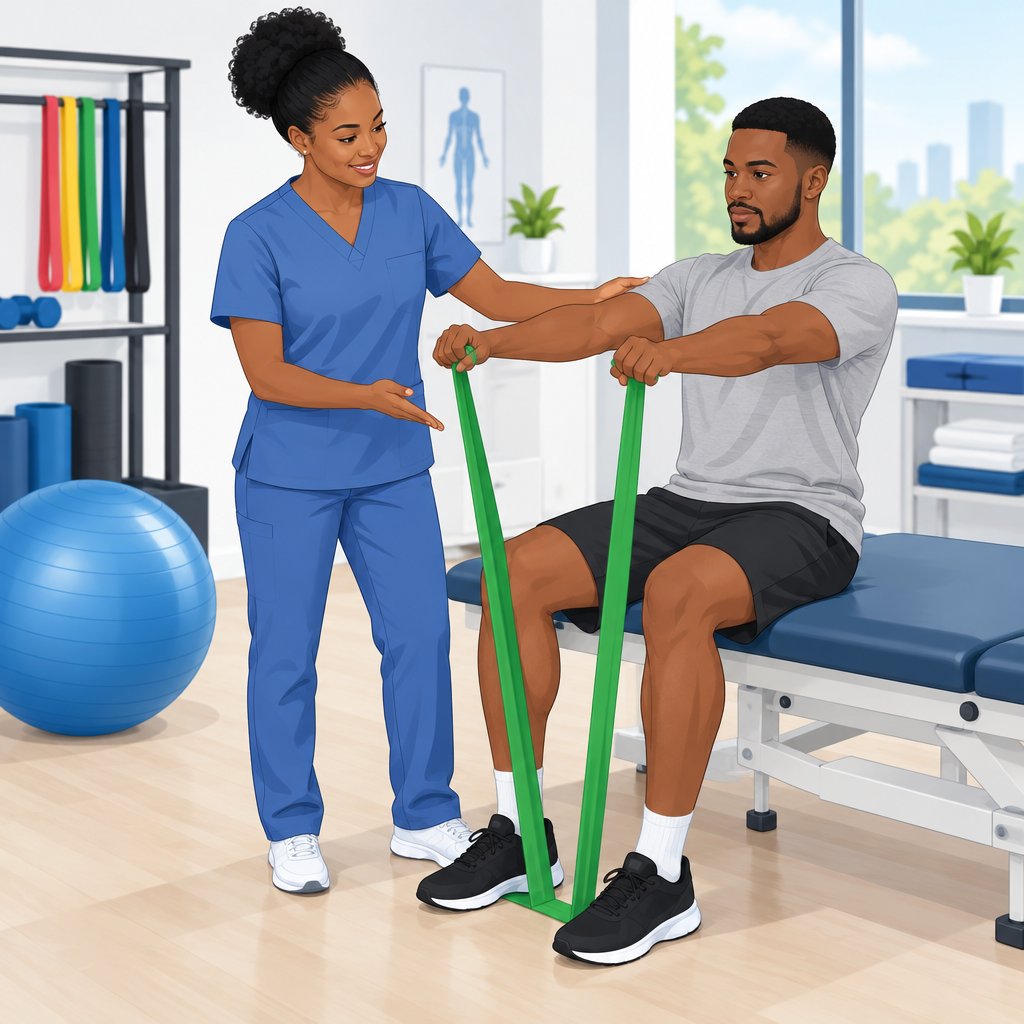
Exercise bands and balls support therapeutic exercises.
Patients use these tools to improve strength, flexibility, and balance.
Their versatility also makes them useful for clinic and home exercises.
Ultrasound Machines
Ultrasound machines use high-frequency sound waves to stimulate deep body tissues.
Therapists commonly use them to reduce inflammation, accelerate healing, and ease pain.
These machines support treatment for musculoskeletal conditions.
Electrical Stimulation Devices
Electrical stimulation devices send controlled impulses to targeted muscles or nerves.
They can help manage pain, improve muscle strength, and enhance circulation.
Clinics use them for various orthopedic and neurological conditions.
Traction Units
Traction units apply gentle pulling forces to the spine or other body parts.
This approach helps decompress affected areas and relieve pressure on nerves.
It can also improve spinal alignment for patients with disc problems or chronic back pain.
Heat and Cold Therapy Equipment
Heat and cold equipment helps manage pain and inflammation.
Moist heat packs promote blood flow and relax muscles.
Ice packs reduce swelling and numb affected areas.
Both modalities commonly support rehabilitation programs.
Gait Training Equipment
Gait training equipment includes parallel bars, walkers, and canes.
These tools provide support and stability while patients practice walking and balance.
They assist recovery after injuries, surgeries, or neurological conditions.
Balance and Coordination Tools
Balance pads, wobble boards, and stability balls challenge balance and coordination.
Such tools help improve proprioception and stability while supporting fall prevention.
They are valuable when rehabilitating vestibular disorders or musculoskeletal injuries.
Transform Your Career with Expert Guidance
Get personalized mentorship consulting that’s tailored to your unique path. Our expert advice is actionable and exclusive.
Get StartedEquipment Supporting Comprehensive Rehabilitation
Nigerian clinics can use this equipment to offer comprehensive treatment options.
Each item supports specific rehabilitation activities and patient needs.
Investing in essential equipment helps clinics support patient recovery and improve outcomes.
Importance of Quality Equipment
- Nigerian clinics benefit from investing in high-quality equipment.
- Quality equipment improves treatment accuracy and supports better patient outcomes.
- Patients experience greater comfort when clinics use high-quality equipment.
- Enhanced patient satisfaction strengthens a clinic’s reputation.
- Reliable equipment helps healthcare professionals achieve better treatment outcomes.
- High-quality equipment reduces complication risks during treatment.
- Investing in dependable equipment demonstrates a clinic’s commitment to patient care.
- Quality equipment also improves clinic operating efficiency.
- Reliable tools increase healthcare professionals’ confidence during treatment.
- Moreover, well-equipped clinics can attract patients seeking quality care.
You Might Also Like: Preparing for Your ENT Surgery in Nigeria
Challenges in Accessing Physiotherapy Equipment in Nigeria
When clinics seek physiotherapy equipment in Nigeria, several barriers can limit their ability to deliver quality care.
These barriers include high prices, limited availability, and insufficient maintenance resources.
Together, these challenges can restrict treatment options and disrupt services for patients.
High Equipment Costs
Imported physiotherapy equipment often carries high prices for clinics in Nigeria.
Smaller clinics may struggle to afford modern devices because of these expenses.
Consequently, limited budgets can prevent clinics from expanding treatment and rehabilitation services.
Limited Equipment Availability
Clinics also face limited access to quality physiotherapy equipment within Nigeria.
The domestic market offers fewer choices than markets in more developed countries.
Therefore, clinics may import devices, pay more, and wait longer before receiving them.
Insufficient Maintenance Resources
After acquisition, clinics must maintain equipment to support safe and reliable operation.
However, many facilities struggle to find qualified technicians or dependable service providers.
As a result, equipment breakdowns can interrupt patient care and affect treatment delivery.
Addressing Equipment Access Barriers
Addressing these barriers requires attention to equipment costs, availability, and maintenance support.
Better access would help clinics provide broader physiotherapy services to their patients.
Strengthening these areas could improve the accessibility and effectiveness of physiotherapy care in Nigeria.
See Related Content: Overview of Dentistry and Dental Surgery in Nigeria
Strategies for Overcoming Equipment Challenges
Physiotherapy clinics in Nigeria can face several equipment challenges while planning patient services.
Limited budgets, unreliable suppliers, and difficulty sourcing durable equipment can restrict clinic options.
However, practical partnerships and funding strategies can help clinics obtain necessary resources.
- Partner with reliable suppliers to access broader equipment options and dependable deliveries.
- Seek grants or healthcare funding to support equipment purchases and facility improvements.
- Join equipment sharing programs to reduce costs and improve access to available resources.
Clinics should assess their equipment needs and budget constraints before selecting an approach.
That assessment helps each clinic choose solutions that match its priorities and available resources.
Additionally, clinics can seek grants from local or international organizations supporting healthcare facilities.
These grants can help clinics purchase essential equipment and upgrade their facilities.
Furthermore, equipment sharing programs allow several clinics to use shared resources.
Such collaboration reduces individual costs and promotes efficient equipment use.
By combining these strategies, clinics can address equipment challenges and strengthen patient care.
Uncover the Details: Common Eye Conditions Treated by Nigerian Optometrists
Staff Training and Education for Safe Equipment Use
Physiotherapy clinics in Nigeria need well-trained staff to use equipment effectively and safely.
Proper instruction helps staff operate equipment correctly and reduce risks for patients and colleagues.
Regular education also supports safe practices as staff improve their equipment knowledge.
Benefits of Proper Equipment Training
Training reduces the risk of injuries caused by incorrect equipment operation.
Without adequate preparation, staff may create accidents or make operational errors.
Additionally, skilled staff can use equipment more efficiently and support better patient outcomes.
This efficiency can improve patient satisfaction and increase clinic productivity.
Ongoing Education and Skill Development
Initial training alone cannot keep staff informed about changing equipment practices.
Ongoing education introduces updates involving equipment operation and safety procedures.
Furthermore, continued learning helps staff expand their skills and knowledge.
Better-prepared staff can address equipment challenges and strengthen the clinic’s reputation.
Gain More Insights: Impact of Prosthesis on Nigerian Disabled Community
Recent Technological Advancements
Physiotherapy technology continues to change how clinics support rehabilitation and pain management.
These innovations give physiotherapists new ways to guide movement, monitor progress, and personalize care.
Nigerian clinics can use these developments to strengthen treatment delivery and patient participation.
- Electrotherapy devices use electrical stimulation to encourage muscle contraction and support pain relief.
- Wearable technology tracks activity, monitors progress remotely, and provides real-time feedback.
- Virtual reality therapy creates immersive experiences that support rehabilitation and pain management.
- Robotic devices assist physiotherapists with precise movements and feedback during therapy sessions.
- Three-dimensional printing creates customized orthotics and prosthetics that improve comfort and treatment outcomes.
How Technology Shapes Physiotherapy Care in Nigeria
These technologies are changing how Nigerian clinics deliver physiotherapy services.
They also help physiotherapists coordinate treatment with greater efficiency and patient involvement.
Furthermore, digital tools can support care beyond the clinic when appropriate monitoring systems exist.
Improving Patient Outcomes
Advanced equipment can help patients recover more effectively during rehabilitation.
Electrotherapy, robotics, and immersive systems give physiotherapists additional treatment options.
Consequently, clinics can use suitable technologies to support stronger patient progress.
Enhancing Rehabilitation Processes
Technological tools can make rehabilitation processes more efficient.
Robotic systems provide precise movement support and feedback during therapy sessions.
Meanwhile, wearable devices help physiotherapists follow patient activity between appointments.
Increasing Access to Care
Remote monitoring can help extend physiotherapy support beyond traditional clinic visits.
Virtual therapy options may also assist patients who live in rural or underserved areas.
As a result, technology can connect more patients with rehabilitation guidance.
Personalizing Treatment Plans
Three-dimensional printing allows clinics to create orthotics and prosthetics for individual patient needs.
Wearable feedback can help physiotherapists understand each patient’s progress.
Therefore, clinicians can adjust therapy regimens according to patient requirements.
Empowering Patients During Rehabilitation
Wearable technology helps patients monitor their activity and rehabilitation progress.
Virtual reality therapy can make patients more active participants in treatment.
These tools encourage patients to engage more directly with their recovery process.
Supporting Effective Physiotherapy Services in Nigerian Clinics
Nigerian clinics can strengthen rehabilitation services by equipping physiotherapy departments with suitable treatment tools.
These tools help therapists address musculoskeletal conditions and support patients throughout rehabilitation.
Clinics should prioritize practical investments that improve service quality and patient experiences.
Well-equipped departments enable therapists to provide comprehensive care for people recovering from injuries and other conditions.
Therefore, clinic leaders should procure appropriate equipment to support effective treatment and improved patient recovery.
Additional Resources
Google search results for Physiotherapy Equipment: Nigerian Clinics Essentials Medical
Bing search results for Physiotherapy Equipment: Nigerian Clinics Essentials Medical


