



Common Eye Conditions in Nigerian Optometry Practice
Eyes support daily functioning.
Therefore, eye health remains important.
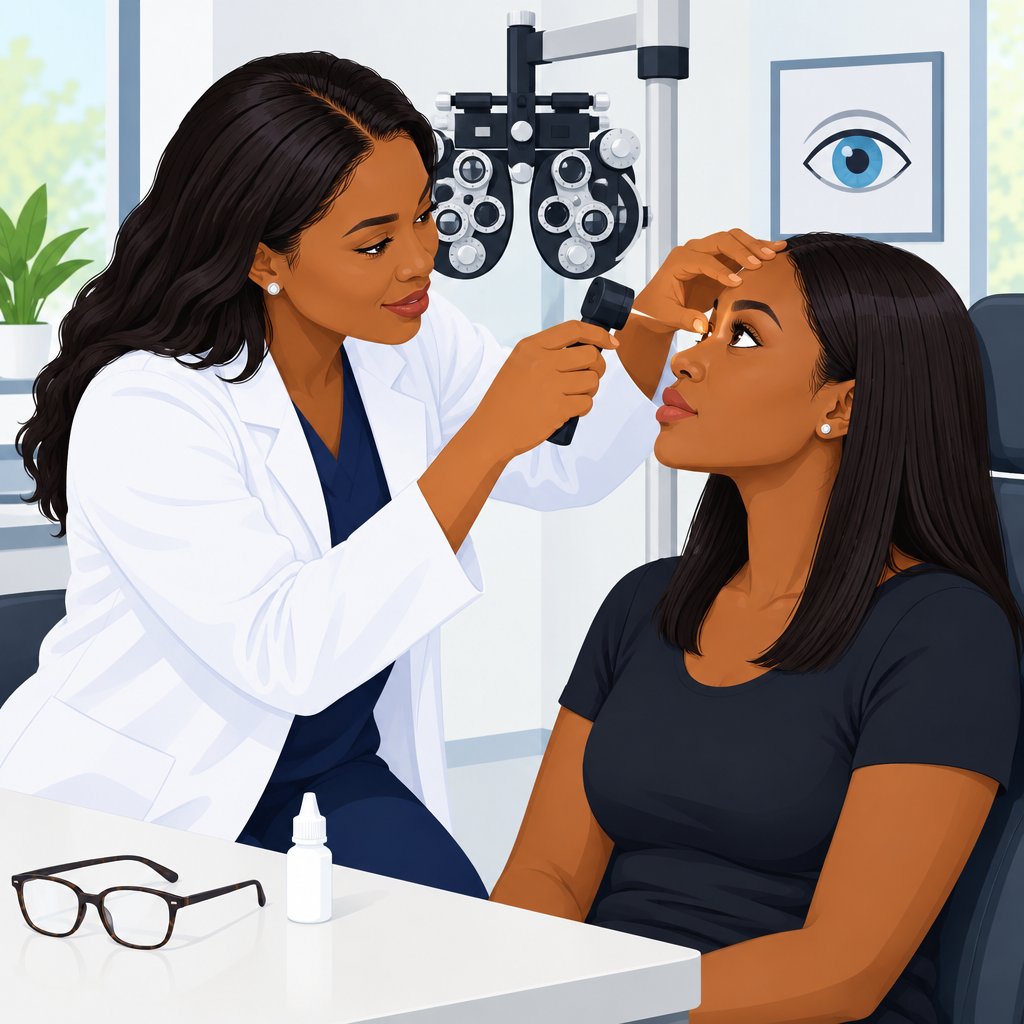
Optometrists diagnose and treat conditions that affect their patients’ vision.
Refractive Errors
Refractive errors include myopia, hyperopia, and astigmatism.
These conditions affect how the eye focuses light.
Optometrists correct them with prescription eyeglasses or contact lenses.
Conjunctivitis
Conjunctivitis, also called pink eye, inflames the outermost eye layer.
Optometrists frequently encounter this condition during practice.
They treat it with antibiotic eye drops.
Cataracts
Cataracts cloud the eye’s lens.
This clouding can cause blurry vision.
Optometrists may recommend surgery to remove cataracts and restore clear vision.
Glaucoma
Glaucoma describes a group of diseases that damage the optic nerve.
Consequently, the condition can cause vision loss.
Optometrists diagnose and manage glaucoma with medications or surgery.
Age-Related Macular Degeneration
Age-related macular degeneration affects the macula.
The macula plays an important role in central vision.
Optometrists diagnose this condition and provide low vision aids.
Diabetic Retinopathy
People with diabetes face a risk of developing diabetic retinopathy.
This condition affects blood vessels in the retina.
Optometrists monitor and manage diabetic retinopathy.
Dry Eye Syndrome
Dry eye syndrome commonly brings patients to optometry practices.
Patients may experience irritation and discomfort.
Optometrists recommend treatments that improve eye comfort.
Myopia (Nearsightedness)
Myopia, commonly called nearsightedness, makes distant objects appear unclear.
It can affect people of all ages, although it often develops during childhood or adolescence.
Therefore, regular eye care helps optometrists monitor vision changes and manage this refractive error.
Definition and Causes of Myopia
Myopia changes how the eye focuses incoming light.
The condition primarily affects clarity when people view distant objects.
Both inherited traits and environmental circumstances may influence its development.
- Myopia occurs when the eye focuses images in front of the retina.
- Genetic and environmental factors can contribute to myopia.
- Excessive screen time and limited outdoor activity represent environmental factors.
Symptoms Experienced by Individuals with Myopia
People with myopia often notice reduced clarity when they look at distant objects.
They may also adjust their eyes or posture to improve visual sharpness.
Additionally, some individuals experience discomfort during activities requiring distance vision.
- People with myopia may experience blurred vision when viewing distant objects.
- They may squint to see distant objects more clearly.
- Eye strain and headaches may occur during activities requiring distance vision.
Treatment Options Available for Myopia
Optometrists can recommend corrective options after assessing an individuals vision.
These options help focus light properly on the retina and improve visual clarity.
Regular examinations allow optometrists to monitor progression and adjust prescriptions when necessary.
- Prescription glasses use corrective lenses to focus light properly on the retina.
- Contact lenses sit directly on the eye surface to correct refractive errors.
- Refractive surgery, including LASIK, reshapes the cornea to improve vision.
Individuals with myopia should schedule regular eye examinations with optometrists.
These examinations help monitor progression and support timely prescription adjustments.
By understanding myopia, Nigerian optometrists can diagnose and manage this common condition effectively.
Hyperopia (Farsightedness)
Hyperopia, also called farsightedness, is a common eye condition.
Transform Your Career with Expert Guidance
Get personalized mentorship consulting that’s tailored to your unique path. Our expert advice is actionable and exclusive.
Get StartedPeople with hyperopia usually see distant objects more clearly than nearby objects.
It occurs when the eyeball is too short or the cornea has too little curvature.
- Causes of Hyperopia: Genetics, aging, and certain medical conditions can cause hyperopia.
- Symptoms of Hyperopia: People may experience blurred near vision, eye strain, headaches, and reading difficulty.
- Treatment Options for Hyperopia: Prescription glasses and contact lenses can correct hyperopia.
- These corrective lenses help focus light on the retina and improve vision.
Gain More Insights: Impact of Prosthesis on Nigerian Disabled Community
Astigmatism
Astigmatism is a common eye condition that causes blurred vision.
An irregularly shaped cornea or lens can distort vision at different distances.
Several treatment options can help manage astigmatism and improve visual clarity.
Definition and Causes of Astigmatism
Astigmatism occurs when the cornea or lens lacks a perfectly curved shape.
This irregular curvature prevents light from focusing properly on the eye.
The exact cause remains unknown, although genetics, eye surgery, or eye injury may contribute.
Symptoms Experienced by Individuals with Astigmatism
People with astigmatism may notice blurred or distorted vision at any distance.
They may also experience eye strain, discomfort, headaches, or frequent squinting.
These symptoms can occur when the irregular eye shape affects visual focus.
- Blurred or distorted vision at any distance
- Eye strain or discomfort
- Headaches
- Squinting
Treatment Options for Astigmatism
Eyeglasses and contact lenses can correct the refractive error associated with astigmatism.
Some procedures reshape the cornea, while other lenses temporarily change its shape.
Individual needs may determine whether one treatment or a combination provides suitable correction.
- Prescription glasses use special lenses to correct astigmatism-related refractive errors.
- Toric contact lenses correct astigmatism by fitting the irregular shape of the eye.
- LASIK or PRK can reshape the cornea to correct astigmatism.
- Orthokeratology uses rigid overnight lenses to reshape the cornea temporarily.
- Some individuals may combine glasses, contact lenses, or surgery.
Astigmatism can be managed through prescription glasses, contact lenses, orthokeratology, or refractive surgery.
Delve into the Subject: How to Choose a Restorative Dentist in Nigeria
Presbyopia
Presbyopia is a common age-related condition that affects the ability to focus on close objects.
With age, focusing on nearby objects becomes more difficult.
People often notice these changes while reading or performing close work.
Definition and Causes of Presbyopia
Presbyopia develops when the lens becomes less flexible with age.
Over time, the lens gradually thickens and hardens.
Therefore, the eye finds it harder to focus on nearby objects.
Symptoms of Presbyopia
People with presbyopia often struggle to read small print.
Close objects may appear blurred during near tasks.
Additionally, close work can cause eye strain, headaches, fatigue, or tiredness.
- Difficulty reading small print
- Blurred vision when looking at close objects
- Eye strain or headaches after reading or doing close work
Individuals may also feel tired when focusing on near objects for extended periods.
Treatment Options for Presbyopia
Several options can help people manage presbyopia.
Each option addresses near vision in a different way.
An optometrist can help identify a suitable solution for specific needs.
- Progressive lenses provide varying magnification levels for clear vision at different distances.
- Reading glasses provide magnification for close tasks, including reading or sewing.
- Monovision contact lenses correct one eye for near vision and the other for distance vision.
- Refractive surgery, including LASIK or PRK, reshapes the cornea to address presbyopia.
Before choosing treatment, consult an optometrist about the most appropriate option for your needs.
Advancements in technology have expanded the treatment choices available today.
These options can make managing presbyopia simple and effective.
Uncover the Details: Top Nigerian Universities for Public Health Studies
Glaucoma
Glaucoma describes a group of eye conditions that damage the optic nerve.
This damage can lead to vision loss.
Usually, increased eye pressure affects the optic nerve and contributes to glaucoma.
Symptoms Associated with Glaucoma
People with glaucoma may experience several changes in their vision.
Some symptoms affect visual clarity, while others cause significant discomfort.
Severe symptoms may require prompt attention.
- Blurry vision
- Halos around lights
- Severe eye pain
- Nausea and vomiting
- Peripheral vision loss
Glaucoma Treatment Options
Doctors select glaucoma treatments according to the severity of the condition.
Eye drops often provide the first treatment for lowering eye pressure.
Additionally, oral medicines, laser procedures, and surgery can reduce eye pressure.
- Eye drops can lower eye pressure and often provide the first treatment option.
- Oral medications may reduce eye pressure in some cases.
- Laser trabeculoplasty improves fluid drainage within the eye.
- Filtering surgery creates a new drainage channel for eye fluid.
- Minimally invasive glaucoma surgery aims to reduce the need for eye drops.
Regular optometrist visits help monitor glaucoma and guide treatment adjustments.
Learn More: Anatomy and Its Importance in Nigerian Healthcare
Cataracts
Cataracts develop when the eye’s lens becomes cloudy.
Aging, trauma, genetic factors, and certain medical conditions can cause cataracts.
People with cataracts may notice blurry vision, nighttime difficulty, or halos around lights.
Symptoms Experienced by Individuals with Cataracts
Cataracts can make vision blurry and make nighttime viewing more difficult.
They can also cause halos around lights and changes in color vision.
Additionally, people may experience double vision and increased sensitivity to glare.
- Blurry vision
- Difficulty seeing at night
- Seeing halos around lights
- Changes in color vision
- Double vision
- Increased sensitivity to glare
Treatment Options Available for Cataracts
Treatment choices depend on the severity of the cataracts.
During the early stages, new eyeglass prescriptions may improve vision.
Anti-glare sunglasses and magnifying lenses may also support clearer vision.
As cataracts progress, surgery may become necessary.
During surgery, doctors remove the cloudy lens and replace it with an artificial lens.
Regular follow-up visits help monitor vision after surgery.
- New eyeglass prescriptions
- Anti-glare sunglasses
- Magnifying lenses
- Surgery to remove the cloudy lens
- Replacement with an artificial lens
- Regular follow-up visits to monitor vision after surgery
Supporting Long-Term Eye Health
Regular eye check-ups and professional care help maintain good eye health.
Therefore, readers should consult Nigerian optometrists about any eye concerns.
Treating common eye conditions can significantly improve overall eye health.
Additional Resources
Google search results for Common Eye Conditions Treated by Nigerian Optometrists Medical
Bing search results for Common Eye Conditions Treated by Nigerian Optometrists Medical


