




Introduction
Nigerian cities face growing waste management concerns as populations increase and urbanization expands.
Currently, waste management systems in Nigerian cities remain inadequate and inefficient.
Therefore, cities must implement effective waste management strategies for environmental sustainability and public health.
Waste Management Challenges in Nigerian Cities
Nigerian cities face several waste management challenges.
These challenges include limited infrastructure, inadequate collection services, and poor disposal practices.
Together, these issues complicate daily waste handling.
- Lack of infrastructure
- Inadequate waste collection services
- Poor waste disposal practices
Infrastructure Gaps
Nigerian cities lack proper infrastructure for effective waste management.
Without treatment plants and recycling centers, cities struggle to manage growing daily waste volumes.
Furthermore, inadequate waste segregation creates mixed waste streams that remain difficult to manage and recycle.
Inefficient transportation networks also delay waste collection and disposal.
Collection Service Shortcomings
Many Nigerian cities provide inadequate waste collection services.
In several areas, irregular collection schedules allow garbage to accumulate on streets and within neighborhoods.
Additionally, insufficient waste bins and collection vehicles restrict proper disposal.
Consequently, residents may dump waste indiscriminately, harming the environment and public health.
Unsafe Waste Disposal Practices
Many Nigerian cities experience poor waste disposal practices.
Residents commonly burn waste openly or dump it in water bodies.
These practices pollute air and water while creating health risks for residents.
Moreover, limited awareness about proper disposal and recycling allows harmful practices to continue.
Many people remain unaware of the environmental and health implications of improper waste handling.
Importance of Community Involvement in Waste Management
Community involvement strengthens waste management by encouraging residents to share responsibility for clean surroundings.
Furthermore, active participation helps communities develop sustainable solutions that benefit everyone.
It also builds local ownership and supports consistent action.
Educating Residents on Proper Waste Disposal Methods
Residents need clear guidance about proper waste disposal methods.
Therefore, education should explain waste segregation, correct bin use, and disposal consequences.
Through awareness campaigns and workshops, people can manage waste in environmentally friendly ways.
Encouraging Recycling and Composting Initiatives
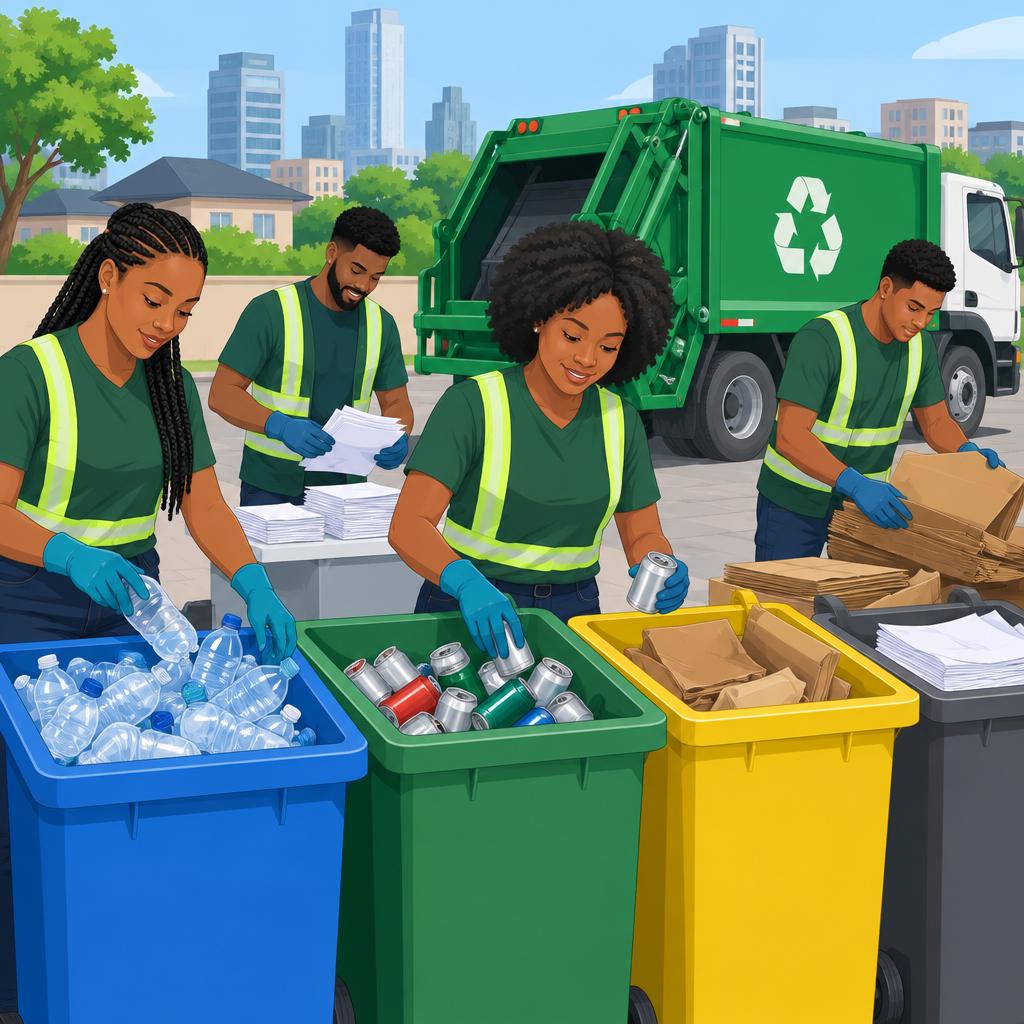
Communities can promote recycling and composting initiatives across Nigerian cities.
By separating recyclable materials, residents can reduce waste sent to landfills.
Additionally, composted organic waste can produce nutrient-rich soil for urban farming and landscaping.
Creating Partnerships with Local Businesses and Organizations
Local businesses and organizations can strengthen sustainable waste management partnerships.
These collaborations can support collection drives, recycling programs, and waste-to-energy projects.
Together, communities, businesses, and organizations can build a more efficient waste management system.
Delve into the Subject: Estate Management in Nigeria: Trends and Future
Waste Segregation and Recycling Programs
Effective waste management in Nigerian cities requires segregation and recycling programs.
These programs separate waste at its source.
Consequently, recycling becomes easier, while landfilled waste decreases.
Separate Bins for Different Waste Types
Authorities should provide separate bins for different waste types.
These bins belong in public spaces, residential areas, and commercial establishments.
Moreover, convenient disposal helps residents keep recyclable materials separate from non-recyclables.
Community Recycling Centers
Communities also need accessible recycling centers.
These centers can collect recyclable materials from nearby residents.
Transform Your Career with Expert Guidance
Get personalized mentorship consulting that’s tailored to your unique path. Our expert advice is actionable and exclusive.
Get StartedWorkers can sort and process those materials before sending them to recycling facilities.
Public Awareness of Recycling Benefits
Public education can increase participation in recycling programs.
Campaigns, workshops, and educational programs can explain recycling’s environmental benefits.
Furthermore, clear information can encourage sustainable waste management practices.
These measures can reduce waste sent to landfills.
They can also help mitigate environmental pollution.
Together, they support a more sustainable environment for future generations.
You Might Also Like: Estate Management and Sustainable Development
Technology Utilization in Waste Management
Nigerian cities generate increasing amounts of waste each day.
Technology can improve how authorities collect, monitor, and manage that waste.
These tools can support efficient, cost-effective, and environmentally sustainable waste management systems.
- Waste collection scheduling apps
- GPS tracking for waste collection trucks
- Bin sensors for optimizing waste collection routes
Waste Collection Scheduling Apps
Waste collection scheduling apps can streamline collection activities.
Residents can use these apps to access real-time collection schedule information.
Consequently, residents can manage waste disposal more effectively.
GPS Tracking for Waste Collection Trucks
GPS devices can help authorities monitor waste collection trucks in real time.
Authorities can track vehicle movements across different areas of a city.
This monitoring can support efficient and timely waste collection.
Bin Sensors for Collection Route Optimization
Sensors can detect the waste level inside collection bins.
They can transmit this information to a centralized management system.
Waste authorities can then plan routes according to actual collection needs.
By adopting these technologies, Nigerian cities can improve waste management practices.
Cleaner and healthier living environments can result from better-organized waste services.
See Related Content: How to Start a Career in Estate Management
Collaboration with Government Agencies and Private Sector Partners
Cities in Nigeria can strengthen waste management by coordinating government agencies and private sector partners.
Such collaboration combines public oversight with specialized operational resources.
Moreover, shared planning can support sustainable practices, compliance, and accountability.
Working with Local Government Authorities to Improve Waste Management Policies
Local government authorities can help cities develop effective waste management policies.
They set regulations, enforce laws, and oversee activities within their jurisdictions.
Additionally, authorities can provide funding, infrastructure, and personnel for local initiatives.
Partnering with Private Companies for Waste Collection and Disposal Services
Private companies can provide waste collection and disposal services for Nigerian cities.
They contribute specialized knowledge, technology, and resources to daily operations.
Furthermore, outsourcing can offer cost-effective services tailored to specific city needs.
Promoting Public-Private Partnerships for Sustainable Waste Management Solutions
Public-private partnerships combine government oversight with private sector capabilities.
These partnerships support knowledge sharing, strategic planning, and resource mobilization.
Consequently, cities can encourage innovation, efficiency, and accountability in waste management.
You Might Also Like: Internships in Environmental Biology in Nigeria
Sustainable Waste Management Outcomes
Effective waste management strategies can help Nigerian cities address their growing waste crisis.
Therefore, stakeholders must coordinate sustainable solutions that improve daily waste management practices.
Meanwhile, cleaner surroundings can protect public health for all residents.
Finally, reducing, recycling, and reusing waste can strengthen communities.
Additional Resources
Google search results for Waste Management Strategies for Nigerian Cities Environmental
Bing search results for Waste Management Strategies for Nigerian Cities Environmental


