



Boat building training centers play a vital role in Nigeria’s maritime industry.
Additionally, boat building supports fishing, transportation, and trade as a crucial Nigerian skill and industry.
However, Nigeria offers limited formal training options for aspiring boat builders.
Therefore, establishing training centers can boost the economy and create job opportunities for young people.
Boat Building Training Centers Across Nigeria
Several boat building training centers operate across Nigeria.
These centers combine practical instruction with theoretical lessons.
They serve aspiring boat builders in several regions.
- Nigerian Institute of Marine Engineering and Technology operates in Oron.
- Maritime Academy of Nigeria operates in Oron.
- Boat Building Academy operates in Lagos.
- Training centers also operate in Port Harcourt, Warri, and other coastal areas.
Successful Centers and Skilled Boat Builders
Successful training centers have developed a record of producing skilled boat builders.
Their graduates work in maritime industries within Nigeria and internationally.
These graduates strengthen the available workforce through practical boat building skills.
- Graduates contribute their skills to maritime workplaces.
- Skilled boat builders support boat construction and maintenance activities.
- Training centers help prepare workers for various maritime activities.
Funding and Resource Challenges
Boat building training centers face significant funding challenges.
Limited funding restricts their ability to obtain equipment for practical instruction.
In addition, limited government support and sponsorship affect program development.
- Inadequate funding limits training activities.
- Centers often lack essential practical training resources.
- Insufficient infrastructure creates difficulties for effective instruction.
- Limited sponsorship can slow the growth of training programs.
Expanding Training Access Across Nigeria
Nigeria needs additional training centers in different regions.
Regional expansion would help more aspiring boat builders access practical instruction.
Broader access would also help address shortages of skilled workers.
- New centers could reach aspiring boat builders outside existing locations.
- Regional programs could widen participation in boat building training.
- Additional facilities could support continued maritime industry development.
- Expanded training could increase the supply of skilled boat builders.
Comparison of Boat Building Training Programs
- Each center combines theoretical lessons with practical boat building instruction.
- Program duration, intensity, and specialization areas vary between training centers.
- Some centers teach traditional wooden boat building, while others emphasize modern fiberglass construction.
- Students can select programs according to their interests, goals, and previous experience.
Curriculum and Practical Training
- The curriculum covers boat design, material selection, hull construction, finishing, and repair.
- Students build different boat types through hands-on training with expert instructors.
- They learn to use tools, read blueprints, and apply mathematical principles to construction.
- They also study safety procedures, regulations, and environmental considerations in boat construction.
Duration and Cost of Training Courses
- Training courses may last several weeks or extend across several months.
- Course costs depend on duration, materials, facilities, and included certifications.
- Short-term courses often cost less than longer programs with advanced instruction.
- Some centers provide scholarships, financial aid, or installment plans for students.
Certification and Job Placement Opportunities
- Graduates receive certificates or diplomas that can strengthen their boat building careers.
- Some centers partner with boat builders, shipyards, or marine industries for job placement.
- Graduates may become boat builders, marine technicians, or design consultants.
- Some graduates may also establish their own boat building businesses.
Find Out More: Essential Tools for Nigerian Biochemists
Student and Graduate Perspectives
Interviews with students and graduates reveal how training shapes boat building journeys.
These perspectives show personal motivation, practical development, and career ambitions.
They also identify challenges and improvements that training centers can address.
- Students often share their passion for boat building and training experiences.
- Graduates explain how practical skills influenced their professional development.
- Interviews provide valuable insights into individual learning journeys.
Hands-On Experiences and Training Challenges
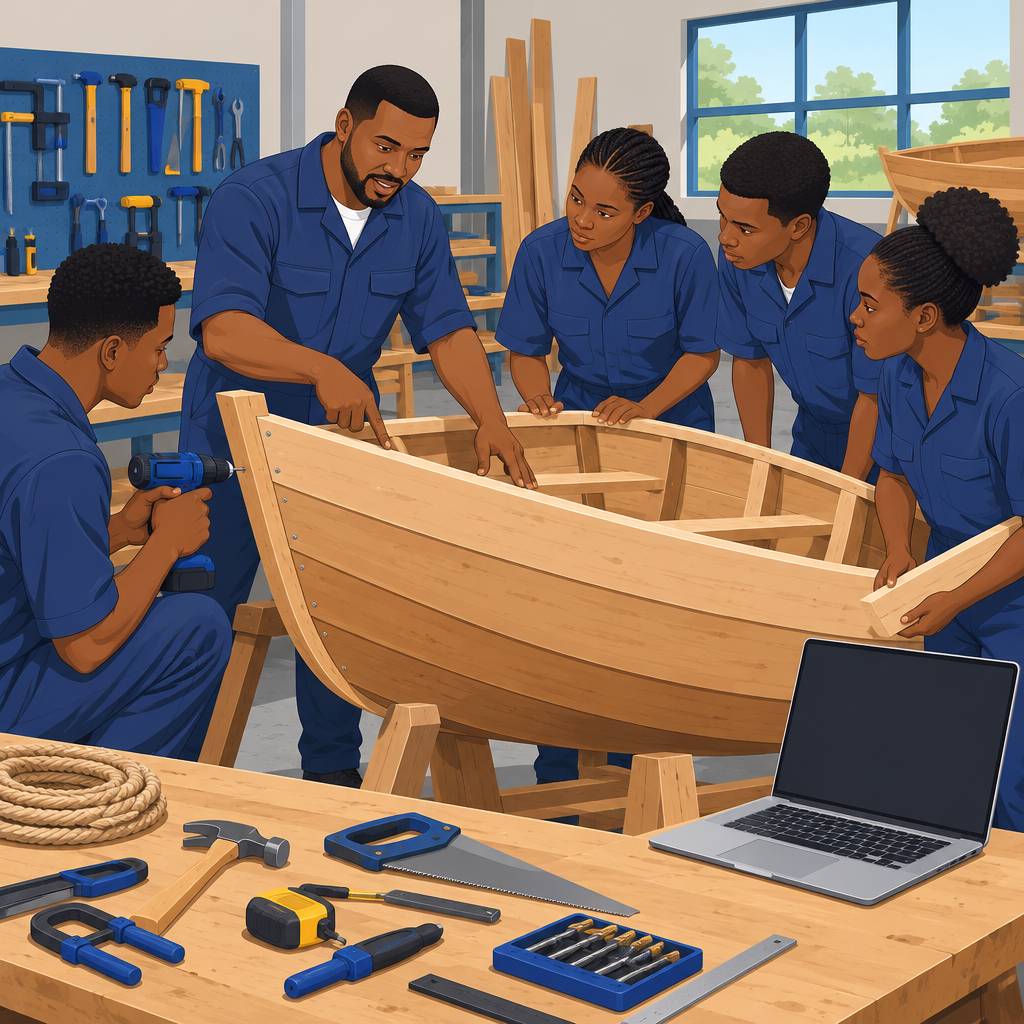
Students gain hands-on experience by building boats from scratch.
Experienced instructors guide learners through practical construction processes.
Meanwhile, demanding projects encourage students to develop patience and technical confidence.
- Students work through challenges involving material sourcing and availability.
- They practice intricate techniques while following project requirements.
- Meeting deadlines helps learners strengthen their organization and preparation skills.
- Completed projects demonstrate the progress achieved through sustained effort.
Feedback for Improving Training Programs
Student feedback helps training centers review their curriculum and teaching methods.
Learners can identify areas that require stronger practical support.
Their suggestions also help programs respond to changing industry expectations.
- Students often request additional practical sessions.
- They also value exposure to new technologies and industry-relevant projects.
- Mentorship can help aspiring boat builders strengthen their professional development.
- Networking opportunities can connect learners with useful industry relationships.
Graduate Success and Career Development
Graduate achievements demonstrate how training can support long-term career development.
Some graduates build careers by applying their acquired skills in professional settings.
Their experiences can encourage current students to pursue their own goals.
- Some graduates establish successful boat building businesses.
- Others contribute to prestigious boat building projects.
- These achievements highlight the value of quality training and dedication.
Training Outcomes for Nigerias Maritime Workforce
Student and graduate experiences reveal the practical value of boat building education.
Their challenges show where training centers can strengthen support and instruction.
Their achievements demonstrate how dedicated learners can pursue rewarding boat building careers.
Find Out More: Challenges Facing Applied Microbiology in Nigeria
Collaboration Between Boat Building Training Centers and External Partners
Partnerships can support the growth and sustainability of Nigeria’s boat building industry.
Government agencies and industry players can provide valuable support to training centers.
These relationships can also connect training with employment opportunities in the maritime sector.
Potential Benefits of Partnerships
Training centers can gain stronger support when they collaborate with public and private organizations.
Partners can improve training quality by sharing funding, equipment, expertise, and practical knowledge.
Furthermore, these relationships can help graduates enter the boat building industry.
- Government and industry partners can fund infrastructure, equipment purchases, and program expansion.
- Organizations can share expertise, knowledge, and skills with training centers.
- Partnerships can create internships, apprenticeships, and job placements for graduates.
Successful Collaborations in Nigeria
Nigerian training centers have collaborated with government agencies, nonprofit organizations, and private companies.
Transform Your Career with Expert Guidance
Get personalized mentorship consulting that’s tailored to your unique path. Our expert advice is actionable and exclusive.
Get StartedThese collaborations have supported the development of boat building skills and industry capacity.
They also demonstrate how coordinated support can strengthen training and employment pathways.
Ways to Foster More Partnerships
Training centers can actively seek relationships with government officials, industry associations, and potential partners.
Clear agreements can help partners understand their responsibilities and shared expectations.
Regular communication can maintain cooperation and address challenges as they arise.
- Training centers can network with government officials, industry associations, and potential partners.
- Formal agreements and memoranda of understanding can define roles and responsibilities.
- Partners should align their goals to support mutual benefits and lasting cooperation.
- Regular communication and feedback can help partners resolve emerging challenges.
Uncover the Details: Customer Trends in Nigerian Boat Building Market
Infrastructure and Instruction Challenges
Boat building training centers in Nigeria often lack adequate infrastructure.
Consequently, poor facilities and insufficient equipment limit students’ practical learning.
Many centers also lack skilled instructors with professional boat building experience.
As a result, students may receive limited guidance while learning essential craft techniques.
Furthermore, restricted access to materials prevents students from practicing and improving their skills.
Support Requirements for Training Centers
Training centers need stronger institutional support to address these persistent limitations.
The government can fund infrastructure improvements and purchase essential training equipment.
Meanwhile, industry partnerships can provide specialized tools, materials, and technical assistance.
Community members can also contribute donations and other resources to support training activities.
Practical Measures for Improving Training
Government investment can improve the quality and consistency of boat building instruction.
Better facilities and equipment would give students more opportunities for practical development.
Additionally, partnerships with industry can connect centers with advanced tools and suitable materials.
Community involvement can increase awareness and encourage broader support for boat building education.
Recognition and Long-Term Support
Advocates should promote greater recognition for boat building training centers in Nigeria.
Greater visibility can help these centers attract resources and funding for continued development.
Moreover, sustained support can strengthen their ability to provide effective skills training.
Recognizing their contribution to skill development can support the industry’s future growth.
Discover More: Boat Building Associations and Networks in Nigeria
Role of Boat Building Training Centers
Boat building training centers develop practical skills for constructing and repairing boats.
Through hands-on instruction, trainees gain knowledge that supports Nigeria’s maritime workforce.
Consequently, these centers help young people pursue employment within the local boat building industry.
Skills and Employment Benefits
These centers teach specialized techniques for boat construction and repair.
Furthermore, trained workers strengthen the skills available across the maritime industry.
As a result, boat building education creates pathways into employment for qualified trainees.
- Training centers provide specialized instruction in boat construction and repair.
- Skilled trainees contribute to the development of Nigeria’s maritime industry.
- Boat building skills create employment opportunities for trained individuals.
Participation and Industry Support
Aspiring boat builders should consider enrollment to gain relevant skills for the industry.
Meanwhile, stakeholders can support these centers through investment and sustained development efforts.
Such support can strengthen maritime skills, expand employment, and encourage industry growth.
Expanding Maritime Skills and Opportunities
Boat building training centers provide essential expertise for Nigeria’s maritime sector.
They also connect practical education with employment opportunities for aspiring boat builders.
Therefore, participation and stakeholder support can advance boat building development across the country.
Additional Resources
Google search results for Boat Building Training Centers in Nigeria Sciences
Bing search results for Boat Building Training Centers in Nigeria Sciences


