




Bioinformatics in Healthcare
Bioinformatics combines biology, computer science, and information technology.
It analyzes complex biological data.
Furthermore, bioinformatics supports healthcare advancements globally.
It helps researchers understand diseases at a cellular level.
Current State of Healthcare in Nigeria
- Healthcare challenges in Nigeria include inadequate infrastructure, limited funding, and scarce medical professionals.
- Furthermore, rural communities have limited access to quality healthcare because facilities remain scarce.
- Consequently, the overburdened system creates long wait times and crowded hospitals.
Challenges Faced by the Healthcare System in Nigeria
- One major challenge involves shortages of doctors, nurses, and other essential healthcare workers.
- Inadequate funding leaves healthcare facilities without necessary equipment and supplies.
- Additionally, malaria, tuberculosis, and HIV/AIDS place further strain on the healthcare system.
Innovative Approaches to Improve Healthcare Delivery in Nigeria
- Telemedicine and telehealth services can help bridge healthcare access gaps in remote areas.
- Moreover, training more healthcare workers can strengthen healthcare delivery across Nigeria.
- Investing in healthcare infrastructure also remains crucial for improving healthcare services.
Bioinformatics for Early Disease Detection
Bioinformatics helps Nigerian healthcare professionals examine genetic data for disease-related variations.
Consequently, clinicians can identify possible conditions earlier and support timely medical decisions.
These findings can also inform treatment planning and genetic counseling for affected individuals.
Diagnostic Applications in Nigeria
Healthcare professionals use genetic analysis to investigate inherited and infectious diseases.
They also examine pathogen sequences to monitor outbreaks and drug resistance patterns.
Additionally, genetic profiles can support more targeted treatment decisions for patients.
Sickle cell anemia: Researchers analyze genetic markers associated with this inherited condition.
This analysis helps identify individuals at risk and supports appropriate care and genetic counseling.
Infectious diseases: Bioinformatics supports diagnosis and monitoring of malaria, tuberculosis, and HIV/AIDS.
Healthcare professionals analyze pathogen sequences to track outbreaks and monitor drug resistance patterns.
These insights can improve treatment strategies for infectious diseases.
Cancer: Researchers analyze tumor cell profiles to identify mutations driving cancer growth.
Clinicians can use these findings to recommend targeted therapies for individual patients.
This approach can improve treatment outcomes and reduce unnecessary interventions.
Gain More Insights: How to Balance Applied Botany Studies and Life
Role of Bioinformatics in Personalized Medicine
Bioinformatics analyzes genetic data to support personalized medicine in Nigeria.
Healthcare providers can use these findings to tailor treatment plans for individual patients.
Consequently, personalized care can improve treatment precision and patient outcomes.
- Bioinformatics can customize treatment plans according to patients’ genetic makeup.
- Personalized medicine can improve patient outcomes in Nigeria.
Personalized Medicine Tailored by Bioinformatics
Bioinformatics helps healthcare providers examine genetic information for treatment planning.
By comparing individual genetic profiles, clinicians can select approaches suited to each patient’s needs.
Therefore, patients can receive more precise care based on their unique biological information.
Customized Treatment Plans Based on Genetic Makeup
Genetic analysis can reveal variations that influence how patients respond to medications.
Doctors can use this information to identify suitable drugs and dosages for individual patients.
As a result, personalized prescribing can reduce adverse reactions and improve treatment effectiveness.
Improved Patient Outcomes Through Personalized Medicine
Personalized medicine enables healthcare providers to match treatments with patients’ genetic profiles.
This targeted approach can reduce side effects and increase the effectiveness of medical interventions.
Thus, patients may achieve better health outcomes through care designed for their individual needs.
Enhanced Healthcare Delivery and Patient Satisfaction
Bioinformatics can help healthcare providers deliver more efficient and effective treatment approaches.
Meanwhile, personalized care can reduce treatment burdens for patients.
These improvements may increase patient satisfaction and strengthen the standard of healthcare delivery.
Future Directions for Bioinformatics in Personalized Medicine
Continued advances in bioinformatics can expand personalized medicine across Nigerian healthcare.
Healthcare providers may integrate genetic data and analytical tools into clinical practice.
This integration could support individualized treatments, better outcomes, and greater health system efficiency.
See Related Content: Major Ecological Challenges Facing Nigeria Today
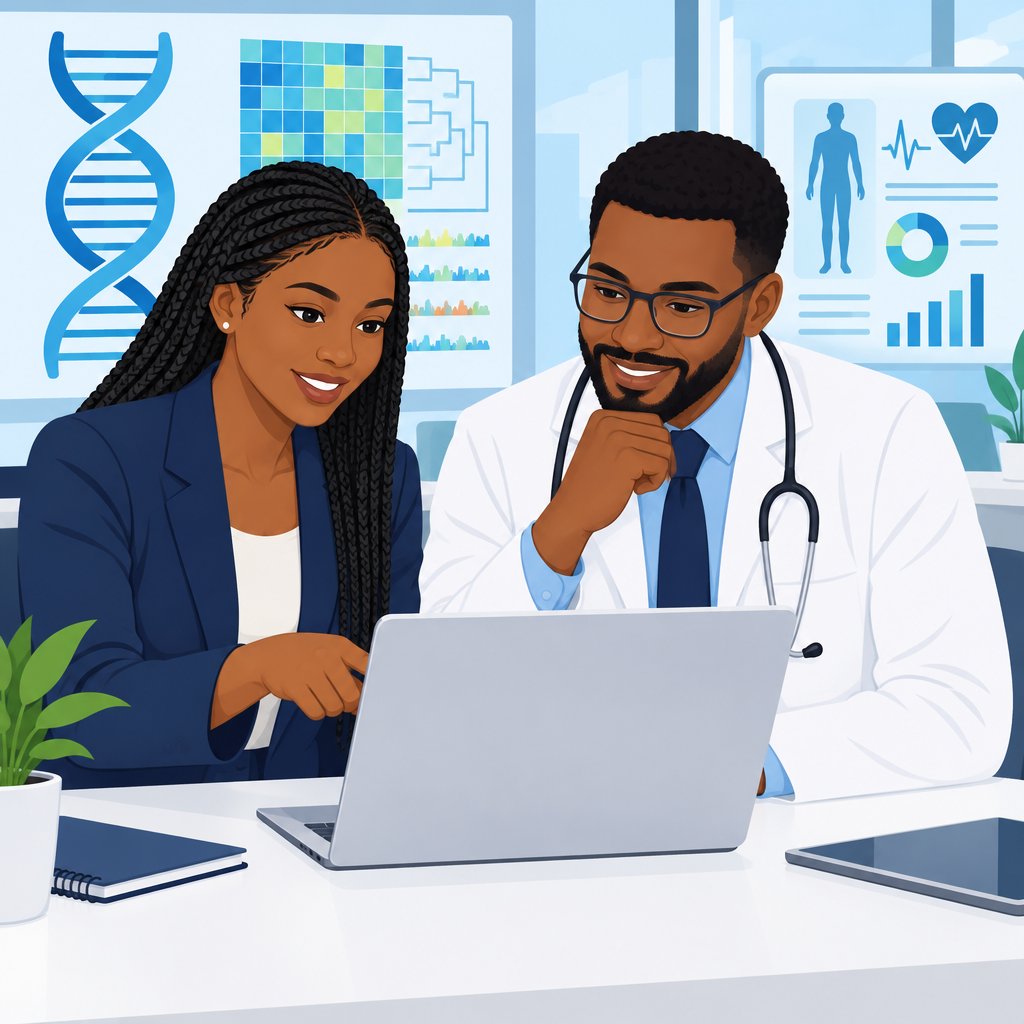
Bioinformatics in Drug Discovery and Development
- Bioinformatics tools can significantly expedite the drug discovery process.
- Additionally, bioinformatics enables researchers to analyze vast amounts of data efficiently.
- By processing genetic information, researchers can identify potential drug targets.
- Furthermore, bioinformatics helps researchers predict how drugs will interact with these targets.
- It also helps researchers understand disease mechanisms at the molecular level.
Successful Drug Development Initiatives in Nigeria Using Bioinformatics
- The Nigerian Institute of Medical Research has leveraged bioinformatics in drug discovery.
- Moreover, NIMR collaborated with international partners to develop antimalarial drugs using bioinformatics tools.
- This initiative successfully identified novel drug candidates for malaria treatment.
- Additionally, Nigerian pharmaceutical companies have used bioinformatics for drug development.
- These companies have effectively integrated bioinformatics into their research and development processes.
Learn More: Understanding Ecology: Basics and Importance in Nigeria
Nigeria faces several challenges when integrating bioinformatics into healthcare.
Transform Your Career with Expert Guidance
Get personalized mentorship consulting that’s tailored to your unique path. Our expert advice is actionable and exclusive.
Get StartedThese barriers can limit the technology’s benefits for patients, disease management, and research.
Addressing them requires coordinated investment, training, policy development, and collaboration.
Barriers to Implementing Bioinformatics Tools
Healthcare institutions often lack the infrastructure and resources needed to implement bioinformatics tools effectively.
Furthermore, inadequate training and expertise can restrict effective use of these technologies.
Resistance to change, high costs, privacy concerns, and inconsistent data also create additional obstacles.
- Lack of infrastructure and resources
- Inadequate training and expertise in bioinformatics
- Resistance to change and traditional practices
- High costs associated with implementing and maintaining bioinformatics tools
- Privacy and data security concerns
- Inconsistent data quality and standardization
Potential Solutions to Overcome Challenges
Nigeria can strengthen implementation by investing in infrastructure and developing local bioinformatics capacity.
Moreover, stakeholder engagement can encourage adoption and address concerns about changing traditional practices.
Government support, clear data policies, and international collaboration can provide additional expertise and resources.
- Investment in infrastructure and resources
- Training programs and capacity building in bioinformatics
- Engagement with stakeholders to promote adoption of bioinformatics
- Government funding and support for bioinformatics initiatives
- Development of data governance frameworks and policies
- Collaboration with international partners for expertise and resources
Addressing these challenges can help Nigeria expand bioinformatics use across healthcare and research.
Consequently, stronger implementation can support improved patient care, disease management, and research outcomes.
Learn More: Prominent Nigerian Ecology Conferences and Events
Bioinformatics Opportunities for Nigerian Healthcare
Bioinformatics strengthens diagnostic accuracy and treatment efficiency within Nigeria’s healthcare system.
It also helps healthcare professionals make informed decisions for better patient outcomes.
Consequently, these informed decisions can reduce mortality rates across various diseases.
As bioinformatics advances, Nigeria can improve public health systems and disease surveillance.
Additionally, the country can expand personalized medicine for its population.
Therefore, investment in infrastructure and professional training can address healthcare challenges more effectively.
Such investment can also support more efficient care delivery for citizens.
Continued adoption can provide Nigeria with substantial benefits across its healthcare system.
Additional Resources
Google search results for Impact of Bioinformatics on Healthcare in Nigeria Sciences
Bing search results for Impact of Bioinformatics on Healthcare in Nigeria Sciences


