




- Animal Science Departments in Nigeria play a vital role in agricultural development.
- These departments conduct research, provide education, and deliver animal-related extension services.
- Nigeria’s agricultural sector relies heavily on animal science for sustainability and growth.
- Academic reputation, research output, and industry partnerships guide the selection of leading departments.
History of Animal Science Departments in Nigeria
Animal science departments in Nigeria have a rich history.
They emerged during the early development of agricultural education.
Universities and institutions created them to address demand for trained animal husbandry professionals.
- Establishment and Evolution
These departments developed within universities and other educational institutions.
- Key Milestones and Developments
Over time, the departments experienced significant growth and development.
They introduced modern teaching methods, research facilities, and international collaborations.
Faculty and Staff Contributions
The leading animal science departments in Nigeria include highly qualified faculty and staff members.
These academics contribute expertise across nutrition, breeding, welfare, physiology, and production systems.
Their research activities and publications support innovation within Nigerian animal science.
Department of Animal Science, University X
- Dr. Adebayo Olatunji holds a PhD in Animal Nutrition and focuses on ruminant nutrition.
- Dr. Chioma Nwosu holds a DVM and specializes in animal breeding and genetics.
- Prof. Ibrahim Ahmed holds a veterinary doctorate and specializes in poultry management.
University X’s Department of Animal Science combines expertise across several important animal science disciplines.
Dr. Olatunji’s research has improved understanding of ruminant nutrition and livestock feed efficiency in Nigeria.
Dr. Nwosu’s breeding and genetics work has supported the development of breeds suited to Nigeria’s climate.
Meanwhile, Prof. Ahmed has helped promote efficient poultry management practices across the country.
Department of Animal Production, University Y
- Dr. Fatima Abubakar holds a PhD in Animal Physiology and studies stress physiology.
- Dr. Musa Ibrahim holds a DVM and specializes in animal welfare and ethics.
- Prof. Bello Aliyu holds a veterinary doctorate and specializes in livestock production systems.
University Y’s Department of Animal Production advances research across animal health, welfare, and production.
Dr. Abubakar’s stress physiology research examines how stress affects animal health and productivity.
Dr. Ibrahim’s work promotes ethical animal treatment within the agricultural sector.
Additionally, Prof. Aliyu’s expertise has influenced approaches to livestock production systems in Nigeria.
Department of Animal Nutrition, University Z
- Dr. Grace Eze holds a PhD in Animal Science and studies non-conventional feed sources.
- Dr. Yunusa Mohammed holds a DVM and specializes in nutritional immunology.
- Prof. Chinedu Okonkwo holds a veterinary doctorate and specializes in animal digestive physiology.
University Z’s Department of Animal Nutrition explores innovative approaches to animal feeding and health.
Dr. Eze’s research into non-conventional feed sources supports sustainable nutrition practices in Nigeria.
Dr. Mohammed’s work examines the relationship between nutrition and immune function in animals.
Finally, Prof. Okonkwo’s digestive physiology expertise supports improved digestion and nutrient absorption in livestock.
Research Expertise Across the Departments
These faculty profiles demonstrate the breadth of expertise within Nigeria’s animal science departments.
The academics address nutrition, genetics, poultry management, welfare, physiology, and livestock systems.
Together, their research and publications continue to shape animal science and agricultural progress in Nigeria.
Uncover the Details: Required Skills for Applied Math and Statistics Degrees
Research and Innovation in Animal Science
Research and innovation advance animal science departments across Nigeria.
These departments investigate practical challenges affecting livestock productivity, animal health, and sustainable agriculture.
Furthermore, their findings support improved methods throughout animal agriculture.
Research Focus Areas
Researchers examine nutrition, genetics, health, and production systems.
These focus areas address major challenges facing livestock production.
Additionally, they help departments develop more productive and sustainable agricultural practices.
- Animal nutrition and feed science
- Animal breeding and genetics
- Animal health and disease management
- Animal production systems
Innovative Projects and Initiatives
Leading departments undertake projects that apply research to animal agriculture.
They develop practical solutions using local resources and improved production methods.
Moreover, these initiatives encourage efficient and sustainable livestock management.
- Novel animal feed formulations using locally sourced ingredients
- Genetic improvement programs for higher livestock production
- Herbal remedies for animal disease prevention
- Sustainable systems using agroforestry and integrated crop-livestock methods
Impactful Research Outcomes
Research outcomes have strengthened animal science and supported Nigeria’s animal agriculture sector.
They have also improved feeding, breeding, disease management, and production practices.
Consequently, farmers can apply approaches that support productivity, animal welfare, and environmental conservation.
- Cost-effective and nutritionally balanced livestock feed formulations
- Genetically superior breeds with higher productivity and disease resistance
- Disease control measures that reduce mortality and improve animal welfare
- Sustainable agricultural practices that support conservation and long-term productivity
See Related Content: Innovations in Geology Research in Nigeria
Academic Programs and Curriculum
- Leading animal science departments in Nigeria offer diverse academic programs.
- These programs include undergraduate and postgraduate degrees in several animal science fields.
- The curriculum gives students a comprehensive understanding of animal science.
- Courses cover animal nutrition, physiology, genetics, health, and production management.
- Students can specialize in livestock management, poultry production, or animal genetics.
- These specializations help students focus on specific areas of animal science.
- Additionally, postgraduate programs often include research on specific animal science topics.
- Moreover, departments provide fieldwork, internships, and practical training for hands-on experience.
You Might Also Like: Future Trends in Applied Chemistry in Nigeria
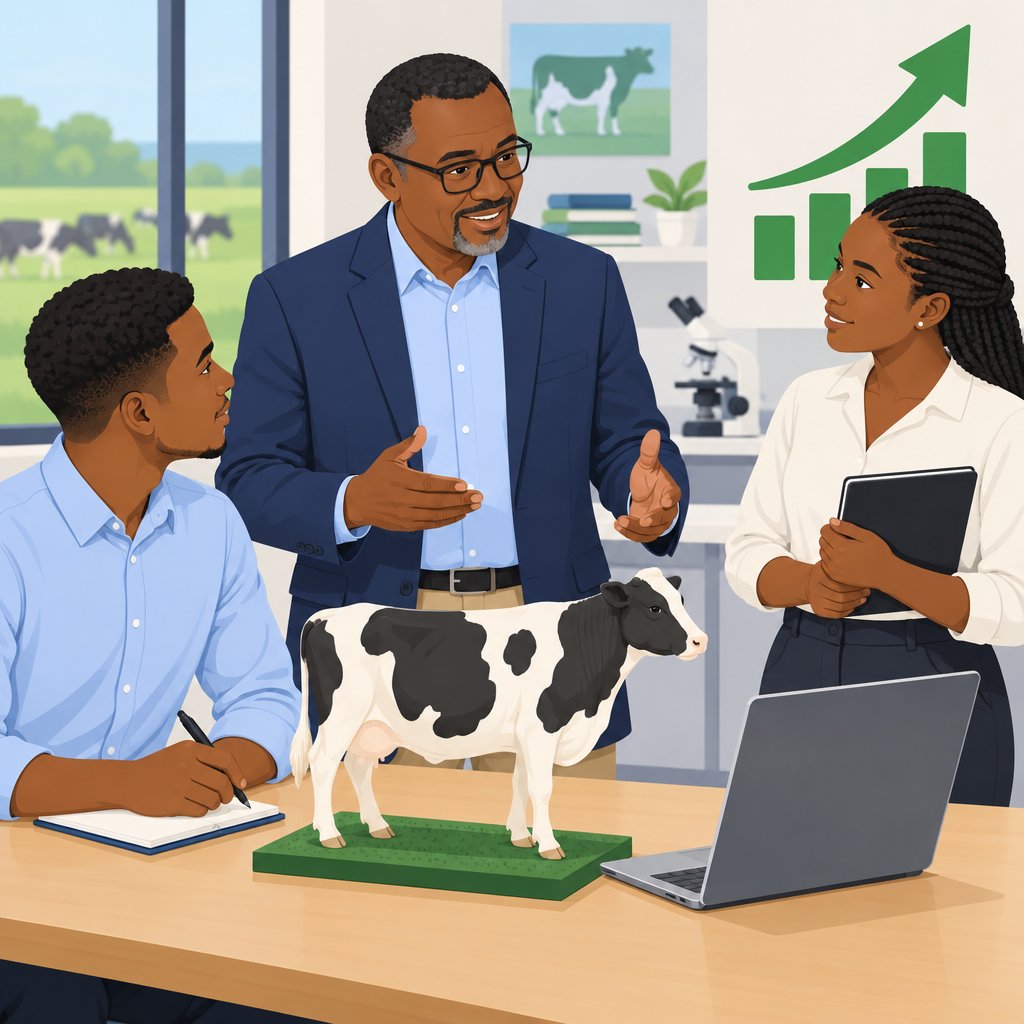
Partnerships with Industry and Research Stakeholders
Leading animal science departments in Nigeria collaborate with institutions, research organizations, and industry stakeholders.
These partnerships provide resources, expertise, and funding for research and educational programs.
The Nigerian Veterinary Medical Association (NVMA) connects students and faculty with practicing veterinarians.
Through these opportunities, participants learn about current industry trends.
Transform Your Career with Expert Guidance
Get personalized mentorship consulting that’s tailored to your unique path. Our expert advice is actionable and exclusive.
Get StartedInternational Collaboration and Research Funding
In addition, international collaborations strengthen the departments’ research capabilities.
One notable partnership connects the University of Ibadan’s Department of Animal Science with the University of California, Davis.
It supports joint research projects, student and faculty exchanges, and shared resources.
Consequently, participants gain a global perspective on animal science.
International organizations, including the Food and Agriculture Organization (FAO) and World Bank, also provide funding opportunities.
These funds support research into food security, animal welfare, and sustainable agriculture.
By combining partnerships and funding, departments advance innovation and contribute meaningfully to animal science.
Find Out More: Case Studies of Geophysical Surveys in Nigeria
Facilities and Resources
- Leading animal science departments in Nigeria provide state-of-the-art facilities and resources for students and researchers.
- Moreover, these departments maintain modern laboratories with advanced technology for experiments and research.
- Research farms and experimental stations give students and faculty members opportunities for hands-on learning and data collection.
- Additionally, departmental infrastructure supports teaching and research activities effectively.
- Specialized equipment, including DNA sequencers, spectrophotometers, and incubators, supports research projects.
- Computer laboratories provide high-speed internet access for data analysis and scientific simulations.
- Furthermore, animal housing facilities accommodate various species and support research across different areas.
- Veterinary clinics provide campus animals with medical care and strengthen animal health research.
- Field research facilities allow students and researchers to study animals within their natural habitats.
- Finally, greenhouses and climate-controlled rooms support environmental studies and plant-animal interaction research.
Continued Engagement with Animal Science Departments
Leading animal science departments can strengthen agricultural development in Nigeria through continued academic and research engagement.
Moreover, these departments develop sustainable approaches for livestock production, animal health, and nutrition.
Their work improves efficiency and productivity across Nigeria’s agricultural industry.
Therefore, continued support can help these departments advance practical solutions for the agricultural sector.
Readers can explore the academic and research opportunities that these departments offer.
By engaging with these institutions, individuals can expand their knowledge and expertise in animal science.
Such collaboration can support agricultural modernization, economic growth, and population well-being.
Additional Resources
Google search results for Profiles of Leading Animal Science Departments in Nigeria Sciences
Bing search results for Profiles of Leading Animal Science Departments in Nigeria Sciences


