



Introduction
- Marine biology studies marine organisms and their interactions with the environment.
- Additionally, it helps researchers understand and preserve marine ecosystems in Nigeria.
- Furthermore, Nigeria’s rich coastal resources support the field’s rapid expansion.
Overview of Marine Biology
Marine biology is the scientific study of life in the ocean and other saltwater environments.
It includes disciplines such as marine ecology, marine conservation, marine zoology, and more.
Additionally, the field helps scientists understand and protect marine ecosystems.
Areas of Study Within Marine Biology
These areas examine marine ecosystems, organisms, microorganisms, and practical applications.
They also address conservation, animal behavior, physiology, and evolution.
Together, these disciplines expand scientific knowledge of marine life and its environments.
- Marine ecology focuses on interactions among organisms and their marine environment.
- Marine conservation preserves and protects marine species and habitats.
- Marine zoology studies marine animals, including their behavior, physiology, and evolution.
- Marine microbiology examines microorganisms and their roles in marine ecosystem processes.
- Marine biotechnology uses marine organisms to develop products and technologies for various industries.
Marine Biology and Environmental Conservation
Marine biology helps scientists understand complex interactions within marine ecosystems.
It also reveals how human activities affect marine life.
Therefore, marine biologists develop resource management strategies and promote ocean protection.
Educational Requirements
A marine biology career in Nigeria requires formal study and practical preparation.
Academic training develops knowledge of marine science, biology, and related environmental subjects.
Research-focused roles often require advanced postgraduate qualifications.
- A bachelor’s degree in Marine Biology or a related field is required.
- Relevant courses include Marine Ecology, Oceanography, Marine Conservation, and Marine Biology.
- SCUBA diving certification and boat handling experience provide beneficial practical skills.
- Advanced degrees, such as master’s or doctoral degrees, often support research positions.
Academic Qualifications
Individuals pursuing marine biology in Nigeria must meet specific academic qualifications.
A bachelor’s degree in Marine Biology or a related field establishes essential scientific knowledge.
Some Nigerian universities offer Marine Biology programs directly.
Other institutions provide Biology or Environmental Science programs with marine ecosystem focuses.
Students should choose programs that match their career goals and interests.
Relevant Courses and Programs
Nigeria offers several courses and programs for aspiring marine biology professionals.
Marine Ecology examines relationships among organisms and their aquatic surroundings.
Oceanography explores the ocean’s physical and chemical properties.
Marine Conservation focuses on protecting aquatic environments and biological resources.
Marine Biology covers organisms, ecosystems, and research approaches.
These subjects strengthen understanding and support the development of professional skills.
Specialized Skills and Certifications
Academic qualifications alone may not prepare candidates for every marine biology responsibility.
Fieldwork and research often require additional practical abilities.
SCUBA certification supports underwater activities associated with marine studies.
Boat handling experience helps professionals operate effectively during field assignments.
Data analysis software proficiency can strengthen research and reporting tasks.
First aid, marine safety, and research methods certifications can enhance job prospects.
These credentials also demonstrate commitment to continuing professional development.
Explore Further: Key Skills for Success in Applied Zoology in Nigeria
Career Paths in Marine Biology
Marine biology offers diverse career paths for people interested in marine life and environmental protection.
Professionals can pursue research, conservation, education, fieldwork, or policy-related responsibilities.
These roles support efforts to understand and protect marine ecosystems in Nigeria.
- Marine biologists study marine organisms and their interactions with the environment.
- Marine conservationists protect marine ecosystems and species from pollution, overfishing, and climate change.
- Marine ecologists examine relationships between organisms and their marine environments.
- Marine scientists research biodiversity, oceanography, marine geology, and other aspects of marine life.
- Marine educators teach communities about marine conservation, biology, and ecology.
Marine biologists may specialize in marine mammalogy, fisheries biology, or marine microbiology.
Meanwhile, conservationists may contribute to advocacy, policy-making, and practical fieldwork.
Marine ecologists can investigate nutrient cycling, species interactions, and habitat management.
Marine scientists may work in academic institutions, government agencies, or nonprofit organizations.
Marine educators may work in aquariums, museums, educational institutions, or outreach programs.
As awareness of marine issues increases, these careers may offer expanding opportunities in Nigeria.
Transform Your Career with Expert Guidance
Get personalized mentorship consulting that’s tailored to your unique path. Our expert advice is actionable and exclusive.
Get StartedFurthermore, increased research funding can support professional growth and advancement.
Government and nonprofit conservation investments can also create additional opportunities in this field.
Professionals can build rewarding careers through research, conservation, education, fieldwork, or policy-making.
Gain More Insights: How to Apply for Geophysics Programs in Nigeria
Job Prospects in Nigeria
Marine biologists can find growing opportunities across Nigeria’s marine resource sector.
As marine resources develop, organizations need professionals with relevant scientific expertise.
These professionals can support marine conservation, research, and sustainable resource management.
Overview of the Job Market
Nigeria’s marine biology job market continues to expand steadily.
Employers seek skilled professionals who can support the responsible management of marine resources.
Because Nigeria has an Atlantic coastline, marine experts help protect important marine ecosystems.
- The job market for marine biologists continues to expand.
- Employers need professionals who understand sustainable marine resource management.
- Marine biologists can help protect ecosystems along Nigeria’s Atlantic coastline.
Demand for Marine Biology Professionals
Government agencies employ marine biologists in regulatory and resource management roles.
Research institutions also need specialists who can investigate marine environments and produce scientific knowledge.
Meanwhile, environmental consultants assess human impacts and develop ways to reduce environmental damage.
- NIMASA hires marine biologists for regulatory roles.
- NIOMR offers research opportunities for marine biology professionals.
- Environmental consulting firms employ specialists to assess and reduce marine environmental impacts.
Key Industries and Organizations
Several industries and organizations create opportunities for marine biologists in Nigeria.
The oil and gas sector uses their expertise to evaluate offshore environmental effects.
Additionally, conservation groups and aquaculture companies rely on marine biology knowledge.
- Oil and gas companies employ marine biologists for offshore environmental assessments.
- The Nigerian Conservation Foundation hires professionals for marine conservation projects.
- Aquaculture companies use marine biology expertise to manage fish farms sustainably.
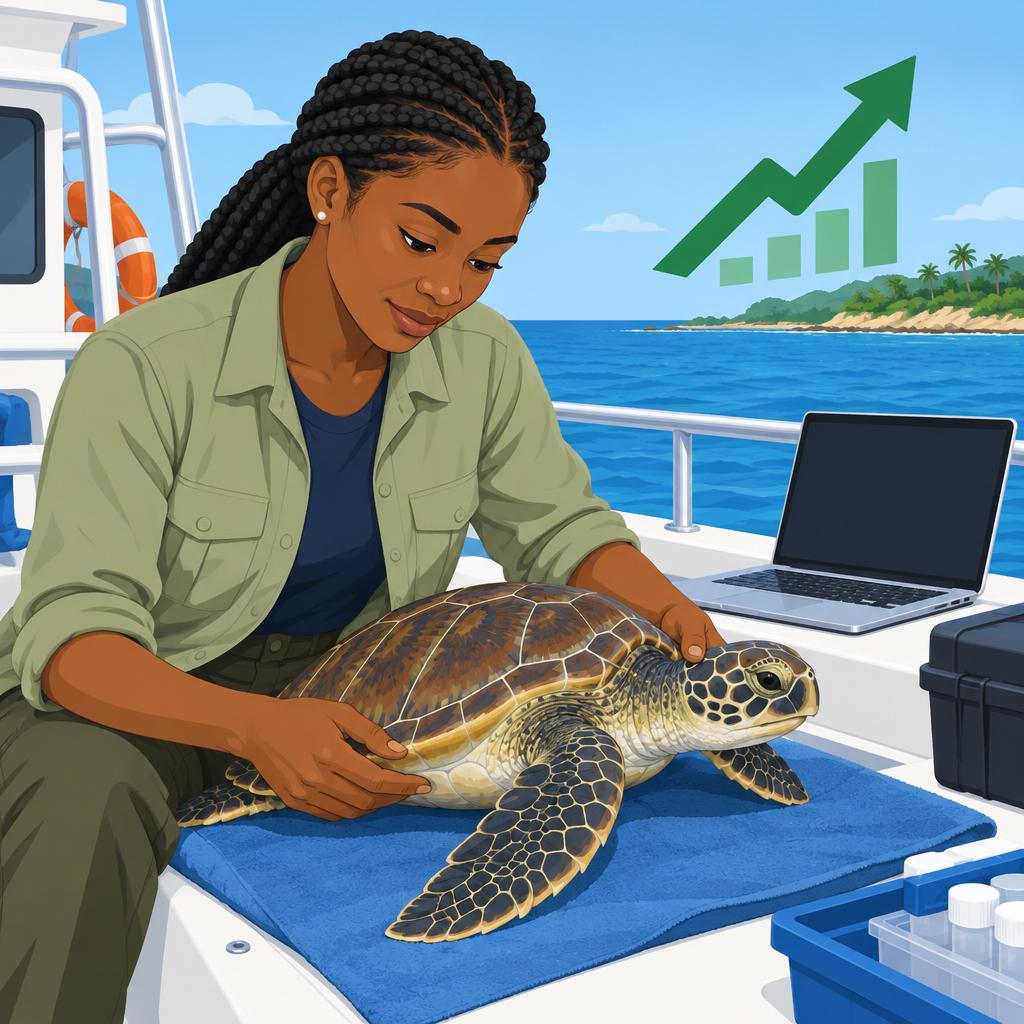
Marine Biology Opportunities in Nigeria
Marine biologists can pursue meaningful work in government, research, consulting, and industry.
These roles allow professionals to support marine conservation and responsible resource use.
Therefore, Nigeria offers diverse prospects for people interested in marine biology careers.
You Might Also Like: Top Nigerian Universities for Applied Biochemistry
Salary and Benefits for Marine Biologists
Marine biologists in Nigeria can earn competitive salaries based on their experience and qualifications.
Entry-level positions generally pay between NGN 100,000 and NGN 200,000 per month.
More experienced professionals with advanced degrees can earn NGN 500,000 or more monthly.
Beyond salary, employers may provide additional benefits and workplace incentives.
For example, some organizations offer healthcare benefits, retirement plans, and paid time off.
These benefits can support employees’ well-being and financial stability.
Furthermore, marine biologists can pursue career advancement within their organizations.
Professionals who demonstrate strong skills and dedication may progress into higher positions.
Consequently, advancement can bring greater responsibilities, higher pay, and professional growth.
Additionally, some organizations reward exceptional performance with financial bonuses.
These bonuses recognize employees who exceed expectations in their roles.
Key Benefits Available to Marine Biologists
- Competitive salaries with opportunities for growth
- Healthcare benefits, retirement plans, and paid time off
- Career advancement within organizations
- Performance-based bonuses for exceptional work
You Might Also Like: Career Opportunities for Applied Biology Graduates
Potential Challenges for Marine Biologists in Nigeria
- Limited funding restricts research and conservation efforts.
- Additionally, Nigeria lacks specialized marine biology training programs.
- Pollution and habitat degradation continue to affect marine ecosystems.
- Furthermore, limited public awareness reduces interest in marine conservation issues.
- Inadequate infrastructure and equipment make fieldwork and research more difficult.
Strategies for Addressing Marine Biology Challenges
- Marine biologists can seek international collaborations for funding and research opportunities.
- Universities can establish dedicated marine biology programs.
- Meanwhile, stricter environmental regulations can help address pollution.
- Outreach programs can educate the public about marine conservation.
- Finally, investments in research facilities and state-of-the-art equipment can strengthen fieldwork.
Opportunities for Growth in Marine Biology
- The expanding aquaculture industry can create additional job opportunities.
- Moreover, research institutions and NGOs increasingly need marine biologists.
- Marine biodiversity can support potential eco-tourism initiatives.
- Marine biologists can collaborate with government agencies on policy development.
- Through research and advocacy, professionals can contribute to global marine conservation efforts.
Internship and Training Programs
Internships give aspiring marine biologists practical experience.
Students apply theoretical knowledge in real-world settings.
Consequently, they develop skills for future marine biology careers.
Importance of Hands-on Experience
Interns work alongside experienced marine biology professionals.
They can observe research projects, data collection, and fieldwork.
This practical exposure clarifies daily responsibilities and strengthens essential skills.
Furthermore, internships help students build professional networks within marine biology.
These connections may support mentorship, employment, or research collaboration opportunities.
Marine Biology Training Programs in Nigeria
Several Nigerian organizations offer training programs and workshops related to marine biology.
These programs address marine conservation, biodiversity, underwater research techniques, and data analysis.
Participants can gain practical knowledge about marine ecosystems and conservation challenges.
- Oceanography and Marine Science Institute offers marine biology, oceanography, and environmental science training.
- Its workshops address marine ecology and conservation through practical learning activities.
- Nigerian Institute for Oceanography and Marine Research provides training in marine biology and related fields.
- Its workshops cover fisheries management, aquaculture, and marine biodiversity.
Applying for Internships and Training Opportunities
Interested individuals should check organizational websites for programs and application deadlines.
Many applications require a CV, a cover letter, academic transcripts, or references.
Applicants should explain their interest in marine biology within their cover letters.
Students can also contact marine biology professors and researchers about possible internships.
Moreover, professional networking may reveal opportunities that organizations do not advertise publicly.
These experiences can provide practical skills, mentorship, and valuable professional connections.
Professional Roles in Marine Biology
Marine biology offers diverse career opportunities in Nigeria, including research, conservation, and education.
Professionals can work in research institutes, universities, environmental organizations, or government agencies.
Marine biologists study marine life, ecosystems, and biodiversity to understand and protect oceans.
They may specialize in marine conservation, fisheries management, or marine mammal research.
Successful professionals need research abilities, analytical skills, and a strong understanding of marine ecosystems.
They may conduct fieldwork, laboratory experiments, data analysis, or policy development to address environmental issues.
Marine Biology’s Value for Nigeria’s Future
Marine biology continues to provide meaningful opportunities for professionals in Nigeria.
The field helps people understand and preserve marine resources for future generations.
People passionate about marine life can explore its varied professional opportunities.
Additional Resources
Google search results for Career Opportunities in Marine Biology in Nigeria Sciences
Bing search results for Career Opportunities in Marine Biology in Nigeria Sciences


