




History of Geology in Nigeria
Nigeria’s geological discipline has a rich and diverse history.
Understanding this history helps contextualize the current state of geology in Nigeria.
Moreover, studying this subject reveals how geological knowledge and practices evolved within the country.
It also highlights important milestones and contributions to geological research.
Consequently, geological research has shaped understanding of Nigeria’s landscape and resources.
Pre-colonial Geological Knowledge in Nigeria
In the pre-colonial era, indigenous geological knowledge shaped how communities understood Nigeria’s rocks and minerals.
Early inhabitants recognized geological resources in their surroundings and used them for practical purposes.
Furthermore, their practices revealed a close relationship between communities and the geological environment.
Indigenous Knowledge of Rocks and Minerals
Indigenous communities identified different rocks and minerals through careful observation.
They examined appearance, texture, and usefulness when distinguishing geological materials.
Moreover, communities passed this knowledge through generations, strengthening their understanding of local geology.
- Indigenous tribes maintained rich traditions for identifying various rocks and minerals.
- They classified rocks according to appearance, texture, and practical utility.
- Generations preserved this knowledge through continuous teaching and community experience.
Uses of Geological Resources by Early Inhabitants
Early inhabitants used geological resources to support daily life and cultural expression.
They shaped these materials into tools, constructed structures, and produced artistic objects.
In addition, their practices reflected resourcefulness and respect for the earth’s materials.
- Early inhabitants used geological materials to craft tools and build structures.
- They also used these resources to create artistic objects and cultural expressions.
- Their resource use demonstrated practical knowledge of the natural wealth around them.
These practices demonstrated the enduring connection between Nigerian communities and their geological surroundings.
Colonial Era
During the colonial era, geology began developing as a formal discipline in Nigeria.
Colonialists recognized geological knowledge as important for mineral exploration and infrastructure development.
Therefore, colonial geologists investigated Nigeria’s distinctive geological features and resources.
- Colonialists explored and mapped geological features.
- Colonial authorities established geological surveys in Nigeria.
Establishment of Geological Surveys
As demand for systematic geological research increased, colonial authorities established geological surveys.
These surveys examined Nigeria’s geological composition through organized and comprehensive investigations.
In the early twentieth century, colonial authorities established Nigeria’s first geological survey.
The survey focused primarily on mapping mineral resources and identifying areas for potential exploitation.
Consequently, organized geological research began supporting mineral exploration and related development policies.
These surveys supplied data that informed mineral exploration, land-use planning, and environmental conservation.
They also established foundations for geology’s later development as an important scientific and economic field.
Discover More: Funding Opportunities for Marine Biology Research
Post-Independence Geology in Nigeria
After independence, Nigerian universities accelerated the development of geology as a scientific discipline.
They expanded academic programs, research activities, and institutional partnerships within geology.
Meanwhile, Nigerian geologists contributed nationally and internationally through professional practice, research, and public service.
University Development of Geology
Universities strengthened geology education by creating departments and introducing degree programs.
They also designed curricula that reflected international standards and indigenous geological knowledge.
Additionally, research programs addressed mineral exploration, environmental geology, and related national needs.
- Universities established geology departments to provide specialized degree programs.
- Academic leaders developed curricula that combined international standards with indigenous geological practices.
- Researchers investigated mineral exploration and environmental geology.
- Institutions invested in laboratories, equipment, and facilities for geology education.
- Universities collaborated with international institutions to exchange knowledge and strengthen research.
Contributions of Nigerian Geologists
Nigerian geologists applied their expertise to resource management, environmental protection, and geological investigation.
They supported national development by studying geological formations and advising relevant sectors.
Furthermore, their academic and professional work strengthened training, policy development, and geological practice.
- Geologists supported natural resource management, especially within the oil and gas sector.
- They studied land degradation and pollution to support environmental protection.
- They conducted geological mapping to clarify formations and resource distribution.
- They trained emerging geologists through mentorship and academic programs.
- They advised policies concerning geology, mining, and environmental conservation.
These university initiatives created stronger foundations for geological education and research.
Continued support and investment can advance Nigerian geology and increase its global recognition.
Uncover the Details: Online Courses for Agricultural Economics in Nigeria
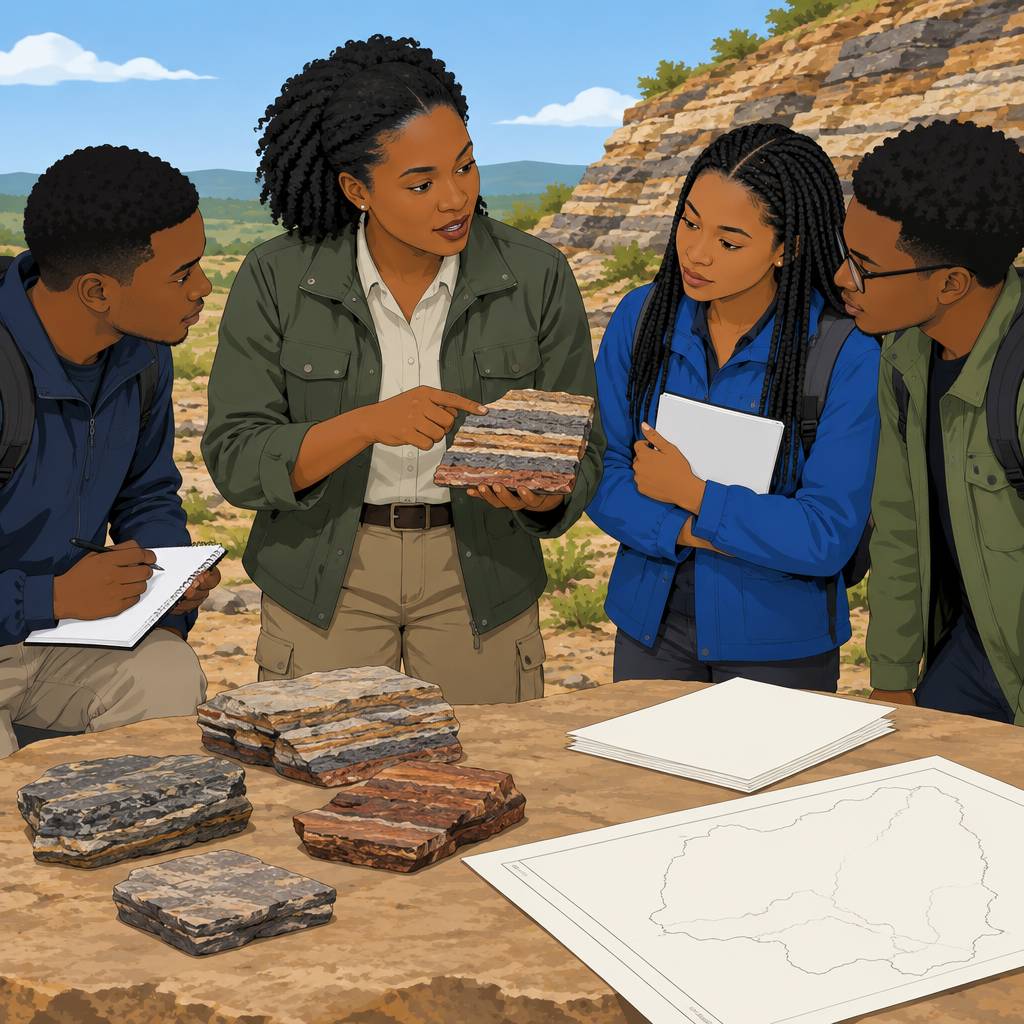
Funding Constraints for Geological Research
Geologists in Nigeria often struggle with inadequate funding for research projects and exploration activities.
Limited financial support can severely restrict the scope of their work.
Transform Your Career with Expert Guidance
Get personalized mentorship consulting that’s tailored to your unique path. Our expert advice is actionable and exclusive.
Get StartedConsequently, funding shortages can reduce the effectiveness of geological research and exploration.
Limited Access to Modern Equipment
Geologists in Nigeria also face shortages of modern equipment and technology.
These resources help them conduct accurate and efficient geological studies.
Without them, geologists may struggle to obtain precise data and make informed decisions.
Nigerian geologists remain dedicated professionals committed to advancing geology.
However, limited funding and restricted access to modern equipment continue to challenge their work.
Addressing these issues can support the continued growth and success of geological research and exploration.
Uncover the Details: Profiles of Leading Animal Science Departments in Nigeria
Current Status of Geology in Nigeria
Geology has grown significantly in Nigeria over the years.
Nigeria’s abundant mineral resources make geology important for exploration, mining, and resource management.
Geologists support responsible resource development through research, exploration, and environmental management.
Growth of the Mining Industry in Nigeria
- Recently, geologists have helped identify and extract mineral deposits across Nigeria.
- Consequently, mining companies have expanded and created opportunities for geologists and other professionals.
- Geologists promote sustainable mining practices that reduce environmental impacts and improve resource use.
- Meanwhile, government policies support transparency, accountability, and sustainable development within the mining sector.
Research and Exploration Opportunities for Geologists
- Nigeria’s diverse geological landscape provides geologists with many research and exploration opportunities.
- Researchers can investigate mineral exploration, petroleum geology, environmental geology, and geotechnical engineering.
- Rich mineral deposits support mapping and exploration projects that identify additional mineral resources.
- Furthermore, international organizations and universities provide collaborative research and professional training opportunities.
Discover More: Required Skills for Applied Math and Statistics Degrees
The Strategic Value of Geology in Nigeria
Nigeria’s geological field has developed from early exploration into a modern discipline.
This development reflects changing approaches to geological surveys, university education, research, and resource management.
Together, these advances strengthen knowledge of the country’s geological formations and resources.
Geological knowledge supports economic development by guiding decisions about natural resources.
It also helps Nigeria manage resources responsibly and protect environmental sustainability.
Therefore, continued investment in research, education, and infrastructure remains essential.
Such investment can help Nigeria apply geological knowledge to growth and innovation.
Furthermore, international collaboration can expand expertise and strengthen research capacity.
These efforts can help geology serve national development while supporting responsible resource management.
Nigeria should continue promoting geology as an essential field for a sustainable future.
Additional Resources
Google search results for The History of Geology as a Discipline in Nigeria Sciences
Bing search results for The History of Geology as a Discipline in Nigeria Sciences


