




Boat Building in Nigeria
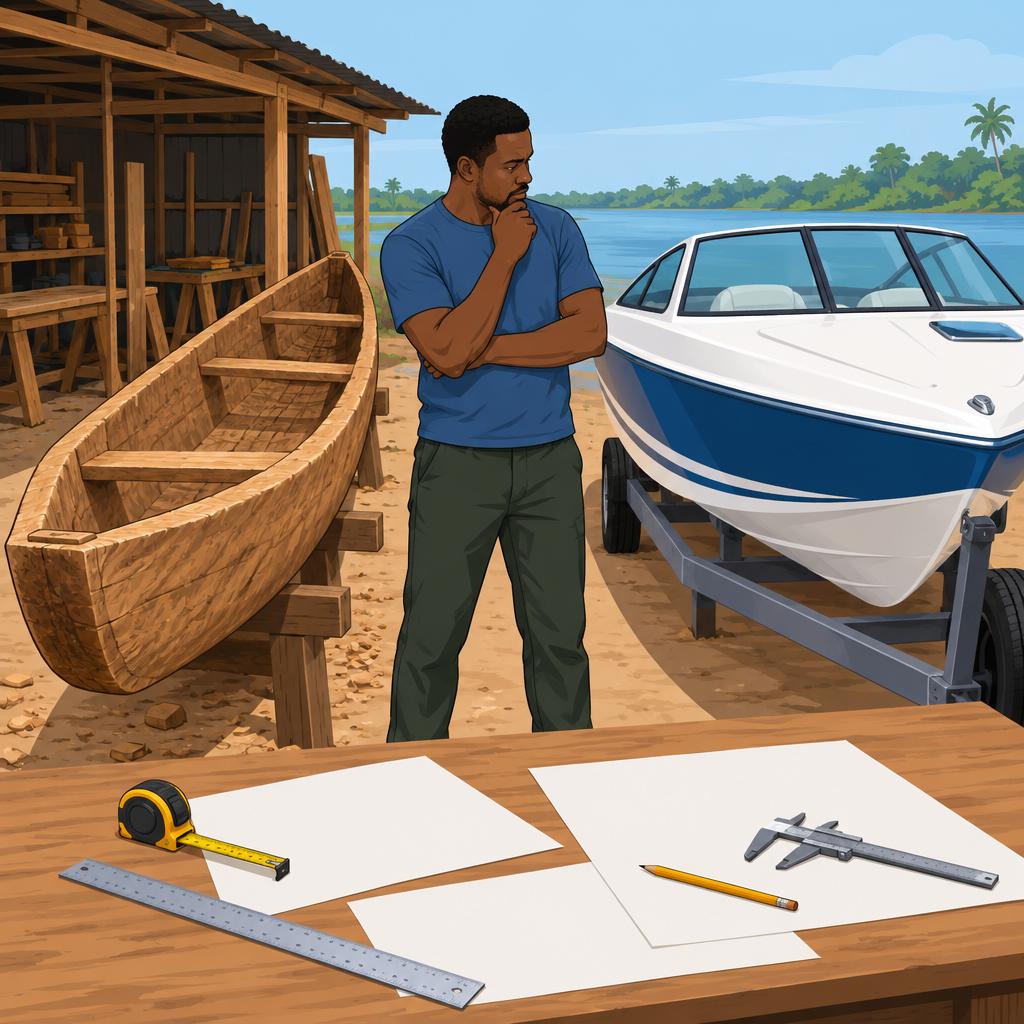
Boat building in Nigeria has a rich history.
The craft holds significant cultural and economic importance in the country.
Traditional and modern methods shape this national boat-building practice.
Traditional Boat Building
Traditional Nigerian boat builders use locally sourced wood and palm fronds.
Skilled craftsmen apply techniques passed through generations.
These boats reflect the heritage and cultural practices of Nigerian communities.
The craft embodies tradition and identity.
Modern Boat Building
Modern Nigerian boat building uses advanced technologies and materials.
Builders use fiberglass and aluminum in these boats.
Mass production incorporates innovative design and construction methods.
Modern boats offer improved performance and durability.
Heritage and Innovation in Nigeria’s Maritime Industry
Traditional boats hold sentimental value for many communities.
Meanwhile, modern boats support efficiency and productivity for globalized market demands.
Both approaches cater to diverse needs and preferences.
The choice often depends on cost, time, and intended use.
Historical and Cultural Importance
Nigeria has practiced traditional boat building for centuries.
Water-based communities rely on handmade boats for transportation.
The craft also supports cultural identity and local economic activity.
Handcrafted Boat Construction Methods
Craftsmen commonly build dugout canoes from hollowed tree trunks.
They select mahogany, iroko, or obeche trees for suitable size and shape.
Using sharp tools, skilled builders carve each trunk into a sleek, sturdy vessel.
They apply oil or paint to protect the wood from water damage.
Passing Boat-Building Skills Through Generations
Communities pass boat-building knowledge from experienced masters to young apprentices.
Apprentices learn through oral instruction and hands-on practice.
This master-apprentice relationship preserves intricate techniques for future generations.
Regions Sustaining Traditional Boat Building
Modernization and industrialization have reduced traditional boat building in many Nigerian areas.
However, communities along the Niger River, Benue River, and coastal areas continue these practices.
Local builders create boats for fishing, trading, transportation, and everyday activities.
This work maintains cultural heritage and supports community livelihoods.
Modern Boat Building Techniques and Materials in Nigeria
Modern boat building techniques and materials have gradually entered Nigeria over the past few decades.
Globalization and technological advances have exposed Nigerian boat builders to new methods and materials.
These developments have changed construction practices across the industry.
Technological Advancements in Nigeria’s Boat Building Industry
Technology has significantly influenced Nigeria’s boat building industry.
It enables faster production, higher-quality vessels, and improved safety standards.
Additionally, computer-aided design software supports complex and efficient boat designs.
These designs can produce boats that are faster, more stable, and more durable.
Benefits of Modern Boat Building in Nigeria
These methods provide several practical benefits for Nigerian boat builders and users.
They improve vessel performance while reducing maintenance demands.
They also support safer and more environmentally conscious operations.
- Modern materials, including fiberglass and aluminum, resist corrosion and wear better than traditional wood.
- These materials extend vessel lifespans and reduce maintenance requirements.
- Modern techniques shorten construction times and improve manufacturing precision.
- Faster production can increase boat builders’ productivity and profitability.
- Modern boats follow higher safety standards and include flotation devices, fire-resistant materials, and advanced navigation systems.
- These features provide better protection for passengers and crew during emergencies.
- Recyclable materials and sustainable practices can reduce the industry’s environmental impact.
- These approaches also help preserve Nigeria’s natural waterways.
As technology advances, Nigerian boat builders can further develop their craft.
Transform Your Career with Expert Guidance
Get personalized mentorship consulting that’s tailored to your unique path. Our expert advice is actionable and exclusive.
Get StartedThey may also strengthen their position in the global market.
Discover More: Interview Tips for Applied Math Graduates
Traditional boat builders in Nigeria face challenges that threaten their craft and livelihoods.
- Limited access to modern tools and materials reduces construction efficiency and boat durability.
- Furthermore, globalization and changing market demands make it difficult for builders to adapt their practices.
- Meanwhile, preserving traditional techniques remains important because these skills carry cultural significance.
Therefore, stakeholders must support traditional boat building in Nigeria.
Recognizing its value can help preserve this heritage for future generations.
Uncover the Details: Bioinformatics Tools and Resources for Nigerian Researchers
Cultural Benefits of Traditional Boat Building
Traditional boat building in Nigeria carries cultural value beyond transportation.
Handcrafted boats reflect local traditions, skills, and community heritage.
Moreover, the craft showcases the knowledge and craftsmanship of local communities.
Preserving Traditional Knowledge and Identity
Builders preserve traditional knowledge by continuing to use age-old construction techniques.
These methods pass between generations and protect expertise from disappearing.
Consequently, traditional boat building connects present communities with their roots.
Sustainable Boat Building Practices
Traditional boat building can support sustainability through local material use.
Wood from renewable forests reduces impacts linked to manufacturing and transportation.
Additionally, manual construction requires little machinery and reduces energy consumption.
It therefore offers an eco-friendly approach that respects regional natural resources.
Discover More: Scholarships for Microbiology Students in Nigeria
Successful Traditional and Modern Boat Building Projects
In the Niger Delta, Ijaw communities have used traditional methods to build dugout canoes for centuries.
Artisans carve each canoe from one tree trunk, often using mahogany or iroko hardwood.
They use simple tools, including adzes and machetes, to hollow and shape the log.
The finished canoe navigates the region’s winding creeks and rivers with ease.
- Traditional dugout canoe project
- Modern catamaran and ferry project
Meanwhile, boat building companies in Lagos construct high-speed catamarans and passenger ferries.
These modern vessels use lightweight materials, such as fiberglass and carbon fiber.
Consequently, they achieve greater speed and improved fuel efficiency.
Advanced design software and precise manufacturing techniques support safety and reliability.
Comparing Traditional and Modern Boat Building Methods
Traditional boat building remains accessible because artisans can use simple tools and local materials.
These methods also preserve local craftsmanship and support community-based skills.
Natural finishes and locally sourced materials can reduce environmental impact.
- Strengths of traditional methods
- Weaknesses of traditional methods
- Strengths of modern methods
- Weaknesses of modern methods
However, traditional construction requires substantial labor and can take considerable time.
Traditional boats may also lack modern amenities and advanced safety features.
Modern methods improve construction efficiency, precision, and speed.
Lightweight materials and advanced technologies can produce faster and more fuel-efficient boats.
Modern vessels often include additional amenities and safety features for commercial operators and tourists.
Nevertheless, imported materials and expertise can raise construction costs.
Specialized equipment and skills may also restrict access for smaller artisanal builders.
Distinctive Features of Traditional and Modern Boats
Traditional Nigerian boats often display carvings and decorations linked to community beliefs and customs.
Builders design these vessels for dependable performance on demanding waterways.
Their straightforward construction gives them a timeless appearance and distinctive craftsmanship.
- Traditional boat features
- Modern boat features
Modern boats prioritize speed, efficiency, passenger comfort, and streamlined performance.
Designers use sleek lines and advanced technology to improve handling and comfort.
Some modern vessels provide air conditioning, Wi-Fi, and advanced safety features.
These amenities serve commercial operators and luxury travelers.
Lightweight materials and streamlined designs help modern boats navigate crowded waterways and open seas.
Discover More: Impact of Technology on Nigerian Ship Building
Balancing Heritage and Innovation in Nigerian Boat Building
This discussion highlights differences between traditional and modern boat building practices in Nigeria.
Traditional methods pass from one generation to another and carry important cultural meaning.
Meanwhile, modern approaches can improve efficiency and safety.
Therefore, preserving traditional techniques remains important for sustaining this heritage.
At the same time, builders can integrate modern innovations to strengthen their work.
Such balance can sustain Nigerian boat building traditions over time.
Readers can appreciate Nigeria’s diverse boat building heritage through both approaches.
These practices demonstrate the skill and craftsmanship involved in boat building.
Additional Resources
Google search results for Traditional vs. Modern Boat Building in Nigeria Sciences
Bing search results for Traditional vs. Modern Boat Building in Nigeria Sciences


