




Technology and Nigerian Shipbuilding
Nigeria has an emerging shipbuilding industry serving domestic and international markets.
The industry has grown significantly in recent years through technological advancements.
Technology has revolutionized industries worldwide by increasing efficiency and productivity.
In shipbuilding, technology enables faster construction and improves safety standards.
It also strengthens design capabilities across the industry.
Consequently, technology has transformed Nigerian shipbuilding through innovative and cost-effective methods.
Furthermore, it supports more sustainable practices within the sector.
Historical Perspective of Nigerian Shipbuilding
Nigerian shipbuilding reflects a long maritime tradition and changing national economic needs.
Indigenous communities built small watercraft for transportation and trade along riverbanks and coastal areas.
Over time, rising trade and offshore oil activities increased demand for larger, more advanced vessels.
- Evolution of shipbuilding in Nigeria
- Historical challenges affecting the industry
- Technology’s role in addressing industry challenges
Evolution of Shipbuilding in Nigeria
Indigenous communities constructed small boats using locally available wood, fiber, and sometimes animal hides.
These watercraft supported movement, commerce, and community connections across inland waterways and coastal regions.
As international trade expanded, Nigerian shipbuilders faced growing expectations for larger and more sophisticated vessels.
The discovery of offshore oil reserves increased demand for vessels and offshore structures supporting oil and gas operations.
Historical Challenges Facing the Industry
Despite its potential, the industry struggled to achieve consistent growth and global competitiveness.
Shipyards often lacked the equipment and facilities needed to construct complex vessels efficiently.
Limited investment and technical expertise further restricted industrial expansion and modernization.
- Shipbuilders lacked advanced technological infrastructure for large-scale vessel construction.
- Shortages of naval architects, marine engineers, and skilled welders limited production capabilities.
- Insufficient funding prevented shipyards from modernizing and expanding their facilities.
- Regulatory requirements and bureaucratic procedures caused delays and increased construction costs.
Technology’s Role in Addressing Industry Challenges
Modern technology has helped Nigerian shipbuilders improve precision, efficiency, and production capacity.
Digital tools now support better design, planning, manufacturing, and resource management.
Training partnerships can also help workers develop skills for advanced shipbuilding processes.
- Computer-aided design and manufacturing improve accuracy during vessel development.
- Composite materials and 3D printing support lighter, stronger, and more durable vessels.
- Robotic welding technologies can improve consistency and manufacturing efficiency.
- Educational partnerships help workers operate modern shipbuilding systems effectively.
- Technology reduces waste and improves resource use, supporting greater cost-effectiveness.
These advances strengthen the industry’s ability to meet international vessel standards.
They also improve competitiveness by streamlining processes and reducing unnecessary resource consumption.
Consequently, technology supports sustainable growth and future development within Nigerian shipbuilding.
Role of Technology in Modern Ship Building
Modern ship building relies on advanced tools, automation, robotics, and CAD software.
These technologies improve precision, efficiency, design quality, and production speed.
Together, they have transformed contemporary ship construction.
Advanced Tools and Techniques
Advanced tools and techniques have revolutionized modern ship building.
For example, laser cutting machines, 3D printers, and advanced welding techniques support construction.
These tools help shipbuilders complete construction processes more precisely and efficiently.
Furthermore, shipbuilders create complex designs with greater accuracy and speed.
As a result, these tools improve the quality of modern ships.
Impact of Automation and Robotics
Automation and robotics increase efficiency throughout ship building.
For instance, robotic arms perform welding, painting, and other repetitive shipbuilding tasks.
Additionally, automation shortens production cycles and reduces labor costs.
Robots enable shipbuilders to increase output while maintaining high quality standards.
Consequently, automation and robotics have transformed shipbuilding operations.
Importance of CAD Software
Computer-Aided Design software supports modern ship design.
Designers use CAD software to create detailed three-dimensional ship models before construction begins.
They can simulate different scenarios and adjust designs to improve performance.
Moreover, CAD software helps shipbuilders identify potential issues early.
Transform Your Career with Expert Guidance
Get personalized mentorship consulting that’s tailored to your unique path. Our expert advice is actionable and exclusive.
Get StartedTherefore, CAD software plays an essential role in successful ship design.
Uncover the Details: Professional Bodies for Geologists in Nigeria
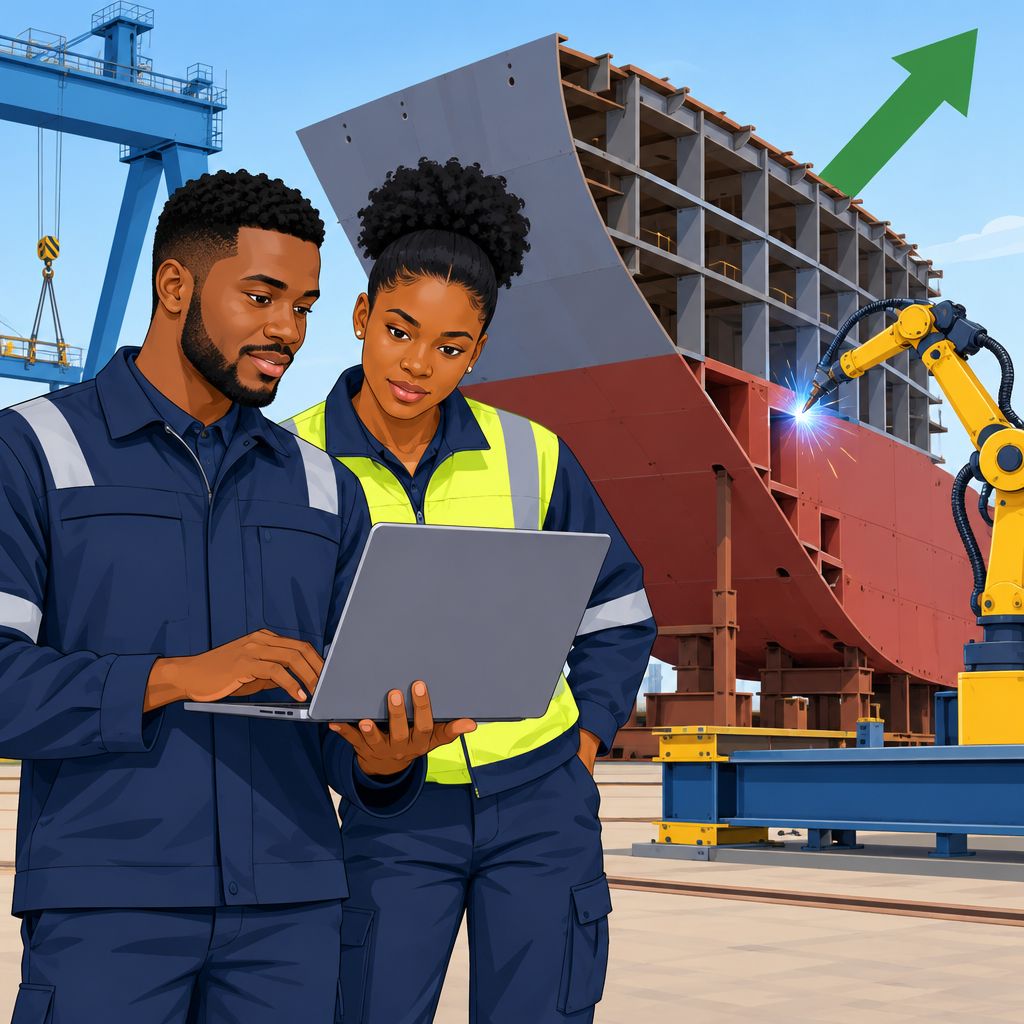
Improvements in Shipbuilding Processes
Technology has significantly improved shipbuilding processes in Nigeria.
Advanced tools now support more efficient production, lower costs, and stronger workplace safety.
These changes help Nigerian shipyards improve performance while adopting further technological developments.
- Analysis of technology’s role in streamlining production processes
- Reduction in construction time and costs
- Enhancement of safety measures through technology integration
Technology Streamlining Production Processes
First, computer-aided design and computer-aided manufacturing streamline several shipbuilding activities.
These tools help shipbuilders create detailed digital vessel models and optimize construction decisions.
Furthermore, simulation software identifies structural problems before construction begins, saving time and resources.
Robotics and automation also improve precision and consistency during ship construction.
Reducing Construction Time and Costs
Technology has also reduced construction time and costs for Nigerian shipyards.
Advanced equipment and software help teams complete projects more quickly and efficiently.
Consequently, shorter production timelines can reduce overall construction expenses.
Additionally, three-dimensional printing produces complex ship components with greater speed and accuracy.
These savings can help Nigerian shipyards compete more effectively in global markets.
Enhancing Safety Through Technology Integration
Technology also strengthens safety measures throughout shipbuilding operations.
Advanced sensors and monitoring systems detect potential hazards in real time.
Workers can then address those hazards and maintain a more secure workplace.
Moreover, augmented reality and virtual reality provide simulated environments for worker training.
This training improves worker skills and reduces the risk of accidents.
These technologies also support remote inspections and maintenance, strengthening safety protocols.
As Nigerian shipyards adopt new technologies, the industry can continue improving production, costs, and safety.
Explore Further: Emerging Trends in Applied Microbiology Nigeria
Influence of Technology on Ship Maintenance and Repair
- Overview of how technology improves maintenance practices
- Introduction of predictive maintenance techniques
- Impact of IoT on monitoring ship performance and condition
Technology has transformed ship maintenance and repair practices across the maritime industry.
These advances help operators improve vessel longevity, efficiency, and reliability.
Furthermore, modern tools support timely inspections and informed maintenance decisions.
Improved Maintenance Practices
Technology has made ship maintenance more streamlined and effective.
Automation, robotics, and advanced materials enable faster inspections and repairs.
These tools reduce downtime and help control operational costs.
Drones and underwater robots reach remote areas that engineers cannot easily access.
Consequently, engineers can assess vessel conditions thoroughly and arrange timely repairs.
Predictive Maintenance Techniques
Predictive maintenance represents a significant advancement in ship maintenance.
Operators analyze sensor data and monitoring records to anticipate potential equipment problems.
They can then schedule maintenance before equipment failure interrupts operations.
This proactive method minimizes unplanned downtime and supports more consistent vessel performance.
It also extends component lifespans while reducing overall maintenance expenses.
IoT Monitoring of Ship Performance and Condition
The Internet of Things has changed how operators monitor ship performance and condition.
Connected sensors collect real-time information about engine health, fuel consumption, and vibration levels.
Ship operators can review this information through integrated connectivity solutions.
Moreover, remote monitoring allows engineers to diagnose problems without immediate physical access.
Engineers can identify developing issues early and take preventive action.
This data-driven approach strengthens operational efficiency and maritime safety standards.
By adopting these technologies, Nigerian shipbuilders can support reliable and sustainable operations.
Learn More: Wildlife Management Studies in Nigeria
Expansion of the Nigerian Shipbuilding Industry
In recent years, technology has helped Nigeria’s shipbuilding industry expand.
Consequently, Nigerian companies now attract international attention and compete more effectively in global markets.
Modern tools also support exports and create new opportunities for local shipbuilders.
- Technology helps Nigerian shipbuilders compete globally.
- Advanced tools and techniques support increased exports of Nigerian-made ships.
- Technology gives local shipbuilding companies new growth opportunities.
Global Competition
Advanced technology helps Nigerian shipbuilders meet international standards.
Furthermore, modern tools improve efficiency and quality during ship design and construction.
As a result, Nigerian companies can compete more effectively for international projects.
Growth in Ship Exports
Technology has strengthened the reputation of Nigerian-made ships for reliability and quality.
Therefore, international clients show greater interest in purchasing ships from Nigerian builders.
This interest has contributed to increased exports and higher industry revenue.
Opportunities for Local Shipbuilders
Modern equipment and software allow local companies to accept larger shipbuilding projects.
Additionally, these tools help businesses expand their operations and improve their capabilities.
Such expansion can create jobs and stimulate economic growth within the industry.
Continued technology adoption can support further development across Nigerian shipbuilding.
Uncover the Details: Applied Zoology Internships and Training Programs in Nigeria
Training and Skills Development in the Industry
Technology continues to reshape the shipbuilding industry.
Therefore, Nigerian shipbuilders must develop skills that support modern production methods.
A capable workforce can help the industry deliver effective and competitive solutions.
- Technology Skills in Shipbuilding Education: Shipbuilding education should include technology-related skills.
These skills help workers use current innovations effectively.
Consequently, training can strengthen workforce competitiveness. - Training Partnerships with Technology Companies: Shipbuilders can collaborate with technology companies on specialized training programs.
Such partnerships can connect traditional practices with modern digital tools.
They can also encourage innovation throughout the industry. - Workforce Skills and Industry Growth: Training programs can develop a workforce that meets changing industry demands.
Skilled workers can improve efficiency, productivity, and innovation.
As technology advances, capable employees can support continued industry growth.
Technological Prospects for Nigerian Shipbuilding
Technology has transformed Nigerian shipbuilding by improving efficiency and productivity.
Advanced tools and software now help companies complete shipbuilding tasks more effectively.
Therefore, continuous innovation remains essential for sector growth and long-term sustainability.
Companies must adopt emerging technologies to remain competitive in the global market.
Meanwhile, the industry has promising prospects for deeper technological integration and further development.
However, limited access to capital can restrict investment in new technologies.
Skilled labor shortages may also slow the adoption of advanced shipbuilding methods.
Additionally, industry stakeholders must address regulatory issues to support continued growth and success.
Additional Resources
Google search results for Impact of Technology on Nigerian Ship Building Sciences
Bing search results for Impact of Technology on Nigerian Ship Building Sciences


