



Boat building in Nigeria supports transportation and fishing industries.
Government policies regulate safety and quality standards across this sector.
These policies protect users while promoting responsible industry growth.
Moreover, construction and maintenance standards help protect passengers and workers.
Boat building also creates employment and revenue for communities along Nigeria’s waterways.
Therefore, government agencies support sustainable practices and innovation within boat building.
Such support promotes growth in this vital sector.
Historical Overview of Boat Building in Nigeria
Boat building in Nigeria reflects centuries of practical knowledge and cultural development.
Builders adapted their techniques to materials available within different regions.
These practices connected watercraft production with community life and local traditions.
Traditional Methods and Materials Used in Boat Building
Wood remains one of the most common materials used in Nigerian boat construction.
Builders commonly selected mahogany, iroko, or cedar for their projects.
Additionally, skilled craftsmen carved canoes from large tree trunks using inherited techniques.
- Wood provided a practical foundation for many traditional boats.
- Canoe carving transformed large tree trunks into navigable watercraft.
- Palm and sisal fibers supported mats, sails, and rope production.
Cultural and Economic Significance of Boat Building
Boat building contributes meaningfully to the cultural life of Nigerian communities.
In coastal areas, fishing communities depend on boats for their livelihoods.
Meanwhile, cultural events may feature elaborate watercraft during important ceremonies.
Notable Boats and Watercraft from Nigeria
Nigerian waterways feature several traditional and modern types of watercraft.
Each type reflects different community needs and changing maritime priorities.
Consequently, Nigerian boat building combines inherited craftsmanship with newer construction approaches.
- Dugout canoes use single tree trunks for travel across rivers and lakes.
- Marine patrol boats support maritime security and efforts against illegal activities.
- Traditional fishing boats help local fishermen maintain their communities.
Current State of the Boat Building Industry in Nigeria
Nigeria’s boat building industry currently serves several important market needs.
Builders produce vessels for fishing, leisure, transportation, and security activities.
However, technology, infrastructure, funding, and regulatory barriers continue to affect industry development.
Types of Boats Built in Nigeria
Local builders produce different vessels according to community, commercial, recreational, and security requirements.
Fishing and transport activities create continuing demand for practical watercraft.
Meanwhile, tourism and national security also encourage production of specialized boats.
- Fishing boats support activities within Nigeria’s fishing sector.
- Pleasure boats serve leisure activities, including cruising and sightseeing.
- Transport boats move people and goods across Nigeria’s waterways.
- Military and security boats help protect Nigeria’s waters.
Key Participants in the Industry
The industry includes local builders, larger manufacturers, and material suppliers.
These participants contribute different skills, production capacities, and resources.
Together, they support boat construction across several Nigerian markets.
- Local boat builders create vessels for communities in different regions.
- Large manufacturers produce boats on a broader operational scale.
- Suppliers provide materials, equipment, and technology for construction activities.
Challenges Affecting Industry Development
Several obstacles limit efficiency, quality, investment, and expansion within the industry.
Many builders still depend on traditional methods instead of modern production technology.
In addition, weak infrastructure, limited funding, and complex regulations create further difficulties.
- Limited modern technology restricts efficiency and product quality.
- Inadequate workspaces and transportation routes hinder construction activities.
- Restricted access to funding makes business expansion more difficult.
- Complex regulations and licensing requirements discourage new industry entrants.
Growth Prospects for Nigerian Boat Building
The boat building industry has significant potential for further growth.
Addressing current barriers could strengthen production and improve industry performance.
Suitable policies and support could help the industry contribute more to Nigeria’s economy and development.
You Might Also Like: Choosing the Right Specialization in Applied Math
Government Policies for Boat Building
Government policies establish requirements that guide boat builders toward safer, consistent, and environmentally responsible construction practices.
These requirements address materials, designs, inspections, licensing, and enforcement across the boat building industry.
Boat builders must follow applicable policies to operate legally and protect users, consumers, and water bodies.
Current Regulations and Standards for Boat Building
Nigerian regulations define technical expectations for constructing boats and maintaining acceptable industry practices.
They specify suitable materials and design standards for boats serving different purposes.
Transform Your Career with Expert Guidance
Get personalized mentorship consulting that’s tailored to your unique path. Our expert advice is actionable and exclusive.
Get StartedAdditionally, testing, inspection, and environmental controls support safety, quality, and protection of water bodies.
- Specifications identify materials suitable for boat construction.
- Design standards guide construction for boats with different purposes.
- Testing and inspections help authorities assess boat quality.
- Environmental regulations help protect water bodies from pollution.
Licensing and Certification Requirements for Boat Builders
Boat builders must meet licensing and certification requirements before operating within the regulated industry.
These requirements help authorities assess builders’ skills, experience, and available construction resources.
Furthermore, renewals encourage continued compliance with applicable rules and standards.
- Builders must obtain a boat building license from the relevant authority.
- Applicants may complete boat building training or an apprenticeship.
- Builders can demonstrate experience through completed construction projects.
- License renewals help maintain continued compliance with regulations.
Enforcement Mechanisms for Regulatory Compliance
Government authorities use monitoring and penalties to encourage compliance with boat building requirements.
Regular facility inspections help identify practices that fail to meet established regulations.
Authorities may also educate builders while addressing serious violations through escalating measures.
- Officials inspect boat building facilities for regulatory compliance.
- Authorities may issue fines or penalties for non-compliance.
- Serious violations may result in license suspension or revocation.
- Public awareness campaigns explain applicable regulations and standards.
These mechanisms support safer construction and help maintain consistent standards across the industry.
Therefore, compliance allows builders to operate legally while supporting responsible development of boat building.
You Might Also Like: Admission Requirements for Microbiology Programs in Nigeria
Impact of Government Policies on Boat Building
Government policies have improved boat quality and safety standards in Nigeria.
These policies guide builders toward safer and more consistent construction practices.
However, regulatory requirements also create economic challenges for the boat building sector.
Evaluation of Government Regulations
- Government regulations have improved the quality and safety standards of boats in Nigeria.
- Furthermore, enforcement requires boat builders to follow specified standards and guidelines.
- Consequently, better construction practices have reduced accidents involving poorly built boats.
Economic Implications of Regulatory Compliance
- Regulatory compliance increases production costs because builders need better materials and technology.
- As a result, consumers may pay more for boats that satisfy regulatory requirements.
- Nevertheless, safer and higher-quality boats provide greater long-term benefits than short-term savings.
Unintended Effects on Boat Builders
- Smaller boat builders may struggle to meet regulatory standards because of financial limitations.
- Therefore, some businesses may leave the industry, reducing job opportunities and economic growth.
- Additionally, strict regulations may limit design innovation and reduce product variety for consumers.
Government policies remain essential for improving boat quality and protecting users.
However, policymakers must address compliance difficulties that affect smaller builders.
A balanced approach can support regulatory compliance while encouraging sustainable industry growth.
Uncover the Details: Bioinformatics Software Development in Nigeria
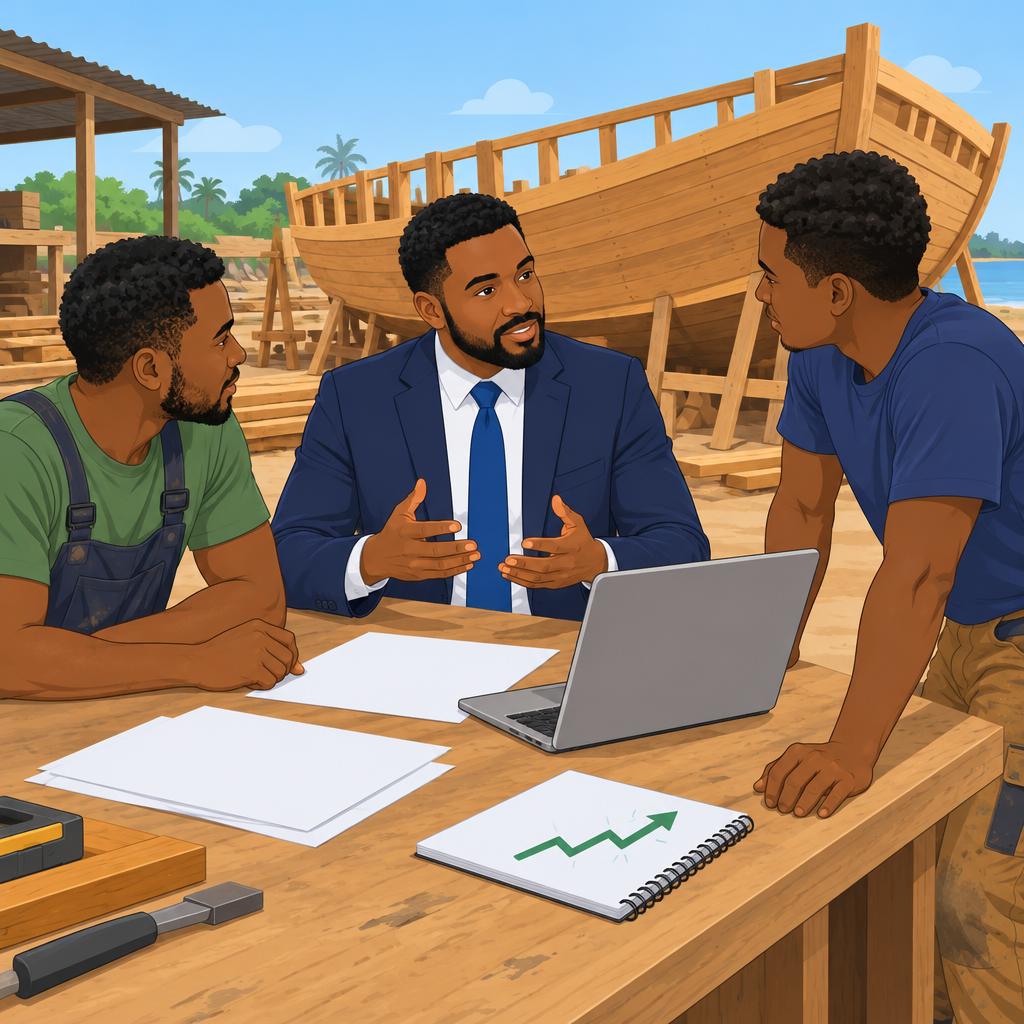
Potential Improvements in Nigerian Boat Building Policies
Government policies can strengthen boat building in Nigeria.
These improvements can enhance safety standards and encourage innovation.
They can also support sustainable growth throughout the industry.
Gaps in Existing Boat Building Regulations
Existing regulations contain several weaknesses that require attention.
Clearer requirements can improve construction quality and regulatory consistency.
Stronger enforcement can also encourage builders to follow safety standards.
- Authorities should provide clear guidelines for materials used in boat construction.
- Regulators need stronger inspection and monitoring processes for boat building practices.
- Clear rules should define qualifications and training requirements for boat builders.
- Government agencies should strengthen enforcement against safety standard violations.
- Officials should create incentives that encourage regulatory compliance and responsible practices.
Stronger Safety Standards for Boat Construction
Safety improvements require consistent training, inspections, and quality control.
Builders also need access to suitable safety equipment and practical resources.
Industry collaboration can help develop guidelines that reflect boat building conditions.
- Government should require safety training programs for boat builders.
- Regulators should strengthen inspections and monitor construction sites regularly.
- Authorities should establish certification systems for boat builders.
- Officials should improve access to safety equipment and construction resources.
- Government should collaborate with industry stakeholders on safety guidelines.
Government Support for Innovation and Sustainability
Government support can help builders adopt innovative construction technologies.
Financial incentives can encourage companies to invest in sustainable practices.
Training partnerships can expand skills and promote knowledge sharing across the industry.
- Government should fund research and development for innovative boat building technologies.
- Authorities should offer tax incentives for companies investing in sustainable practices.
- Officials should support partnerships that encourage innovation and knowledge sharing.
- Government should create training programs for emerging boat building technologies.
- Authorities should develop a national strategy for sustainable marine resource management.
Uncover the Details: Boat Building Training Centers in Nigeria
International standards offer Nigeria useful models for strengthening boat building practices.
Countries with thriving boat building industries demonstrate how policy can support safety and quality.
By comparing these approaches, Nigeria can identify practical opportunities for sector improvement.
International Regulatory Frameworks
Norway, the Netherlands, and the United States prioritize safety and quality control through established regulatory frameworks.
These systems often require certification, which helps builders demonstrate that vessels meet international standards.
Therefore, Nigeria could strengthen trust and competitiveness by adopting comparable regulatory measures.
- Successful frameworks emphasize safety and quality control.
- Certification processes help ensure that vessels meet international standards.
- Nigeria can use similar measures to build consumer trust and improve competitiveness.
International Collaboration and Knowledge Sharing
International partnerships can give Nigerian craftsmen access to new techniques and innovative technologies.
Joint research projects and exchange programs can support practical learning between local and international builders.
Moreover, knowledge sharing can help align local practices with global standards.
- Joint research projects can create opportunities for technical collaboration.
- Exchange programs can help Nigerian craftsmen learn from established boat builders.
- Shared knowledge can support a more robust and sustainable industry.
International Alignment and Industry Growth
Nigeria can elevate its boat building sector by embracing international best practices.
Furthermore, stronger regulations and global partnerships can encourage innovation across the industry.
By remaining open to new ideas, Nigeria can strengthen its position in boat building.
Policy Priorities for Nigeria’s Boat Building Sector
Effective government policies are crucial for Nigeria’s boat building industry.
These policies should support innovation, skills development, and infrastructure to drive industry growth.
Additionally, regulations should prioritize safety, environmental sustainability, and local workforce empowerment.
A conducive business environment will attract investment and strengthen industry competitiveness.
Furthermore, collaboration among government, industry players, and stakeholders can improve policy implementation.
Through dialogue and research, stakeholders can refine policies for a sustainable boat building sector.
Additional Resources
Google search results for Government Policies on Boat Building in Nigeria Sciences
Bing search results for Government Policies on Boat Building in Nigeria Sciences


