



Bioinformatics and Public Health in Nigeria
Bioinformatics combines biology, computer science, and information technology to analyze and interpret biological data.
It helps public health researchers study diseases, pathogens, and genetic variations.
These analyses support better treatments and preventive measures.
Nigeria has a population of over 200 million people and faces numerous public health challenges.
These challenges include infectious diseases, maternal and child mortality, and non-communicable diseases.
Bioinformatics helps Nigerian researchers and policymakers analyze health data and track disease outbreaks.
They can then develop evidence-based strategies to improve public health outcomes.
Furthermore, bioinformatics integrates datasets from genomics, proteomics, and clinical records.
This integration helps researchers understand the genetic basis of diseases and identify potential risk factors.
The findings support personalized medicine, precision healthcare, and targeted therapies.
Such therapies can reflect the unique genetic makeup of individuals.
Facilitation of Disease Surveillance
- Use of bioinformatics in tracking disease outbreaks
- Timely response to health emergencies
- Improved public health decision-making
Bioinformatics helps Nigerian health officials track disease outbreaks in real time.
This capability supports faster responses to health emergencies.
Consequently, officials can improve disease control and containment.
Tracking Disease Outbreaks
Bioinformatics analyzes large volumes of disease-related data quickly and efficiently.
Computational algorithms help researchers identify patterns in disease transmission.
These insights guide strategies for preventing and controlling disease spread.
Timely Response to Health Emergencies
Continuous data monitoring helps officials detect potential outbreaks early.
Early detection allows health teams to deliver swift and targeted interventions.
This proactive approach can contain diseases before they become larger public health crises.
Improved Public Health Decision-Making
Bioinformatics gives public health officials data-driven insights for decision-making.
Researchers analyze genetic, epidemiological, and demographic data to identify high-risk populations.
Officials can then prioritize interventions and improve resource allocation.
Strengthening Public Health Preparedness
Bioinformatics strengthens disease surveillance and emergency response capabilities in Nigeria.
It also supports more effective public health policies and interventions.
Continued investment in infrastructure and capacity building can further improve public health preparedness.
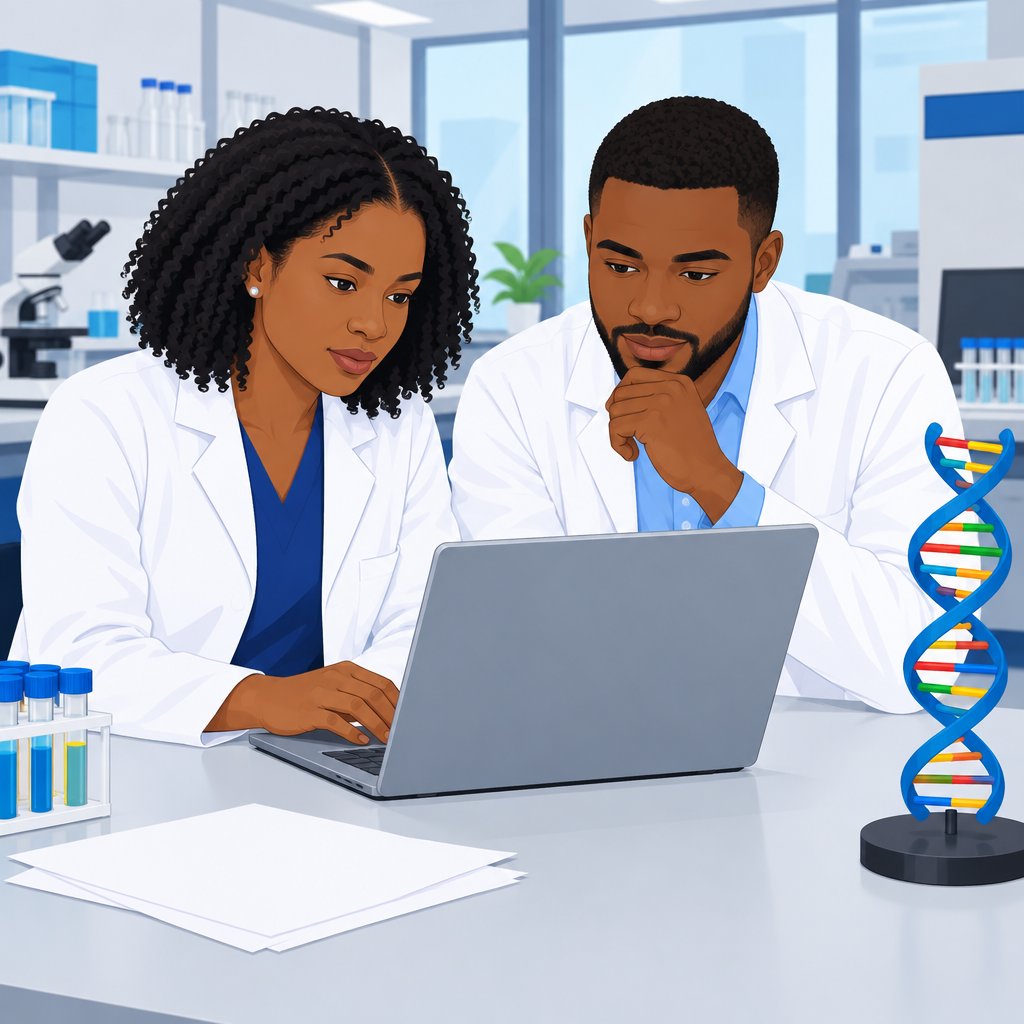
Advancement in Genomic Research
- Acceleration of research in genetic diseases
- Precision medicine tailored to individual patients
- Enhanced understanding of disease pathways
Bioinformatics has advanced genomic research in Nigerian public health.
It has deepened understanding of genetic diseases and supported tailored treatments for patients.
First, bioinformatics accelerates research into genetic diseases.
Researchers analyze large genomic datasets to identify markers linked to different diseases.
These findings support targeted therapies and health interventions.
Furthermore, bioinformatics enables precision medicine in Nigeria.
This approach customizes treatment according to each patient’s genetic makeup.
Consequently, healthcare professionals can optimize therapeutic outcomes and reduce adverse effects.
Moreover, genomic analysis improves understanding of disease pathways.
Researchers examine gene interactions and their influence on biological processes.
Therefore, they can clarify disease mechanisms and develop more effective prevention and treatment strategies.
You Might Also Like: Geology and Disaster Management in Nigeria
Bioinformatics for Epidemic Prediction and Prevention
Bioinformatics helps Nigerian public health teams predict and prevent epidemics.
- Bioinformatics tools detect potential outbreaks early by analyzing patterns across large datasets.
- Scientists analyze pathogen genetic data to develop vaccines and targeted treatments.
- Public health officials track disease spread and implement control measures to reduce transmission.
These capabilities enable rapid responses and targeted interventions during epidemics in Nigeria.
Transform Your Career with Expert Guidance
Get personalized mentorship consulting that’s tailored to your unique path. Our expert advice is actionable and exclusive.
Get StartedYou Might Also Like: Challenges Facing Bioinformatics in Nigeria
Improvement in Healthcare Delivery
- Personalized treatment plans based on genetic data
- Enhanced diagnostic accuracy
- Cost-effective healthcare solutions
Bioinformatics enables healthcare providers to develop personalized treatment plans using individual genetic data.
These plans can help professionals select targeted interventions and reduce risks associated with unsuitable medications.
Additionally, genetic markers can indicate disease susceptibility or possible responses to particular treatments.
Healthcare professionals also use bioinformatics tools to examine complex biological data more accurately.
By analyzing genomic sequences and protein structures, these tools can reveal disease markers and potential treatment targets.
Consequently, providers can detect diseases earlier and make more accurate diagnostic decisions.
Moreover, bioinformatics supports cost-effective healthcare by streamlining processes and improving resource allocation.
Researchers can identify potential drug targets, develop treatments, and optimize existing therapies through these analyses.
These efficiencies may reduce unnecessary tests and treatments while improving access to affordable healthcare solutions.
Explore Further: Anthropology Conferences and Workshops in Nigeria
Capacity Building for Healthcare Professionals
Healthcare professionals in Nigeria need bioinformatics capacity to apply data effectively in public health.
First, targeted training should provide practical skills in bioinformatics tools and techniques.
- Training in bioinformatics tools and techniques
- Integration of bioinformatics in medical curricula
- Empowerment of local public health agencies
Furthermore, medical curricula should integrate bioinformatics to prepare future professionals for data-driven practice.
Consequently, trained professionals can apply technological approaches to address public health challenges effectively.
Local public health agencies also need bioinformatics capabilities to strengthen disease surveillance and response.
With suitable tools and knowledge, these agencies can analyze complex health data and support informed decisions.
They can then develop targeted interventions that improve public health practice in Nigeria.
Find Out More: Nigerian Boat Building: Export Opportunities
Strategic Priorities for Bioinformatics in Nigerian Public Health
Bioinformatics provides essential tools for advancing public health efforts in Nigeria.
It helps researchers analyze and interpret complex biological data.
Moreover, these capabilities strengthen disease surveillance, diagnosis, and treatment strategies.
They can therefore improve healthcare outcomes and population health.
Investment in bioinformatics research and infrastructure remains essential for addressing public health challenges effectively.
Consequently, Nigeria must prioritize funding and support for bioinformatics initiatives.
Such investment can help transform healthcare systems and save lives.
Furthermore, collaboration among bioinformaticians, healthcare professionals, and policymakers supports successful public health integration.
By working together, these groups can drive innovation and optimize healthcare delivery.
This cooperation can help create a healthier future for all Nigerians.
Additional Resources
Google search results for Importance of Bioinformatics in Nigerian Public Health Sciences
Bing search results for Importance of Bioinformatics in Nigerian Public Health Sciences


