



Bioinformatics in Agricultural Development
Bioinformatics applies computer technology to manage biological information.
It uses data analysis and computational techniques to address complex biological questions.
In agriculture, bioinformatics helps researchers analyze genetic data to improve crop yields.
Researchers also use it to develop new strains and increase agricultural productivity.
These tools help farmers and researchers make informed decisions about crop production.
Nigeria has made significant progress in bioinformatics and agriculture.
One notable innovation uses genomics to examine the genetic makeup of crop plants.
Nigerian researchers have sequenced cassava and yam genomes.
This work identified key genes linked to disease resistance and yield.
History of Bioinformatics in Nigeria
- Evolution of bioinformatics in the country
- Milestones achieved in the field
- Contributions of Nigerian scientists to bioinformatics research
Bioinformatics has grown significantly in Nigeria over time.
Its development reflects expanding research activity across universities and research institutions.
Researchers established the first bioinformatics groups during the early 1990s.
Those early efforts created a foundation for later national growth.
One major milestone involved establishing dedicated research centers and laboratories across Nigeria.
These facilities have supported research and innovation in several bioinformatics areas.
Researchers have investigated genomics, proteomics, and computational biology through these centers.
Consequently, the centers have helped strengthen Nigeria’s bioinformatics research capacity.
Nigerian scientists have contributed significantly to bioinformatics research internationally.
Their studies have appeared in top-tier journals.
These publications have received recognition for advancing knowledge of complex biological systems.
Notable Nigerian scientists include Dr. Catherine Aku Otubanjo, Dr. Ifeanyi Nwachukwu, and Dr. Fatima Akanbi.
The field continues to expand across Nigeria.
Continued support and investment could help Nigeria achieve greater progress in bioinformatics research.
Bioinformatics and Crop Yield Improvement
Bioinformatics tools help researchers analyze genetic data and develop crop varieties with higher yields.
Through genome sequencing, scientists identify genes linked to drought resistance and increased productivity.
Breeders then use this information to create varieties suited to specific growing conditions.
Bioinformatics in Plant Genetic Engineering
Bioinformatics tools support plant genetic engineering and the development of genetically modified organisms.
Scientists identify genes that provide desirable traits, including pest resistance and increased nutrient content.
Researchers then insert selected genes into plant genomes to develop resilient and nutritious crops.
Bioinformatics for Pest and Disease Management
Bioinformatics helps scientists examine the genetic makeup of agricultural pests and pathogens.
By studying their genomes, researchers develop targeted strategies for controlling pests and diseases.
These strategies can reduce chemical pesticide use while limiting crop losses and protecting quality.
Advancing Sustainable Agricultural Production
Bioinformatics has transformed approaches to crop production and agricultural management.
Scientists now use genetic data and analysis to develop innovative agricultural solutions.
Consequently, bioinformatics supports more efficient and sustainable food production.
Discover More: Interdisciplinary Nature of Bioinformatics in Nigeria
Nigerian Innovations in Bioinformatics and Agriculture
Nigerian researchers are applying bioinformatics to local agricultural challenges.
These efforts connect crop genetics, institutional cooperation, and established farming knowledge.
Together, these approaches support practical decisions about resilient and sustainable agriculture.
Development of Bioinformatics Tools Specific to Nigerian Crops
Nigerian scientists are developing tools that reflect the characteristics of indigenous crops.
Transform Your Career with Expert Guidance
Get personalized mentorship consulting that’s tailored to your unique path. Our expert advice is actionable and exclusive.
Get StartedThese tools help researchers examine plant genetics and identify responses to pests, diseases, and environmental stress.
Consequently, farmers can use research findings to guide crop management and improve productivity.
Collaborations Between Nigerian Universities and Research Institutions for Bioinformatics Research
Universities and research institutions increasingly cooperate on bioinformatics and agricultural studies.
Such partnerships share knowledge, resources, and expertise among Nigerian scientists.
Moreover, collaboration supports crop breeding, sustainable farming practices, and stronger food security.
Integration of Traditional Agricultural Practices with Modern Bioinformatics Techniques
Traditional agricultural knowledge can complement modern bioinformatics techniques.
This combination helps farmers improve yields while reducing unnecessary resource use.
It also supports climate adaptation and preserves cultural knowledge for future generations.
Uncover the Details: Women Pioneers in Nigerian Archaeology
Bioinformatics Applications Improving Agricultural Productivity
Bioinformatics has supported agricultural productivity in Nigeria through genetic analysis and data-informed farm management.
Researchers used genetic sequencing to identify genes associated with resistance to common crop diseases.
Breeders incorporated those findings into breeding programs and developed varieties with stronger disease resistance.
Consequently, farmers experienced higher yields and lower risks of crop loss.
Precision agriculture also uses sensor and drone data to guide crop management.
This approach helps farmers use water and fertilizers more efficiently.
As a result, farms can improve yields while reducing environmental impact.
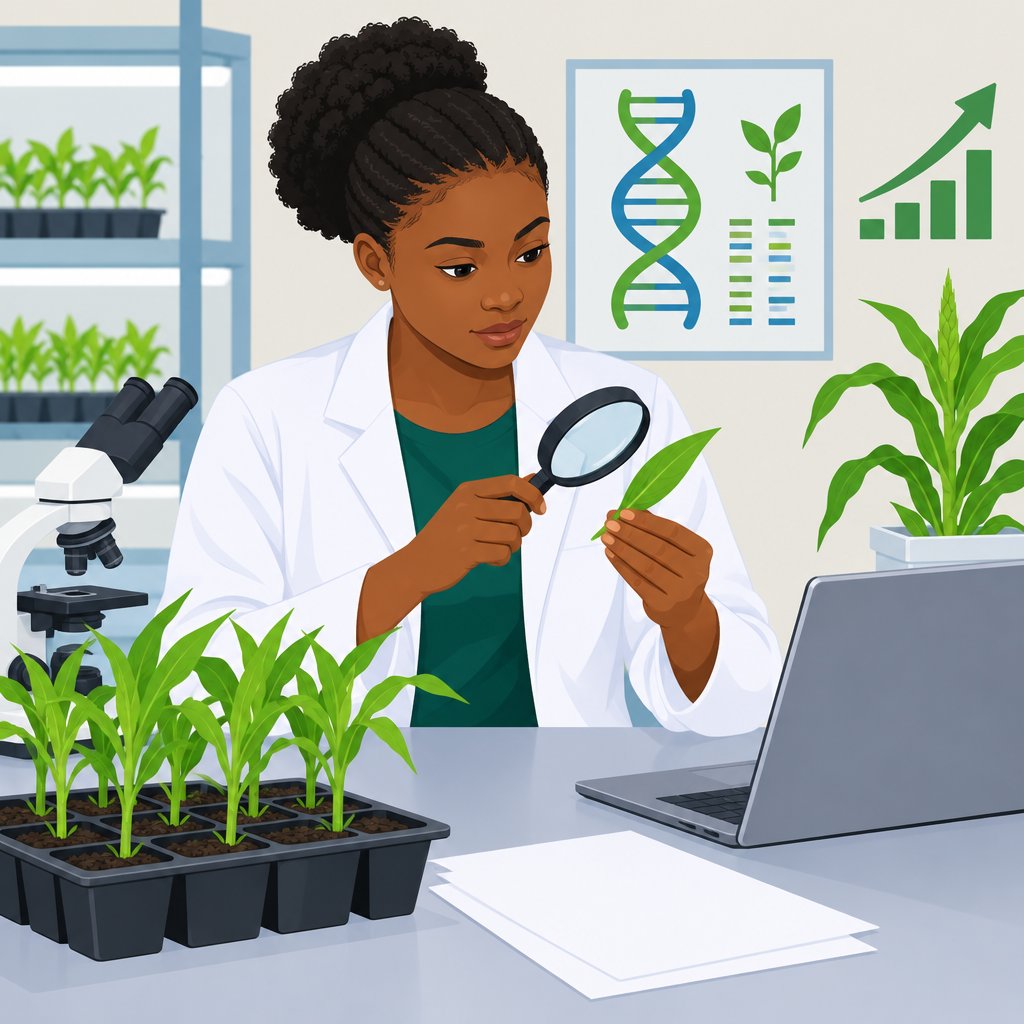
Farmer Experiences With Bioinformatics Innovations
Farmers across Nigeria report practical benefits from bioinformatics-based agricultural innovations.
Mr. Adekunle said disease-resistant varieties reduced crop losses on his farm.
He also reported higher yields and improved income.
Meanwhile, Mrs. Ibrahim used precision agriculture insights to reduce resource waste.
She said the approach helped her maximize crop output.
Furthermore, she described greater convenience, efficiency, and farm profitability.
Economic Effects on Nigerian Agriculture
Bioinformatics contributes to Nigeria’s agricultural economy by supporting productivity, food security, and rural livelihoods.
Higher productivity can reduce dependence on imported food.
Disease-resistant varieties can also reduce farmers’ need for chemical pesticides.
Therefore, farmers may lower production costs while improving profitability.
Precision agriculture helps farmers optimize resource use and reduce waste.
More efficient production allows farmers to generate greater revenue from available land.
These combined effects support growth across the agricultural sector.
Gain More Insights: Postgraduate Studies in Animal Science in Nigeria
Challenges Facing Bioinformatics Adoption in Nigerian Agriculture
- Limited access to bioinformatics technology in rural areas
- Limited funding for bioinformatics research in Nigeria
- Need for capacity building and bioinformatics training for agricultural stakeholders
One major challenge facing bioinformatics adoption in Nigerian agriculture is limited technology access in rural areas.
Urban centers may access advanced bioinformatics tools and platforms.
However, rural farmers and agricultural stakeholders often lack comparable access.
This limitation prevents rural farmers from using bioinformatics to improve crop production and disease management.
It also restricts their ability to strengthen broader agricultural practices.
Another significant challenge involves limited funding for bioinformatics research in Nigeria.
Without adequate financial support, research institutions struggle to develop necessary infrastructure and resources.
A shortage of funding also limits agricultural organizations’ ability to deploy bioinformatics solutions.
Consequently, the agricultural sector adopts innovative technologies more slowly.
Many farmers, extension workers, and agricultural professionals also need stronger bioinformatics skills.
Currently, some stakeholders lack the knowledge required to use bioinformatics tools effectively.
Training and educational opportunities can help stakeholders apply these technologies to agricultural practices.
Such capacity building can support productivity and food security in Nigeria.
Addressing these challenges will promote bioinformatics adoption across Nigerian agriculture.
It will also support sustainable development, stronger research outcomes, and greater agricultural competitiveness.
Discover More: Contributions of Applied Math to Nigerian Research
Government Support for Agricultural Bioinformatics
- The Nigerian government supports bioinformatics research in agriculture.
- Various initiatives encourage researchers to apply bioinformatics within the agricultural sector.
- Government funding supports bioinformatics projects that address agricultural priorities.
- Researchers receive grants and subsidies for developing innovative bioinformatics solutions.
- These financial incentives help advance agricultural bioinformatics.
Government Initiatives Supporting Bioinformatics Research
- The government establishes research centers and institutes focused on agricultural bioinformatics.
- Government agencies encourage collaboration with universities and industry partners.
- Workshops, conferences, and training programs help researchers develop bioinformatics skills.
- Awareness campaigns explain the benefits of integrating bioinformatics into agriculture.
- Expert advisory panels guide the implementation of agricultural bioinformatics strategies.
Funding Opportunities for Agricultural Bioinformatics
- The government allocates funding for agricultural bioinformatics research grants.
- Competitive funding schemes encourage innovative bioinformatics research proposals.
- Public-private partnerships increase investment in agricultural bioinformatics projects.
- Tax incentives and rebates support companies investing in agricultural bioinformatics solutions.
- Venture capital firms receive encouragement to invest in promising agricultural bioinformatics startups.
Policies Regulating Bioinformatics Technology in Agriculture
- The government establishes regulatory frameworks for ethical bioinformatics use.
- Data protection laws safeguard sensitive information from bioinformatics research.
- Government guidelines promote responsible and sustainable agricultural implementation.
- Quality control measures maintain the accuracy and reliability of bioinformatics tools.
- All agricultural bioinformatics applications must comply with international standards and conventions.
Strengthening Bioinformatics in Nigerian Agriculture
Bioinformatics has revolutionized Nigerian agriculture by offering innovative solutions to challenges faced by farmers and researchers.
Therefore, Nigeria needs greater investment and support for bioinformatics research to sustain growth and development.
Furthermore, government agencies, research institutions, and private partners must collaborate to harness bioinformatics fully.
Additional Resources
Google search results for Bioinformatics and Agriculture: Nigerian Innovations Sciences
Bing search results for Bioinformatics and Agriculture: Nigerian Innovations Sciences


