



Introduction
Women pioneers in Nigerian archaeology have significantly advanced the field.
They have contributed despite working in a male-dominated environment.
Additionally, their work has shaped understanding of Nigeria’s rich cultural heritage.
Early Women Archaeologists in Nigeria
When people imagine archaeology, they often picture rugged explorers braving elements to uncover ancient artifacts.
However, Nigerian women also helped shape archaeological work through perseverance and professional dedication.
These early archaeologists faced barriers, yet their efforts supported future generations.
- Dr. Marianne Lawal: Dr. Lawal entered Nigerian archaeology early despite social norms discouraging women from STEM careers.
- Dr. Abigail Okpoko: Dr. Okpoko came from a rural village, overcame skepticism, and became a respected archaeologist.
- Dr. Grace Ogunyemi: Dr. Ogunyemi pursued archaeology despite financial constraints and became an authority through meticulous research.
Challenges Faced by Early Women Archaeologists
These pioneers encountered many challenges in archaeology.
They entered a field dominated by men.
Moreover, they navigated limited support, gender bias, and restricted opportunities.
- Gender Discrimination: These women challenged expectations that women should prioritize family over professional careers.
- Lack of Funding: Funding bodies often hesitated to support archaeological projects led by women.
- Limited Opportunities: Women faced restricted access to academic training, research opportunities, and professional resources.
Pioneering Work and Legacy
Despite these obstacles, the archaeologists produced important work in Nigeria.
Their research expanded knowledge of the country’s archaeological past.
They also encouraged young women to consider archaeology as a career.
- Dr. Marianne Lawal: Dr. Lawal’s research on ancient Nigerian civilizations reshaped understanding of the region’s history.
- Dr. Abigail Okpoko: Dr. Okpoko’s excavations uncovered artifacts that illuminated Nigeria’s cultural heritage.
- Dr. Grace Ogunyemi: Dr. Ogunyemi documented archaeological finds carefully and mentored scholars through her research projects.
Notable Women Archaeologists in Nigeria
Several Nigerian women have advanced archaeological research through focused studies of the country’s cultural heritage.
Their work examines ancient art, settlements, technology, trade, and social organization.
Each researcher has contributed evidence that clarifies Nigeria’s complex archaeological past.
Professor Pamela Eze-Uzomaka
Professor Pamela Eze-Uzomaka has dedicated her career to studying Nigeria’s rich cultural heritage.
Her research focuses especially on the Nok culture and its distinctive terracotta sculptures.
Furthermore, her work examines Nok social organization, religious practices, and artistic achievements.
- She studied terracotta sculptures dating back more than 2,000 years.
- Her research provided valuable insights into the ancient Nok people.
- She also supported cultural heritage preservation through research and documentation.
Dr. Abidemi Babalola
Dr. Abidemi Babalola researches the historical archaeology of Yoruba communities in southwestern Nigeria.
Her investigations explore material culture and settlement patterns across ancient Yorubaland.
Moreover, her excavations reveal connections between urban development and long-distance exchange.
- Her findings illuminate complex Yoruba sociopolitical structures.
- Excavated artifacts provide evidence of long-distance trade networks.
- Her research also documents the growth of urban centers in ancient Yorubaland.
Dr. Ronke Afolabi
Dr. Ronke Afolabi studies Iron Age sites in central Nigeria, especially across the Jos Plateau region.
Her fieldwork investigates early iron smelting and agricultural practices.
Consequently, her research helps explain technological change and social complexity in ancient Nigerian communities.
- She conducted fieldwork at Taruga, Dutsen-kura, and Wushishi.
- Her investigations uncovered evidence of early ironworking practices.
- She also examined agricultural activities at central Nigerian Iron Age sites.
Research Contributions to Nigerian Archaeology
These researchers expanded archaeological knowledge through studies of art, technology, settlement, and exchange.
Their discoveries connect material evidence with broader questions about ancient Nigerian societies.
In addition, their publications and fieldwork continue to support cultural heritage research and inspire future archaeologists.
Learn More: Postgraduate Studies in Animal Science in Nigeria
Challenges Faced by Women in Nigerian Archaeology
Women archaeologists in Nigeria have faced challenges that hinder career advancement and professional growth.
These challenges include gender discrimination, bias, and systemic barriers within the field.
Consequently, these barriers can limit women’s opportunities and professional contributions.
Gender Discrimination and Bias
- Women archaeologists often face gender discrimination in Nigerian archaeology.
- This discrimination can involve unequal pay, limited recognition, and exclusion from decision-making processes.
- Moreover, perceptions of male dominance can restrict women’s fieldwork, funding, and leadership opportunities.
- Male colleagues may also question women’s abilities, skills, and expertise because of their gender.
Systemic Barriers to Professional Growth
- Systemic barriers within Nigerian archaeology further limit opportunities for women.
- For example, women may lack access to resources, professional networks, mentorship, and development opportunities.
- These resources remain essential for career growth and sustained professional advancement.
- Additionally, women often balance professional commitments with family responsibilities.
- Fieldwork can require long periods away from home, which creates additional difficulties.
Supportive Policies for Career Growth
- Creating an inclusive and supportive environment remains essential for women in Nigerian archaeology.
- Furthermore, gender equality and diversity can strengthen the field through women’s perspectives and skills.
- Supportive policies can help women overcome barriers and advance their careers.
- These policies include equal pay, parental leave, flexible work arrangements, and mentorship programs.
Addressing these barriers can create a more equitable and diverse field.
Inclusive practices can help Nigerian archaeology benefit from all members’ talents and expertise.
Therefore, proactive support can help women thrive in their professional endeavors.
Delve into the Subject: Contributions of Applied Math to Nigerian Research
Transforming Archaeological Research Methods
Women researchers introduced methods that broadened archaeological investigation in Nigeria.
Their approaches helped researchers uncover histories and narratives that earlier studies had overlooked.
Consequently, archaeological evidence gained wider interpretation through questions that expanded beyond established research practices.
Promoting Inclusive Archaeological Practice
These pioneers encouraged greater participation from women within Nigerian archaeology.
They also advocated opportunities for marginalized groups to join archaeological research.
Transform Your Career with Expert Guidance
Get personalized mentorship consulting that’s tailored to your unique path. Our expert advice is actionable and exclusive.
Get StartedAs a result, the discipline developed a more diverse and representative scholarly community.
Recovering Underrepresented Narratives
Women archaeologists examined perspectives that received limited attention in Nigeria’s archaeological record.
Their research highlighted experiences associated with marginalized communities.
Furthermore, these studies challenged traditional interpretations of Nigeria’s past.
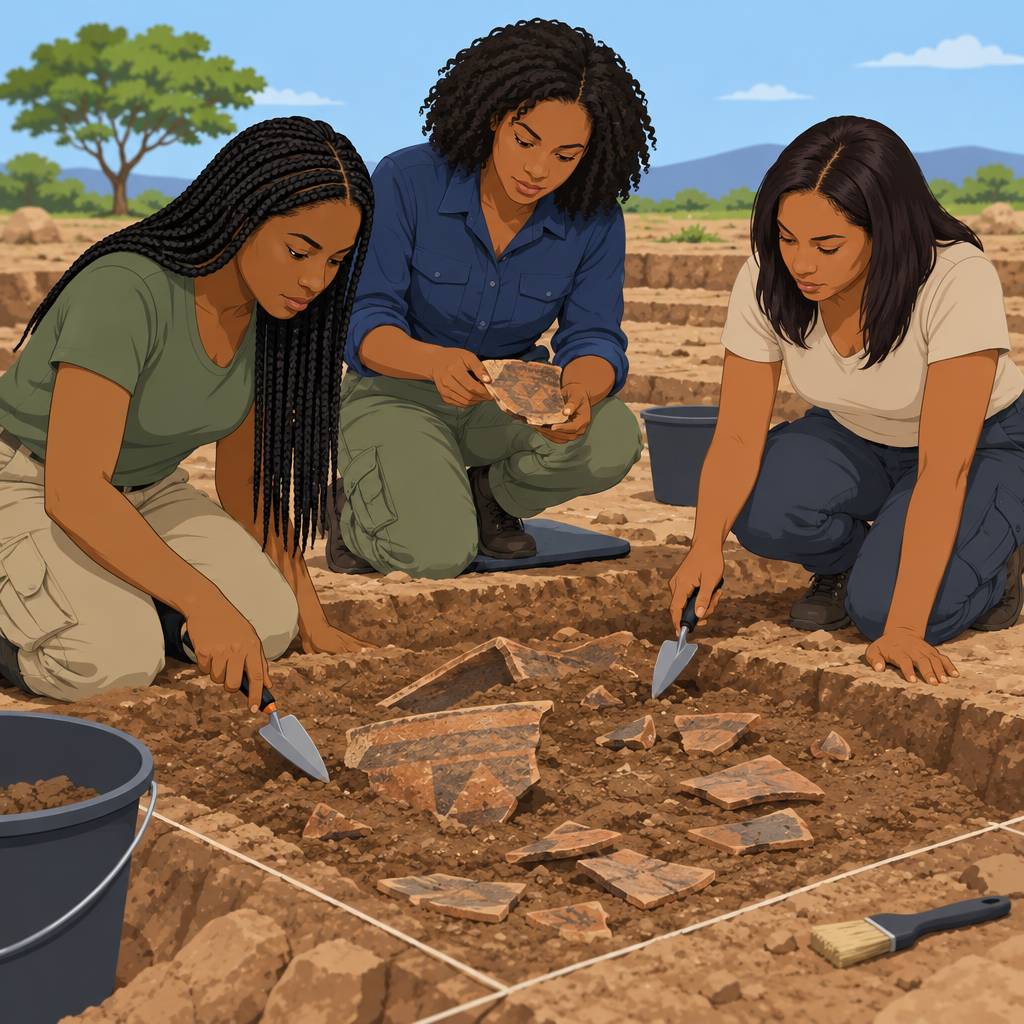
Empowering Future Archaeological Scholars
By opening professional pathways, these pioneers encouraged other women to pursue archaeology.
Their mentorship supported young scholars as they developed research interests.
Through continued advocacy, they helped future archaeologists make meaningful contributions to the discipline.
Strengthening Collaborative Research Networks
Women pioneers built networks that connected archaeology with related fields.
These relationships encouraged archaeologists, historians, anthropologists, and other scholars to exchange knowledge.
Therefore, collaboration produced richer and more nuanced interpretations of the past.
Protecting Nigeria’s Cultural Heritage
Through research and advocacy, women archaeologists supported the preservation of Nigeria’s cultural heritage.
They documented archaeological sites, artifacts, and traditions for wider understanding.
Meanwhile, their work raised awareness about protecting historical resources for future generations.
Advancing Social Justice in Archaeology
Many women archaeologists challenged colonial narratives within the discipline.
They promoted indigenous knowledge systems and respected local community perspectives.
Additionally, their advocacy addressed the rights and dignity of communities affected by archaeological work.
Learn More: Role of Ecology in Nigeria's Sustainable Development
Progress in Advancing Gender Equality
Recent years have brought significant progress toward gender equality in Nigerian archaeology.
Women now hold more academic and research positions across the field.
Several Nigerian universities and research institutions have recruited and promoted women archaeologists.
Consequently, archaeological communities now include more diverse perspectives and research interests.
Moreover, the field increasingly recognizes women’s research, publications, and conference participation.
This visibility encourages more young women to pursue archaeology and related careers.
Initiatives Supporting Women Archaeologists
Several Nigerian initiatives support and empower women archaeologists.
For example, the Women in Archaeology Network provides networking, mentorship, and professional development opportunities.
Through this network, women archaeologists share experiences and learn from one another.
Additionally, scholarships and funding opportunities provide financial support for women pursuing archaeological careers.
Future Representation and Leadership Opportunities
Nigerian archaeology has strong potential for greater female representation and leadership.
Continued support for equality initiatives can make the field more inclusive and diverse.
A broader range of perspectives can also enrich archaeological research and interpretation.
As recognition grows, more women may pursue leadership roles within the field.
Women leaders could influence research agendas and help shape Nigerian archaeology’s future.
Therefore, expanding representation and leadership opportunities can strengthen the discipline’s continued development.
Delve into the Subject: Job Market for Geology Graduates in Nigeria
Women pioneers in Nigerian archaeology have made significant contributions to the field.
Through their work, they have deepened understanding of Nigeria’s rich history.
Moreover, these women overcame challenges and barriers while succeeding in a male-dominated field.
Their achievements inspire future generations of female archaeologists.
Therefore, institutions must recognize and support women in archaeology.
Such support can help sustain their legacy of excellence.
Further research opportunities should encourage more women to enter archaeology.
By acknowledging these pioneers, the field can promote greater diversity and inclusivity.
Additional Resources
Google search results for Women Pioneers in Nigerian Archaeology Sciences
Bing search results for Women Pioneers in Nigerian Archaeology Sciences


