



Role of Bioinformatics in Nigeria
Bioinformatics is the field of science that combines biology, computer science, and information technology to analyze and interpret biological data.
It plays a crucial role in Nigeria by providing solutions to health challenges, agricultural issues, and environmental concerns.
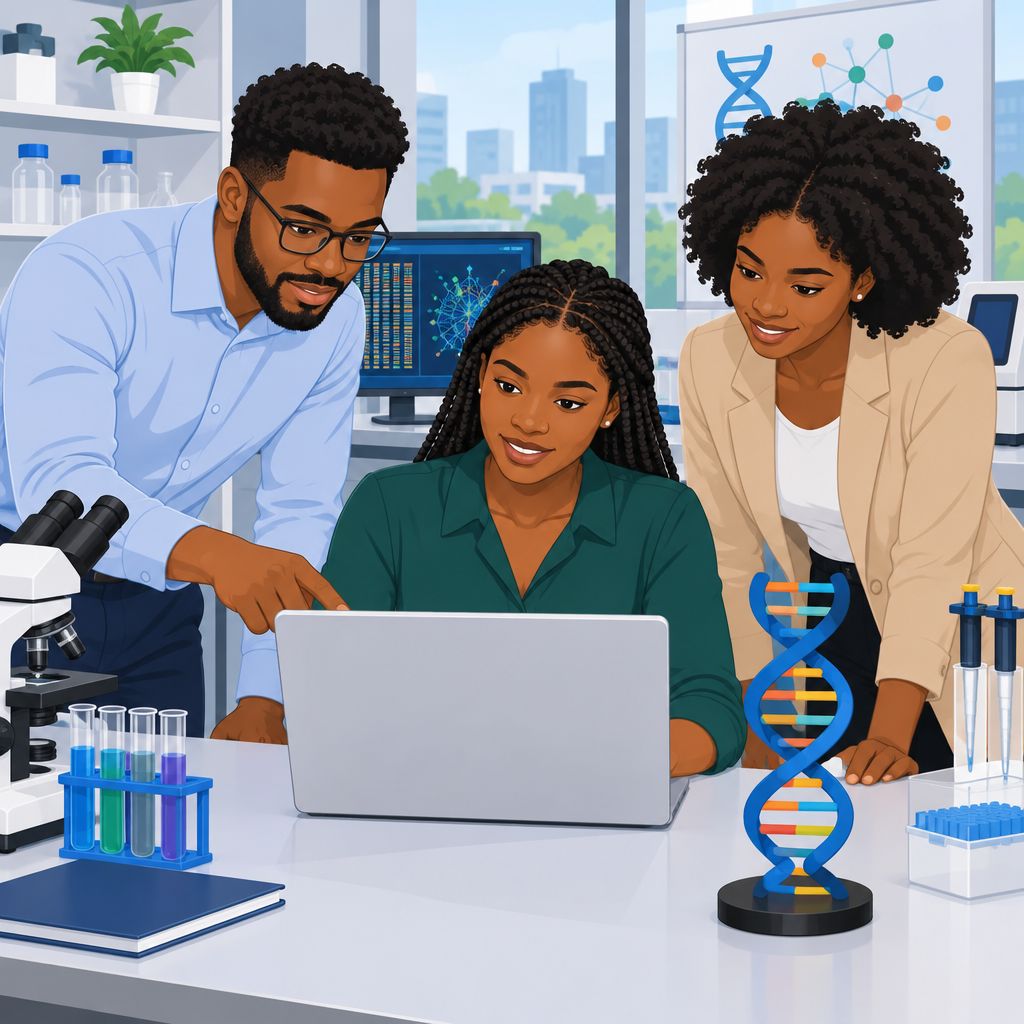
The interdisciplinary nature of bioinformatics in Nigeria involves collaboration between biologists, computer scientists, statisticians, and other specialists.
Overview of Bioinformatics in Nigeria
- Current state of bioinformatics in Nigeria
- Role of bioinformatics in healthcare, agriculture, and research
- Challenges faced in implementing bioinformatics in Nigeria
Bioinformatics is rapidly growing in Nigeria, especially as researchers apply computational tools to biological data.
As data-driven research expands, the field helps scientists interpret extensive biological information.
Universities and research institutions increasingly include bioinformatics in their curricula.
This expansion supports a growing community of Nigerian researchers and experts.
These specialists contribute to healthcare, agriculture, and scientific research.
In healthcare, researchers use bioinformatics for disease diagnosis, drug discovery, and personalized medicine.
Genetic analysis can reveal biomarkers that support targeted therapies and treatment strategies.
These applications address diseases prevalent in Nigeria.
Meanwhile, agricultural researchers study plant and animal genetics to improve production.
This approach supports higher crop yields and stronger disease resistance.
It also helps improve livestock breeding and productivity.
Furthermore, bioinformatics enables scientists to analyze large-scale biological datasets.
These datasets include genomics, proteomics, and metabolomics information.
Consequently, researchers can accelerate discoveries in genetics, evolutionary biology, and biotechnology.
However, Nigeria faces several challenges when implementing bioinformatics widely.
Limited funding restricts research activities and technology development.
Inadequate infrastructure also limits access to essential computational resources.
Additionally, Nigeria needs more professionals with advanced bioinformatics skills.
Greater collaboration among academic institutions, government agencies, and industry partners can address these barriers.
Training programs can strengthen expertise and encourage interdisciplinary collaboration.
With sustained investment, Nigeria can expand bioinformatics across healthcare, agriculture, and research.
Interdisciplinary Collaboration in Bioinformatics
Bioinformatics combines biology, computer science, and statistics to study biological data.
Successful research depends on collaboration among computer scientists, biologists, and statisticians.
Each discipline contributes specialized knowledge that supports innovative solutions for biological data analysis.
Computer scientists develop algorithms that process biological data efficiently.
Meanwhile, statisticians evaluate the data and identify meaningful patterns.
Biologists provide the domain knowledge needed to interpret those findings accurately.
This cooperation improves the accuracy and relevance of biological data interpretation.
Furthermore, multiple perspectives support a deeper understanding of complex biological processes.
Combining these disciplines also encourages the development of innovative technologies and analytical methods.
Consequently, interdisciplinary work accelerates scientific discovery across biology.
Cross-disciplinary collaboration fosters creativity when researchers address challenging biological problems.
It also supports breakthroughs in genomics, proteomics, and drug discovery.
Learn More: Women Pioneers in Nigerian Archaeology
Bioinformatics Applications in Healthcare
Bioinformatics supports personalized medicine, disease diagnosis, and improved patient outcomes in Nigeria.
It connects biological data analysis with healthcare decisions and treatment development.
Healthcare providers can use these approaches to create more informed and targeted care plans.
Transform Your Career with Expert Guidance
Get personalized mentorship consulting that’s tailored to your unique path. Our expert advice is actionable and exclusive.
Get StartedBioinformatics in Personalized Medicine
Bioinformatics helps providers tailor treatment plans to each patient’s genetic makeup, lifestyle, and environmental factors.
By analyzing genomic datasets, it can identify treatments that may suit individual patients.
Consequently, personalized care can improve outcomes and reduce treatment-related side effects.
Genomics and Proteomics in Disease Diagnosis
Genomics examines individual genetic information to identify possible disease markers.
Proteomics analyzes proteins to clarify disease mechanisms and support targeted therapies.
Together, these fields can help providers make more accurate diagnoses and select tailored treatment options.
Bioinformatics Tools Used in Nigerian Healthcare
Healthcare teams in Nigeria can apply several bioinformatics tools to support patient care.
These tools compare biological data, examine disease relationships, and guide treatment research.
Moreover, they help researchers investigate molecular structures and potential drug interactions.
- Sequence alignment tools compare DNA and protein sequences, supporting genetic variation analysis and drug development.
- Phylogenetic analysis tools examine evolutionary relationships, aiding identification of disease-causing agents and potential treatments.
- Drug design software predicts drug-target interactions, facilitating medication development and personalized treatment strategies.
- Structural bioinformatics tools analyze three-dimensional molecular structures, helping researchers understand disease mechanisms and design targeted therapies.
Delve into the Subject: Postgraduate Studies in Animal Science in Nigeria
Bioinformatics helps Nigerian researchers improve crop and livestock production.
It provides biological insights that support more productive and adaptable agricultural methods.
Furthermore, researchers can use genetic information to address diseases, pests, and environmental challenges.
Bioinformatics for Crop Improvement
Researchers analyze plant genomes to understand genetic traits that support crop improvement.
Moreover, genetic analysis helps scientists develop varieties with stronger disease and pest resistance.
Breeding programs can also use bioinformatics to improve productivity and environmental adaptability.
- Researchers analyze plant genomes to identify useful traits for crop improvement.
- Scientists use genetic data to develop crops with improved disease and pest resistance.
- Breeders apply bioinformatics tools to enhance crop productivity and adaptability.
Bioinformatics in Livestock Breeding
Bioinformatics helps researchers identify livestock genes linked with desirable production traits.
Consequently, genomic analysis supports selective breeding for improved meat, milk, and wool production.
Breeding programs can also strengthen livestock resilience and promote more sustainable populations.
- Researchers identify genetic markers associated with valuable livestock characteristics.
- Breeders select animals with traits that support better meat, milk, and wool production.
- Genomic tools help design breeding programs that improve livestock resilience and sustainability.
Applications of Bioinformatics in Nigerian Agriculture
Nigerian agricultural researchers can apply genomic information across crop and livestock programs.
These applications support faster breeding decisions and more targeted agricultural improvements.
Additionally, microbiome studies can improve livestock health management and feed use.
- Genomic selection can accelerate high-yielding and disease-resistant crop development.
- Genetic markers can help researchers identify drought tolerance in crops.
- Gut microbiome studies can support improved livestock feed conversion and health management.
Bioinformatics gives Nigerian agriculture valuable tools for improving productivity, sustainability, and resilience.
As researchers expand these applications, farmers and breeders can make better-informed production decisions.
Delve into the Subject: Contributions of Applied Math to Nigerian Research
Bioinformatics in Research
- Bioinformatics analyzes biological data and significantly supports scientific research.
- Moreover, data mining and analysis uncover patterns and insights.
- Consequently, bioinformatics advances knowledge in genomics, proteomics, and biomedicine.
Learn More: Role of Ecology in Nigeria's Sustainable Development
Education and Training in Bioinformatics
Bioinformatics education supports the growth of this field in Nigeria.
It prepares professionals to address needs in healthcare, agriculture, and environmental research.
Therefore, Nigerian institutions must develop more opportunities for bioinformatics learning and research.
Availability of Bioinformatics Programs
Only a limited number of Nigerian universities currently offer bioinformatics programs.
This shortage makes it difficult to meet the country’s growing demand for trained professionals.
However, universities continue working to expand bioinformatics courses and related academic opportunities.
Training the Next Generation of Bioinformaticians
Training future bioinformaticians remains essential for Nigeria’s scientific and technological development.
These professionals analyze biological data, develop computational tools, and support research across several domains.
Consequently, stronger training programs can improve Nigeria’s research capacity and technological innovation.
Initiatives Supporting Bioinformatics Education
Several initiatives currently promote bioinformatics education across Nigeria.
Universities and research institutions collaborate while developing interdisciplinary courses and establishing training centers.
Additionally, scholarships and workshops support students and researchers interested in bioinformatics.
Advancing Bioinformatics Through Collaboration and Investment
Bioinformatics in Nigeria advances when biology, computer science, and statistics collaborate to produce innovative research and discoveries.
Therefore, stakeholders should recognize bioinformatics’ potential and prioritize investment in research and technological advancement.
By valuing diverse disciplines, Nigeria can apply interdisciplinary approaches to complex biological challenges.
Additional Resources
Google search results for Interdisciplinary Nature of Bioinformatics in Nigeria Sciences
Bing search results for Interdisciplinary Nature of Bioinformatics in Nigeria Sciences


