




Introduction
Applied microbiology plays a crucial role in Nigeria.
It addresses public health concerns, food safety, and environmental issues.
This field applies microorganisms practically across various areas.
This post explores emerging trends in applied microbiology in Nigeria.
It highlights recent advancements and innovations within the field.
Increased Focus on Bioremediation
Bioremediation uses microbes to clean contaminated environments.
This process uses biological agents to remove or neutralize pollutants.
It offers a cost-effective, sustainable, and eco-friendly approach to environmental cleanup.
By leveraging microorganisms, bioremediation can degrade or transform contaminants with less disturbance than traditional techniques.
Examples of Successful Bioremediation Projects in Nigeria
Nigeria has applied bioremediation to several types of environmental contamination.
These efforts address pollution affecting land and water resources.
They also demonstrate the practical value of microbial treatment methods.
- Remediation of oil-polluted sites in the Niger Delta region
- Cleanup of heavy metal-contaminated soil in mining areas
- Restoration of polluted water bodies through microbial treatment
Future Developments in Nigerian Bioremediation
Nigeria can advance bioremediation by improving microbial selection and treatment strategies.
Researchers may identify microbial strains that target specific contaminants more effectively.
Moreover, combined cleanup methods could produce stronger remediation results.
- Enhanced microbial strain selection for specific contaminants
- Integration of bioremediation with other cleanup methods for synergistic effects
- Development of novel bioaugmentation and biostimulation techniques
Nigeria continues to face pollution from industrial activities, agricultural practices, and oil spills.
Consequently, the country needs innovative and sustainable solutions for restoring contaminated sites.
Bioremediation can provide an effective and less intrusive option for addressing these environmental concerns.
Advances in microbial ecology and genetic engineering may support more effective remediation.
These developments could help Nigeria achieve longer-lasting restoration of contaminated environments.
Industrial Microbiology in Nigeria
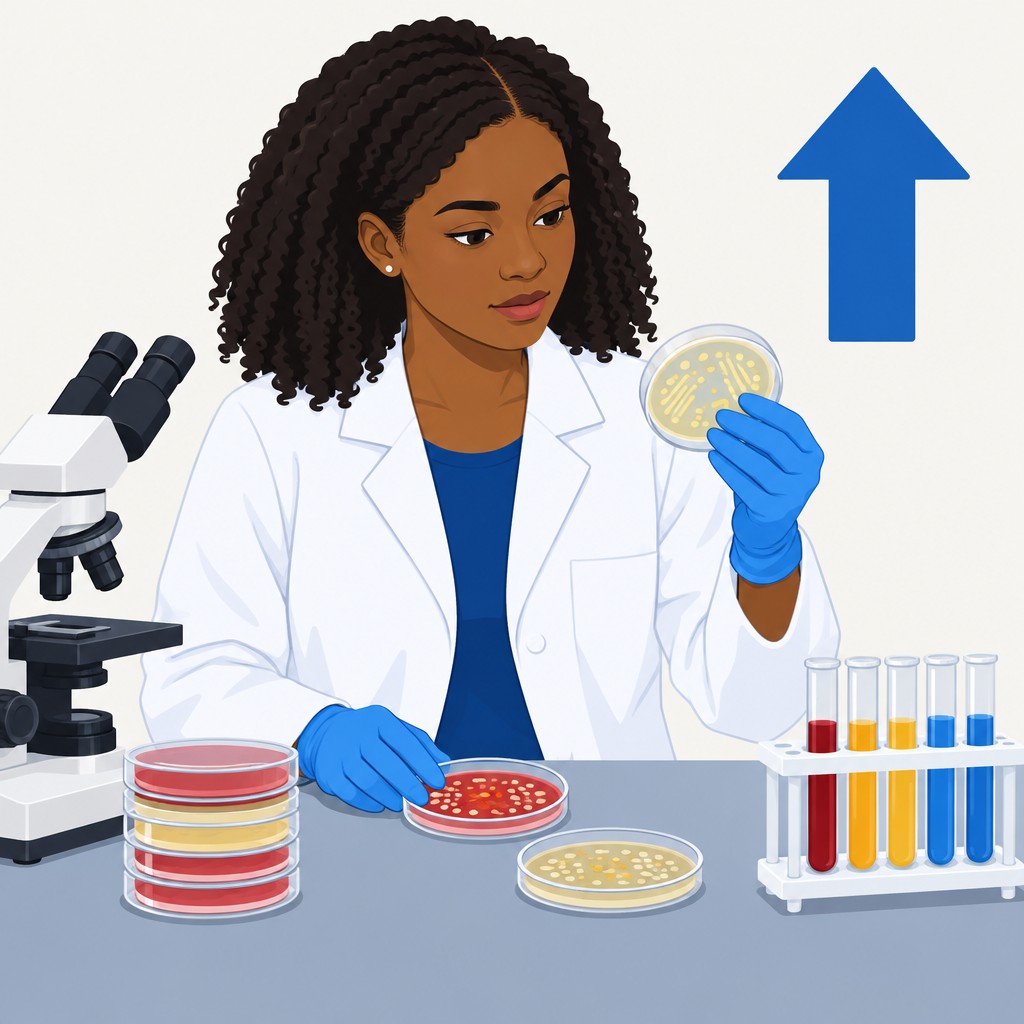
Industrial microbiology uses microorganisms in industrial processes to create valuable products and services.
It supports industries that produce enzymes, antibiotics, vaccines, biofuels, and other bioproducts.
In Nigeria, these applications connect biological processes with food, pharmaceutical, biotechnology, and agricultural activities.
Industrial Microbiology Processes
Microorganisms help manufacturers transform raw materials into useful products through controlled biological processes.
These processes include fermentation, microbial production, preservation, and the development of biological agents.
Consequently, industrial microbiology combines microbiological knowledge with manufacturing and commercial objectives.
Applications Across Nigerian Industries
In Nigeria, food and beverage producers use fermentation, probiotics, and preservation methods.
These methods support product development and food quality.
Meanwhile, pharmaceutical manufacturers rely on microorganisms to produce antibiotics, vaccines, and other biopharmaceuticals.
The biotechnology sector also uses industrial microbiology to develop genetically modified organisms and bio-based products.
Together, these applications expand the practical value of microbiological research.
Industrial Microbiology Case Studies
One reported Nigerian case involves palm oil production through microbial fermentation techniques.
The approach has supported increased yield and improved quality.
Another case uses microbial consortia to treat polluted water bodies.
These consortia can contribute to cleaner environments and sustainable water resources.
Researchers also produce biofertilizers with microbial inoculants.
These products have shown promise for improving soil fertility and crop productivity.
Growth Opportunities for Industrial Microbiology
Future opportunities include applying microbial methods to oil spills in the Niger Delta region.
Such applications could help mitigate environmental impacts.
Farmers may also use microbial agents for pest control.
Transform Your Career with Expert Guidance
Get personalized mentorship consulting that’s tailored to your unique path. Our expert advice is actionable and exclusive.
Get StartedThis approach could reduce reliance on chemical pesticides and support sustainable farming.
Researchers can develop novel biocatalysts for green chemistry and eco-friendly chemical production.
These opportunities could strengthen Nigeria’s industrial microbiology sector.
Industrial Microbiology and Sustainable Development
Industrial microbiology offers Nigeria diverse opportunities across several industries.
Research and innovation can expand these applications and support sustainable development.
Continued progress can strengthen production, environmental management, agriculture, and biotechnology.
You Might Also Like: Wildlife Management Studies in Nigeria
Medical Microbiology in Healthcare
Medical microbiology supports healthcare and disease prevention.
As infectious diseases and antibiotic resistance rise, this field helps professionals identify pathogens.
Meanwhile, microbiologists prevent disease spread through surveillance, diagnosis, and research.
They analyze samples to identify infection causes and recommend suitable treatments.
Additionally, medical microbiology supports vaccine development and epidemiological studies.
Current Challenges and Advancements in Medical Microbiology
Drug-resistant pathogens present a major challenge in medical microbiology.
This resistance threatens public health by limiting available infection treatments.
However, PCR and next-generation sequencing have transformed diagnostic practice.
These methods identify pathogens rapidly and accurately, supporting timely treatment.
Furthermore, bioinformatics helps researchers analyze microbial data and improve understanding.
Research Priorities for Medical Microbiology in Nigeria
Nigeria needs more medical microbiology research to address emerging infectious diseases.
Effective collaboration among researchers, healthcare professionals, and policymakers can address public health challenges.
Moreover, infrastructure investment and personnel training can strengthen medical microbiology practice.
Future studies should develop new antimicrobial agents and improve diagnostics for better patient care.
Medical microbiology will remain increasingly important to healthcare in Nigeria.
Learn More: Applied Zoology Internships and Training Programs in Nigeria
Technological Advancements in Agricultural Microbiology
Agricultural microbiology is transforming farming practices in Nigeria.
Microorganisms improve soil fertility, plant growth, and disease prevention.
Furthermore, new technologies help farmers apply microbial benefits while supporting sustainable production.
Innovative Technologies in Agricultural Microbiology
Farmers and researchers use several microbial technologies to address agricultural challenges.
These approaches can improve nutrient availability, pest management, and soil condition.
Moreover, they can reduce dependence on some chemical inputs.
- Bio-fertilizers contain live microorganisms that improve soil fertility and plant nutrient uptake.
- Biopesticides use microbes to control crop pests, insects, and diseases.
- Bioremediation uses microbes to restore soil contaminated by pollutants.
Implications for Food Security and Sustainability
Agricultural microbiology can help Nigerian farmers achieve higher yields and better crop quality.
It can also reduce production costs, strengthen food security, and support farmer incomes.
Additionally, microbial practices can promote organic farming, preserve soil health, and protect biodiversity.
These benefits can help address food shortages and improve nutrition.
By maintaining beneficial microbial communities, farmers can support long-term agricultural productivity.
Consequently, Nigeria can build a more resilient agricultural system for farmers and consumers.
See Related Content: How to Pursue a Career in Archaeology in Nigeria
Collaboration with Government and Research Institutions
Collaboration between government agencies, research institutions, and industry players advances applied microbiology.
It pools resources, expertise, and knowledge to address complex challenges in the field.
Successful partnerships in Nigeria demonstrate the benefits of cooperation.
Partnerships Advancing Applied Microbiology in Nigeria
The Nigerian Institute of Medical Research and the Federal Ministry of Health have supported infectious disease research.
Similarly, the University of Lagos Faculty of Science works with local biotechnology companies.
This partnership has helped develop biotechnology solutions for agriculture and environmental remediation.
- Establish collaborative research centers connecting government, academia, and industry.
- Provide funding opportunities and grants for joint research projects.
- Encourage conferences, seminars, and workshops that promote knowledge sharing.
- Create regulations that support partnerships in applied microbiology.
- Promote interdisciplinary research that encourages cross-sector collaboration and innovation.
Together, these recommendations can help Nigeria build a robust collaboration ecosystem.
Such an ecosystem can drive innovation, economic growth, and responses to health and environmental challenges.
Find Out More: Networking for Agricultural Economists in Nigeria
Future Directions for Applied Microbiology in Nigeria
Recent research, technologies, and practices are shaping applied microbiology in Nigeria.
These developments reveal emerging trends across the field.
Professionals who track these trends can strengthen their knowledge and skills.
They can also remain competitive in the industry.
The field’s future appears promising because research funding, collaborations, and technological advancements continue increasing.
As a result, professionals can find more opportunities for growth and innovation.
Additional Resources
Google search results for Emerging Trends in Applied Microbiology Nigeria Sciences
Bing search results for Emerging Trends in Applied Microbiology Nigeria Sciences


