




Archaeology as a Career in Nigeria
Archaeology in Nigeria examines human history through artifacts and excavation.
Furthermore, the profession helps preserve Nigeria’s rich cultural heritage for future generations.
As development and urbanization increase, Nigeria needs more archaeologists.
Understanding Archaeology
Archaeology studies human history and prehistory through physical remains.
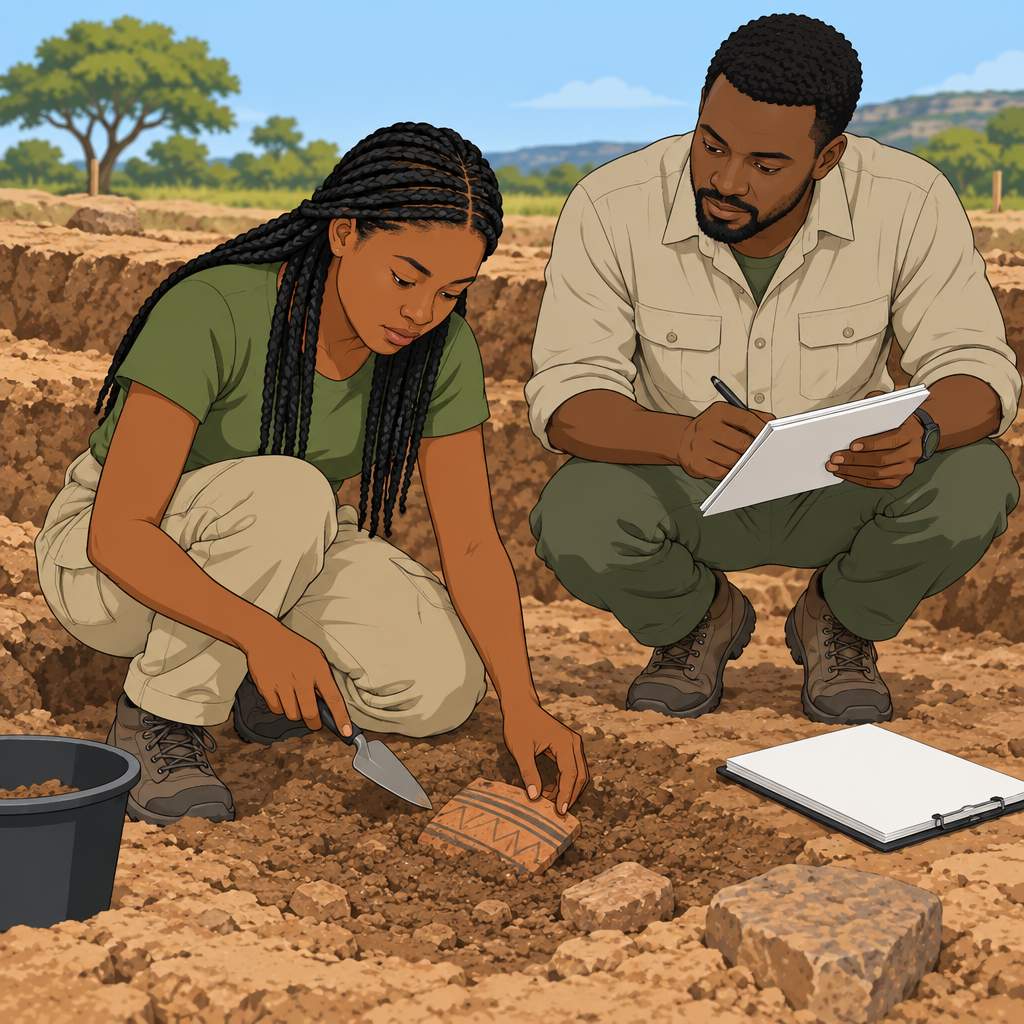
Researchers excavate sites and analyze artifacts to understand past societies and cultures.
Material remains reveal information about human life, traditions, technologies, and behavior.
- Definition of archaeology
- Different branches of archaeology
- Importance of archaeology in studying past human societies
Definition of Archaeology
Archaeology is the scientific study of human history and prehistory.
It examines artifacts and other physical remains from human societies.
Through excavation and analysis, archaeology explains how people lived in the past.
Different Branches of Archaeology
Archaeology includes several branches that examine different aspects of human history.
Each branch uses physical evidence to study past societies and environments.
These branches include historical, experimental, underwater, and landscape archaeology.
- Historical archaeology
- Experimental archaeology
- Underwater archaeology
- Landscape archaeology
Importance of Archaeology in Studying Past Human Societies
Archaeology reveals cultural practices and traditions through material remains.
It also provides insights into ancient technologies and their development.
Furthermore, archaeology tracks changes in human behavior across time.
- Archaeology reveals cultural practices and traditions.
- Archaeology provides insights into ancient technologies.
- Archaeology tracks changes in human behavior over time.
Archaeology helps people learn more about their ancestors and human social development.
Educational Requirements
To pursue archaeology in Nigeria, you need at least a bachelor’s degree in archaeology or a related field.
For example, related fields may include anthropology.
Several Nigerian universities offer archaeology as a major, including the University of Ibadan, Ahmadu Bello University, and the University of Nigeria, Nsukka.
Additionally, practical experience and fieldwork form essential parts of archaeological training.
Hands-on training helps you develop crucial skills for archaeological research.
You Might Also Like: Networking for Agricultural Economists in Nigeria
Skills and Experience
Aspiring archaeologists in Nigeria need essential skills to excel in this profession.
- Research skills: Conduct research, analyze findings, and draw conclusions.
- Attention to detail: Notice important details during archaeological fieldwork.
- Problem-solving skills: Address challenges through quick thinking and effective solutions.
- Physical stamina: Maintain good physical fitness for demanding fieldwork.
- Teamwork: Collaborate effectively with archaeologists and researchers.
Aspiring archaeologists can gain practical experience through volunteer opportunities and internships in Nigeria.
These opportunities provide hands-on experience in archaeological fieldwork.
They also expose participants to various archaeological techniques and methodologies.
Volunteer Opportunities and Internships in Nigeria
Several organizations in Nigeria offer volunteer opportunities and internships for aspiring archaeologists.
These opportunities can help participants develop practical experience in archaeology.
- Nigerian Archaeological Society
- National Commission for Museums and Monuments
- Universities and research institutions
Internships and volunteer work can enhance your skills and knowledge.
They can also help you build valuable connections in the field.
Networking with Archaeology Professionals
Networking with archaeology professionals supports career advancement and professional growth.
Building relationships with experienced archaeologists can provide valuable career support.
- Gain mentorship and guidance for your career path.
- Learn about job opportunities and upcoming projects.
- Receive recommendations and references for future opportunities.
- Stay updated on developments and trends in archaeology.
- Collaborate on research projects and publications.
Attending conferences, workshops, and seminars in Nigeria offers opportunities to meet archaeology professionals.
These events can help you establish connections within the archaeological community.
A strong professional network can open doors to opportunities in Nigerian archaeology.
Delve into the Subject: Innovations in Applied Chemistry by Nigerian Scientists
Job Opportunities
Archaeologists in Nigeria can explore opportunities across government agencies, museums, research institutions, and private organizations.
These sectors support cultural heritage preservation, archaeological research, public education, and responsible development.
Furthermore, each sector offers different responsibilities, work environments, and opportunities for professional development.
- Government Agencies
- Museums
- Research Institutions
- Private Organizations
Government agencies, including the National Commission for Museums and Monuments, can provide stable career opportunities.
Transform Your Career with Expert Guidance
Get personalized mentorship consulting that’s tailored to your unique path. Our expert advice is actionable and exclusive.
Get StartedState archaeological departments also employ professionals who help preserve cultural heritage and historical sites.
Museums offer roles involving exhibit curation, archaeological research, and public education.
Consequently, museum professionals help preserve artifacts while explaining Nigeria’s history and archaeological importance.
Research institutions provide opportunities for fieldwork, artifact analysis, and archaeological publication.
Researchers can also develop specialized interests and contribute to archaeological knowledge in Nigeria.
Private organizations hire archaeologists for surveys, excavations, and heritage impact assessments.
These employers may include archaeological consulting firms, construction companies, and heritage management companies.
Their work helps protect archaeological sites during development projects and supports cultural heritage preservation.
Salary Prospects and Career Growth
Archaeology salaries in Nigeria vary according to an employee’s sector and professional experience.
Entry-level roles in government agencies or museums may offer lower salaries than some private-sector positions.
However, specialized skills and experience can help archaeologists access higher salaries and senior positions.
Career advancement may lead to leadership roles, project management positions, or academic work in universities.
Strong research abilities, analytical skills, and cultural knowledge can support long-term professional development.
Additionally, continuing education and professional development courses can strengthen an archaeologist’s career prospects.
Networking opportunities can help professionals build connections and discover new possibilities within the field.
Finally, staying informed about archaeological techniques, technologies, and research trends can expand professional knowledge.
Find Out More: Scholarships for Geology Students in Nigeria
Challenges and Solutions
- Archaeologists in Nigeria face various challenges in pursuing their careers.
- One major challenge involves insufficient funding for research projects.
- Without adequate funding, archaeologists struggle to conduct meaningful research and excavations.
- Another challenge involves limited resources and support for archaeological work in Nigeria.
- Archaeologists often rely on external sources for funding and equipment.
- Therefore, advocacy for better government support and funding remains essential.
- Archaeological associations and professionals should collaborate to lobby for increased funding.
- Government officials need to understand archaeologys importance in preserving Nigerias cultural heritage.
- Additionally, collaboration with international organizations can help secure project funding.
- By raising awareness, archaeologists can attract more government and private-sector support.
Learn More: Top Shipyards in Nigeria: Locations and Facilities
When considering an archaeology career in Nigeria, first recognize this field’s significance.
Archaeologists help preserve Nigeria’s rich cultural heritage and history.
Education and Training for Archaeologists
An aspiring archaeologist needs a degree in archaeology or a related field.
Furthermore, practical training develops hands-on skills for archaeological work.
Fieldwork experience strengthens that preparation through direct participation in research activities.
Professional Networking and Collaboration
Professionals can build a strong network within Nigeria’s archaeological community.
Additionally, collaboration with fellow archaeologists and researchers supports career advancement.
These connections can provide opportunities for growth and learning.
Research and Academic Publications
Archaeologists should engage in research projects to develop professional expertise.
Publishing findings in academic journals establishes credibility in the field.
Moreover, published work contributes to knowledge about Nigerian archaeology.
Technology and Innovative Archaeological Methods
Modern technology can improve the efficiency of archaeological research in Nigeria.
In addition, innovative approaches can strengthen the effectiveness of archaeological projects.
Archaeologists should stay current with technological advances.
Advocacy and Cultural Heritage Conservation
Archaeologists advocate for preserving archaeological sites and artifacts.
They also support conservation efforts that protect cultural heritage.
By raising awareness, they help safeguard Nigeria’s past for future generations.
Career Contributions to Cultural Heritage
Pursuing archaeology in Nigeria can provide personally fulfilling professional work.
It also enables people to contribute to preserving Nigeria’s cultural heritage.
Therefore, young people can explore archaeology as an exciting and rewarding field.
Additional Resources
Google search results for How to Pursue a Career in Archaeology in Nigeria Sciences
Bing search results for How to Pursue a Career in Archaeology in Nigeria Sciences


